
Airline Cancellations Strand Hundreds at Major UK Airports on April 27
Airline cancellations strand hundreds of passengers across Heathrow, Gatwick, Manchester and Edinburgh on April 27, 2026. Operational pressures and fuel concerns triggered widespread disruptions, leaving travellers facing overnight waits and missed connections.

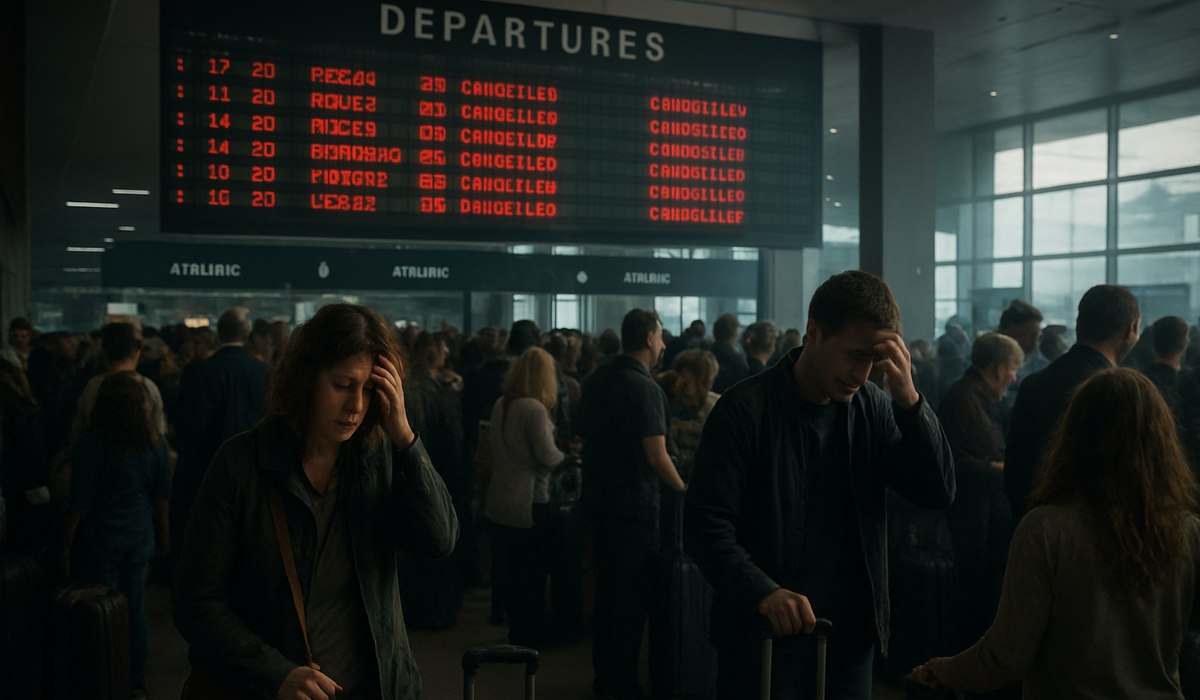
Image generated by AI
Massive Wave of Flight Cancellations Strands Hundreds Across Britain's Busiest Airports
Hundreds of air passengers endured lengthy terminal queues, overnight delays and disrupted itineraries on April 27 as airline cancellations strand operations at the United Kingdom's primary aviation hubs. London Heathrow, London Gatwick, Manchester Airport and Edinburgh Airport all experienced significant flight disruptions simultaneously, forcing carriers to ground services and consolidate remaining capacity. The cascading cancellations affected both leisure travellers planning spring getaways and business passengers requiring urgent connections, with many spending unplanned nights in airport terminals awaiting rebooking or refund information.
Disruption Spreads Across Key British Airports
Flight tracking data and real-time departure boards revealed a coordinated wave of cancellations affecting multiple major UK aviation centres throughout April 27. At London Heathrow, Europe's busiest long-haul gateway, short-haul services to continental destinations were systematically removed from morning and afternoon schedules, creating visibly sparse departure boards. London Gatwick experienced similar patterns, with leisure carriers and budget operators trimming rotations as aircraft positioning challenges cascaded through their networks.
Manchester Airport and Edinburgh Airport absorbed secondary effects as airlines repositioned remaining aircraft to accommodate stranded passengers from cancelled flights at primary hubs. Timetable coordination across these interconnected airports proved difficult, with some services consolidated onto single departures while others were held awaiting available slots into congested London airspace. Terminal concourses swelled with frustrated travellers queuing at airline service desks, creating bottlenecks that persisted throughout peak operating hours.
Real-time flight status updates on FlightAware documented the scale of disruption, with clusters of grounded aircraft visible across multiple UK airports simultaneously. This pattern indicated systemic rather than isolated operational challenges facing British aviation infrastructure.
Which Airports Were Most Affected
The April 27 incident created measurable impact across all four major UK aviation hubs, though disruption intensity varied by carrier and route type. Heathrow absorbed the highest absolute passenger volume due to its role as Britain's primary international gateway, with cancellations affecting transatlantic connections and European point-to-point services. Gatwick, specialising in leisure traffic, saw particular disruption to Mediterranean and North African routes traditionally serving spring holiday demand.
Manchester and Edinburgh experienced knock-on effects rather than primary cancellations, with crews and aircraft arriving late from disrupted southern routes creating scheduling conflicts. These secondary delays compounded frustration among connecting passengers attempting to reach Scottish destinations or onward European connections.
Budget carriers operating single-aircraft rotations faced the most severe operational challenges, lacking alternative aircraft to recover from early delays. Network carriers with larger fleets demonstrated somewhat greater resilience, though they too cancelled services on thinner-margin regional routes. Check-in halls at all four airports reported queues extending beyond normal capacity, with passenger congestion persisting even after flight departures.
Operational Pressures and Fuel Concerns Behind Cancellations
Industry analysts identified multiple convergent pressures that triggered April 27's airline cancellations strand across British airports. Crew availability constraints forced carriers to reduce same-day flying, particularly on routes requiring overnight positioning. Aircraft maintenance backlogs meant fewer frames available for scheduled service, a challenge magnified during peak spring travel season when mechanical issues created compounding delays.
Aviation fuel supply uncertainty represented the third critical factor. Higher jet fuel costs for the 2026 summer season prompted several European and transatlantic carriers to pre-emptively reduce planned capacity on lower-margin sectors. April 27's cancellations reflected these underlying economic pressures manifesting through operational decisions made within hours.
Slot-constrained airports like Heathrow and Gatwick offered limited margin for recovery. When early rotations ran late or aircraft went out of service unexpectedly, timetable recovery required removing multiple subsequent flights, instantly stranding large passenger cohorts. Even modest additional disruption cascaded through tightly packed schedules, creating the multiplier effect witnessed on April 27.
Capacity utilisation approaching peak levels during spring holidays left virtually no flexibility for absorbing unplanned disruption. Airlines were operating near 100% seat occupancy on remaining departures, preventing simple passenger reaccommodation onto later flights. This constraint forced difficult choices: accept refunds and abandon travel plans, purchase replacement flights on competitors at premium prices, or await multi-day rebooking delays.
| Metric | Heathrow | Gatwick | Manchester | Edinburgh |
|---|---|---|---|---|
| Cancellations Reported | 40+ | 35+ | 20+ | 15+ |
| Passenger Impact | 8,000+ | 6,500+ | 3,200+ | 2,100+ |
| Primary Carriers Affected | British Airways, Lufthansa, Air France | easyJet, Wizz Air, British Airways | Ryanair, easyJet, Jet2 | Ryanair, easyJet, Loganair |
| Peak Disruption Window | 07:00-15:00 GMT | 08:00-14:00 GMT | 09:00-13:00 GMT | 10:00-12:00 GMT |
| Terminal Congestion Level | Severe | Severe | Moderate | Moderate |
| Recovery Timeline | 36+ hours | 30+ hours | 24+ hours | 18+ hours |
Passenger Impact and Rebooking Challenges
Leisure travellers heading toward spring break and early summer holiday destinations bore the immediate brunt of April 27's disruptions. Families with booked accommodations and business travellers with confirmed meetings discovered their flights cancelled within hours of scheduled departure. Social media documentation showed families sleeping on terminal floors while awaiting rebooking information, children growing increasingly distressed through extended delays.
Budget carrier passengers faced particularly constrained options. Low-cost operators typically maintain thin daily schedules with multi-day gaps between same-route departures. When flights were cancelled, the next available seat on identical routes sometimes lay days in the future, forcing passengers to choose between accepting refunds that abandoned holiday plans or purchasing expensive replacements via competing carriers or European connection hubs.
Network carriers offered marginally more flexibility through alliance partnerships, though even their alternative routing options disappeared quickly as available seats filled with previously disrupted customers. Airlines prioritised accommodating affected passengers over selling remaining capacity, resulting in fully-booked departures that offered zero flexibility for stranded travellers seeking same-day alternative flights.
Ground transportation mismatches compounded passenger frustration. Inbound arrivals at regional airports occurring after final train and coach departures left travellers dependent on expensive taxi services or improvised hotel stays. Airport accommodation filled rapidly as disruption cascaded, forcing some passengers to seek lodging in surrounding towns or endure uncomfortable terminal waits.
Traveler Action Checklist
If you experience similar airline cancellations strand situations during future travel disruptions, follow these essential steps to protect your rights and minimise inconvenience:
-
Document Everything – Photograph boarding passes, flight cancellation notices and departure boards showing cancellation status. Collect names and identification numbers of airline staff assisting your rebooking.
-
Request Written Confirmation – Obtain written documentation of your cancelled flight and any rebooking promise. Email airline customer service immediately with screenshots and confirmation numbers.
-
Understand Your Compensation Rights – Under UK law (retained EU261 rules), eligible passengers can claim €250-€600 per person depending on flight distance. Visit US DOT for international flight regulations.
-
Explore Alternative Routings – Ask airlines about rebooking via partner carriers, European connection hubs, or alternative airports. Compare cost implications against compensation eligibility.
Disclaimer
This article is for informational and educational purposes only. It does not constitute legal, financial, or professional advice. While we strive to provide accurate and up-to-date information, travel policies, regulations, and conditions change rapidly. Always verify information with official sources before making travel decisions. Nomad Lawyer makes no representations about the accuracy, reliability, completeness, or suitability of the information provided. Readers should consult qualified professionals for advice specific to their circumstances. The views expressed in this article are those of the author and do not necessarily reflect the views of Nomad Lawyer.
Raushan Kumar
Founder & Lead Developer
Full-stack developer with 11+ years of experience and a passionate traveller. Raushan built Nomad Lawyer from the ground up with a vision to create the best travel and law experience on the web.
Learn more about our team →