
Indian Railways Approves Speed Limits of 100 kmph on Katra to Banihal Section to Shorten Valley Travel Times Starting Autumn 2026
Indian Railways raises the speed limit on the 111-km Katra-Banihal broad gauge corridor to 100 kmph, accelerating regional connectivity.

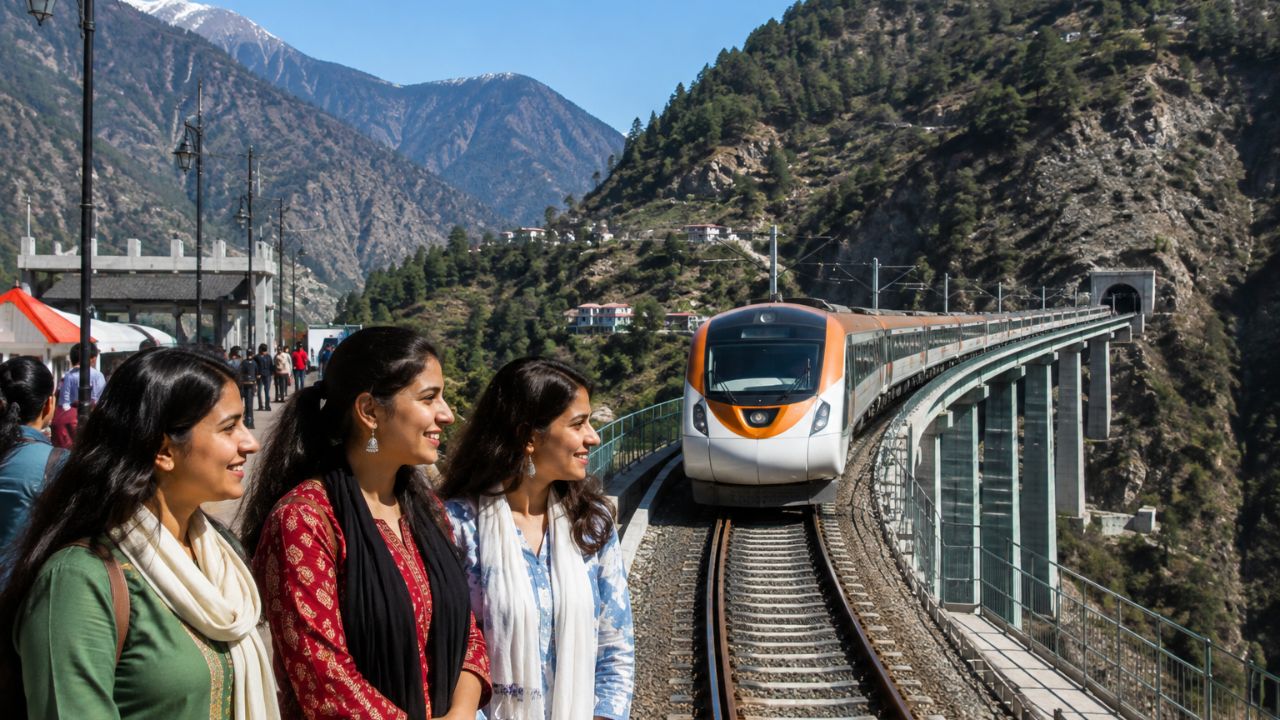
Image generated by AI
Indian Railways has authorized an operational speed limit of 100 kmph along the 111-kilometer Katra-Banihal rail section in Jammu and Kashmir, replacing previous restrictions of 75 kmph and 85 kmph. This infrastructure upgrade accelerates connectivity through the Himalayan mountains, providing a faster transit alternative to road travel for travelers and local communities.
Broad Gauge Corridor Receives Speed Limit Authorization
A major improvement in Jammu and Kashmir's railway connectivity has been introduced as Indian Railways approves a higher operating speed of 100 kmph on the 111-kilometer Katra-Banihal broad gauge rail corridor. The upgrade is expected to make train journeys quicker, improve passenger movement, and strengthen transportation links across the region. The revised limit enables more efficient train operations throughout the corridor, providing a reliable alternative to road travel, especially through difficult mountainous terrain.
The newly approved speed limit replaces the previous restrictions on different parts of the route. Earlier, trains could run at a maximum speed of 85 kmph between Shri Mata Vaishno Devi Katra and Sangaldan, while the Sangaldan-Banihal section allowed speeds of up to 75 kmph. The speed increase was introduced after Indian Railways completed the required technical evaluations and safety procedures. The railway network underwent checks to confirm that the track, infrastructure, signaling systems, and operational parameters were ready to support faster train movement without compromising passenger safety.
With trains now permitted to travel at higher speeds, passengers can expect shorter journey times between Shri Mata Vaishno Devi Katra and Banihal. The upgrade is designed to provide a smoother travel experience with improved efficiency for daily commuters, visitors, and other railway users. Faster railway services can make travel planning easier and encourage greater movement of tourists across connected destinations.
Katra-Banihal Corridor Upgrade Specifications
To assist travelers and logistics planners in understanding the technical parameters of the newly authorized corridor, the table below outlines the route length, previous speed limits, and upgraded operational speeds:
| Rail Corridor Section | Section Distance (km) | Previous Speed Limit (kmph) | Authorized Speed Limit (kmph) | Technical Status |
|---|---|---|---|---|
| Katra to Sangaldan | 111 (Total Corridor) | 85 kmph | 100 kmph | Broad gauge track, safety certified |
| Sangaldan to Banihal | 111 (Total Corridor) | 75 kmph | 100 kmph | Mountainous rail section, broad gauge |
| Integrated Katra-Banihal Corridor | 111 | Mixed (75/85 kmph) | 100 kmph | Complete broad gauge link authorized |
These speed limits apply to all passenger train services operating along the broad gauge line, subject to local speed restrictions in tunnels or over bridges as determined by regional railway divisions.
Traveler Logistics and Ticketing Guidelines
For travelers planning to utilize the upgraded Katra-Banihal rail link, coordinating reservations through the official Indian Railway Catering and Tourism Corporation (IRCTC) portal is highly recommended. Because the route connects key pilgrimage destinations, including the Shri Mata Vaishno Devi shrine, trains can experience high passenger volumes during religious festivals and peak summer holiday seasons. Booking tickets at least 60 days in advance is advised to secure preferred classes of travel.
When connecting from the Katra terminal to the wider Kashmir valley, travelers should plan for a minimum layover time of 45 to 60 minutes to accommodate security checks and platform transfers. Digital ticketing options are available at primary stations, but carrying physical copies of booking confirmations and valid government-issued identification is mandatory for security clearance. For passengers carrying heavy luggage or sports equipment, porter services are available at Shri Mata Vaishno Devi Katra and Banihal terminals, with rates regulated by the railway administration.
The introduction of faster services also simplifies connections to regional bus networks and taxi services. From Banihal, passengers can access shared taxis and state transport buses connecting to Srinagar and other northern destinations. Travelers should monitor the official National Train Enquiry System (NTES) mobile application for real-time updates on train arrivals, departures, and platform assignments.
Regional Economic and Connectivity Integration
The improved rail infrastructure is expected to support local economic activities. Better connectivity can help businesses, traders, and communities benefit from easier movement and stronger links between different areas. Efficient transport networks play an important role in encouraging regional growth and development, facilitating the transit of local goods and agricultural produce to wider markets.
Developing and maintaining railway infrastructure in the Himalayan region presents unique engineering challenges, requiring advanced planning, strong safety systems, and continuous monitoring. The speed enhancement reflects ongoing efforts to improve connectivity in geographically challenging areas. Tracks, signaling networks, and bridge structures are subject to regular inspections by the Commissioner of Railway Safety (CRS) to maintain the integrity of the line under the new operating parameters.
By reducing the dependency on the Jammu-Srinagar National Highway (NH-44), which is frequently closed due to landslides and winter snow, the rail corridor provides a weather-resilient transport alternative. The faster transit times are expected to encourage longer stays in the Kashmir valley, supporting hotels, guest houses, and recreational tour operators.
Related Travel Guides
- Saudi Arabia Tourism Boom Prospects Rise as Strait of Hormuz Energy Shield Secures Regional Stability: New Travel Alert
- Croatia Travel Safety Warning Issued as Summer Wildfires and Schengen Entry Rules Impact Adriatic Tourism: New Travel Alert
- Adelaide Airport Deploys Amadeus Cloud and Hybrid Self-Service Bag Drops to Streamline Passenger Journeys: New Travel Alert
Disclaimer
This article is for informational and educational purposes only. It does not constitute legal, financial, or professional advice. While we strive to provide accurate and up-to-date information, travel policies, regulations, and conditions change rapidly. Always verify information with official sources before making travel decisions. Nomad Lawyer makes no representations about the accuracy, reliability, completeness, or suitability of the information provided. Readers should consult qualified professionals for advice specific to their circumstances. The views expressed in this article are those of the author and do not necessarily reflect the views of Nomad Lawyer.
Raushan Kumar
Founder & Lead Developer
Full-stack developer with 11+ years of experience and a passionate traveller. Raushan built Nomad Lawyer from the ground up with a vision to create the best travel and law experience on the web.
Learn more about our team →