
The Rose-Red Kingdom Rebounds: How Jordan Is Courting American Travelers Amid Petra's Tourism Recalibration
Jordan launches a targeted North American roadshow across New York, Chicago, and Los Angeles as American travelers emerge as Petra's largest foreign market.

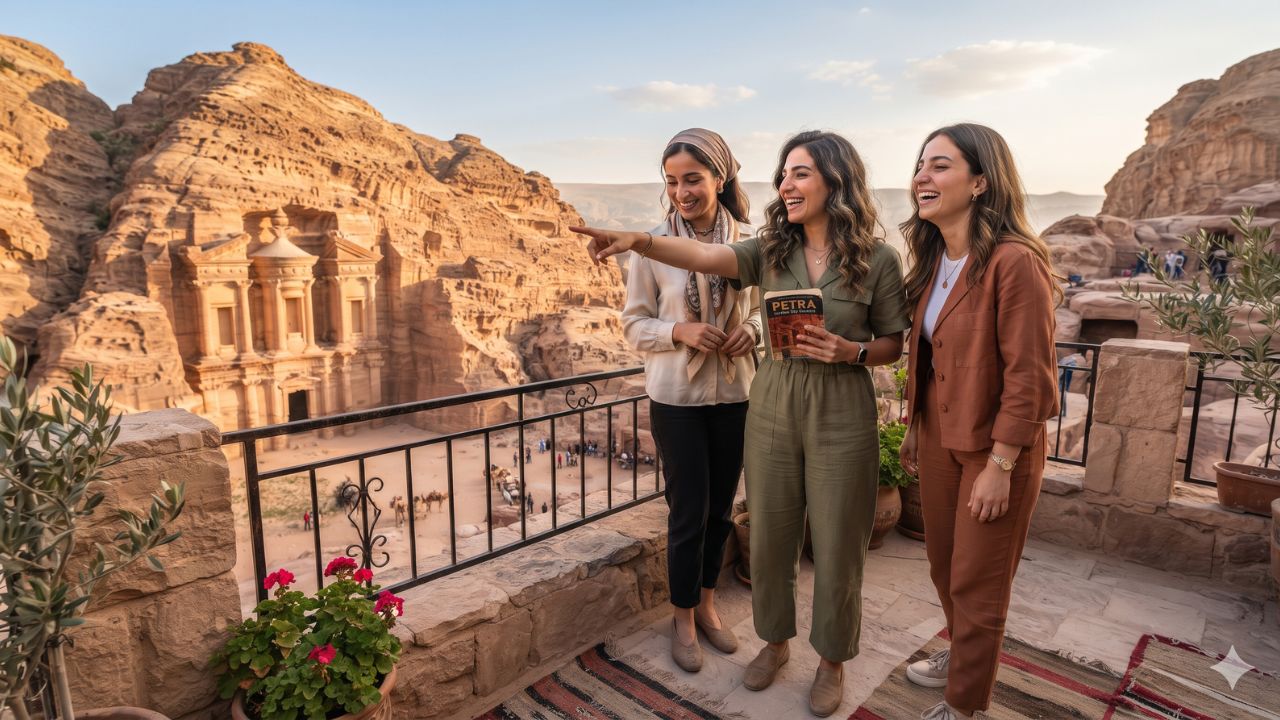
Even as foreign tourist arrivals to Petra dipped 17.8% across the first nine months of 2026, American travelers defied regional headwinds to become the ancient Nabataean capital's single largest overseas market, contributing 3,803 visitors in September alone. Rather than retreating during an era of regional geopolitical friction, the Jordan Tourism Board launched a coordinated five-city promotional campaign across North America, beginning with a high-stakes trade gathering in New York on 22 October 2026. Uniting 13 Jordanian destination management companies with 33 American travel operators, the opening event logged 429 direct business negotiations to rebuild consumer confidence, establish bespoke cultural itineraries, and reconnect independent travelers with Jordan's historic wonders.
With subsequent stops rolling into Chicago on 22 October and Los Angeles on 26 October, the promotional blitz—supported by national carrier Royal Jordanian Airlines and newly appointed North American representative Trove Tourism Development Advisors—seeks to decouple Jordan from broad regional misconceptions. For travelers who make the journey, the reward is an uncrowded rose-red city of Petra, empty desert canyons in Wadi Rum, and quiet biblical shrines where visitors can encounter local hospitality without the crush of mass tour buses.
Inside the Tourism Recovery Numbers
Tourism serves as a foundational pillar of the Hashemite Kingdom's national economy. Data released by the Petra Development and Tourism Region Authority illustrates both the challenges faced by local heritage operators and the critical role American travelers play in stabilizing the sector.
| Statistical Indicator / Operational Dimension | Official Metric / Recorded Figure | Strategic & Travel Context |
|---|---|---|
| September 2026 Total Petra Visitation | 43,901 visitors | Down ~8% compared with September 2025 |
| September 2026 Foreign Arrivals in Petra | 21,995 visitors | Accounts for 50.1% of total monthly site traffic |
| Leading Overseas Source Market (September) | United States (3,803 visitors) | America represents Petra's primary international contributor |
| Jan–Sept 2026 Cumulative Petra Attendance | 362,215 total visitors | Reflects a 2.8% year-on-year contraction |
| Jan–Sept 2026 Foreign Visitor Contraction | 17.8% year-on-year decline | Demonstrates regional airspace and security sensitivity |
| New York Tourism Roadshow Negotiations | 429 business-to-business meetings | 13 Jordanian suppliers partnered with 33 US operators |
| Five-City Roadshow Itinerary | New York (22 Oct), Chicago (22 Oct), LA (26 Oct) | Comprehensive outreach to top US luxury and pilgrimage agencies |
| Official Jordan Pass Pricing | 70 to 80 Jordanian Dinars (JOD) | Covers 40+ attractions; waives visa fee with 2+ nights stay |
| US Department of State Advisory Level | Level 3 – Reconsider Travel (dated 29 Aug 2026) | Regional armed conflict caution; Level 4 on select border zones |
While 429 trade meetings in Manhattan signify strong commercial goodwill rather than finalized hotel reservations, they demonstrate that US operators are actively designing luxury, pilgrimage, and eco-adventure departures for the upcoming autumn and winter seasons.
What Makes Jordan's Historic Circuit Exceptional
Jordan offers a compact corridor of human history spanning Paleolithic desert settlements, Roman imperial outposts, and foundational biblical landmarks, all linked by modern highways stretching from the northern pine forests to the Red Sea.
The Nabataean Wonder of Petra
Carved directly into vertical sandstone cliffs by the Nabataean civilization more than two millennia ago, the ancient city of Petra remains Jordan's crowning jewel, designated by the UNESCO World Heritage Centre. Travelers enter through the Siq, a serpentine natural fissure flanked by 80-meter-high cliffs that culminates in the famous facade of the Treasury (Al-Khazneh). Beyond the Treasury lies an expansive mountain metropolis of royal tombs, a Roman-style theater, and the colossal Monastery (Ad-Deir), reached via an 800-step stone staircase winding through wind-sculpted granite ravines.
Wadi Rum: The Valley of the Moon
South toward the border with Saudi Arabia, the Wadi Rum Protected Area protects 720 square kilometers of dramatic wilderness characterized by towering red sandstone monoliths, natural rock arches, and narrow gorges lined with Thamudic petroglyphs. Managed in close partnership with local Zalabieh and Howeitat Bedouin tribes, Wadi Rum offers traditional goat-hair desert camps, astronomical stargazing under zero light pollution, and camel trekking across crimson sands made famous by T.E. Lawrence.
Biblical Sanctuaries and Sacred Waters
Jordan's religious tourism assets anchor many North American specialized itineraries. Along the eastern bank of the Jordan River lies Bethany Beyond the Jordan (Al-Maghtas), authenticated as the historic location of the baptism of Jesus Christ. Just to the north, Mount Nebo rises above the Jordan Rift Valley, marking the sacred summit where Moses is recounted to have viewed the Promised Land before his death. In nearby Madaba, the sixth-century mosaic map inside the Basilica of Saint George preserves the oldest surviving cartographic depiction of the Holy Land, meticulously assembled from millions of colored stones.
Wellness and Marine Sanctuaries
Jordan's geography provides striking thermal contrasts. At 430 meters below sea level, the hypersaline waters of the Dead Sea allow swimmers to float effortlessly while coating their skin in mineral-rich black mud renowned for dermatological therapies. In the far south, Aqaba provides a coastal base on the Red Sea, where coral reefs shelter sea turtles, clownfish, and world-class diving wrecks in warm, crystal-clear water.
Visitor Insider Tips
Experiencing Jordan with cultural sensitivity and practical efficiency requires localized knowledge:
- Purchase the Jordan Pass Before Arrival: If you plan to spend at least two consecutive nights (three days) in the country, buy the official Jordan Pass online before boarding your flight. Priced between 70 and 80 Jordanian dinars (JOD)—depending on whether you select one, two, or three days in Petra—the pass covers admission to more than 40 national monuments and waives the standard 40 JOD single-entry visa fee upon arrival at Queen Alia International Airport.
- Time the Siq Walk at Dawn: Standard tour groups arrive at Petra's visitor center between 08:30 and 10:00. Arrive when the gates open at 06:00 to walk through the cool, silent Siq in solitude. The morning sun strikes the Treasury facade around 08:30, illuminating the pink sandstone with brilliant golden light.
- Opt for an Eco-Lodge in Dana Biosphere Reserve: On the drive between Amman and Petra along the scenic King's Highway, stay overnight at the Feynan Ecolodge in the Dana Biosphere Reserve. Powered entirely by solar energy and lit at night by hundreds of handmade beeswax candles, the lodge offers hiking trails led by local Bedouin guides.
- Master the Ritual of the National Dish (Mansaf): When dining with locals, savor mansaf—tender lamb slow-simmered in a fermented dried goat yogurt broth called jameed, served over yellow rice and tissue-thin shrak bread, garnished with toasted pine nuts and almonds. In Amman, visit neighborhood institutions in Jabal Amman or Al-Weibdeh rather than international hotel dining rooms.
- Review Official Consular Guidelines: Before traveling, review the latest safety notices from the U.S. Department of State. While tourist sites like Petra, Jerash, and Wadi Rum operate peacefully with heavy security escorts and polite tourism police, travelers should avoid unmonitored border areas near Syria and Iraq.
Cultural and Environmental Context
Tourism in Jordan is inextricably tied to community preservation and environmental stewardship. In desert enclaves like Wadi Rum and the mountain hamlets bordering Petra, revenue from guiding, camel transport, and Bedouin guesthouses provides direct livelihoods to families who have inhabited these lands for generations.
At the same time, Jordan confronts acute environmental constraints, ranking among the most water-stressed countries on the planet. The surface level of the Dead Sea is dropping by more than one meter per year, prompting strict water-rationing guidelines across resort complexes. By supporting sustainable travel initiatives—such as staying in solar-powered eco-lodges, hiring certified local guides, and respecting Bedouin conservation bylaws—international visitors contribute directly to preserving the fragile ecology of the Levant.
FAQ: Visiting Jordan 2026
Is it safe for American tourists to travel to Jordan right now?
Yes, Jordan's primary tourist circuits—including Amman, Petra, Wadi Rum, and the Dead Sea—remain open and secure. Travelers should remain aware of regional news, avoid border areas, and follow official travel advisories.
How does the Jordan Pass save money on sightseeing?
The Jordan Pass (70–80 JOD) covers entrance fees to over 40 historic attractions, including Petra, and completely waives the 40 JOD single-entry visa fee for travelers staying at least two consecutive nights.
What is the best season to explore Petra and Wadi Rum?
Spring (March to May) and autumn (September to November) offer moderate daytime temperatures and clear skies, avoiding the scorching summer heat and cold winter desert winds.
What is the dress code for cultural and religious sites in Jordan?
Modest attire is expected. Both men and women should wear clothing that covers shoulders and knees, particularly when visiting mosques, churches, or rural village markets.
When you stand in the morning silence before the Treasury at Petra, you understand that Jordan's ancient stone does not merely endure history—it welcomes those who seek it.
Related Travel Guides
- Middle East Aviation Under Pressure: 109 Flight Cancellations and 1,224 Delays Ripple Across Riyadh, Dubai, and Istanbul
- Typhoon Champi Grounds Asian Skies: 754 Flight Cancellations and 6,264 Delays Strike Taoyuan, Naha, and Major Hubs
- Spain's Wilderness Frontier: How Garajonay, Doñana, and Teide Are Pioneering High-Value Nature Escapes
Disclaimer
This article is for informational and educational purposes only. It does not constitute legal, financial, or professional advice. While we strive to provide accurate and up-to-date information, travel policies, regulations, and conditions change rapidly. Always verify information with official sources before making travel decisions. Nomad Lawyer makes no representations about the accuracy, reliability, completeness, or suitability of the information provided. Readers should consult qualified professionals for advice specific to their circumstances. The views expressed in this article are those of the author and do not necessarily reflect the views of Nomad Lawyer.
Naina Thakur
Contributor & Travel Specialist
Travel enthusiast and legal writer covering visa regulations, responsible tourism, and cultural journeys across global destinations.
Learn more about our team →