
Jordan Launches Petra Biodiversity Exhibition at Beidha Cultural Village to Expand Ecotourism Beyond Ancient Rock-Cut Monuments
Jordan opens the Petra Biodiversity Exhibition in Beidha, showcasing native desert wildlife, fossils, and freshwater aquariums to disperse tourist flows.

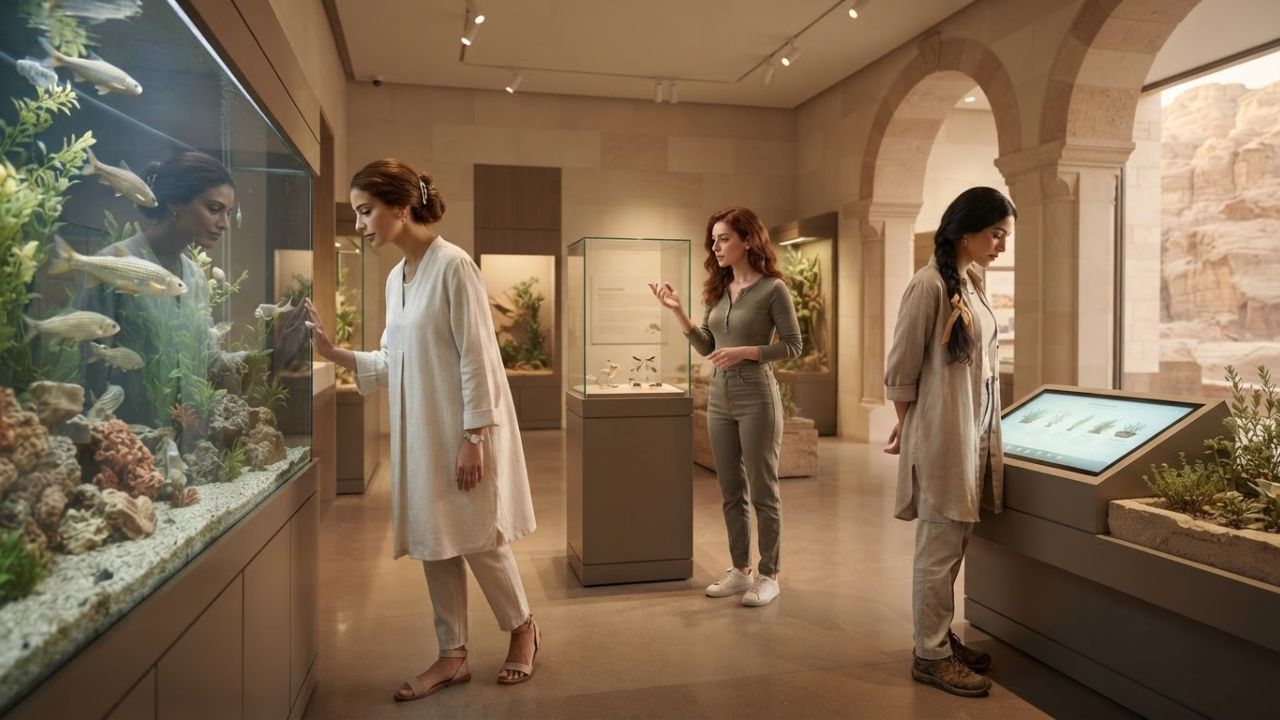
Image generated by AI
Jordan’s heritage and tourism authorities have launched the Petra Biodiversity and Natural Heritage Exhibition at the Nabataean Cultural Village in Beidha, expanding regional travel beyond the rock-cut architecture of the Siq and Treasury. Designed to disperse visitor density across southern Jordan, the new scientific facility showcases native desert ecosystems, live specimens, preserved fauna, fossils, and freshwater aquariums.
Jordan Establishes Beidha Ecotourism Hub to Disperse Petra Visitor Flows
To address overtourism and physical congestion within Petra's central archaeological core, the Jordan Tourism Board and regional conservation authorities have expanded cultural infrastructure to the surrounding Beidha region. Positioned near Little Petra, the newly opened exhibition at the Nabataean Cultural Village introduces an ecological dimension to Jordan's historic tourism product.
While international itineraries have historically focused on the Treasury (Al-Khazneh) and Monastery (Ad-Deir), the Beidha initiative highlights the fragile arid ecosystems that sustained Nabataean civilization. By incorporating natural history education, heritage planners aim to disperse daily tourist traffic across secondary heritage sites, reducing physical footfall impact on sandstone monuments designated as a UNESCO World Heritage site.
Scientific Displays, Live Specimens, and Ecosystem Infrastructure
The exhibition combines traditional museum curation with interactive technology to present the natural environment of southern Jordan's desert highlands and canyons.
Inside the facility, exhibits detail the evolutionary adaptations of native flora and fauna to extreme climate swings and water scarcity. Displays feature live specimens, preserved desert wildlife, ancient geological fossils, and specialized freshwater aquariums highlighting riparian ecosystems. Interactive installations illustrate how drought-resistant shrubs and desert wildflowers supported early agriculture and nomadic trade routes across the Arabian peninsula.
| Exhibition Domain | Display & Technical Specification | Primary Educational & Conservation Objective |
|---|---|---|
| Live Fauna Displays | Controlled desert terrariums & habitats | Demonstrates reptile and arthropod desert adaptations |
| Freshwater Aquariums | Specialized desert stream tanks | Showcases endemic freshwater aquatic species & springs |
| Fossil Collection | Preserved geological & marine fossils | Maps pre-historic environmental shifts in southern Jordan |
| Botanical Exhibits | Preserved flora & drought-resistant flora | Explains Nabataean agricultural & pastoral grazing systems |
| Interactive Science Modules | Digital ecological simulation panels | Educates visitors on climate change & water conservation |
| Management Vector | Core Archaeological Hub (Siq & Treasury) | Beidha Ecotourism Corridor (Nabataean Village) |
|---|---|---|
| Visitor Density | High physical footfall concentration | Dispersed, low-impact educational outreach |
| Primary Attraction | 1st-century BCE rock-cut tombs | Natural ecosystems, live fauna, fossils, & aquariums |
| Conservation Focus | Sandstone erosion & structural preservation | Ecosystem protection & wildlife habitat conservation |
| Traveler Profile | High-volume day tour groups | Independent travelers, researchers, & ecotourists |
Practical Traveler Logistics: Navigating Beidha and the Nabataean Cultural Village
Travelers visiting southern Jordan can integrate the Beidha exhibition into their broader Petra and Wadi Rum itineraries using updated transit and site access details.
- Location & Access: The Nabataean Cultural Village is situated in Beidha (Little Petra), approximately 9 kilometers north of the main Petra Visitor Center in Wadi Musa. Shuttle buses and local taxis link the main site with Beidha.
- Suggested Itinerary Pacing: Allocate 1.5 to 2 hours to explore the exhibition galleries before or after visiting the rock-cut ruins of Siq al-Barid (Little Petra). Combining the biodiversity facility with Little Petra provides a comprehensive look at Nabataean living quarters and natural surroundings.
- Dispersal & Trail Routing: Visitors holding the Jordan Pass or standard Petra entry tickets can access Beidha without extra entry fees. The site serves as the starting point for the scenic backcountry hike from Little Petra to the Monastery (Ad-Deir), offering a low-congestion alternative entry path.
- Conservation Guidelines: Stay on marked paths and respect local wildlife. Managed in partnership with environmental organizations like the Royal Society for the Conservation of Nature (RSCN), the facility encourages visitors to adhere to Leave No Trace principles in surrounding desert canyons.
Environmental Conservation and Sustainable Tourism Dispersion in Southern Jordan
The launch of the Petra Biodiversity and Natural Heritage Exhibition reflects a broader shift toward sustainable destination management in Jordan. Environmental reports indicate that expanding visitor activities beyond central archaeological ruins helps mitigate structural wear caused by overcrowding along the Siq.
Furthermore, climate change and habitat fragmentation pose ongoing threats to native species across the Shobak and Dana biosphere corridors. By educating international travelers on desert flora, fauna, and water conservation, the Beidha facility fosters environmental stewardship while supporting local Bedouin communities through sustainable tourism employment.
Frequently Asked Questions: Petra Biodiversity Exhibition in Beidha
Where is the Petra Biodiversity Exhibition located?
The exhibition is located inside the Nabataean Cultural Village in Beidha (Little Petra), situated approximately 9 kilometers north of the main Petra archaeological park entrance.
What can visitors see inside the Beidha exhibition?
Exhibits feature live desert specimens, preserved wildlife, marine and land fossils, specialized freshwater aquariums, and interactive scientific displays detailing regional ecosystems.
How does the Beidha exhibition support sustainable tourism in Jordan?
By attracting visitors to Beidha, the exhibition disperses tourist crowds away from congested areas like the Siq and Treasury, reducing physical wear on ancient monuments while raising environmental awareness.
Is entry to the Beidha Biodiversity Exhibition included with a Petra ticket?
Yes. Visitors traveling to Beidha can access the exhibition as part of their standard Petra site entry or Jordan Pass itinerary.
Related Travel Guides
Disclaimer
This article is for informational and educational purposes only. It does not constitute legal, financial, or professional advice. While we strive to provide accurate and up-to-date information, travel policies, regulations, and conditions change rapidly. Always verify information with official sources before making travel decisions. Nomad Lawyer makes no representations about the accuracy, reliability, completeness, or suitability of the information provided. Readers should consult qualified professionals for advice specific to their circumstances. The views expressed in this article are those of the author and do not necessarily reflect the views of Nomad Lawyer.
Kunal K Choudhary
Co-Founder & Contributor
A passionate traveller and tech enthusiast. Kunal contributes to the vision and growth of Nomad Lawyer, bringing fresh perspectives and driving the community forward.
Learn more about our team →