
Cambodia's Jaya House River Park Marks 10 Years in Siem Reap Revealing That 60% of Guests Now Use ChatGPT and AI to Plan Trips, Direct Bookings Rise 11% Year-on-Year, and 10-12% of Visitors Chose the Destination Because of the Hotel: New Update
As Jaya House River Park in Siem Reap, Cambodia marks its 10th anniversary, the award-winning boutique hotel has revealed that approximately 60% of its guests now use ChatGPT or other AI-powered platforms to research and plan their holidays — while simultaneously recording an 11% year-on-year increase in direct bookings and finding that 10-12% of visitors discovered the hotel before deciding to visit Siem Reap, signaling that exceptional independent properties are increasingly becoming the primary reason travelers choose a destination rather than the reverse.

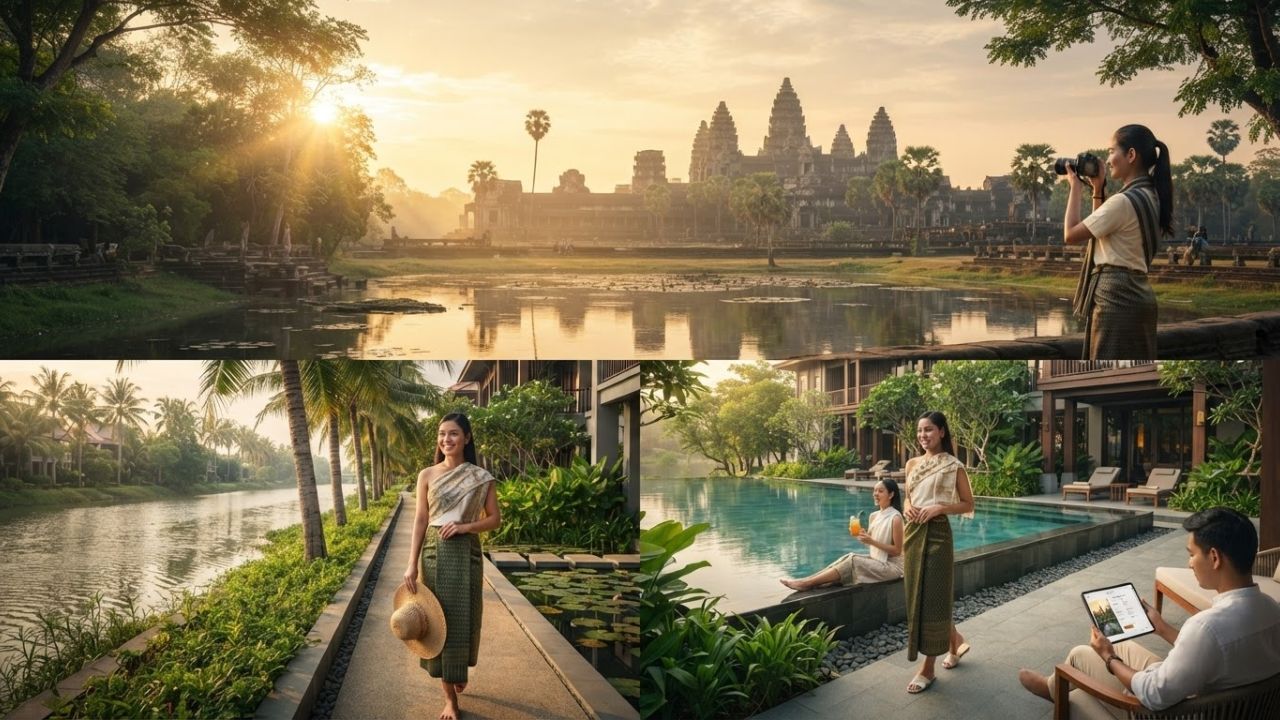
Image generated by AI
Published on July 28, 2026
Jaya House River Park, the independently operated boutique hotel in Siem Reap, Cambodia, has marked its 10th anniversary by releasing a detailed analysis of how guest behavior and luxury travel decision-making have transformed over the past decade — revealing that approximately 60% of its guests now use ChatGPT or other AI-powered platforms while researching and planning their holidays, that the property has recorded an 11% year-on-year increase in direct bookings despite the rapid growth of AI and third-party digital discovery channels, and that a striking 10 to 12% of guests discovered Jaya House River Park before deciding to visit Siem Reap — making the boutique hotel itself the primary reason those travelers chose Cambodia's heritage capital as their destination. Christian de Boer, Managing Director of Jaya House River Park, has shared a detailed assessment of what these trends mean for independent boutique hotels in the AI era — arguing that artificial intelligence is not a threat to authentic hospitality but a more efficient discovery channel that actively benefits properties offering the kind of personalised, culturally embedded, and experience-driven stays that large chain hotels consistently struggle to replicate. For travelers planning luxury or experience-focused journeys to Southeast Asia in 2026, the Jaya House River Park findings offer a revealing window into how AI is reshaping the very first stage of the holiday planning process.
Quick Summary
- Anniversary: Jaya House River Park, Siem Reap, Cambodia marks 10 years of operations as an award-winning independent boutique hotel.
- AI Planning: ~60% of guests now use ChatGPT or other AI-powered platforms to research and plan their holidays — the hotel's single most significant behavioral shift in a decade.
- Direct Bookings: Despite growing AI tool usage, the hotel has recorded an 11% year-on-year increase in direct bookings — especially for long-haul, complex, and experience-led trips.
- Hotel-First Discovery: 10–12% of guests discovered Jaya House River Park before deciding to visit Siem Reap — meaning the hotel itself became the reason for the destination choice.
- Managing Director's View: Christian de Boer states that AI is evolving from an inspiration source into a genuine planning tool that actively helps travelers find independent properties offering specific values, interests, and authentic experiences — giving boutique hotels a competitive advantage on substance over advertising spend.
Boutique hospitality has always competed against a fundamental structural disadvantage: the marketing budgets, global distribution systems, and brand recognition of major international hotel chains dwarf what independent properties can realistically deploy. For a decade, Jaya House River Park has navigated this landscape by building its reputation through a combination of exceptional hospitality, genuine guest relationships, strong online reviews, and personal recommendations — a foundation that is now proving unexpectedly well-suited to the AI era of travel planning. As the hotel enters its second decade, its guest data and operational insights are generating findings that have broad implications for the wider hospitality industry and for the travelers who increasingly rely on artificial intelligence to discover where to stay.
Jaya House River Park at 10: Key Findings on AI, Bookings, and Destination Discovery
The 60% AI Planning Statistic: What It Means
Christian de Boer's Full Assessment: AI, Boutique Hotels, and the Future of Luxury Travel
Christian de Boer, Managing Director of Jaya House River Park, has offered one of the hospitality industry's most thoughtful analyses of what the AI travel planning revolution means for independent properties:
"AI is quickly moving from a source of inspiration to a genuine travel-planning tool, particularly for travellers looking beyond major hotel brands and more obvious destinations. Travellers are no longer necessarily beginning with an OTA or Google; they're asking AI to identify hotels that match highly specific interests, values and priorities. This gives independent hotels an opportunity to compete on substance rather than advertising spend. Experiential travel — the kind of authentic, personalised experiences that independent boutique hotels are uniquely positioned to provide — continues to create outstanding guest reviews and word-of-mouth recommendations, building an even stronger foundation for success in the age of AI-driven travel planning."
The core of de Boer's argument is that AI-driven discovery is meritocratic in a way that paid advertising and OTA algorithms are not. When a traveler asks an AI platform to recommend boutique hotels in Siem Reap that offer genuine cultural connection, exceptional service, and authentic local experiences, the AI draws on the aggregated record of guest reviews, editorial coverage, and publicly available quality signals — not on advertising budgets or commission structures. For a property like Jaya House River Park, which has built its decade-long reputation precisely through authentic hospitality and genuine guest relationships rather than marketing investment, this is a structural competitive advantage.
What the Data Reveals About Modern Luxury Travel Behaviors
Practical Guidance for Travelers: Planning a Boutique Experience in Siem Reap
Travelers interested in visiting Siem Reap and considering Jaya House River Park as their accommodation base should follow these practical steps:
- Use AI platforms to identify the right fit for your travel values. The Jaya House River Park data confirms that AI tools are now effective at surfacing boutique properties that match specific traveler priorities — use ChatGPT or comparable platforms to describe your ideal stay in terms of atmosphere, values, and experience preferences rather than generic search terms.
- Book directly with the hotel for complex or experience-led itineraries. The 11% year-on-year direct booking growth at Jaya House River Park reflects travelers' recognition that direct contact delivers better personalisation, more reliable confirmation of specific arrangements, and a more confident booking experience for high-investment journeys.
- Allow sufficient time in Siem Reap to engage meaningfully with the destination. Siem Reap's connection to Angkor — one of Southeast Asia's most historically and architecturally significant heritage landscapes — rewards extended exploration. A minimum of three to four days allows travelers to experience both the archaeological sites and the city's living cultural character.
- Research independently operated boutique hotels before OTA searches. The hotel-first discovery pattern documented by Jaya House River Park suggests that starting a destination search with boutique hotel research — rather than destination-first OTA browsing — frequently surfaces exceptional properties and experiences that algorithm-driven accommodation lists would never prioritize.
- Factor guest reviews and editorial coverage into accommodation selection. AI discovery tools draw on the aggregated quality record of properties — meaning that hotels with sustained high-quality guest feedback have a growing advantage in AI-mediated discovery. Look for properties with consistent five-to-ten-year track records of guest satisfaction rather than simply high recent review counts.
- Contact the hotel directly before finalizing to personalize your stay. Boutique properties like Jaya House River Park are specifically designed to accommodate personalized requests — dietary requirements, room preferences, experience packages, local recommendations — in ways that standardized OTA booking flows cannot capture.
Broader Context: Siem Reap, Angkor, and the Value of Authentic Heritage Tourism
Siem Reap's international appeal rests on its position as the gateway city to the Angkor archaeological complex — a UNESCO World Heritage Site containing one of the world's most extraordinary concentrations of medieval architectural achievement, including Angkor Wat, Angkor Thom, and dozens of lesser-visited temple complexes spread across the surrounding jungle landscape.
Beyond the archaeological monuments, Siem Reap has developed a sophisticated cultural tourism offering — traditional performing arts, artisan craft traditions, contemporary Cambodian culinary experiences, and a boutique hospitality sector that has grown substantially in quality and depth over the past decade. Jaya House River Park's decade of operations coincides precisely with this maturation of the Siem Reap tourism ecosystem — from a destination primarily defined by its UNESCO monuments to one where the quality of the overall visitor experience, including accommodation, has become a meaningful differentiator.
The hotel's finding that 10–12% of its guests chose Siem Reap because of the property demonstrates how boutique hotels operating in heritage destinations can become active contributors to destination appeal rather than passive beneficiaries of inherent tourism attraction.
What to Expect Next: The AI-Boutique Hotel Relationship in 2026 and Beyond
The trajectory established by Jaya House River Park's data — growing AI-driven discovery alongside growing direct booking — is likely to intensify through the remainder of 2026 and into subsequent years. As AI travel planning tools become more sophisticated, their ability to surface specific, personality-matched boutique properties will improve, further narrowing the discovery advantage that large hotel chains have historically enjoyed through marketing spend and OTA commission investment.
For independent boutique hotels globally, the Jaya House River Park findings carry a clear strategic implication: the substantive quality of the guest experience, the authenticity of cultural connection, and the consistency of positive guest feedback are becoming more commercially valuable, not less — because these are precisely the signals that AI discovery platforms weight most heavily when responding to travelers seeking meaningful, personalized, and authentic stays.
For travelers, the message is equally clear: the era of AI-assisted travel planning is actively making it easier to find the best independent boutique hotels — the properties that offer genuine cultural connection and personalized hospitality but have historically been harder to surface through traditional digital discovery channels.
Jaya House River Park's decade of experience in Siem Reap has produced a dataset that speaks directly to how luxury travel is evolving — and the 60% AI planning figure, the 11% direct booking growth, and the 10–12% hotel-first destination discovery rate together tell a coherent story: technology is expanding the discovery universe for independent boutique hotels, while the enduring human desire for authentic connection and personalized experience continues to drive the final booking decision. For travelers planning Cambodia journeys in 2026, the combination of AI-assisted discovery and direct hotel engagement offers the best possible route to the kind of meaningful, culturally embedded travel experience that Jaya House River Park has been delivering for ten years.
FAQ: Jaya House River Park, AI Travel Planning, and Siem Reap Boutique Hotel Trends 2026
What is Jaya House River Park and where is it located?
Jaya House River Park is an independently operated, award-winning boutique luxury hotel in Siem Reap, Cambodia — the city that serves as the gateway to the Angkor archaeological heritage complex. The property has been operating for 10 years and has built its reputation through exceptional hospitality, authentic cultural connection, and strong guest relationships that generate consistent high-quality reviews and direct personal recommendations.
How many Jaya House River Park guests use AI tools to plan their trips?
Approximately 60% of Jaya House River Park guests now use ChatGPT or other AI-powered platforms as part of their holiday research and planning process — a figure the hotel identifies as the most significant shift in guest decision-making behavior it has observed across its decade of operations.
Why are direct bookings at Jaya House River Park increasing despite AI growth?
Jaya House River Park has recorded an 11% year-on-year increase in direct bookings — which the hotel attributes to travelers using AI platforms for discovery and inspiration but then moving to direct hotel contact for the personalization, confidence-building, and detailed communication required to finalize significant, high-investment travel commitments, particularly for long-haul, culturally complex, and experience-led journeys.
What does it mean that 10-12% of guests chose Siem Reap because of the hotel?
The finding that 10–12% of Jaya House River Park guests discovered the hotel before deciding to visit Siem Reap reflects a reversal of the traditional hospitality demand model — where travelers previously chose a destination first and then searched for accommodation. In the hotel-first discovery pattern, an exceptional boutique property with a distinctive identity becomes a primary travel motivation, inspiring destination choices that the traveler hadn't previously committed to.
What does Managing Director Christian de Boer say about AI and boutique hotels?
Christian de Boer, Managing Director of Jaya House River Park, states that AI is "quickly moving from a source of inspiration to a genuine travel-planning tool" and that it gives independent boutique hotels "an opportunity to compete on substance rather than advertising spend" — because AI platforms surface properties based on aggregated quality and authentic experience signals rather than marketing budgets or OTA commission structures. He identifies experiential travel as the category that "continues to create outstanding guest reviews and word-of-mouth recommendations" in the AI planning era.
Suggested SEO Metadata & Assets
Related Travel Guides
Disclaimer
This article is for informational and educational purposes only. It does not constitute legal, financial, or professional advice. While we strive to provide accurate and up-to-date information, travel policies, regulations, and conditions change rapidly. Always verify information with official sources before making travel decisions. Nomad Lawyer makes no representations about the accuracy, reliability, completeness, or suitability of the information provided. Readers should consult qualified professionals for advice specific to their circumstances. The views expressed in this article are those of the author and do not necessarily reflect the views of Nomad Lawyer.
Kunal K Choudhary
Co-Founder & Contributor
A passionate traveller and tech enthusiast. Kunal contributes to the vision and growth of Nomad Lawyer, bringing fresh perspectives and driving the community forward.
Learn more about our team →