
Japan Raises Mount Tokachidake Volcano Alert to Level 3 as Hokkaido Hiking Routes and Hot Springs Face Restrictions
Japan raises Mount Tokachidake volcano alert to Level 3 in Hokkaido, restricting access within 3 km, closing hiking trails, and shutting hot springs.

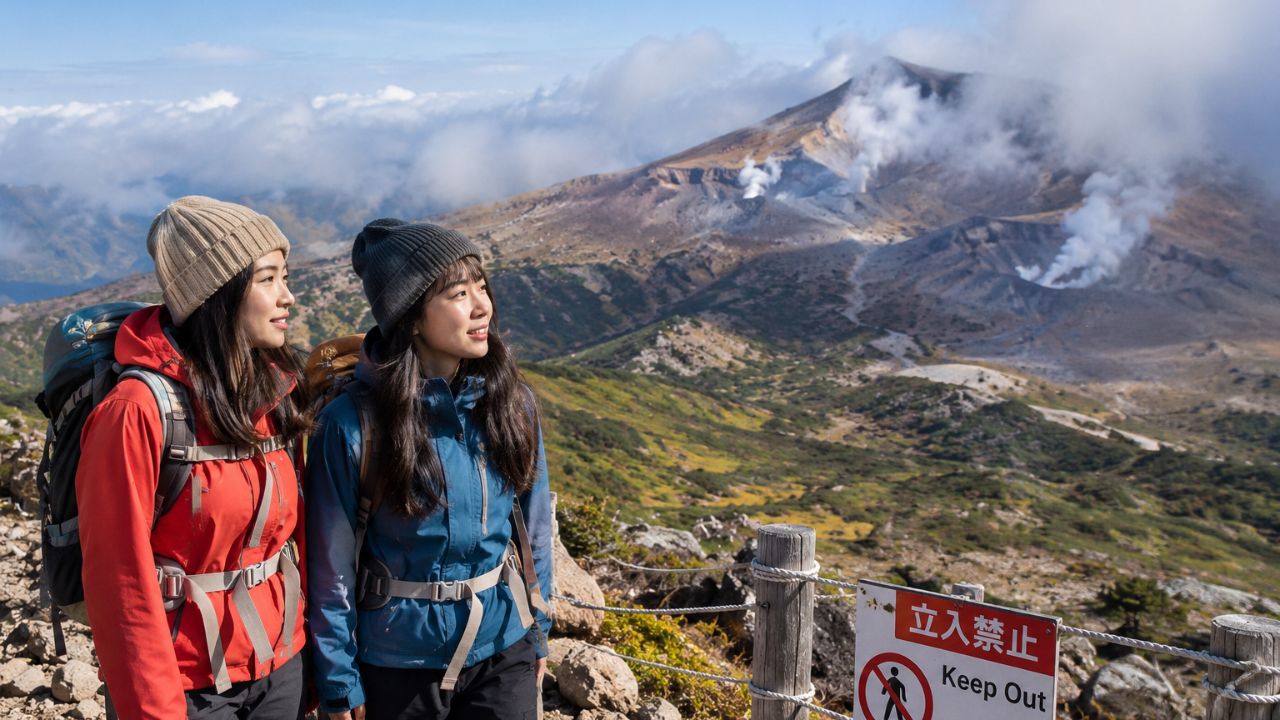
Image generated by AI
Japan has escalated the volcanic alert level for Mount Tokachidake in central Hokkaido to Level 3 following a surge in volcanic earthquakes, forcing immediate closures of alpine hiking trails, hot spring resorts, and scenic mountain roads during the peak autumn travel season.
HOKKAIDO, Japan — Japanese meteorological officials have placed Mount Tokachidake under a Level 3 volcanic alert, restricting public access within three kilometres of the active crater following an intensification of underground seismic activity. The warning, issued by the Japan Meteorological Agency (JMA) on September 12 at 9:30 a.m. local time, moves the volcano from Level 2 to Level 3 on Japan's five-point scale. The decision triggers immediate entry bans around key access points, disrupting outdoor activities across one of northern Japan's primary autumn tourist destinations.
The warning comes during one of the most important travel periods for Hokkaido mountain tourism. Visitors normally arrive throughout September and October for alpine hiking, scenic driving routes, volcanic landscapes, and natural hot spring experiences. While safety cordons remain strictly focused on the immediate mountain vicinity, major regional tourism hubs such as Furano and Biei remain open to travelers.
Seismic Activity Escalates Around 62-2 Crater
The Mount Tokachidake volcano alert level upgrade followed a marked rise in larger-amplitude volcanic earthquakes, indicating intensified underground pressure beneath the mountain complex.
According to monitoring information released by geologists, larger volcanic earthquakes have increased since August 17. The strongest earthquake in the recent sequence was recorded at around 8:20 a.m. on September 12. The shaking was considered strong enough to potentially be felt around the foothills of the volcano.
Mount Tokachidake has remained under close observation due to persistent volcanic signs, including elevated thermal activity. Earlier in 2026, volcanic activity around the 62-2 crater had already increased, with a small eruption reported from the crater area while the alert level remained lower at Level 2. The upgraded status reflects authority concerns that an explosive eruption impacting areas near the crater has become significantly higher, requiring stricter visitor controls.
Three-Kilometre Exclusion Zone Established Around Active Crater
Under the Level 3 volcanic warning, authorities have issued strict instructions for tourists, hikers, and local residents to stay clear of restricted zones surrounding the active crater.
The primary exclusion zone extends approximately three kilometres from the 62-2 crater, where volcanic rocks could be hurled during an explosive event.
| Safety Measure Details | Specific Situation / Parameter |
|---|---|
| Volcano Alert Level | Increased from Level 2 to Level 3 |
| Responsible Authority | Japan Meteorological Agency |
| Affected Volcano | Mount Tokachidake, Hokkaido |
| Active Area | 62-2 crater |
| Restricted Distance | Approximately three kilometres from crater |
| Main Risks | Volcanic rocks, ash, smaller volcanic fragments |
People located downwind of the volcano have also been warned about potential ash emissions and smaller volcanic fragments that could travel beyond the immediate three-kilometre crater perimeter. These preventive measures aim to safeguard travelers, mountain guides, and nearby communities from unpredictable volcanic shifts.
Peak Autumn Hiking Routes Closed Across Daisetsuzan Region
The implementation of safety restrictions has directly impacted Hokkaido adventure tourism, particularly mountain trekking across the Daisetsuzan region. Mount Tokachidake is recognized as one of Hokkaido's premier mountain destinations, attracting domestic and international travelers for its rugged alpine scenery and seasonal autumn foliage.
Following the JMA directive, hiking towards the mountain range has been prohibited from two vital trail access points:
| Trail Access Point | Current Status |
|---|---|
| Tokachidake Onsen Trailhead | Hiking prohibited |
| Fukiage Trailhead | Hiking prohibited |
The timing of these closures is critical for the local outdoor industry, as September and October represent the annual peak for autumn foliage hiking. Travelers planning excursions around Tokachidake must adjust their itineraries to bypass restricted routes and check official conditions prior to departure.
Hot Spring Resorts Face Temporary Closures and Suspended Access
The elevated volcanic alert has extended to nearby hot spring tourism facilities, which form an integral part of the Hokkaido vacation experience. Several thermal establishments near the slopes have announced temporary shutdowns following the Level 3 warning.
| Tourism Facility | Current Situation |
|---|---|
| Fukiage Onsen Health Center Hakuginso | Closed until further notice |
| Fukiage Roten-no-Yu Outdoor Bath | Closed |
| Other Tokachidake Onsen Accommodation | Remaining open with possible restrictions |
These suspensions illustrate the direct operational impact on local hospitality businesses that rely on autumn visitors seeking mountain retreats and outdoor thermal baths. However, accommodation facilities throughout the broader Tokachidake Onsen area have not undergone a complete shutdown, remaining open with heightened safety protocols.
Tokachidake Skyline Road Restrictions Alter Scenic Driving Routes
Road infrastructure near Mount Tokachidake has been modified to enforce the exclusion perimeter and keep access routes clear for monitoring personnel.
Vehicle access on the Tokachidake Skyline route has been restricted between Biei Shirogane Onsen and Tokachidake Onsen. A gate near the Fukiage junction has been closed to prevent public vehicular traffic through the affected zone.
| Transport Change | Impact on Travellers |
|---|---|
| Tokachidake Skyline access | Partial closure |
| Route between Biei Shirogane Onsen and Tokachidake Onsen | No through traffic |
| Local buses | Operating normally |
| Fukiage Roten-no-Yu stop | Temporarily unavailable |
| Hakuginso stop | Temporarily unavailable |
Public transit operators continue to run regional bus routes, though specific stops within the hazard zone have been suspended. Stops at Fukiage Roten-no-Yu and Hakuginso remain temporarily out of service. Travelers planning scenic drives across the mountain region should review real-time road reports before setting out.
Resort Destinations Furano and Biei Remain Open for Tourists
Despite the Level 3 volcano alert, tourists visiting central Hokkaido do not need to evacuate or avoid the broader tourism districts of Furano and Biei. The alert does not constitute a general evacuation directive for surrounding towns, as safety cordons focus strictly on the immediate crater slopes of Mount Tokachidake.
Both Furano and Biei remain vibrant travel destinations, offering visitors:
- Expansive autumn landscapes and rural scenic viewpoints
- Countryside agricultural tours and regional culinary experiences
- Cultural attractions and local craft markets
- Scenic low-altitude driving loops throughout the valley
Visitors should note that volcanic restrictions apply specifically to high-altitude mountain activities rather than general sightseeing across the surrounding agricultural region.
Mandatory Safety Protocols for Central Hokkaido Travelers
Travelers planning visits to central Hokkaido during the active alert period should implement several travel safeguards:
| Traveller Recommendation | Reason |
|---|---|
| Check official volcanic updates before travelling | Conditions can change quickly |
| Avoid restricted hiking routes | Entry bans are in place for safety |
| Confirm road access before driving | Mountain routes may close without notice |
| Follow local authority instructions | Safety measures may change |
| Consider alternative Hokkaido attractions | Wider tourism areas remain accessible |
Travelers are urged to rely exclusively on official updates provided by the Japan Meteorological Agency and local municipal authorities rather than unverified reports on social media.
Operational Impact and Strategic Travel Advice
Located in central Hokkaido, Mount Tokachidake is a prominent active volcano within the Daisetsuzan mountain range. While current restrictions alter access to peak trails and select hot spring baths, the wider Hokkaido transportation and hospitality network remains fully functional.
For travelers, the key takeaway is that Hokkaido remains safe for travel, provided visitors avoid the designated three-kilometre exclusion zone around Mount Tokachidake. Tourism officials continue to monitor seismic data closely, with access rules subject to revision based on volcanic developments.
FAQ: Mount Tokachidake Volcano Alert 2026
Is it safe to visit Hokkaido right now? Yes. Hokkaido remains safe for travel. The Level 3 alert and entry restrictions apply specifically to a three-kilometre radius around the 62-2 crater of Mount Tokachidake. Major towns like Furano, Biei, Asahikawa, and Sapporo are completely open.
Which hiking trails are closed at Mount Tokachidake? Hiking is strictly prohibited from the Tokachidake Onsen Trailhead and the Fukiage Trailhead. Access points leading into the Daisetsuzan range from these locations are closed to all visitors.
Are local hot springs and hotels affected by the alert? Fukiage Onsen Health Center Hakuginso and the Fukiage Roten-no-Yu Outdoor Bath are closed until further notice. Other accommodations around Tokachidake Onsen remain open, though operating under security advisories.
Related Travel Guides
Disclaimer
This article is for informational and educational purposes only. It does not constitute legal, financial, or professional advice. While we strive to provide accurate and up-to-date information, travel policies, regulations, and conditions change rapidly. Always verify information with official sources before making travel decisions. Nomad Lawyer makes no representations about the accuracy, reliability, completeness, or suitability of the information provided. Readers should consult qualified professionals for advice specific to their circumstances. The views expressed in this article are those of the author and do not necessarily reflect the views of Nomad Lawyer.
Raushan Kumar
Founder & Lead Developer
Full-stack developer with 11+ years of experience and a passionate traveller. Raushan built Nomad Lawyer from the ground up with a vision to create the best travel and law experience on the web.
Learn more about our team →