
Jackson–Medgar Wiley Evers International Airport Hits Severe Travel Turmoil as PSA Airlines, Piedmont, and Delta Cancel Flights and Trigger Delays Across Major United States Routes: New Travel Alert
Flight cancellations and delays hit Jackson–Medgar Wiley Evers International Airport (JAN), affecting connections to Charlotte, Dallas, Atlanta, and Washington.

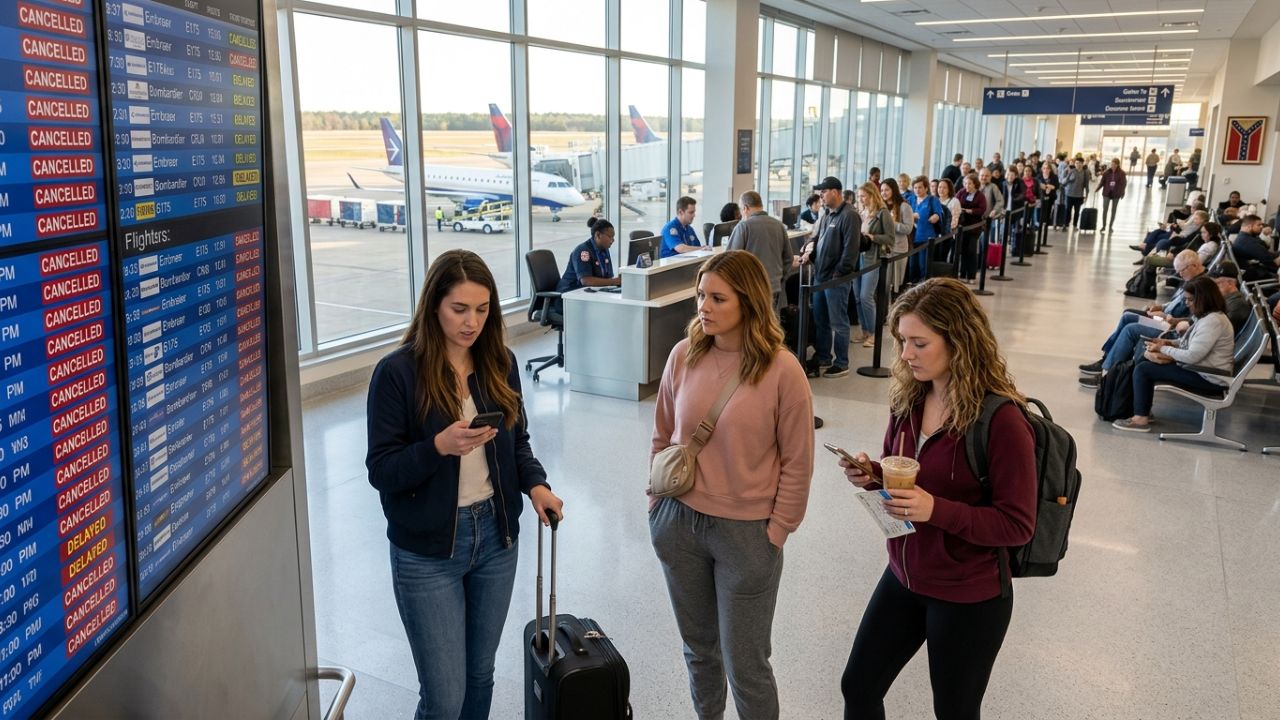
Image generated by AI
Published on June 20, 2026
A significant aviation disruption is unfolding in Mississippi as Jackson–Medgar Wiley Evers International Airport experiences significant flight cancellations and delays, stranding hundreds of passengers. The operational bottlenecks are impacting major routes connecting the state with key domestic aviation hubs across the country, including Charlotte, Dallas, Atlanta, and Washington. Travelers are encountering sudden schedule changes, extended wait times, and missed connections, forcing airport staff and airlines to continuously adjust operations.
Quick Summary
- Five Direct Cancellations: A combined total of 5 flights were canceled at Jackson–Medgar Wiley Evers International Airport.
- Carrier Breakdown: PSA Airlines canceled 2 flights (11% of operations), Piedmont canceled 2 flights (100% of operations), and Delta canceled 1 flight (8% of operations).
- Numerous Delayed Services: PSA Airlines recorded 8 delays, while Delta Air Lines faced 2 delays amid local operational challenges.
- Wider Route Impact: The cancellations extended to key hubs, causing 2 cancellations in Charlotte and individual cancellations in Dallas, Atlanta, and Washington.
- Delay Complications: Delayed flights in Houston and Nashville added to the regional travel turmoil, creating widespread layover disruptions.
According to recent flight tracking data, Jackson–Medgar Wiley Evers International Airport became the epicenter of a localized travel disruption. Grounded in the interconnected nature of the United States air grid, the flight cancellations and delays have triggered a ripple effect across regional networks. With passenger volumes remaining high, the sudden removal of flight capacity highlights the fragility of regional air routes and the importance of checking real-time flight statuses before departing.
Event and Incident Details: Flight Cancellations and Delays Disrupt Jackson–Medgar Wiley Evers International Airport
The operational disruptions at Jackson–Medgar Wiley Evers International Airport have resulted in a total of 5 flight cancellations across three major airlines. According to recent data from FlightAware, Piedmont Airlines was the hardest hit in terms of scheduled service preservation, canceling 2 flights which represented a 100% cancellation rate of its operations at the airport. PSA Airlines also canceled 2 flights, which represented 11% of its scheduled service, while experiencing 8 flight delays.
In addition to regional carriers, major trunk airlines faced similar challenges. Delta Air Lines canceled 1 flight, representing 8% of its operations at JAN, and recorded 2 delayed services. These disruptions quickly extended beyond Mississippi, impacting key connecting points across the country. In the broader network, Charlotte experienced 2 flight cancellations, while Dallas, Atlanta, and Washington each recorded individual cancellations that disrupted travel plans for transiting passengers.
| Airline / Carrier | Cancelled Flights (JAN) | Delayed Flights (JAN) | Impact on Scheduled JAN Operations |
|---|---|---|---|
| PSA Airlines (AAL) | 2 flights | 8 flights | 11% of scheduled flights cancelled; significant passenger backlogs |
| Piedmont (AAL) | 2 flights | 0 flights | 100% of scheduled flights cancelled; complete route suspension |
| Delta Air Lines | 1 flight | 2 flights | 8% of scheduled flights cancelled; moderate delays |
This concentration of cancellations at Jackson–Medgar Wiley Evers International Airport underscores the airport's role as the primary center of disruption, leaving passengers to face extended rebooking wait times across major routes.
Risk and Impact: How Jackson–Medgar Wiley Evers International Airport Disruptions Ripple Nationwide
The flight cancellations and delays at Jackson–Medgar Wiley Evers International Airport have had a direct impact on several key transit corridors. Because the airport serves as a primary link between Mississippi and major domestic hubs, the sudden cancellation of flights creates immediate capacity bottlenecks. This makes it difficult for passengers to secure timely rebookings, particularly on high-demand business and holiday routes.
Key risks and operational impacts resulting from this travel turmoil include:
- Hub Delays: Delayed flights in Houston and Nashville have stalled connecting itineraries, causing passengers to miss downstream flights.
- Complete Route severing: The cancellation of a scheduled service to Washington completely severed direct connectivity on that route for the day.
- Missed Connections in Key Gateways: Individual cancellations in Dallas and Atlanta have disrupted passengers transiting through these primary aviation hubs.
- Extended Airport Wait Times: With PSA Airlines experiencing 8 delays, passengers at the airport faced longer wait times and crowded terminals.
This structural shock in the regional flight network demonstrates how easily minor scheduling issues can propagate throughout the domestic US airspace.
What Authorities and Airlines Are Saying
Airport management and airline representatives have urged affected passengers to remain in communication with their carriers to coordinate rebookings. Spokespersons for the airlines noted that in order to maintain safety, they must actively modify schedules and itineraries when operational constraints arise. Staff at Jackson–Medgar Wiley Evers International Airport continue to adjust flight schedules to minimize further disruption and distribute passenger flows.
Airlines emphasize that they are making every effort to accommodate passengers on subsequent flights or offer alternative transit routes. They advise travelers not to panic and to utilize digital customer service portals to avoid long queues at the airport information counters.
Practical Traveler Advice: How to Manage Flight Cancellations
If you are traveling through Jackson–Medgar Wiley Evers International Airport or expect to connect through affected hubs, consider these actionable steps:
- Monitor Flight Statuses Regularly: Check the airline's mobile app or website before leaving for the airport to receive real-time schedule updates.
- Head to the Service Desk or Call Immediately: If your flight is canceled, queue at the airport desk while calling the customer support line simultaneously to secure a faster response.
- Know Your Passenger Rights: Review the airline's cancellation policy to see if you are eligible for meal vouchers, hotel accommodations, or refunds.
- Consider Alternate Travel Routes: Ask if you can be rebooked on flights from nearby airports or consider using alternative regional transit if the delay is extensive.
- Maintain Flexibility: Keep your travel plans flexible, particularly when booking connecting flights through major hubs like Charlotte, Dallas, or Atlanta.
Broader Context: The Interconnected Nature of US Aviation Networks
This travel turmoil highlights the high sensitivity of regional air networks to even small disruptions. When a regional airport like Jackson suffers five cancellations and multiple delays, the operational impacts are felt across the country. Because routes to hubs like Charlotte, Dallas, Atlanta, and Washington rely on the timely arrival and departure of inbound aircraft, a delay in one city quickly creates a backlog that affects subsequent flights. This event demonstrates the complexity of maintaining airline schedules during periods of high demand.
What to Expect Next: Restoring Normal Service Levels
Airlines are working to clear passenger backlogs and restore normal operations over the next 24 to 48 hours. Ground crews and gate agents are focusing on helping travelers secure rebookings on alternative routes or next-day flights. Travelers should expect some residual delays as aircraft are repositioned to their correct starting points across the domestic network.
Conclusion Paragraph
The severe travel disruptions at Jackson–Medgar Wiley Evers International Airport underscore the importance of traveler preparedness and flexibility. By tracking airline announcements, understanding customer rights, and staying calm, passengers can successfully navigate sudden flight changes. Staying updated through official channels remains the best strategy for ensuring a safe and successful journey.
Related Travel Guides
- United States Holiday Congestion: Peak Fourth of July Travel Demand Sparks Severe Highway Traffic Across Florida, Los Angeles, and East Coast Cities: New Travel Alert
- California State Parks Enforce Strict Access: How the Burney Falls Reservation System Travel Impact Transforms Northern California Waterfall Tourism and Road Trip Itineraries: New Travel Alert
- United States Families and Road Trippers Pivot: How to Manage Budget Summer Travel in the United States Amid Soaring Gas Prices and Rental Costs: New Travel Alert
FAQ
How many flights were canceled at Jackson–Medgar Wiley Evers International Airport?
A combined total of 5 flights were canceled across multiple airlines, including PSA Airlines, Piedmont, and Delta Air Lines.
Which airline experienced the highest cancellation rate?
Piedmont Airlines experienced a 100% cancellation rate, canceling both of its scheduled services at the airport.
Which cities were most affected by these flight disruptions?
The primary affected routes and connecting hubs included Charlotte, Dallas, Atlanta, Nashville, Washington, and Houston.
What should passengers do if their flight is canceled or delayed?
Passengers are advised to check flight statuses regularly via the airline’s mobile app or website, contact customer support lines, and remain flexible regarding alternative routes.
Where was the flight information for this travel alert sourced?
The travel alert metrics and flight tracking data were manually sourced from FlightAware's official flight monitoring platforms.
Disclaimer
This article is for informational and educational purposes only. It does not constitute legal, financial, or professional advice. While we strive to provide accurate and up-to-date information, travel policies, regulations, and conditions change rapidly. Always verify information with official sources before making travel decisions. Nomad Lawyer makes no representations about the accuracy, reliability, completeness, or suitability of the information provided. Readers should consult qualified professionals for advice specific to their circumstances. The views expressed in this article are those of the author and do not necessarily reflect the views of Nomad Lawyer.
Raushan Kumar
Founder & Lead Developer
Full-stack developer with 11+ years of experience and a passionate traveller. Raushan built Nomad Lawyer from the ground up with a vision to create the best travel and law experience on the web.
Learn more about our team →