Italy Travel Unlocks Authentic Holidays With Vespa Rides And Vintage Fiat 500 Adventures

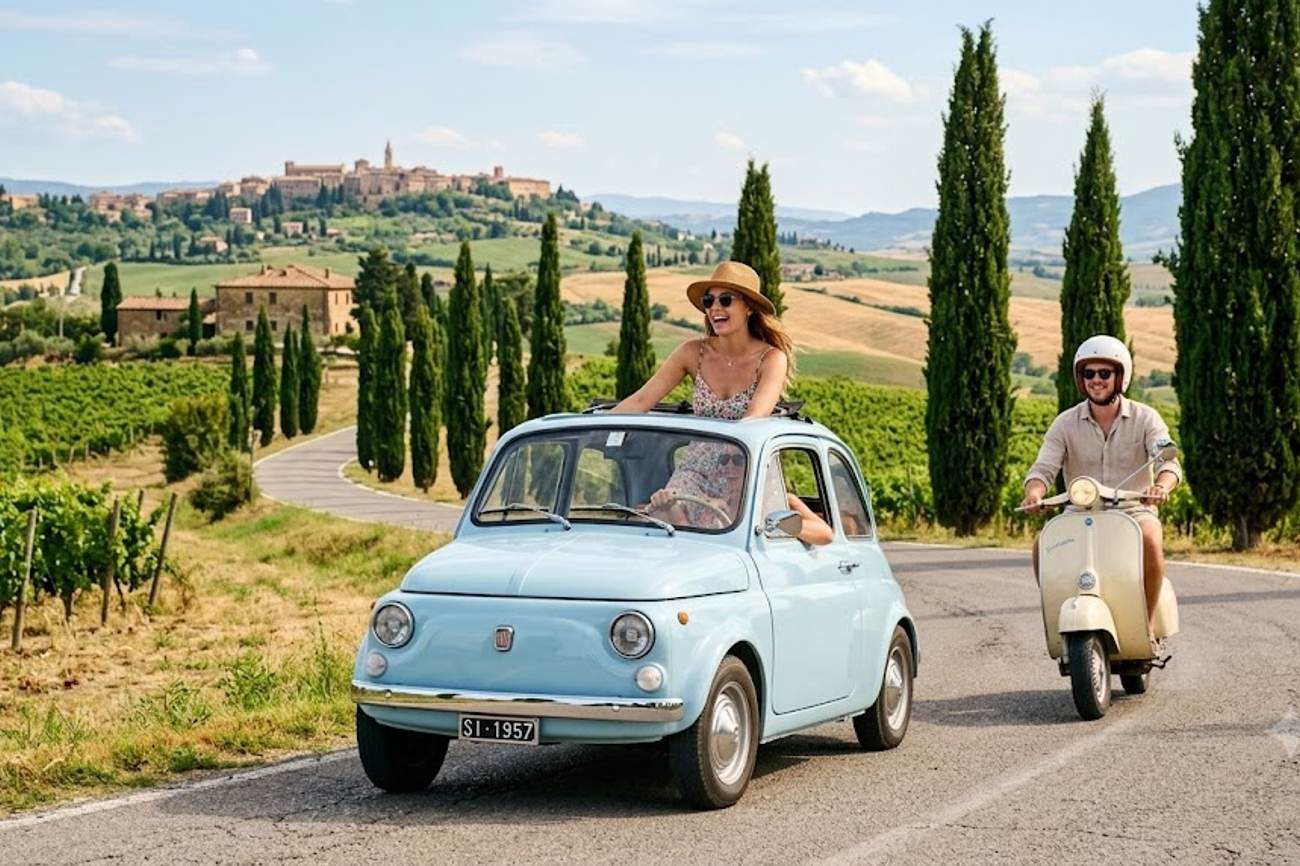
Image generated by AI
[Rome, May 2024] — The Italian national tourism authority is aggressively promoting the rental of vintage Fiat 500s and classic Vespas to shift international visitor patterns toward "slow travel" and rural exploration. This strategic push aims to decouple tourism from congested urban centers and redirect traveler spending toward small-scale regional businesses and hidden landmarks.
The initiative, coordinated through the Italian National Tourism Board (ENIT), positions these iconic mobility symbols not merely as transport, but as cultural tools for immersive heritage experiences. By incentivizing the use of compact, historic vehicles, Italy seeks to alleviate the pressure on traditional sightseeing routes while offering tourists a nostalgic, self-paced alternative to organized bus tours and public transit.
The Shift Toward Heritage Mobility
The catalyst for this movement is a documented rise in demand for "authentic" travel. Modern tourists are increasingly rejecting sanitized, high-volume tour packages in favor of experiences that facilitate direct interaction with local communities. The Italian government is leveraging the global recognition of the Vespa and the Fiat 500 to capitalize on this trend.
These vehicles are specifically marketed to bridge the gap between major city hubs and the underserved rural periphery. By utilizing scooters and compact vintage cars, travelers can navigate narrow medieval alleyways and remote hillside roads that are physically inaccessible to standard rental cars or tour coaches. This operational shift is designed to distribute the economic benefits of tourism more equitably across the Italian peninsula, moving revenue from the "big three" cities—Rome, Florence, and Venice—into the agrarian and coastal heartlands.
Markets and Routes Impacted
The promotion of classic rentals targets several specific geographic clusters and traveler demographics. The impact is most pronounced in regions where infrastructure favors small-vehicle navigation.
| Region | Primary Vehicle | Target Experience |
|---|---|---|
| Tuscany | Vintage Fiat 500 | Vineyard circuits and medieval village hopping |
| Campania/Amalfi | Vespa | Coastal cliffside navigation and urban agility |
| Liguria | Vespa / Fiat 500 | Maritime village exploration and narrow coastal roads |
| Mediterranean Isles | Vespa | Local market access and remote beach discovery |
Affected Traveler Profiles:
- Luxury & Romantic Travelers: High-end couples utilizing Fiat 500s for photography-centric "slow escapes."
- Adventure Tourists: Solo or duo travelers using Vespas to bypass public transport schedules.
- Cultural Historians: Visitors seeking a tactile connection to 20th-century Italian industrial design.
Practical Traveler Advisory and Strategic Insights
For the average tourist, this initiative translates into a shift in how logistics are handled for an Italian itinerary. Moving away from the Trenitalia rail network or standard rental agencies requires a different set of preparations and risk assessments.
Practical Impact Assessment:
- Booking Lead Times: Because the fleet of authentic vintage Fiat 500s and classic Vespas is finite, "walk-in" rentals are becoming obsolete. Travelers must now secure bookings months in advance, particularly for the summer peak (June–August).
- Licensing and Legalities: This is not a "hop-on" service. International drivers must ensure their licenses are valid for the specific class of vehicle. For many non-EU citizens, an International Driving Permit (IDP) is a mandatory requirement to avoid heavy fines or rental denials.
- Insurance Complexity: Vintage vehicles do not carry the same standardized insurance as a modern Hertz or Avis rental. Travelers must scrutinize policies for "vintage-specific" coverage, as deductibles for classic cars can be significantly higher than for modern economy vehicles.
- Navigation Changes: Switching to a Vespa or Fiat 500 encourages "off-map" exploration. This means travelers are more likely to encounter roads not fully indexed on standard GPS, requiring a higher reliance on local knowledge and physical maps.
Italy's rich history and stunning landscapes make it an ideal destination for travelers, with many opting for unique experiences like Vespa rides and vintage Fiat 500 adventures to explore the countryside. For the most up-to-date information on travel requirements and regulations, visitors can check the official Italian Government Tourist Board website. This resource provides valuable insights and tips for planning an authentic Italian holiday.
The Roadmap for Sustainable Tourism
The long-term goal of this mobility push is the promotion of sustainable, decentralized tourism. By encouraging the use of small-footprint vehicles, Italy is attempting to reduce the environmental and physical impact of massive tour buses on fragile historic centers.
The "Slow Travel" philosophy embedded in this program encourages visitors to stay longer in one region rather than rushing through five cities in ten days. When a traveler rents a Vespa, they are statistically more likely to stop at a family-run trattoria in a village of 200 people rather than a tourist-trap restaurant in a city center. This creates a sustainable economic loop where the tourist's spend directly supports the preservation of rural Italian life.
Furthermore, the promotion of these vehicles serves as a living museum. By keeping the Fiat 500 and Vespa in active circulation, Italy preserves its industrial heritage while simultaneously using it as a marketing engine to attract a younger, "experience-driven" demographic of travelers.
FAQ: Classic Italian Rentals 2024
Do I need a special license to rent a Vespa in Italy? Yes. You cannot ride a Vespa with a standard driver's license if the engine displacement exceeds the limits of your current permit. Most rentals require a valid motorcycle license. Always check if an International Driving Permit (IDP) is required for your specific nationality.
Are vintage Fiat 500s safe for long-distance travel? While restored to high standards, vintage cars lack modern safety features like airbags or advanced ABS. They are best suited for scenic, regional exploration rather than high-speed motorway (Autostrada) travel. Plan routes through provincial roads for the best experience.
How far in advance should I book a classic vehicle? For the peak summer season or romantic holidays (like Valentine's Day or honeymoon periods), booking 3 to 6 months in advance is recommended. Availability for authentic vintage models is extremely limited compared to modern fleets.
What happens if the vehicle breaks down in a rural area? Most authorized rental providers include a roadside assistance package. However, because these are vintage machines, parts may not be immediately available. Ensure your rental agreement explicitly outlines the towing and replacement vehicle protocol before signing.
Italy is trading the tour bus for the scooter, betting that nostalgia is the fastest way to a traveler's heart.
Related Travel Guides
This article is for informational purposes. Flight routes, passenger regulations, visa rules, and transit advisories are subject to change by airlines and aviation authorities. Readers are advised to verify schedules and travel documentation with relevant carriers and border agencies before departure.
Related Stories
AI Algorithmic Bias Drives Overcrowding in Florence and Europe's Iconic Hubs in 2026

Sicily, Tuscany and Piedmont: Italy's Luxury Vineyard Escapes Attract US Travelers in 2026