Italy Pair Up With Austria and More as Europe’s Coach Travel Revival Unlocks Multi Country Tourism Growth and Hidden Destinations

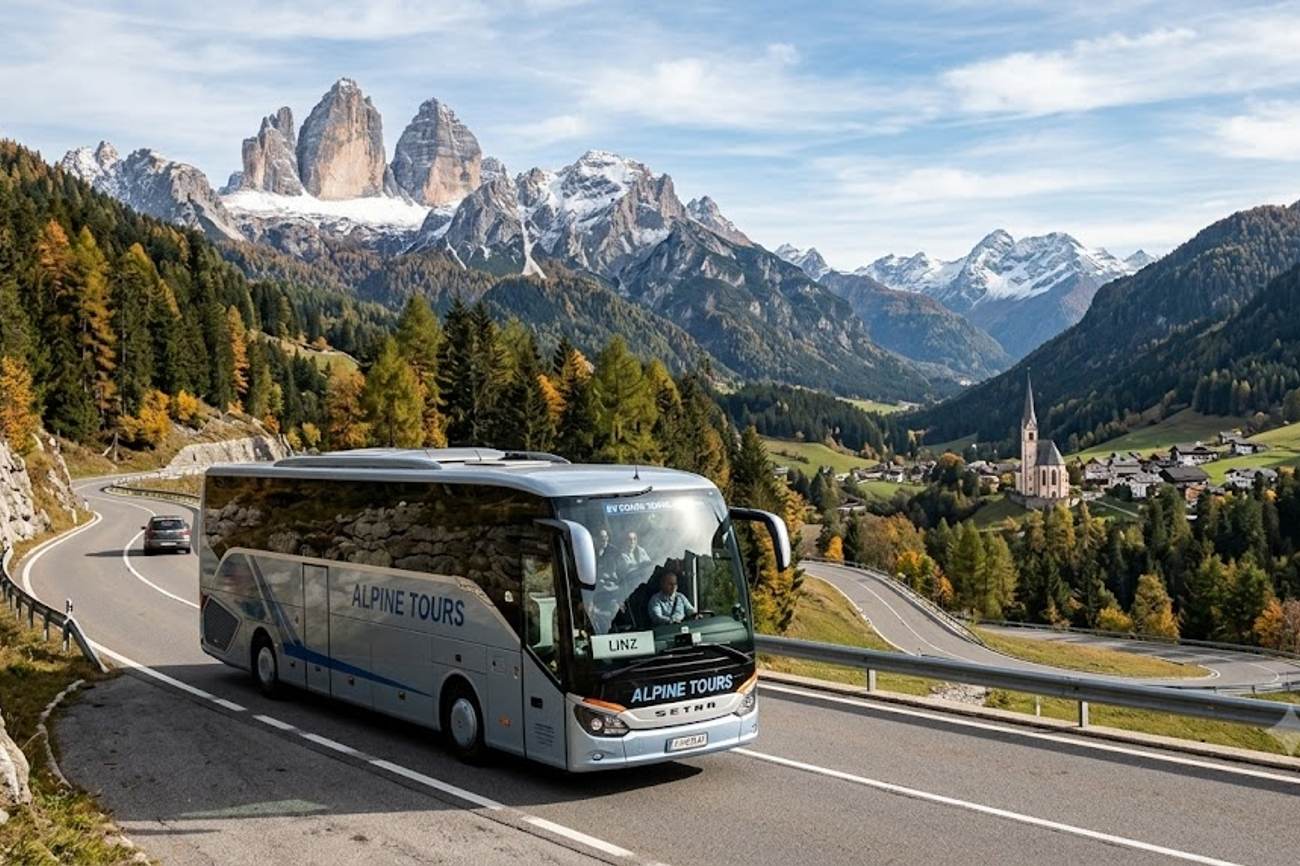
Image generated by AI
[Rome, May 2025] — Italy, Austria, and France are spearheading a strategic revival of European coach travel to unlock multi-country tourism growth and redirect visitor traffic toward underserved regional destinations. This coordinated shift in transport infrastructure aims to alleviate pressure on primary urban hubs while expanding the economic benefits of tourism into rural and cultural hinterlands.
The initiative leverages a surge in international demand for affordable, connected transit options that allow travelers to traverse multiple borders within a single itinerary. By integrating modern coach networks, these three nations are bridging the gap between iconic capitals and lesser-known scenic regions, effectively transforming the traditional "city-hop" model into a comprehensive regional exploration.
The Catalyst for Coach Integration
The primary driver behind this revival is the saturation of "over-tourism" in primary European gateways. As cities like Venice and Paris struggle with extreme visitor density, the Italian National Institute of Statistics (ISTAT) and other regulatory bodies are identifying a need to distribute tourism spending more equitably across national territories.
Coach travel provides a scalable solution to this logistical challenge. Unlike rail, which is often bound by rigid station infrastructure, or aviation, which concentrates arrivals in a few massive hubs, coach networks can be flexibly routed to reach small villages, Alpine communities, and archaeological sites. This flexibility is coinciding with a broader trend toward sustainable and budget-conscious travel, where visitors prioritize seeing more of the continent without the cost and carbon footprint of multiple short-haul flights.
Markets and Routes Under Expansion
The network is designed to create a seamless corridor across Western and Central Europe, focusing on the following key hubs and regional connections:
| Country | Primary Connection Hubs | Strategic Tourism Focus |
|---|---|---|
| Italy | Rome, Florence, Venice, Pompeii, Capri, Lake Maggiore | UNESCO heritage, coastal tourism, and rural gastronomy |
| Austria | Alpine regions, historic city centers, Central European transit corridors | Nature-based tourism and mountain culture |
| France | Paris, regional gateways to Southern Europe | International arrivals and cross-border logistics |
In Italy, the impact is already visible in the data. In 2024, the country recorded 458.4 million tourist overnight stays, a 2.5% increase over the previous record year. Crucially, international visitors accounted for more than 250 million of these stays—representing over 50% of total demand. This massive influx of foreign travelers is the primary engine driving the demand for multi-region transport solutions.
Austria is utilizing its geographic position as the "heart of Europe" to act as a transit bridge. By linking the French and Italian markets, Austria is expanding its reach beyond traditional winter sports, promoting its Alpine communities and historic cities as essential stops on a larger European tour.
France continues to serve as the primary gateway for global arrivals. With Paris functioning as the main entry point, the French government is focusing on road connections that funnel international tourists away from the capital and toward the south and east, strengthening the link between Western and Southern Europe.
Practical Traveler Advisory and Strategic Insights
For the modern nomad or tourist, this revival translates into a fundamental shift in how European trips are structured. The "hub-and-spoke" model—where a traveler stays in one city and takes day trips—is being replaced by linear, multi-country itineraries.
Direct Passenger Impacts:
- Lower Entry Costs: Travelers can now access high-value destinations like Tuscany or the Austrian Alps without the expense of car rentals or premium rail passes.
- Access to "Hidden" Gems: Destinations that were previously difficult to reach without a private vehicle, such as smaller villages in Lake Maggiore or rural Austrian provinces, are now integrated into standard tour routes.
- Simplified Border Crossing: The integration of these networks reduces the logistical friction of moving between France, Austria, and Italy.
- Extended Stays: Because coach travel allows for a slower pace of movement, there is a projected increase in the average length of stay in regional accommodation businesses.
However, travelers should remain vigilant regarding French transit. Current shifts in French public finances may lead to changes in infrastructure investment. This could result in fluctuations in public charges, updated tourist fees, or changes in taxes associated with transport services within French borders.
Infrastructure and Economic Outlook
The long-term goal of this coach revival is the decentralization of the tourism economy. By moving visitors from the "big three" (Rome, Paris, Vienna) into the countryside, these nations are supporting local SMEs and regional hospitality providers.
In Italy, the Ministry of Tourism is focusing on routes that specifically target Pompeii and the Tuscan countryside to ensure that the 54.6% of overnight stays currently held by non-residents are spread across more provinces. In Austria, [Statistics Austria](https://www.statistik Austria.at) is monitoring visitor flows to ensure that the growth in nature-based tourism does not overwhelm fragile Alpine ecosystems.
The next phase of this rollout involves the integration of more digital booking platforms and "intermodal" ticketing, where a single pass might cover a coach journey from Paris to Vienna and a local shuttle to a mountain resort. As France optimizes its budgetary costs and prioritizes public spending, the efficiency of these cross-border road networks will depend heavily on government-led infrastructure investments.
FAQ: European Coach Travel 2025
Is coach travel a viable alternative to trains for multi-country trips? Yes. While trains are faster between major cities, coaches provide direct access to rural areas and smaller towns (like those in Tuscany or the Alps) that lack rail stations, often at a significantly lower price point.
Which countries are currently the most integrated into this network? Italy, Austria, and France are the primary drivers, creating a corridor that connects Western Europe's gateways with Central Europe's mountains and Southern Europe's heritage sites.
Will this affect the cost of visiting major cities like Paris or Rome? The cost of the cities themselves remains stable, but the cost of reaching the surrounding regions is decreasing, making it more affordable to combine a city visit with a rural exploration.
Are there any new taxes or fees I should know about? Travelers should monitor updates from the French government, as adjustments to public finances may lead to new infrastructure fees or changes in transport taxes for international visitors.
The era of the isolated city-break is ending; the era of the connected continent has arrived.
Related Travel Guides
- Austria Aligns With Switzerland and Other Major Markets as International Tourism Dependence Reveals a New Travel Divide
- France Debt Set for Highest Since 1978 as €54 Billion Fiscal Plan Shapes Travel and Tourism Outlook
- Oman Pairs Up With UAE And More Middle Eastern Countries In Stronger Investment Controls To Build A Safer Tourism Economy
This article is for informational purposes. Flight routes, passenger regulations, visa rules, and transit advisories are subject to change by airlines and aviation authorities. Readers are advised to verify schedules and travel documentation with relevant carriers and border agencies before departure.
Related Stories

European Mass Protests Disrupt Travel Across France, Italy, Belgium, and Turkey in 2026

Sicily, Tuscany and Piedmont: Italy's Luxury Vineyard Escapes Attract US Travelers in 2026