International Tourism Dependence Reveals a New Travel Divide

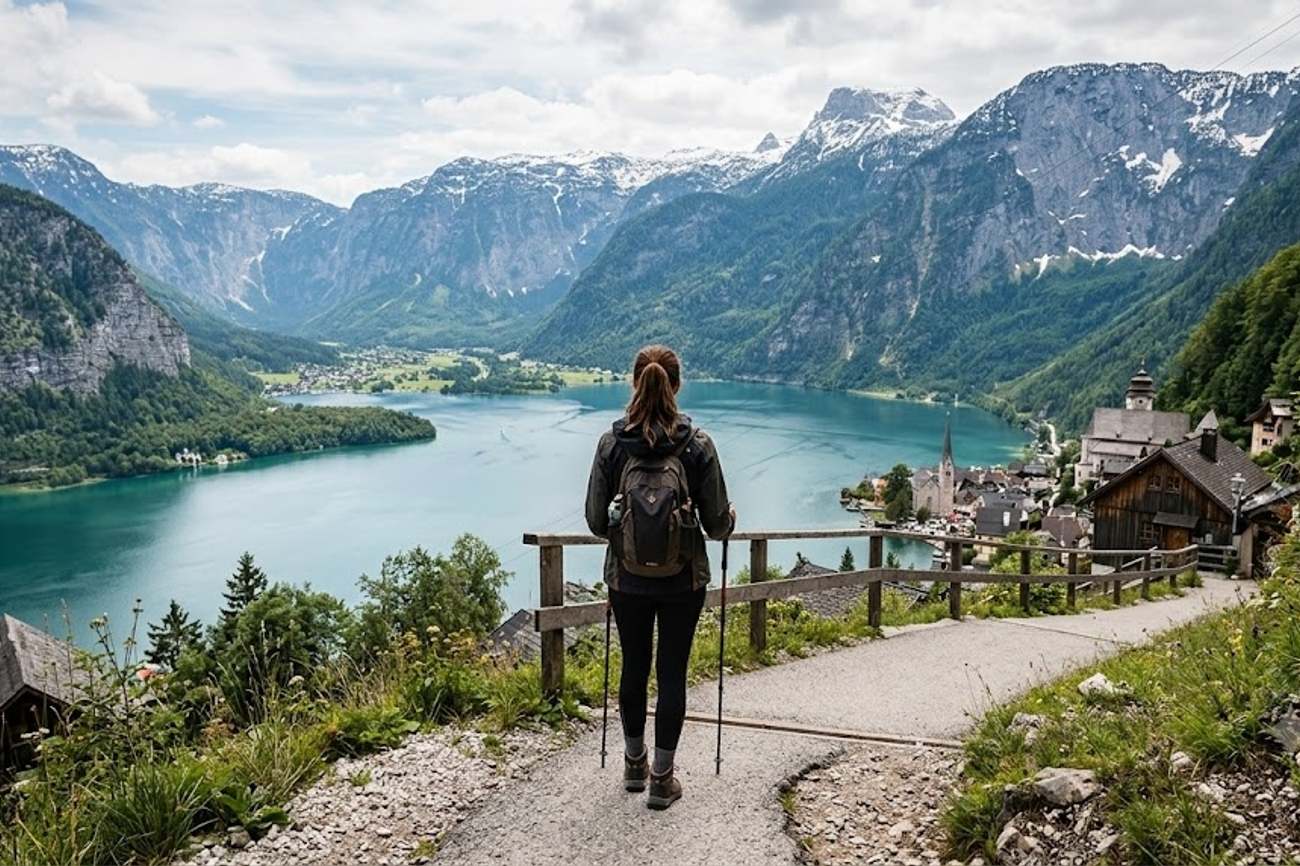
Image generated by AI
Austria manages a staggering 17.1 overnight stays for every single one of its residents, a ratio that reveals a tourism intensity far beyond what its modest population suggests. While larger neighbors like Germany and France rely heavily on their own citizens to fill hotel rooms, Austria operates as a true international magnet, with non-residents accounting for 74.3% of its 157.29 million accommodation nights in 2025.
The Shift in Central European Travel Rhythms
The current state of European travel is not a monolith; it is a fragmented map of domestic loyalty versus international dependence. In 2025, the European Union recorded nearly 3.1 billion nights across all tourist accommodations, but the way these nights are distributed tells a story of diverging economic models. We are seeing a clear split between "volume markets" and "intensity markets."
France and Germany are the giants of volume. France recorded 471.7 million accommodation nights in 2025, and Germany followed closely with 442.1 million. However, these numbers are heavily padded by domestic travel. In Germany, specifically during the first quarter of 2026, foreign guests represented only about one-fifth of all nights. This means the German tourism engine is largely fueled by its own people, creating a stable internal market that is less susceptible to global geopolitical shocks.
Austria and Switzerland, conversely, are the intensity markets. Austria’s 2025 data shows 48.17 million arrivals resulting in 157.29 million overnight stays. The sheer concentration of visitors is most evident in Tyrol and Salzburg, which together absorbed 80.92 million nights—more than half of the entire country's total. This creates a unique pressure on infrastructure and a highly seasonal rhythm that differs sharply from the urban flow of Vienna, which recently crossed the 20-million-night threshold for the first time.
What Makes the Alpine Core Different
The experience of visiting the Alpine region is defined by a high-value, high-density model. Switzerland exemplifies this, recording 43.93 million hotel nights in 2025, with 51.8% coming from international guests. Unlike the sprawling domestic tourism of France—where INSEE recorded a massive 847.5 million nights including non-commercial stays with friends and family—the Swiss and Austrian models are built on commercial, high-yield hospitality.
The financial disparity is stark. France generated US$77.0 billion in international travel receipts in 2024, leveraging its global brand. Austria, while smaller, still pulled in US$26.3 billion. Germany’s position is the most paradoxical: it earned US$40.1 billion from international visitors in 2024, but its residents spent a whopping US$116.8 billion traveling abroad, leaving a negative international travel balance of US$76.7 billion.
For the traveler, this means that while France feels like a global crossroads, Austria and Switzerland feel like curated destinations. The reliance on foreign visitors—specifically Germans, who accounted for 58.55 million nights in Austria in 2025—means the service industry in the Alps is hyper-tuned to international expectations, often more so than in the domestic-heavy regions of Germany.
Visitor Insider Tips
To navigate these regions without feeling like part of the mass statistics, you need to time your movements against the domestic calendars of the neighboring countries.
Avoid the German Wave Since German visitors are the primary drivers of Austrian tourism (58.55 million nights in 2025), avoid the Tyrol and Salzburg regions during German school holidays and the "Brückentage" (bridge days) surrounding public holidays. To find silence in the Alps, visit in the "shoulder" weeks of late September or early December.
Vienna’s New Scale With Vienna now exceeding 20 million nights annually, the city center is increasingly crowded. Base yourself in the 7th district (Neubau) or the 9th district (Alsergrund) to experience the city's intellectual and artistic pulse away from the primary tourist corridors.
The Swiss Value Hack Switzerland’s high-value model means prices are steep. To experience the country like a local, utilize the Swiss Travel Pass for seamless transitions between trains, boats, and buses. Focus on the smaller valleys of the Graubünden region rather than the overcrowded Interlaken circuit.
French Regionalism In France, move beyond the commercial accommodation hubs. The difference between the 465.4 million commercial nights and the 847.5 million total nights recorded by INSEE shows that the real France is found in "non-market" stays. Rent a gîte in the Auvergne or the Dordogne to escape the high-volume corridors.
Cultural and Environmental Context
The extreme "tourism intensity" seen in Austria—17.1 nights per resident—creates a complex relationship between locals and visitors. When a small population hosts a disproportionately large number of guests, the environmental footprint per capita skyrockets. In Tyrol and Salzburg, the concentration of over 80 million nights puts immense pressure on Alpine ecosystems and traditional village structures.
In France, the challenge is one of distribution. The massive volume of 471.7 million nights often clusters around a few iconic sites, leading to "overtourism" in Paris and the Riviera, while rural provinces struggle for visibility. This has led to a push toward "slow tourism" and the preservation of heritage sites through UNESCO guidelines, ensuring that the commercialization of the landscape does not erase the cultural identity of the regions.
Germany's model is more sustainable in terms of local integration, as the high percentage of domestic travelers (~80% in early 2026) means the tourism industry is essentially a dialogue between different regions of the same culture. However, the negative travel balance of US$76.7 billion suggests that Germans view the world as their playground, contributing significantly to the tourism economies of their neighbors while maintaining a more reserved, domestic-focused approach at home.
FAQ: Visiting Central Europe 2026
What is the best time to visit the Austrian Alps? To avoid the massive influx of German tourists, visit in late September or early November. You will find lower accommodation prices and significantly shorter queues at cable cars and mountain huts.
Is Switzerland too expensive for a budget traveler? It is high-value, but manageable. Stick to hostels, use the official Switzerland Tourism guides for free walking tours, and purchase food from Coop or Migros supermarkets rather than dining out for every meal.
How do I get from Vienna to the Tyrol region? The ÖBB Railjet is the most efficient method. It connects Vienna to Innsbruck in about 4.5 hours, offering a scenic transition from the urban capital to the high Alps without the stress of Alpine driving.
Is France safe for solo travelers? Yes, France is very safe for solo travelers. Stick to well-lit areas in major cities and use official transport apps. For a more intimate experience, explore the smaller towns in the Loire Valley or Provence.
The data proves that while France and Germany provide the scale, it is the Alpine intensity of Austria and Switzerland that defines the luxury and rhythm of the European getaway.
Related Travel Guides
- France Debt Set for Highest Since 1978 as €54 Billion Fiscal Plan Shapes Travel and Tourism Outlook
- Oman Pairs Up With UAE And More Middle Eastern Countries In Stronger Investment Controls To Build A Safer Tourism Economy
- Vietnam’s Sun PhuQuoc Airways Unlocks New Tourism Growth With Asia’s Best Leisure Airline Award
This article is for informational purposes. Flight routes, passenger regulations, visa rules, and transit advisories are subject to change by airlines and aviation authorities. Readers are advised to verify schedules and travel documentation with relevant carriers and border agencies before departure.
Related Stories

Spain and France Lead Global Winter Tourism Rankings 2026 as Seasonal Travel Shifts

Austria Simplifies Digital Receipt Rules for Businesses and Travelers Starting October 2026