
Italian National Tourism Board ENIT Targets Austrian and North American Markets as Atri Promotes Off-Grid Abruzzo Heritage Routes
ENIT and Abruzzo Tourism highlight Atri in Teramo province, combining Basilica of Santa Maria Assunta heritage, Calanchi badlands, and Adriatic rail routes.

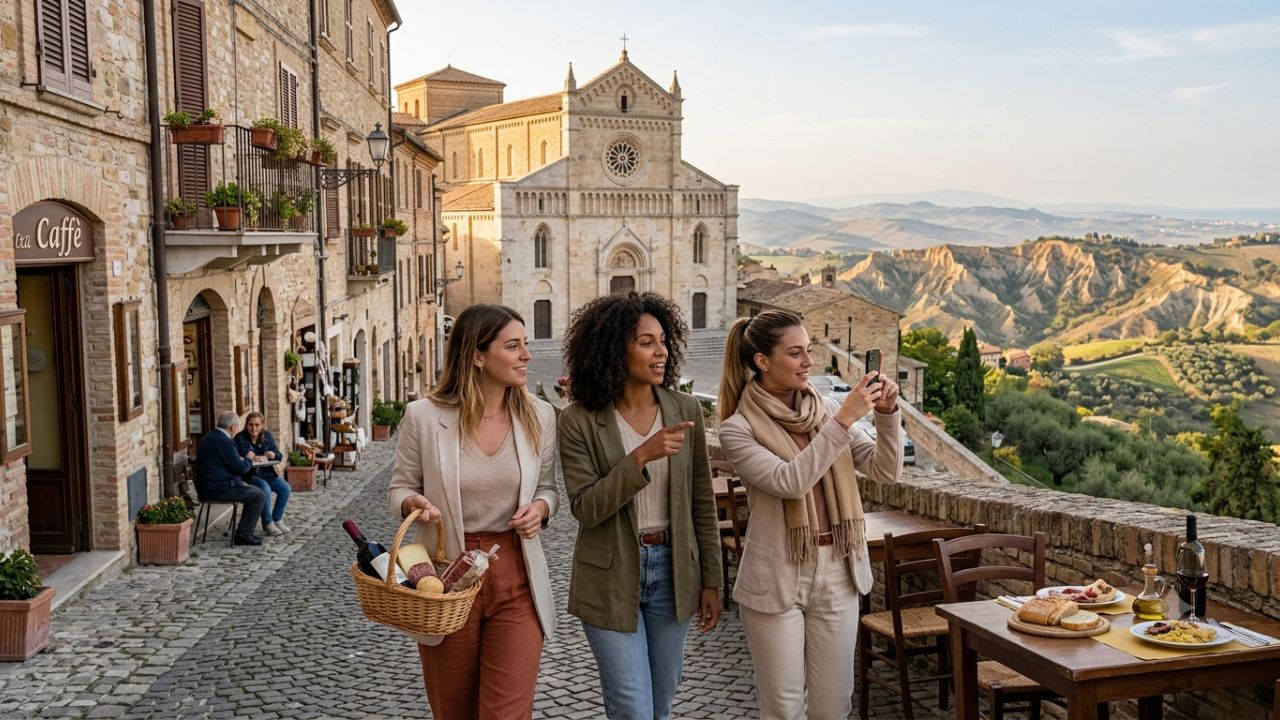
Image generated by AI
The Italian National Tourism Board (ENIT) and regional authorities in Central Italy are prioritizing off-grid destination models centered on Atri in Teramo province, drawing increased travel volume from Austria, the United States, and Canada. Positioned between the Gran Sasso mountain range and the Adriatic coast, the hilltop municipality combines Renaissance architecture at the Basilica of Santa Maria Assunta with geological ecotourism across the Calanchi di Atri Nature Reserve.
Supported by the Abruzzo Tourism Board and regional transport providers, the destination illustrates Italy's national strategy to distribute international visitor traffic away from high-density urban centers like Rome, Florence, and Venice into lesser-known rural territories.
ATRI ABRUZZO REGIONAL TOURISM & TRANSIT CORRIDORS
| Column 1 |
|---|
| [ Inbound Visitor Demand: Austria (Road/Rail), United States & Canada (Air) ] |
| +---> Air Gateways: Pescara Airport (PSR) & Rome Fiumicino (FCO) |
| +---> Rail Transit: Trenitalia Adriatic Line to Pineto-Atri / Silvi |
| +---> Road Network: A14 Autostrada Adriatica (Exit Atri-Pineto) |
| v |
| [ Atri Destinations: Basilica Assunta, Calanchi Badlands, Silvi Coast ] |
Strategic Regional Diversification Away from Overburdened City Centers
Italy's national tourism policy emphasizes geographic diversification, encouraging international travelers to explore secondary and tertiary municipalities. Located in Teramo province, Atri functions as a multi-experience hub where visitors access historical sightseeing, protected natural environments, and coastal leisure within a single regional itinerary.
Key regional advantages shaping the destination's appeal:
- Preserved Medieval Heritage: Cobblestone streets, fortified towers, and religious monuments free from mass tourism queues.
- Geological Protection: The Calanchi di Atri Nature Reserve showcases dramatic erosion-formed clay badlands protected under WWF and regional conservation management.
- Adriatic Coastal Integration: Direct proximity to coastal beach destinations including Silvi Marina and Roseto degli Abruzzi.
- Regional Culinary Identity: Abruzzese gastronomy centered on handcrafted maccheroni alla chitarra, aged pecorino cheeses, and regional Montepulciano d'Abruzzo wines.
Inbound Market Dynamics: Austrian Proximity and North American Long-Haul Travel
Targeted marketing by Italian tourism authorities focuses on key international source markets seeking authentic regional travel.
Austrian Road and Rail Mobility
Austria represents an established European market for Central and Northern Italy, supported by direct highway connections via the Brennero and Tarvisio passes, as well as EuroCity rail links. Austrian travelers demonstrate high demand for self-drive road trips, combining nature hiking in the Calanchi badlands with heritage visits and coastal stays along the Adriatic.
United States Heritage and Culinary Travel
The United States remains one of Italy's largest long-haul source markets. American travelers increasingly seek secondary Italian destinations that offer immersive cultural experiences. Atri provides US visitors with accessible medieval history, traditional food production tours, and boutique lodging that fits into broader multi-city itineraries connecting Rome with the Adriatic coast.
Canadian Extended Leisure Demand
Canadian visitors represent a growing long-haul segment interested in extended regional stays and community-based travel. Canadian travelers frequently combine gateway arrivals in Rome with rail or rental car travel through Abruzzo, exploring historic architecture, regional parks, and coastal communities.
Atri and Abruzzo Regional Tourism Matrix
The table below outlines key tourism assets in Atri and Teramo province, detailing cultural value, primary target source markets, and transport infrastructure links:
| Tourism Element | Cultural & Ecological Value | Primary Target Source Market | Infrastructure & Transit Link |
|---|---|---|---|
| Historic Center of Atri | Medieval urban planning, palaces & ancient cisterns | US, Canada, Austria | TUA Regional Bus from Pineto / Silvi |
| Basilica of Santa Maria Assunta | Romanesque-Gothic cathedral with Renaissance frescoes | US, Canada, European Culture | Short walk from central Piazza Duomo |
| Calanchi di Atri Reserve | Protected geological clay badlands & biodiversity | Austria, Germany, Nature Explorers | 10-minute drive from Atri center |
| Abruzzese Gastronomy | Traditional food routes & regional wine tasting | US, Canada, Austria | Local trattorias & estate vineyards |
| Silvi Marina Coastline | Sandy Adriatic beaches & seaside promenades | Austria, Domestic Italian | 15-minute bus / drive east via SP28 |
| Roseto degli Abruzzi | Coastal resort town & marine transport hub | European Leisure Travelers | Trenitalia Adriatic Line Rail Station |
Cultural Heritage and Ecotourism Assets: Basilica Assunta and Calanchi Badlands
Atri's cultural centerpiece is the Basilica of Santa Maria Assunta, constructed between the 13th and 14th centuries. The cathedral features a blend of Romanesque and Gothic architectural elements, housing a 15th-century choir fresco cycle created by Renaissance master Andrea De Litio. The site draws art historians and heritage enthusiasts seeking preserved Italian sacred art outside major metropolitan museums.
Complementing its historical assets, the Calanchi di Atri Nature Reserve encompasses over 380 hectares of protected terrain. The landscape features dramatic badland formations (calanchi) created by centuries of soil erosion on clay hillsides. The reserve provides structured walking and mountain biking trails, allowing nature travelers to explore unique geological formations and native flora under guided conservation protocols.
CALANCHI DI ATRI ECOTOURISM TRAIL ARCHITECTURE
| Column 1 |
|---|
| [ Protected 380-Hectare WWF Nature Reserve Area ] |
| +---> Geological Badland Trails (Clay Formations & Erosion Scenery) |
| +---> Guided Ecotourism & Mountain Biking Routes |
| +---> Educational Visitor Center & Native Flora Protection |
| v |
| [ Low-Impact Sustainable Nature Travel in Central Italy ] |
Traveler Logistics Guide: Accessing Atri via Rail, Road, and Air Corridors
Independent travelers planning journeys to Atri and the wider Abruzzo territory can manage regional transit using the following multi-modal guidelines:
ATRI & ABRUZZO PUBLIC TRANSIT LOGISTICS GUIDE
| [ Entry Gateways: Pescara Airport (PSR) or Rome Fiumicino (FCO) / Ciampino (CIA) ] |
|---|
| +---> Step 1: Rail - Trenitalia Adriatic Line to Pineto-Atri Station |
| +---> Step 2: Road - A14 Autostrada Adriatica (Exit Atri-Pineto) |
| +---> Step 3: Bus - TUA Local Bus from Pineto Station to Atri Hilltop |
| +---> Step 4: Express Coach - ProntoBus / FlixBus Direct from Rome Airport |
Rail Transit via Trenitalia Adriatic Line
- Target Stations: Mainline regional trains operating along the Trenitalia Adriatic Line (Bologna–Rimini–Pescara–Bari corridor) stop at Pineto-Atri station and Silvi station.
- Connecting Bus Link: From Pineto-Atri or Silvi rail stations, local TUA (Società Unica Abruzzese di Trasporto) buses run frequent hilltop feeder services up to central Atri (15-20 minute ascent).
- Ticketing: Purchase regional train tickets via the Trenitalia mobile app or station kiosks. Validate physical tickets prior to boarding.
Air Gateways and Express Coaches
- Pescara Abruzzo Airport (PSR): Located 30 kilometers south of Atri, PSR handles regional European flights. From Pescara Central Rail Station, frequent regional trains connect to Pineto-Atri in 20 minutes.
- Rome Airport Gateways (FCO / CIA): Long-haul travelers arriving at Rome Fiumicino or Ciampino airports can take direct intercity coaches—such as ProntoBus or FlixBus—operating from Rome directly across the Apennine mountains to Pescara or Teramo (2.5-hour transit).
Highway and Self-Drive Routes
For visitors navigating by car:
- A14 Autostrada Adriatica: Take the Atri-Pineto exit. From the toll gate, follow provincial road SP28 uphill for 10 kilometers directly into Atri's historic center.
- Parking Logistics: Vehicles are restricted within Atri's central ZTL (Zona a Traffico Limitato). Drivers should use designated public parking lots located along the municipal perimeter (e.g., Parcheggio Sant'Antonio).
Infrastructure Impact and Regional Economic Resilience in Teramo Province
Promoting secondary destinations like Atri yields measurable economic benefits for regional communities across Teramo province. Spreading visitor footfall beyond overcrowded coastal strips channels tourist expenditure directly into small-scale hospitality businesses, family-owned agricultural estates, and local craft workshops.
Furthermore, tourism revenues support municipal preservation efforts for historical monuments like the Basilica of Santa Maria Assunta while funding environmental protection programs across the Calanchi badlands. This integrated regional approach establishes a sustainable travel framework that preserves local heritage while strengthening Central Italy's tourism economy.
FAQ: Atri Abruzzo Tourism & Regional Italy Travel 2026
Where is Atri located in Italy?
Atri is a historic hilltop town located in Teramo province within the Abruzzo region of Central Italy, situated between the Apennine mountains and the Adriatic coast.
How do travelers reach Atri by train?
Travelers can take a Trenitalia regional train along the Adriatic line to Pineto-Atri or Silvi station, then transfer to a local TUA bus for a 15-minute ride up to Atri's historic center.
What is the Calanchi di Atri Nature Reserve?
The Calanchi di Atri is a protected 380-hectare nature reserve known for its erosion-formed clay badland landscapes, featuring guided hiking and mountain biking trails.
What are the main cultural sites in Atri?
The primary cultural landmark is the 13th-century Basilica of Santa Maria Assunta, renowned for its Romanesque-Gothic architecture and 15th-century Renaissance choir frescoes.
Related Travel Guides
Disclaimer
This article is for informational and educational purposes only. It does not constitute legal, financial, or professional advice. While we strive to provide accurate and up-to-date information, travel policies, regulations, and conditions change rapidly. Always verify information with official sources before making travel decisions. Nomad Lawyer makes no representations about the accuracy, reliability, completeness, or suitability of the information provided. Readers should consult qualified professionals for advice specific to their circumstances. The views expressed in this article are those of the author and do not necessarily reflect the views of Nomad Lawyer.
Kunal K Choudhary
Co-Founder & Contributor
A passionate traveller and tech enthusiast. Kunal contributes to the vision and growth of Nomad Lawyer, bringing fresh perspectives and driving the community forward.
Learn more about our team →