
Israel Aligns With US And Other Countries To Deploy Quantum Border Defences Against Next-Gen Cyber Attacks
Israel Aligns With US And Other Countries To Deploy Quantum Border Defences Against Next-Gen Cyber Attacks

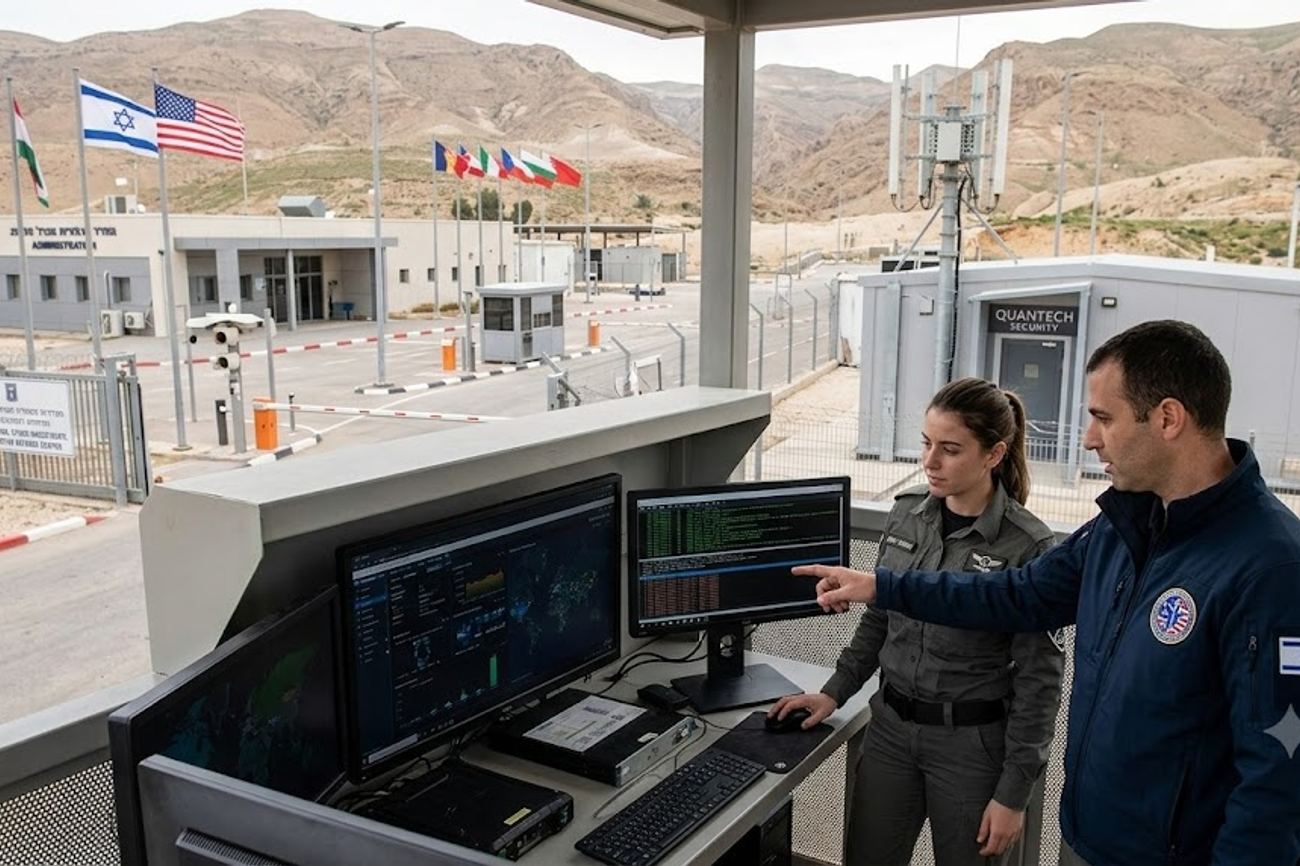
Image generated by AI
[Washington D.C., May 2024] — The United States, Israel, Singapore, and Switzerland have launched an urgent deployment of quantum-resistant cryptographic protocols to prevent state-sponsored actors from grounding global commercial aviation. National security taskforces are racing to secure critical digital border infrastructures as hostile entities aggressively harvest encrypted passenger databases and air traffic logs for future decryption.
The crisis stems from a "harvest-now-decrypt-later" strategy employed by state-sponsored threat actors. These groups are currently intercepting sensitive biometric passenger logs and air traffic management data streams, storing the encrypted information until quantum computing capabilities evolve sufficiently to break legacy asymmetric encryption. To counter this, the Federal Aviation Administration (FAA) and other international regulators are mandating a transition to lattice-based post-quantum algorithms and zero-trust cryptographic modules.
The Quantum Decryption Threat
The immediate trigger for this international mobilization is the inherent vulnerability of legacy communication channels. Much of the global aviation network relies on unauthenticated data links and unencrypted automatic broadcasts. These architectural weaknesses allow malicious actors to execute spoofing attacks, generate "ghost flights" in air traffic control systems, and compromise the continuity of border control operations.
Because traditional encryption cannot withstand advanced quantum decryption, the aviation industry faces a systemic risk. If a cryptanalytically relevant quantum computer becomes operational before these systems are upgraded, the integrity of global air traffic management could collapse, leading to catastrophic system-wide ground stops.
Nations Leading the Migration
Four key nations have established specific frameworks to bridge the preparedness gap. These countries are prioritizing "cryptographic agility," allowing them to swap out vulnerable encryption methods for quantum-safe alternatives without requiring a total redesign of aircraft fleets.
| Country | Lead Authorities | Core Framework Focus | Key Milestone |
|---|---|---|---|
| United States | CISA, NSA, FAA, TSA | CNSA 2.0 compliance & zero-trust legacy upgrades | Drop-in quantum-safe hardware deployment |
| Israel | INCD, IAI | AI-driven border defense & critical infrastructure hardening | National Cybersecurity Strategy (2025–2028) |
| Singapore | CSA, GovTech, IMDA | Mandatory CII migration & readiness metrics | Plans due March 2027; full transition by 2031 |
| Switzerland | FOCA, ESA partners | Space-backed Quantum Key Distribution (QKD) corridors | EAGLE-1 low-earth-orbit satellite initiative |
The Cybersecurity and Infrastructure Security Agency (CISA) is currently guiding the U.S. transition toward CNSA 2.0 compliance, focusing on the rapid deployment of hardware that can be "dropped in" to existing legacy systems to neutralize real-time interception risks.
Practical Traveler Advisory and Strategic Insights
For the average passenger, these upgrades occur in the digital background, but the implications for travel continuity are significant.
Data Privacy Risks If you have traveled internationally in recent years, your biometric data and passport details may have already been intercepted by state actors. While this data is currently encrypted, the "harvest-now-decrypt-later" tactic means your personal information is sitting in foreign databases awaiting the arrival of quantum decryption.
Flight Continuity The primary goal of these upgrades is to avoid "ground stops." Without quantum-resistant security, a single successful breach of air traffic control could force regulators to ground entire fleets to prevent mid-air collisions or security breaches, leading to massive delays and cancellations.
Border Processing Travelers may notice updates to biometric kiosks and border control hardware. The transition to zero-trust modules ensures that the data transmitted between your passport and the government database cannot be spoofed or altered by external actors.
Securing the Skies via Satellite
While terrestrial fiber-optic networks provide the backbone for airport security, they are often insufficient for securing remote oceanic airspace or challenging geographical terrains. To solve this, European aviation taskforces are integrating space-based technologies.
Switzerland and its partners are leveraging the EAGLE-1 low-earth-orbit satellite initiative to implement Quantum Key Distribution (QKD). This system uses the laws of quantum mechanics to transmit tamper-proof encryption keys directly to ground control stations and aircraft in transit. Because any attempt to intercept a quantum key alters its state, the system provides an unhackable communication channel that remains secure regardless of geopolitical instability or terrestrial infrastructure failure.
Regulatory Enforcement and Timelines
To prevent operational complacency, governments are moving away from voluntary guidelines and toward strict administrative mandates. Regulatory bodies are now enforcing binding milestones and requiring comprehensive cryptographic asset inventories from all transport authorities.
In Singapore, for example, the Cyber Security Agency (CSA) has set a hard deadline for migration plans by March 2027, with a full systemic transition required by 2031. These deadlines are designed to ensure that the migration is complete before quantum computers reach the capability to break current standards. Failure to meet these milestones may result in penalties for infrastructure operators.
FAQ: Aviation Quantum Security 2024
Is my current flight data safe? Current data is protected by legacy encryption, which is secure against today's computers. However, it is vulnerable to future quantum decryption if intercepted now. Governments are deploying new protocols to stop this "harvesting" process.
Will these security upgrades cause flight delays? No. The transition focuses on "drop-in" hardware and software updates to existing systems. These upgrades are designed to happen without disrupting daily flight operations or requiring aircraft to be taken out of service.
What is "Quantum Key Distribution" (QKD)? QKD uses satellites and lasers to send encryption keys. Because of quantum physics, if a hacker tries to eavesdrop on the key, the key changes, alerting the system and making the intercepted data useless.
Which airports are upgrading first? Priority is being given to major international hubs in the U.S., Israel, Singapore, and Switzerland, as these serve as primary digital borders for global transit.
The race between quantum decryption and aviation defense is now a matter of national security.
#US-FAA #Singapore-CSA #CISA #QuantumCryptography #AviationSecurity2024 #EAGLE-1
Related Travel Guides
- Machchafushi Discover The Unbelievable Multi-Sensory Luxury Escape Redefining Mindful Eco-Travel In Maldives
- US Healthcare Jobs Face AI Revolution: EMTs and Paramedics Among 10 Professions With Near-Zero Replacement Risk
- Qatar Airways Overtakes Emirates And Gulf Rivals With Award-Winning Premium Experience, Strong Connectivity And Advanced Onboard Services
Disclaimer
This article is for informational and educational purposes only. It does not constitute legal, financial, or professional advice. While we strive to provide accurate and up-to-date information, travel policies, regulations, and conditions change rapidly. Always verify information with official sources before making travel decisions. Nomad Lawyer makes no representations about the accuracy, reliability, completeness, or suitability of the information provided. Readers should consult qualified professionals for advice specific to their circumstances. The views expressed in this article are those of the author and do not necessarily reflect the views of Nomad Lawyer.
Naina Thakur
Contributor & Travel Specialist
Travel enthusiast and legal writer covering visa regulations, responsible tourism, and cultural journeys across global destinations.
Learn more about our team →