
UAE Ras Al Khaimah Accelerates Flying Vehicle Future With New Advanced Air Mobility Test Zone For Smart Travel
UAE Ras Al Khaimah Accelerates Flying Vehicle Future With New Advanced Air Mobility Test Zone For Smart Travel

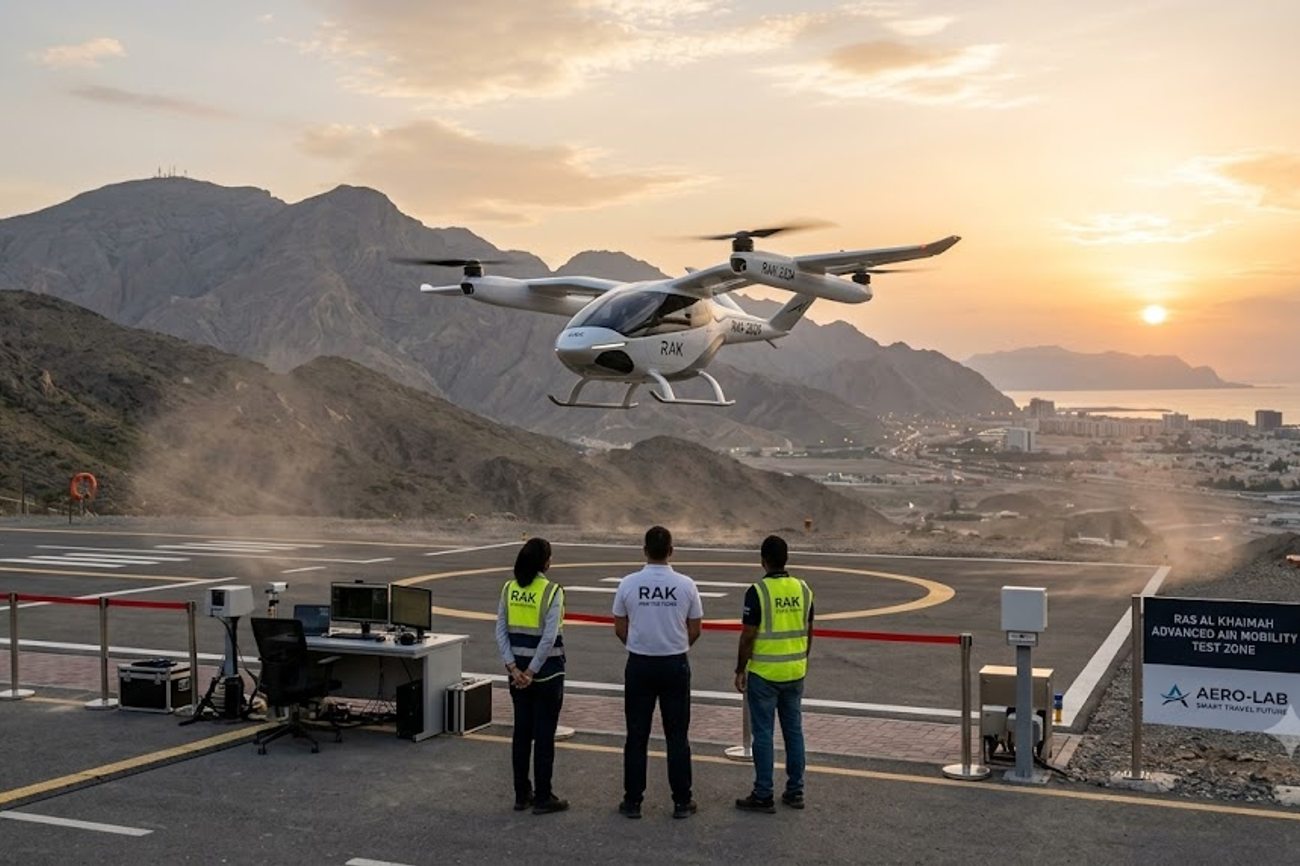
Image generated by AI
[Ras Al Khaimah, September 18, 2026] — The Emirate of Ras Al Khaimah has officially launched a dedicated advanced air mobility (AAM) test zone to transition flying car technology from isolated demonstrations to rigorous operational trials.
The initiative is the result of a formal agreement signed between the Ras Al Khaimah Transport Authority (RAKTA), the RAK Department of Civil Aviation, and Aridge, a Chinese AAM firm affiliated with XPeng. This strategic partnership establishes a controlled environment where aircraft performance, safety protocols, and airspace integration can be analyzed in real-time before any wide-scale public implementation.
The Shift to Operational Testing
The creation of this test zone represents a fundamental pivot in the emirate's aviation strategy. While previous efforts focused on "proof of concept" flights, the current phase prioritizes the systemic requirements of urban air mobility. On September 10, 2025, the Ras Al Khaimah Transport Authority conducted an initial trial flight with XPENG AEROHT at the Al Jazirah Aviation Club, which served as a baseline for the technology's viability.
Under the new 2026 agreement, Aridge assumes the role of founding partner and will be the first entity to maintain a permanent operational presence within the zone. Unlike previous one-off demonstrations, Aridge is deploying a dedicated specialist team and a fleet of aircraft to the emirate. This allows for organized, repetitive testing cycles that simulate actual transport scenarios rather than curated exhibitions.
The primary objective is to move the technology through a structured pipeline: from initial demonstrations to validation, and finally to operational trials. This process is being monitored closely by the RAK Department of Civil Aviation and other UAE regulatory bodies to ensure that every flight meets stringent safety benchmarks.
Scope of Impact and Integration
The test zone is designed to evaluate how flying vehicles interact with existing airspace and the specific infrastructure required to support them. The focus is not merely on the aircraft themselves, but on the "ecosystem" of flight, including communication links, emergency override systems, and traffic management.
The following sectors are identified as the primary beneficiaries of this technology:
- Tourism: Connecting high-end resorts, islands, and mountain retreats.
- Logistics: Accelerating freight transport and last-mile delivery.
- Emergency Services: Reducing response times for medical evacuations and disaster relief.
- Passenger Transit: Creating high-speed alternatives to congested road networks.
The potential for tourism is particularly high given the emirate's diverse geography. Visitors currently navigate between beaches, desert landscapes, and the peaks of Jebel Jais via road. Electric aircraft could drastically reduce these transit times, adding a new layer of luxury and efficiency to the visitor experience. This aligns with current growth trends; the Ras Al Khaimah Tourism Development Authority reported a record-breaking first half of 2026, with visitor counts exceeding 670,000.
What This Means for Travelers
For the average traveler or business nomad, there is no immediate change to current booking options, as commercial passenger services have not yet been approved. However, the infrastructure being built now dictates the travel experience of the next 24 months.
The "15-Minute" Promise: The most significant impact will be the proposed corridor between Dubai and Ras Al Khaimah. Through a separate partnership involving Joby Aviation and Skyports Infrastructure, officials aim to launch a passenger air-taxi network by 2027. A journey from Dubai International Airport to Al Marjan Island, which currently takes over an hour by car, is projected to take less than 15 minutes via air taxi.
New Infrastructure (Vertiports): Travelers will soon see the emergence of "vertiports"—specialized hubs for electric vertical take-off and landing (eVTOL) aircraft. A framework agreement signed in November 2025 between RAKTA and Skyports Infrastructure outlines the development of four initial vertiports. Al Marjan Island is slated to be the first location, with subsequent hubs targeting key tourism zones.
The Roadmap to 2027
The transition from the current test zone to a functioning air-taxi network follows a strict timeline. The 2026 phase is dedicated to the "microscope" stage: examining airspace requirements and technology readiness. Only after the General Civil Aviation Authority (GCAA) and local regulators validate these trials will the project move toward public utility.
The synergy between the Aridge test zone and the Joby/Skyports infrastructure project creates a dual-track approach. While Aridge focuses on the technical validation of flying vehicles, the Skyports agreement ensures the physical ground infrastructure—the vertiports—is ready to receive them.
By integrating aircraft testing, regulatory oversight, and infrastructure development simultaneously, Ras Al Khaimah is attempting to bypass the fragmented rollout seen in other global cities. The goal is a seamless transition where a passenger can land at a major international airport and transfer directly to an eVTOL for a rapid transit to a remote resort.
FAQ: Ras Al Khaimah Air Mobility 2026
Can I book a flying car or air taxi in Ras Al Khaimah right now? No. Current activities are limited to testing and operational trials. Commercial passenger services are not yet approved, though a passenger air-taxi network is targeted for launch in 2027.
Where will the air taxis land and take off? They will use "vertiports." A network of four is planned, with Al Marjan Island designated as the first location. Other sites will include key tourism areas like Jebel Jais.
How much faster is an air taxi compared to a car from Dubai? Official projections suggest a flight from Dubai International Airport to Al Marjan Island will take less than 15 minutes, compared to over 60 minutes by road.
Who is regulating the safety of these flying vehicles? The RAK Department of Civil Aviation and other UAE federal regulators are overseeing all trials to establish safety standards and airspace procedures before public use.
The sky is no longer the limit; it is the new highway.
#RAKTA #Aridge #XPeng #eVTOL #AlMarjanIsland #DubaiToRAK2027
Related Travel Guides
- Texas Steps Up With Florida And More US Places In Becoming Tourist Magnets Through AI Innovations And Smart Hospitality Systems
- Philippines Department of Tourism Launches Open Data Dashboard Tracking 4.41 Million International Arrivals and Economic Growth Metrics
- PATA and ATTIA Sign Landmark MoU to Accelerate Travel Technology Innovation and Digital Transformation Across Asia Pacific
Disclaimer
This article is for informational and educational purposes only. It does not constitute legal, financial, or professional advice. While we strive to provide accurate and up-to-date information, travel policies, regulations, and conditions change rapidly. Always verify information with official sources before making travel decisions. Nomad Lawyer makes no representations about the accuracy, reliability, completeness, or suitability of the information provided. Readers should consult qualified professionals for advice specific to their circumstances. The views expressed in this article are those of the author and do not necessarily reflect the views of Nomad Lawyer.
Raushan Kumar
Founder & Lead Developer
Full-stack developer with 11+ years of experience and a passionate traveller. Raushan built Nomad Lawyer from the ground up with a vision to create the best travel and law experience on the web.
Learn more about our team →