
Qatar Airways Overtakes Emirates And Gulf Rivals With Award-Winning Premium Experience, Strong Connectivity And Advanced Onboard Services
Qatar Airways Overtakes Emirates And Gulf Rivals With Award-Winning Premium Experience, Strong Connectivity And Advanced Onboard Services

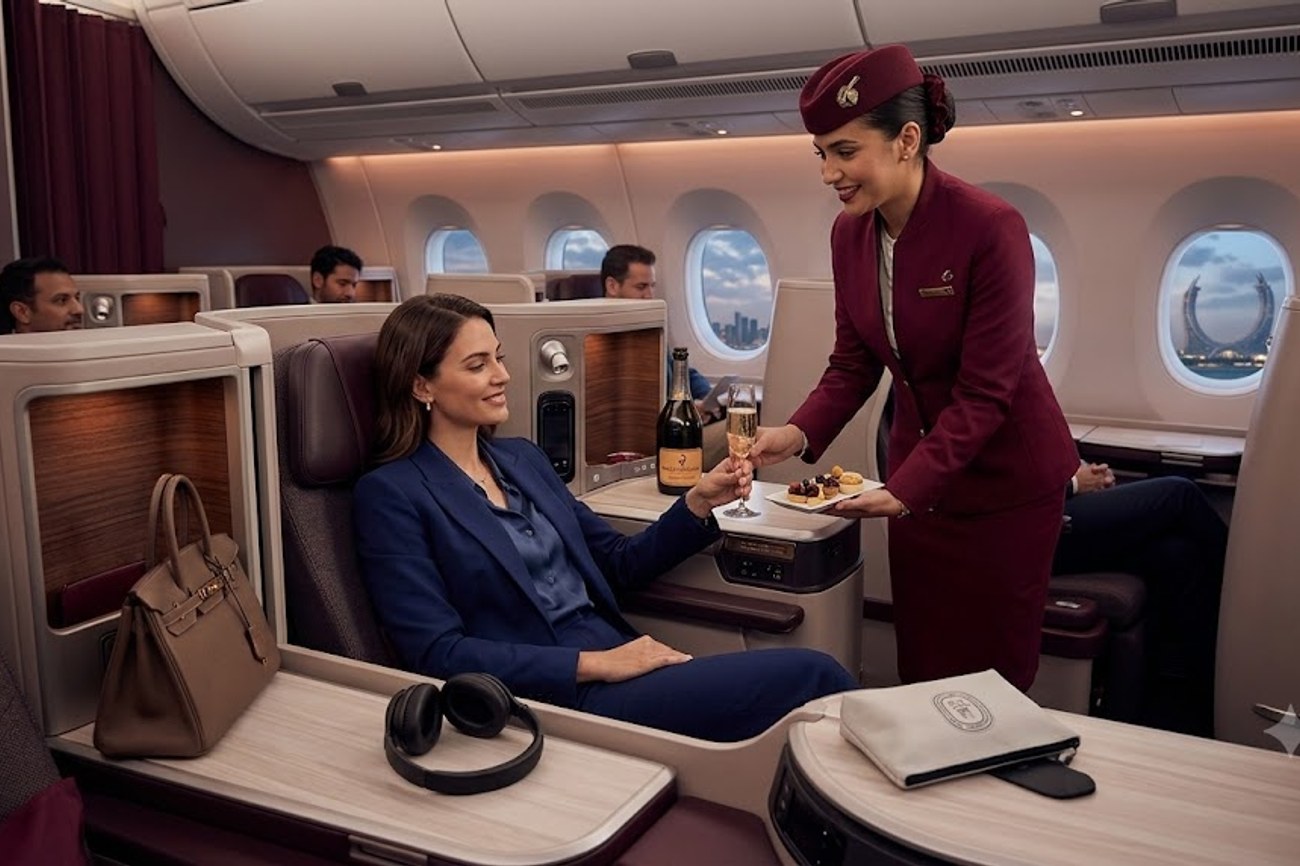
Image generated by AI
While most travelers view a layover as a chore, the Gulf’s aviation titans have turned the transit experience into a destination in itself, with Qatar Airways currently holding the 2026 Skytrax title for the World’s Best Business Class Airline. This shift represents a broader regional strategy where the flight is no longer just a means of transport, but a high-stakes competition in luxury, digital integration, and hospitality.
The New Era of Gulf Aviation Dominance
The aviation landscape in the Middle East is undergoing a massive consolidation of power and prestige. By 2026, the region has moved beyond simply offering "luxury" to redefining the entire passenger journey. Carriers like Qatar Airways, Emirates, Saudia, Etihad Airways, Oman Air, and Gulf Air are no longer just competing on route maps; they are battling for the title of the world's most sophisticated travel ecosystem.
Qatar Airways has currently claimed the lead in this premium race. Their success is anchored in the Qsuite, a product that effectively blurred the line between Business and First Class by introducing sliding doors and flexible seating. This commitment to privacy and precision has earned them the top spot in the 2026 Skytrax rankings. Simultaneously, the airline has solved one of the greatest pain points of long-haul travel by securing the award for World’s Best Onboard WiFi, acknowledging that for the modern nomad, connectivity is as essential as oxygen.
Meanwhile, the UAE's powerhouses continue to scale. Emirates has leveraged its massive Airbus A380 fleet to maintain a dominant international network, reporting a staggering volume of over 8.6 million passengers during the peak July and August window of 2026. In Abu Dhabi, Etihad Airways is aggressively expanding its footprint, with August load factors hitting 92%, signaling a nearly full house as they upgrade cabins and expand their hub.
What Makes the Gulf Carriers Different
The distinction of these airlines lies in their ability to blend extreme luxury with strategic geography. Positioned at the crossroads of Asia, Europe, Africa, and the Americas, these carriers have turned their home cities into global conduits.
Qatar Airways focuses on a "benchmark" approach to luxury. The Qsuite isn't just a seat; it is a private sanctuary featuring fully flat beds and the ability to create group seating for colleagues or family, which is a rarity in premium cabins. Their hub at Hamad International Airport is designed to facilitate seamless transfers, making Doha a strategic pivot point for global travelers.
Emirates takes a different path, focusing on the "ecosystem" of travel. From their world-renowned ice entertainment platform to their sprawling first-class suites, the experience is designed to be immersive. They treat the flight as a luxury cruise in the sky, supported by the massive tourism draw of Dubai.
Then there is the rise of Saudia. As Saudi Arabia opens its doors wider to the world, Saudia is evolving from a regional carrier into a global player. Their growth is intrinsically linked to the Kingdom's tourism ambitions, serving as the primary artery for visitors heading to Riyadh, Jeddah, AlUla, and the Red Sea region. They are leaning heavily into Middle Eastern hospitality, focusing on staff service standards to differentiate themselves from the more corporate feel of other carriers.
Oman Air and Gulf Air provide a more intimate alternative. Oman Air leverages the authentic, slower pace of Omani hospitality, positioning Muscat as a gateway for those seeking nature and cultural depth over the glitz of the larger hubs. Gulf Air continues to lean on its heritage as a pioneer of aviation in the region, focusing on high-efficiency regional connectivity.
Visitor Insider Tips
Navigating the Gulf's aviation hubs requires a different strategy than navigating European or American airports. To make the most of these experiences, keep these local nuances in mind:
Timing Your Transit If you are transferring through Doha or Dubai, aim for a layover of 8 to 12 hours. Both cities offer exceptional stopover programs that allow you to leave the airport and experience the city. For those flying Qatar Airways, check for "Stopover" packages that provide luxury hotel stays at significantly reduced rates.
Mastering the Hubs Hamad International Airport (Doha) is vast. Use the internal transit trains to save time, but leave at least 45 minutes to wander through the art installations and luxury retail. In Dubai (DXB), the A380 boarding process can be slow; arrive at your gate early to avoid the rush, especially during the peak summer months.
Dining and Etiquette While these airlines offer world-class dining, remember that the Gulf is a region of deep tradition. When interacting with crew or visiting the cities during a stopover, modest dress is appreciated. Onboard, the "dine on demand" service in premium cabins is a highlight—don't feel pressured to eat with the rest of the cabin; the crew is trained to serve you on your own schedule.
Connectivity Hacks While Qatar Airways leads in onboard WiFi, always ensure your roaming is deactivated before takeoff to avoid "ghost charges" from regional providers. Use the airline's app to manage your seat and meal preferences at least 48 hours before departure to ensure you get your preferred Qsuite configuration.
Cultural and Environmental Context
The rapid expansion of these airlines is not happening in a vacuum; it is part of a larger geopolitical shift. For countries like Qatar, the UAE, and Saudi Arabia, aviation is a tool for economic diversification. By reducing their reliance on hydrocarbons, these nations are investing in "tourism diplomacy."
The growth of Saudia, for example, is directly tied to the Saudi Vision 2030 project. The airline is the physical manifestation of the country's desire to welcome the world into previously restricted areas like the Red Sea coast. This creates a fascinating tension between rapid modernization and the preservation of heritage.
However, this growth brings environmental challenges. The reliance on massive aircraft like the A380 has a significant carbon footprint. In response, carriers like Etihad and Qatar Airways are increasingly investing in fleet modernization—replacing older jets with more fuel-efficient models to align with global sustainability goals. The challenge for the Gulf is balancing their identity as providers of "excess" and luxury with the global necessity for greener aviation.
For the traveler, this means the region is becoming more accessible, but it also means the hubs are becoming more crowded. The shift toward "premium travel" is a way for these airlines to increase revenue per seat, reflecting a global trend where luxury travelers are willing to pay a premium for privacy and health-conscious environments.
FAQ: Visiting the Gulf 2026
What is the best time to visit the Gulf region? The window between November and March is ideal. Temperatures are mild, making it possible to explore the outdoor attractions of Doha, Dubai, or Muscat without the oppressive summer heat.
Do I need a visa for transit stopovers? Many Gulf nations offer visa-on-arrival or easy e-visas for stopover passengers. For example, Qatar and the UAE have streamlined processes for those staying a few days, but always check the official Qatar Visit or UAE Government portals.
How do I get from the airport to the city center in Doha or Dubai? The Dubai Metro is the most efficient way to leave DXB. In Doha, the Doha Metro (Red Line) is world-class and connects Hamad International Airport to the city center in minutes.
Is it safe for solo travelers? Yes, the Gulf region is generally considered very safe for solo travelers. Both the airlines and the airport hubs have high security standards and a culture of hospitality toward foreigners.
The sky is no longer the limit for the Gulf; it is their primary showroom.
#QatarAirways2026 #GulfAviationLuxury #QsuiteExperience #VisitSaudi2026 #DohaTransitTips #MiddleEastTravel2026
Related Travel Guides
- British Columbia Aligns With Quebec And More Canadian Destinations Accelerate 6% Digital Tourism Growth Through New Technology
- IBTM World Unveils Dr Eliza Filby Keynote on AI, Society and the Future of Human Behaviour
- Europe’s Travel Future Transformed as AI and Social Media Redefine How Millions Plan Their Next Holiday
Disclaimer
This article is for informational and educational purposes only. It does not constitute legal, financial, or professional advice. While we strive to provide accurate and up-to-date information, travel policies, regulations, and conditions change rapidly. Always verify information with official sources before making travel decisions. Nomad Lawyer makes no representations about the accuracy, reliability, completeness, or suitability of the information provided. Readers should consult qualified professionals for advice specific to their circumstances. The views expressed in this article are those of the author and do not necessarily reflect the views of Nomad Lawyer.
Raushan Kumar
Founder & Lead Developer
Full-stack developer with 11+ years of experience and a passionate traveller. Raushan built Nomad Lawyer from the ground up with a vision to create the best travel and law experience on the web.
Learn more about our team →