
Indonesia Transforms Asian Travel with Seamless QR Payments and Village Tourism
Indonesia Transforms Asian Travel with Seamless QR Payments and Village Tourism

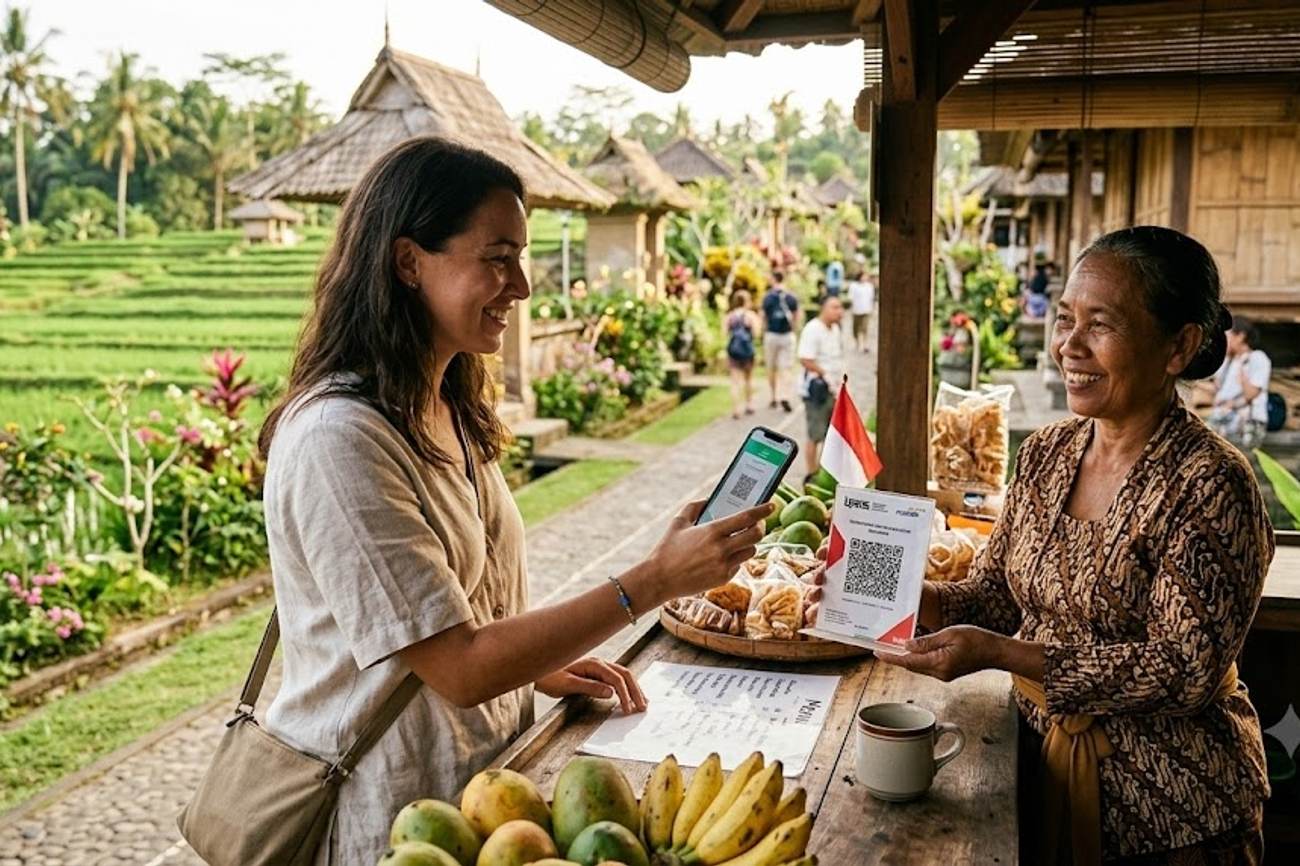
Image generated by AI
60.77 million users had adopted the QRIS system by February 2026, signaling a tectonic shift in how Southeast Asia and its partners handle the friction of cross-border liquidity. This is not merely a convenience for the modern traveler; it is a strategic decoupling from the traditional reliance on Western-centric credit card rails and the volatility of physical currency exchange. By standardizing the Quick Response Code Indonesian Standard (QRIS), Indonesia is effectively digitizing the "last mile" of tourism, allowing a street food vendor in a remote village to transact with a business traveler from Seoul or Singapore without requiring expensive Point-of-Sale (POS) hardware.
The Architecture of QRIS Cross-Border Integration
The genesis of this system lies in the removal of "app silos." Historically, digital payments required both the merchant and the consumer to utilize the same proprietary platform. QRIS dismantled this barrier by creating a universal standard where a single QR code can be scanned by various approved payment services. This interoperability is the engine driving the current expansion into international markets.
The strategic rollout began with a regional focus, building a "payment bridge" across the ASEAN bloc before expanding to East Asian powerhouses. The timeline of this expansion reveals a calculated approach to market integration:
- Thailand: The first major implementation occurred on 29 August 2022, following a pilot phase. This link involved 76 payment providers and was designed to increase the efficiency of local currency usage.
- Malaysia: On 8 May 2023, the linkage between QRIS and DuitNow QR was commercially launched, targeting retail payments for shoppers and holidaymakers.
- Singapore: The network expanded on 17 November 2023 through a partnership between Bank Indonesia and the Monetary Authority of Singapore, integrating QRIS with NETS QR codes.
- South Korea: A significant leap occurred on 1 April 2026, when Bank Indonesia and the Bank of Korea launched a connection allowing Indonesian users to transact in Korean won via domestic apps.
- China: Most recently, on 5 May 2026, BCA announced support for QRIS Cross-Border in China through the myBCA and BCA mobile applications.
Data Breakdown: The Digital Payment Shift
The scale of adoption indicates that QRIS is moving from a niche tool to a primary financial instrument for regional travel. The following data points illustrate the current trajectory of the system:
| Metric | Value/Date | Significance |
|---|---|---|
| Total QRIS Users | 60.77 Million (Feb 2026) | Massive domestic penetration facilitating outbound travel. |
| Thailand Launch | 29 August 2022 | First major cross-border implementation. |
| Malaysia Launch | 8 May 2023 | Integration with DuitNow QR for retail. |
| Singapore Launch | 17 November 2023 | Integration with NETS QR for high-volume corridors. |
| South Korea Launch | 1 April 2026 | Expansion into East Asian beauty/culture markets. |
| China Expansion | 5 May 2026 | Integration via BCA mobile and myBCA apps. |
| 2025 Transaction Trend | Inbound > Outbound | Higher volume of foreign spend within Indonesia. |
Expert Analysis: The Death of the Currency Exchange Booth
For the seasoned nomad or business traveler, the expansion of QRIS represents more than just "easier payments." It is a systemic shift in the economics of travel. The most critical feature of this network is the automatic currency conversion. When a traveler scans a code, the app displays the charge in their home currency, while the merchant receives the equivalent in their local currency.
The direct consequence for travelers is the elimination of "hidden" exchange fees often found at airport kiosks or through predatory ATM operators. By bypassing the need for physical cash or international credit cards—which often fail at small-scale merchants—travelers can now access "tourism villages" and micro-entrepreneurs who were previously invisible to the global financial system.
However, this creates a new set of dependencies. The reliability of the journey now hinges on three variables: app compatibility, real-time internet connectivity, and merchant-side configuration. Not every QRIS-enabled merchant is configured for cross-border acceptance. This creates a "digital divide" where some vendors can accept international scans while others remain domestic-only.
Furthermore, the pricing pressure shifts. While the convenience is high, the exchange rates are determined by the participating banks and the International Air Transport Association (IATA) standards for financial settlement in travel. Travelers must remain vigilant about the specific rates applied by their domestic apps, as these may fluctuate independently of the mid-market rate.
Key Takeaways
- Universal Interoperability: QRIS allows one code to accept multiple payment apps, removing the need for merchants to display numerous different QR codes.
- Strategic Corridors: The network now spans Thailand, Malaysia, Singapore, South Korea, and China, covering the most high-traffic routes for Indonesian travelers.
- Micro-Economy Access: The system empowers small-scale vendors (tour guides, craft sellers) to accept international payments without investing in costly credit card terminals.
- Currency Automation: Exchange conversions happen automatically within the app, reducing the need for physical foreign currency exchange.
- Verification Requirement: Users must manually verify the merchant name and the converted amount in both currencies before finalizing a transaction to avoid errors.
FAQ: QRIS Cross-Border Payments 2026
Do I need a special bank account to use QRIS in South Korea or China? No, but you must use a participating domestic Indonesian payment application that supports cross-border transactions. Ensure your app is updated to the latest version before departure to verify that the specific destination is activated.
What happens if a payment shows as "pending" during a scan? Do not attempt the payment a second time immediately. Check your app's transaction history and ask the merchant to verify receipt. Use the payment reference number provided in the app to resolve any disputes.
Are QRIS payments cheaper than using a credit card? Not necessarily. While they avoid some ATM fees, exchange rates and app-specific limits vary. The primary advantage is accessibility at small merchants who do not accept international credit cards.
Can any QR code in Indonesia be scanned by foreign tourists? Only those merchants who have enabled cross-border acceptance through their payment provider. Travelers should look for the QRIS logo and confirm with the merchant that they accept international payment apps.
The transition from leather wallets to digital scans is no longer a trend—it is the new regulatory baseline for Asian transit.
Tags: QRIS, Bank Indonesia, Bank of Korea, BCA Mobile, ASEAN Payment Linkage, South Korea Travel 2026
Related Travel Guides
- London Heathrow Airport Strengthens Drop-Off Charge Rules As New Travel Measures Transform Terminal Access
- Walt Disney World Tests AI Travel Planning Tool to Simplify Resort Booking and Guest Experiences
- US Healthcare Jobs Face AI Revolution: EMTs and Paramedics Among 10 Professions With Near-Zero Replacement Risk
Disclaimer
This article is for informational and educational purposes only. It does not constitute legal, financial, or professional advice. While we strive to provide accurate and up-to-date information, travel policies, regulations, and conditions change rapidly. Always verify information with official sources before making travel decisions. Nomad Lawyer makes no representations about the accuracy, reliability, completeness, or suitability of the information provided. Readers should consult qualified professionals for advice specific to their circumstances. The views expressed in this article are those of the author and do not necessarily reflect the views of Nomad Lawyer.
Kunal K Choudhary
Co-Founder & Contributor
A passionate traveller and tech enthusiast. Kunal contributes to the vision and growth of Nomad Lawyer, bringing fresh perspectives and driving the community forward.
Learn more about our team →