
India’s Glowing Shores Reveal Rare Bioluminescent Beach Escapes For Night-Time Coastal Travel
India’s Glowing Shores Reveal Rare Bioluminescent Beach Escapes For Night-Time Coastal Travel

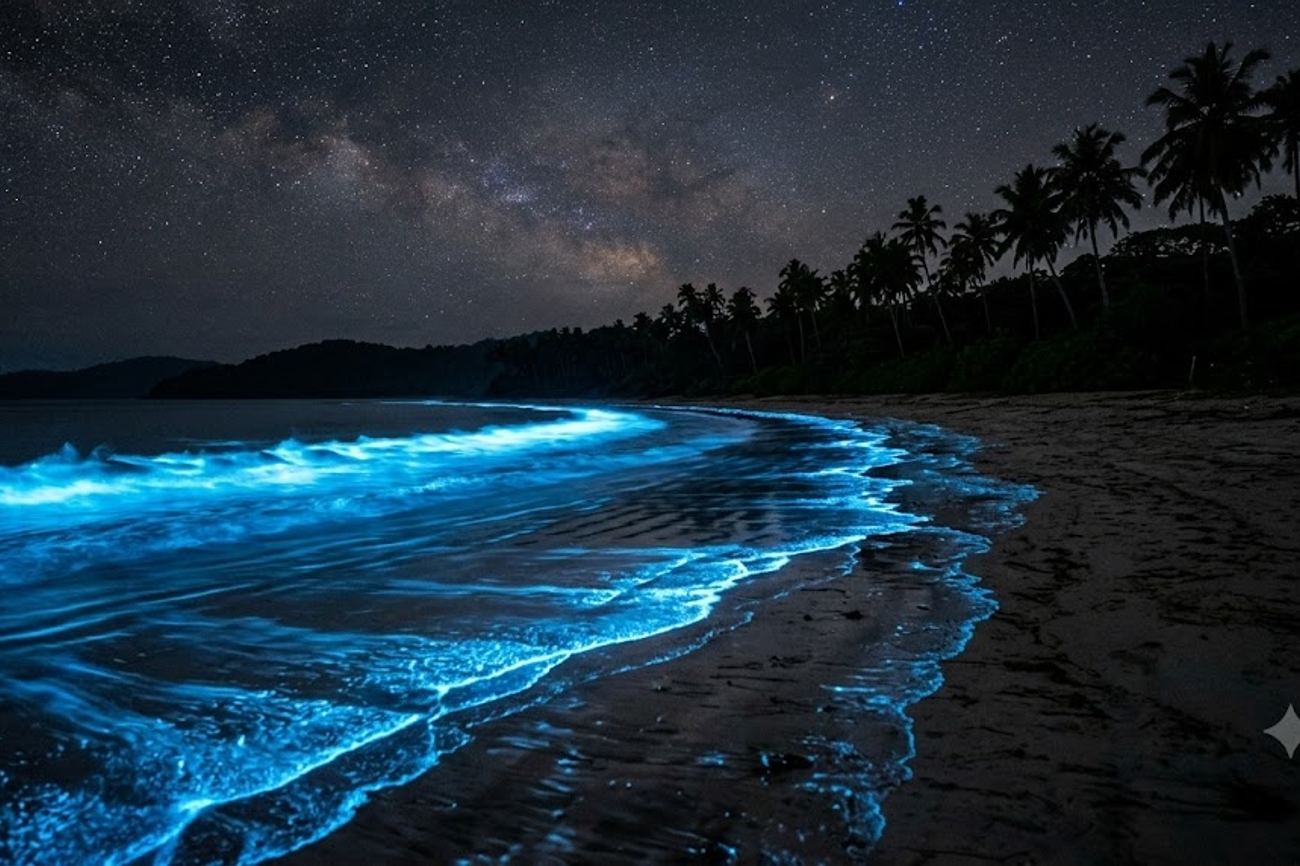
Image generated by AI
India's coastal nature-tourism segment has seen a marked shift toward "dark-sky" marine experiences, with bioluminescence sightings moving from isolated anomalies to documented travel drivers across five distinct states. While traditional beach tourism in India historically peaked during the winter months for sun and sand, the emergence of night-time coastal travel—specifically targeting dinoflagellate activity—indicates a pivot toward high-value, experiential nature travel. This shift mirrors a global trend where travelers prioritize rare biological events over static sightseeing, a pattern reflected in the growing demand for sustainable, low-impact tourism as tracked by the World Tourism Organization (UNWTO).
The Bioluminescence Metric: Mapping India's Glowing Coastlines
The data reveals that bioluminescence in India is not a monolithic event but a fragmented series of regional occurrences driven by specific marine biology. The phenomenon is primarily caused by dinoflagellates and other plankton that emit blue or blue-green light when disturbed by physical movement.
From a data perspective, the geographical distribution of these sightings spans the Andaman and Nicobar Islands, Lakshadweep, Karnataka, Odisha, Goa, and Maharashtra. The Andaman and Nicobar Islands, specifically Radhanagar Beach and Elephant Beach on Swaraj Dweep, show a broad window of viability from October to May. In contrast, the Lakshadweep territory—specifically Bangaram Island and Kavaratti—operates on a tighter window from October to March.
The Karnataka coast presents a more erratic data pattern. Mattu Beach (12 kilometers from Udupi) and Padukere Beach lack a fixed scientific calendar for sightings, though historical data points to a post-monsoon surge, with specific recorded events in November 2020 and December 2021. This suggests that while the Andaman and Lakshadweep regions offer seasonal predictability, the mainland coast relies on opportunistic, event-driven travel.
Regional Benchmarks and Seasonal Variance
When comparing these regions, a clear divide emerges between the "Island Ecosystems" and "Mainland Coastlines." The islands offer more stable environmental conditions for plankton concentration, whereas mainland sightings are often tied to tidal shifts and lunar cycles. For instance, Odisha’s Chandipur Beach associates the glow with the returning tide, while Dublagadi Beach sightings are linked to darker lunar conditions.
The following table breaks down the operational windows and regional characteristics of India's primary bioluminescent zones:
| Destination | Region | Primary Trigger/Context | Optimal Window |
|---|---|---|---|
| Radhanagar & Elephant | Andaman Islands | Plankton disturbance | October to May |
| Bangaram & Kavaratti | Lakshadweep | Lagoon/Coral ecosystems | October to March |
| Mattu & Padukere | Karnataka | Post-monsoon surges | Variable/Event-based |
| Chandipur & Habalikhati | Odisha | Tidal shifts/Phytoplankton | October to March |
| Betalbatim | Goa | Winter/Post-monsoon | Winter |
| Juhu | Maharashtra | Urban coastal variance | Variable |
This distribution shows that the "Prime Window" for bioluminescent travel in India is the Q4 to Q1 period (October through March), where four of the six major regions overlap in their peak sighting probabilities. This aligns with broader IATA data regarding peak seasonal travel flows into the Indian subcontinent, suggesting that bioluminescence is currently an "add-on" experience rather than a primary seasonal driver.
What This Means for Travelers
For the individual traveler, the data suggests a move away from "fixed-itinerary" planning toward "flexible-window" bookings. Because bioluminescence is a biological event and not a scheduled attraction, the probability of a sighting is never 100%.
If you are planning a nature-focused trip to the Andaman Islands or Lakshadweep, booking between October and March maximizes your statistical probability of success. However, for those targeting the Karnataka or Odisha coasts, the data indicates that local, real-time reports are more valuable than historical calendars.
Actionable Booking Advice:
- Avoid Peak Lunar Phases: For destinations like Dublagadi Beach, plan your visit around the New Moon. High lunar illumination washes out the blue-green light of the dinoflagellates, significantly reducing the visual impact.
- Prioritize Low-Light Zones: The data highlights that artificial light pollution is a primary deterrent. Travelers should prioritize uninhabited locations like Bangaram Island over urban centers like Juhu Beach to ensure the contrast necessary for the glow to be visible.
- Buffer Your Stay: Because sightings in Karnataka (e.g., Mattu and Padukere) are sporadic, a 48-to-72-hour stay in the region is recommended over a single-night visit to increase the chance of encountering a plankton bloom.
Trajectory of Night-Time Coastal Tourism
The current trajectory suggests that India is moving toward a "Niche Nature" market. The scientific study of lagoons in Kavaratti indicates that this is no longer just a tourist curiosity but a point of biological research. As travelers increasingly seek "transformative" experiences—a trend documented by Statista in global travel preference shifts—we can expect a rise in specialized "Dark Sky" tour operators in India.
We are likely to see the development of "Bioluminescence Circuits," particularly in the Andaman and Lakshadweep regions, where the overlap of coral reef tourism and night-time glowing waters creates a high-value package. The shift from the 2020-2021 sightings in Karnataka to the broader regional reporting of 2026 suggests that awareness is scaling, which will inevitably lead to increased footfall in previously remote areas like Odisha's Habalikhati Beach.
FAQ: India Bioluminescence Travel 2026
Can I guarantee a bioluminescent sighting if I visit in December? No. While December falls within the optimal window for Lakshadweep, Odisha, and the Andamans, the phenomenon depends on plankton concentration and weather. It is a natural occurrence, not a guaranteed event.
Which region offers the most reliable sightings? Based on the data, the Andaman and Nicobar Islands (Radhanagar and Elephant Beach) offer the longest window of viability, spanning from October to May.
Is specialized equipment needed to see the glow? No, but the data emphasizes that "dark skies" are essential. The best way to experience it is by visiting secluded beaches with minimal artificial light pollution.
Which airlines are expanding to these regions? While specific carrier expansions aren't listed, the availability of helicopter transfers to Bangaram Island and boat access from Agatti indicates a growing infrastructure for high-end, remote island access.
The shift from sun-seeking to glow-seeking marks the next evolution of the Indian coastal economy.
#AndamanBioluminescence2026 #LakshadweepMarineTrends #IndiaNatureTourismGrowth #DinoflagellateTravelPatterns #CoastalIndiaDarkSky
Related Travel Guides
Disclaimer
This article is for informational and educational purposes only. It does not constitute legal, financial, or professional advice. While we strive to provide accurate and up-to-date information, travel policies, regulations, and conditions change rapidly. Always verify information with official sources before making travel decisions. Nomad Lawyer makes no representations about the accuracy, reliability, completeness, or suitability of the information provided. Readers should consult qualified professionals for advice specific to their circumstances. The views expressed in this article are those of the author and do not necessarily reflect the views of Nomad Lawyer.
Kunal K Choudhary
Co-Founder & Contributor
A passionate traveller and tech enthusiast. Kunal contributes to the vision and growth of Nomad Lawyer, bringing fresh perspectives and driving the community forward.
Learn more about our team →