
Pennsylvania Measles Outbreak Surges Across 37 Counties, Putting US Travel Health Under Scrutiny
Pennsylvania Measles Outbreak Surges Across 37 Counties, Putting US Travel Health Under Scrutiny

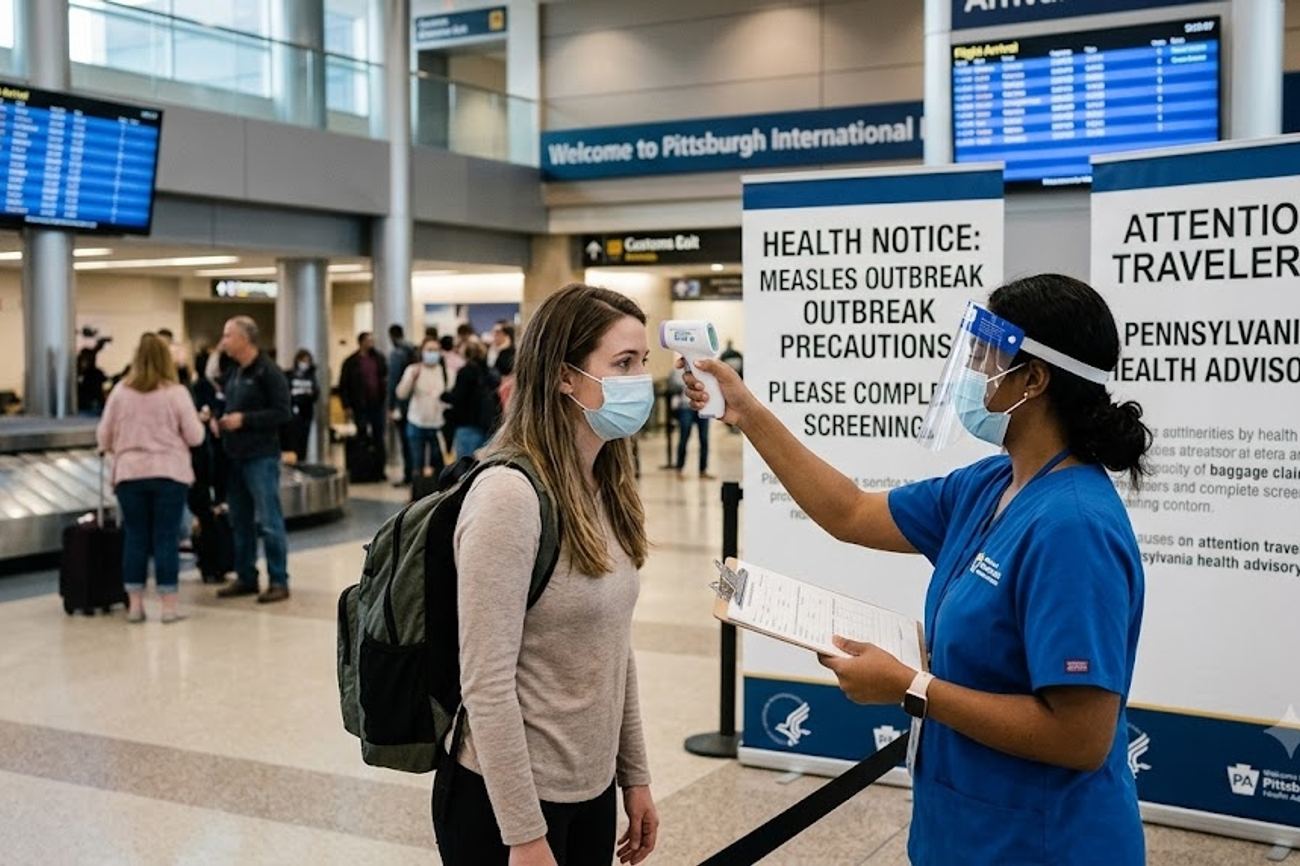
Image generated by AI
676 confirmed measles cases across 37 Pennsylvania counties signal a critical failure in regional community immunity, compounded by a recent fatality involving an unvaccinated 40-year-old woman in Jefferson County. This escalation transforms a localized health concern into a significant logistical risk for the travel and hospitality sectors, as the virus leverages high-traffic transit hubs to expand its reach. The death, reported by Coroner Greg Furlong on September 13, underscores the lethal potential of the virus in adults and highlights a growing disconnect between state-level reporting and federal surveillance.
The Pennsylvania Transmission Vector
The current crisis in the Commonwealth of Pennsylvania is not a static event but a rapidly accelerating outbreak that began in late April 2026. The velocity of transmission is evident in the recent data: between September 9 and September 11, the state recorded 52 new infections, pushing the total from 624 to 676 cases. This surge is not merely a matter of numbers but of geography, with the virus now embedded in 37 different counties.
The severity of the outbreak is further evidenced by 124 hospitalizations, indicating that a significant percentage of those infected are experiencing complications requiring acute clinical care. The biological profile of the outbreak confirms that the primary vulnerability is a lack of immunization. Out of the 676 cases, only four individuals were appropriately vaccinated for their age—a figure representing less than 1% of the total infected population. This data reinforces the efficacy of the MMR vaccine, which maintains a 97% effectiveness rate after two doses.
National Resurgence and Systemic Vulnerability
Pennsylvania’s crisis is a microcosm of a broader, more alarming trend across the United States. According to the Centers for Disease Control and Prevention (CDC), the national case count reached 2,777 by August 20, 2026. This figure already eclipses the total of 2,289 cases recorded for the entirety of 2025, demonstrating that the U.S. is experiencing a systemic resurgence of a disease once considered largely eradicated in the region.
The driver behind this trend is a measurable decline in "herd immunity." Public health standards dictate that a vaccination rate of 95% is required to prevent sustained community transmission. However, MMR coverage among U.S. kindergarten children has slipped from 95.2% during the 2019–20 school year to 92.4% in the 2025–26 period. This 2.8% drop may seem marginal, but in epidemiological terms, it creates the "pockets of susceptibility" necessary for the virus to jump from one community to another.
| Metric | 2025 Figures | 2026 Figures (Latest CDC) |
|---|---|---|
| Total Confirmed US Cases | 2,289 | 2,777 |
| National Outbreak Volume | 48 | 36 New Outbreaks |
| Outbreak-Associated Case % | 90% | 94% |
| Kindergarten MMR Coverage | 95.2% (2019-20) | 92.4% (2025-26) |
Expert Analysis: The Logistics of Contagion
For the modern traveler, the Pennsylvania outbreak represents a "transit-risk" scenario. Measles is one of the most contagious viruses known to science, and its ability to linger in the air makes traditional hygiene—such as hand sanitizer or surface wiping—largely ineffective.
The direct consequence for travelers booking routes through Philadelphia or Pittsburgh is an increased exposure risk in "closed-loop" environments. Airports, hotel lobbies, and public transportation systems act as accelerators for the virus. When an unvaccinated traveler from an international destination enters a Pennsylvania gateway, they are not only at risk of contracting the virus from the local outbreak but may also serve as a secondary vector, introducing new strains into already vulnerable populations.
Furthermore, the reporting discrepancy between the Jefferson County Coroner’s Office and the CDC reveals a dangerous lag in real-time health intelligence. When federal agencies are not immediately notified of deaths or surges, the "travel health warnings" issued to international visitors may be outdated. For those relying on federal dashboards to determine the safety of their itinerary, this lag creates a false sense of security. The pricing pressure on travel insurance may soon reflect these risks, as health-related disruptions become more frequent in the Northeast corridor.
Key Takeaways
- Vaccination is the only viable defense: With less than 1% of Pennsylvania's cases occurring in vaccinated individuals, the MMR vaccine remains the primary tool for avoiding infection.
- National trend is upward: U.S. cases have already surpassed 2025 totals, with 2,777 cases reported by August 20, 2026.
- Herd immunity is eroding: Kindergarten vaccination rates have fallen to 92.4%, dropping below the 95% threshold required to stop community spread.
- High-risk environments: Travelers should be particularly cautious in crowded transit hubs, hotels, and attractions within the 37 affected Pennsylvania counties.
- Reporting lags exist: There is a documented gap between local county reports (e.g., Jefferson County) and federal CDC data, meaning local updates are often more current than national ones.
FAQ: Pennsylvania Measles Outbreak 2026
Do I need to cancel my trip to Pennsylvania? No, cancellation is generally not necessary. However, you should verify your vaccination status. If you have not received two doses of the MMR vaccine, consult a healthcare provider before traveling to the affected 37 counties.
How does the virus spread in travel hubs? Measles is airborne and can remain active in the air or on surfaces for up to two hours after an infected person has left the area. This makes airports and hotels high-risk zones for unvaccinated individuals.
Why are there different death tolls reported by the state and the CDC? Verification processes differ. Local coroners report deaths immediately, but the World Health Organization (WHO) and CDC require formal state notification and clinical verification before updating national surveillance dashboards.
Is the MMR vaccine effective for adults? Yes. The vaccine is 97% effective after two doses. Adults who are unsure of their childhood vaccination history are encouraged to get a booster or a blood test for immunity.
The erosion of community immunity is no longer a theoretical risk; it is a logistical reality for every traveler crossing the U.S. border.
Tags: Pennsylvania Health Crisis 2026, MMR Vaccination Rates, CDC Surveillance, Jefferson County Outbreak, US Travel Health Safety
Related Travel Guides
Disclaimer
This article is for informational and educational purposes only. It does not constitute legal, financial, or professional advice. While we strive to provide accurate and up-to-date information, travel policies, regulations, and conditions change rapidly. Always verify information with official sources before making travel decisions. Nomad Lawyer makes no representations about the accuracy, reliability, completeness, or suitability of the information provided. Readers should consult qualified professionals for advice specific to their circumstances. The views expressed in this article are those of the author and do not necessarily reflect the views of Nomad Lawyer.
Naina Thakur
Contributor & Travel Specialist
Travel enthusiast and legal writer covering visa regulations, responsible tourism, and cultural journeys across global destinations.
Learn more about our team →