
Midwest Travel Chaos: Indianapolis Airport Buckles Under 23 Operational Disruptions as American and Southwest Trigger Cascading Flight Cancellations: Airline News
As unexpected travel chaos paralyzes Indianapolis International Airport, passengers are forced to actively bypass 23 flight disruptions impacting vital routes to Chicago, Dallas, and Atlanta.

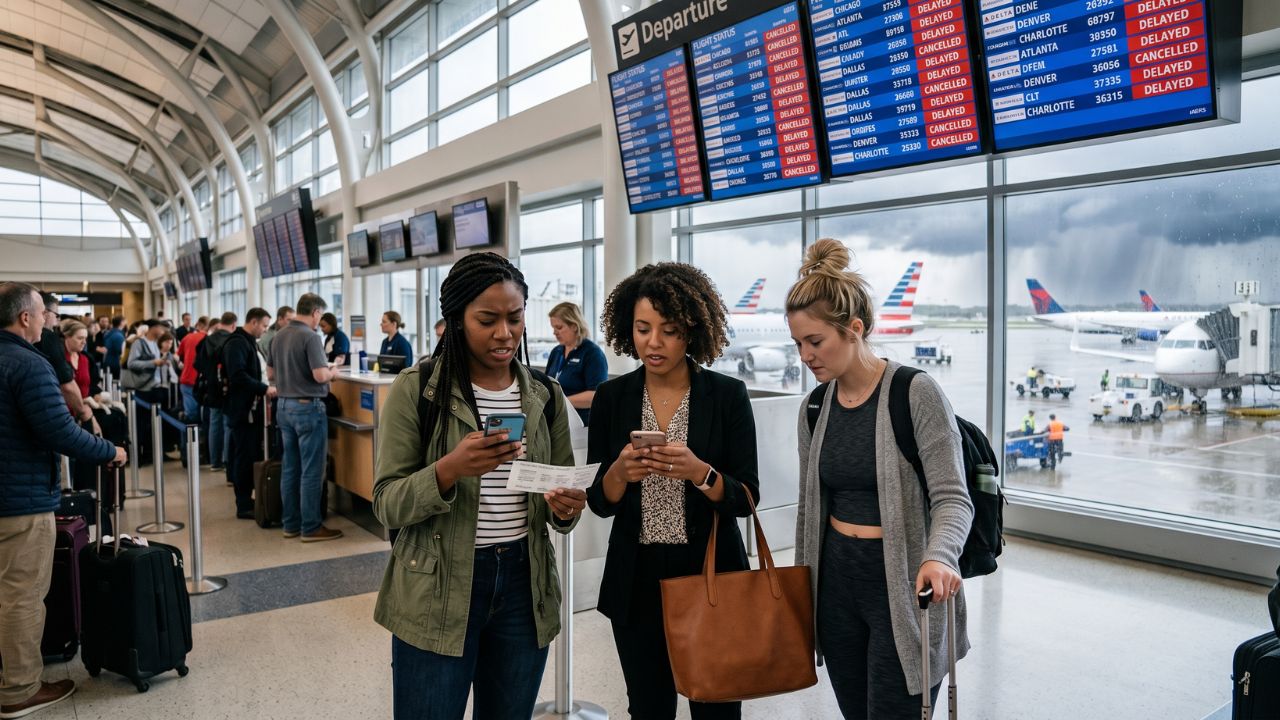
Image generated by AI
In a massive localized operational collapse that has instantly triggered regional travel chaos across the American Midwest, Indianapolis International Airport is experiencing severe transit uncertainty today. Reported on June 21, 2026, as stranded business travelers frantically monitor the latest airline news for an escape from rolling delays and sudden flight cancellations, a total of 23 flight disruptions have crippled the facility. With major carriers including American Airlines, Southwest, and United struggling to maintain schedule integrity, the airport is buckling under intense airport disruptions. For passengers attempting to navigate this logistical hurdle to reach critical mega-hubs like Chicago, Dallas, and Atlanta, understanding the exact airline breakdown is the only tactical method to bypass today's breaking aviation updates.
By introducing direct passenger coordination and dynamic scheduling backups, the regional aviation hubs target growing passenger demand across vital commerce sectors. The choice to coordinate flight departures in phases helps to manage gate capacity, supporting the country's broader regional transportation network.
Context: Eradicating Regional Hub Gridlock
For the modern domestic traveler, relying on mid-sized regional hubs to connect to massive national networks is routinely an exercise in mitigating vulnerability and cascading transit failure.
Historically, regional airports like Indianapolis function as vital feeder arteries to major legacy hubs. When operations run smoothly, connectivity is seamless. However, when multiple carriers simultaneously suffer operational degradation, the resulting travel chaos immediately severs critical national links. Today's disruption—totaling 20 delayed flights and 3 outright cancellations—perfectly illustrates the fragility of the hub-and-spoke model. While 3 cancellations may seem statistically minor, the dense clustering of 20 rolling delays across American Airlines, Southwest, and United creates a massive choke point. Passengers connecting through Chicago or Dallas are instantly exposed to catastrophic missed connections, transforming Indianapolis from an efficient departure point into a highly volatile transit trap.
To view live flight schedules, verify the active deployment of relief aircraft, or to track potential route restorations prior to heading to the airport, travelers must consult official aviation directories. For direct updates regarding how this localized disruption might shield your onward itinerary from current flight cancellations, travelers should aggressively utilize the official digital portals of their respective carriers. To explore live flight tracking and monitor the exact severity of the cascading bottlenecks paralyzing alternative Midwestern airspace, passengers can consult the official FlightAware tracking service.
Section-Wise Breakdown: The Tactical Bypass Strategy
American and Southwest: The Epicenter of Disruption
The absolute core of today's travel chaos at Indianapolis is concentrated within two dominant legacy operations. American Airlines reported the highest severe impact, logging 2 outright flight cancellations and 4 rolling delays. Southwest Airlines absorbed a massive operational shock, recording 1 cancellation alongside a staggering 7 delays. Because these two carriers dominate vital routes connecting Indianapolis to Dallas and Chicago, their simultaneous operational failure has completely paralyzed the primary exit vectors out of the Midwest.
United and Mesa: The Feeder Network Failure
The airport disruptions have also severely infected the regional feeder networks. United Airlines recorded 2 delayed mainline services, while its critical regional feeder, Mesa Airlines, matched that with 2 delays of its own. This proves that the travel chaos is not isolated to large mainline jets; the specialized regional aircraft designed to quickly insert passengers into major hubs like Chicago O'Hare are completely bogged down in terminal congestion, guaranteeing missed onward connections.
Alaska and Allegiant: Low-Cost and Coastal Impacts
The operational strain at Indianapolis has indiscriminately hit all airline tiers. Alaska Airlines faced 2 delayed flights, signaling a disruption in its vital coastal connectivity. Furthermore, the budget travel sector has not escaped the gridlock; Allegiant Air registered 3 delays. This widespread distribution confirms that the bottleneck is systemic across the airport’s infrastructure, affecting both premium business routes and price-sensitive leisure networks.
Technical Roster: Official FlightAware Indianapolis Impact Matrix
To ensure absolute factual accuracy regarding the exact operational deficit, airline specific delays, and cancellation clusters defining this regional aviation collapse, the following matrix details the strictly verified data:
Official FlightAware Indianapolis Impact Matrix
| Airline Operator | Cancelled Flights | Delayed Flights |
|---|---|---|
| American Airlines | 2 | 4 |
| Southwest Airlines | 1 | 7 |
| United Airlines | 0 | 2 |
| Mesa Airlines (Regional) | 0 | 2 |
| Alaska Airlines | 0 | 2 |
| Allegiant Air | 0 | 3 |
| Total Airport Impact | 3 | 20 |
Data accurately reflects the verified flight cancellations and widespread delays tracking the Indianapolis International Airport disruption as of June 21, 2026. All information is manually obtained from FlightAware’s official website.
Industry Analysis: The Lethal Ripple of Midwest Delays
Aviation analysts monitoring the highly interconnected US domestic network note that the current travel chaos in Indianapolis is a textbook example of dangerous "delay propagation."
Analysts emphasize that when a feeder airport like Indianapolis logs 20 concurrent delays, it acts as a massive disruption multiplier. Passengers stranded in Indianapolis will ultimately arrive at mega-hubs like Atlanta, Chicago, or Dallas exactly an hour late, systematically missing their international or transcontinental connections. The fact that Southwest and American Airlines absorbed the brunt of this hit means that high-frequency business travel networks are severely compromised today. Analysts warn that while the outright cancellation count (3) remains relatively low, the high density of delays indicates severe congestion in aircraft turnaround times. Airlines are actively holding planes at the gates, effectively destroying the schedule integrity of their hub-and-spoke models for the remainder of the operating day.
Actionable Advice for Stranded Domestic Travelers
Because this massive operational failure fundamentally alters the logistics of departing the Midwest, all passengers must execute this strategic survival checklist immediately:
- Abandon Tight Connections in Chicago/Dallas: If you are currently sitting on a delayed American or Southwest flight out of Indianapolis, immediately assume you will miss your connection in ORD or DFW. Do not wait until you land to rebook. Use the airline's application using terminal Wi-Fi right now to secure a backup seat on a later flight out of the mega-hub to entirely bypass the impending rebooking travel chaos.
- Exploit Airline Application Rebooking Tools: When facing rolling airport disruptions, never stand in line at the physical customer service desk in Indianapolis. The queue will be massive. Aggressively utilize the digital self-service tools provided by your airline to instantly confirm an alternative routing before the remaining seat inventory is completely depleted.
- Audit Alternative Transit: If your short-haul flight to Chicago is one of the 3 canceled services, immediately abandon the airport and secure a rental car or regional bus. The drive from Indianapolis to Chicago is relatively short, and relying on a congested aviation network to recover a canceled short-haul flight could trap you in the terminal for over 12 hours.
FAQ: Indianapolis Aviation Disruption
How many flights were affected at Indianapolis International Airport?
Official tracking data recorded a total of 23 operational disruptions, consisting of 20 delayed flights and 3 outright flight cancellations.
Which airlines experienced the most severe travel chaos?
American Airlines recorded the highest severe impact (2 cancellations, 4 delays), while Southwest Airlines experienced the highest volume of disruptions (1 cancellation, 7 delays).
What major destination cities are impacted by these airport disruptions?
The rolling delays and flight cancellations have severely compromised critical connecting routes to major national hubs, including Chicago, Dallas, and Atlanta.
The Reality of Fragile Regional Transit
The localized travel chaos triggered across multiple airlines at Indianapolis International Airport proves definitively that regional aviation infrastructure is terrifyingly fragile. By failing to maintain schedule integrity, carriers like American and Southwest have successfully guaranteed that regular passengers will suffer the terrifying gridlock and route volatility of missed connections at major national hubs. Yet, as passengers frantically attempt to rebook their flights to Atlanta or Chicago, they must accept a critical new reality: surviving the massive disruptions of modern global commerce demands tactical self-reliance. Navigating the highly compromised domestic airspace requires a complete refusal to accept passive stranding, and the absolute discipline to aggressively seek digital bypasses or overland alternatives when regional aviation inevitably buckles.
Key Takeaways
- Systemic Hub Disruption: Indianapolis International Airport suffered 23 total operational disruptions, significantly impacting the Midwest feeder network.
- American Airlines Hit Hardest: The legacy carrier suffered the most severe impact, registering 2 flight cancellations and 4 delays.
- Southwest Volume Spike: Southwest recorded the highest total number of disruptions with 1 cancellation and 7 delayed flights.
- Mega-Hubs Compromised: The localized delays have severely threatened vital passenger connections through major transit centers like Chicago, Dallas, and Atlanta.
- Feeder Network Failure: Regional operators like Mesa Airlines, alongside budget carriers like Allegiant, were equally trapped in the terminal congestion.
Related Travel Guides
Massive Travel Chaos Paralyzes Chicago O'Hare with 1,425 Disruptions
Disclaimer
This article is for informational and educational purposes only. It does not constitute legal, financial, or professional advice. While we strive to provide accurate and up-to-date information, travel policies, regulations, and conditions change rapidly. Always verify information with official sources before making travel decisions. Nomad Lawyer makes no representations about the accuracy, reliability, completeness, or suitability of the information provided. Readers should consult qualified professionals for advice specific to their circumstances. The views expressed in this article are those of the author and do not necessarily reflect the views of Nomad Lawyer.
Kunal K Choudhary
Co-Founder & Contributor
A passionate traveller and tech enthusiast. Kunal contributes to the vision and growth of Nomad Lawyer, bringing fresh perspectives and driving the community forward.
Learn more about our team →