
Unpack Once, Wake in Rome: Why Sixty-Seven Percent of Indian Voyagers Are Choosing Mediterranean Cruises
A landmark YouGov survey reveals 67% of Indian travelers embrace European cruises to bypass airport lines and rail hurdles, sailing from Barcelona and Civitavecchia aboard Royal Caribbean's Legend of the Seas.

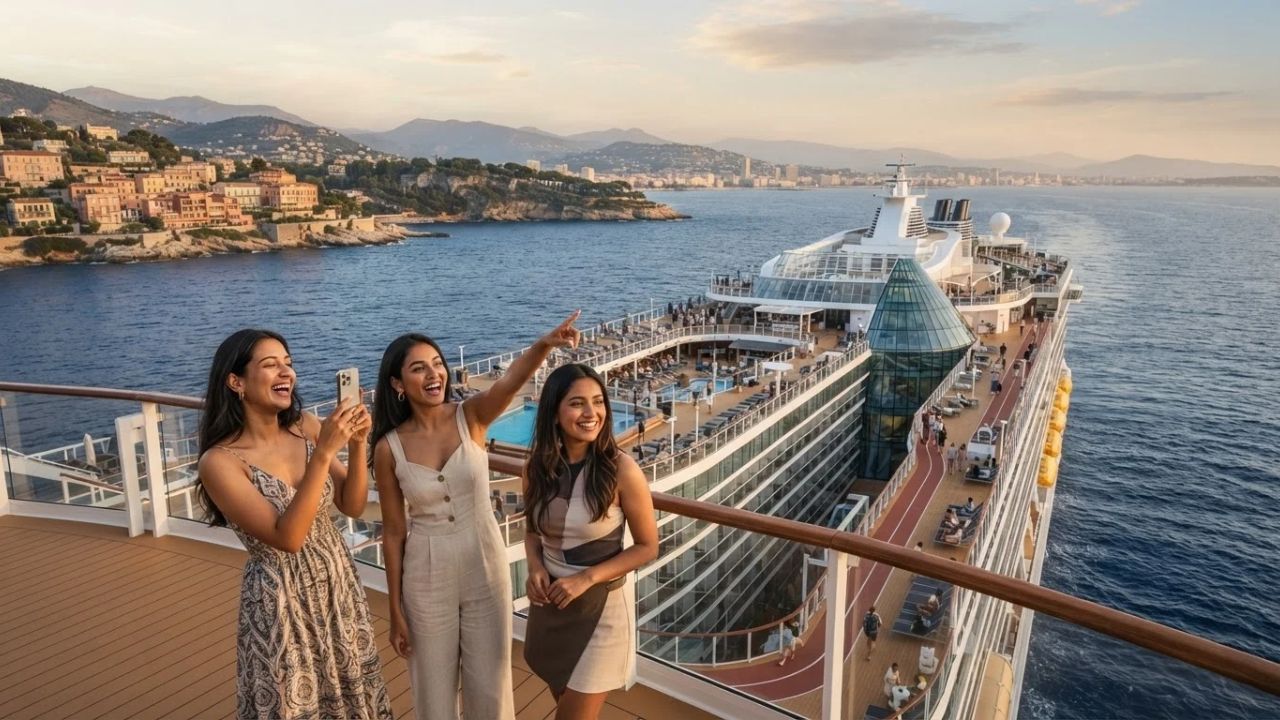
European multi-destination cruises offer seamless maritime transit between iconic Mediterranean ports
Nearly nine out of ten travelers across Asia-Pacific—including voyagers from India, Singapore, Malaysia, Indonesia, and the Philippines—openly concede that managing multi-country logistics across Europe has become the single most exhausting hurdle of international holidays. Rather than wrestling heavy suitcases up the narrow stairwells of historic Italian train stations or navigating airport security queues during peak European holiday seasons, an overwhelming 67 per cent of Indian respondents surveyed in a comprehensive YouGov study commissioned by Royal Caribbean International confirmed they now actively favor exploring the continent aboard multi-destination cruise ships. With the maiden European deployment of the Icon Class vessel Legend of the Seas establishing dual homeports in Barcelona, Spain, and Rome's maritime harbor of Civitavecchia in Italy, the classic European holiday is undergoing a profound structural shift.
For Indian families and multi-generational groups who have historically braved dizzying schedules of separate flights, domestic train connections, and shifting hotel check-ins, maritime transit offers an irresistible alternative: the ability to unpack once in an ocean-view suite while visiting four countries in seven nights. The appeal is direct and pragmatic. By turning travel time into resort leisure, passengers fall asleep gazing at the open Mediterranean and awake docked directly beneath the volcanic cliffs of Naples or within sight of Palma de Mallorca's gothic spires.
Deconstructing the Shift: Why Convenience Outweighs the Traditional Rail Grand Tour
The findings of the Royal Caribbean study illuminate the precise friction points that have traditionally challenged international tourists in Europe. When asked to identify the primary attraction of a cruise vacation, 45 per cent of Indian respondents highlighted the ability to visit multiple destinations effortlessly. Closely behind, 42 per cent cited safety and predictable comfort as decisive considerations, while 40 per cent emphasized the all-inclusive nature of meals, world-class entertainment, and supervised youth programming. Significantly, 39 per cent underscored the immense relief of eliminating airport check-in queues, strict baggage weight allowances, and cascading flight delays.
While European train networks have long held romantic cachet—remaining the preferred transit mode for 25 per cent of surveyed Indian travelers—cruises and short-haul flights are now tied in second place at 24 per cent each, followed by rental cars at 18 per cent and regional buses at 9 per cent. The parity between aviation and cruising signals a pivotal evolution. Long-haul travelers realize that hopping between European cities on low-cost carriers often consumes an entire daylight day in transit: traveling to peripheral airports, waiting through security verifications, and taking expensive express taxis into metropolitan centers. In contrast, cruise journeys convert transit hours into sunset dinners, Broadway-caliber theater productions, and restorative spa sessions.
Destination preferences among Indian voyagers remain anchored in classical heritage. Italy emerged as the undisputed top choice, selected by 51 per cent of respondents drawn to its culinary mastery and ancient architecture. France claimed the second spot at 48 per cent, the United Kingdom ranked third with 45 per cent, and Spain captured 30 per cent of traveler interest. The Western Mediterranean sailing corridors operated by Legend of the Seas specifically target this demand, weaving together Barcelona, Palma de Mallorca, the lavender-draped coastline of Provence, Florence (via Livorno), Rome (via Civitavecchia), and the dramatic cliffs of Naples and Capri into one seamless maritime circuit.
What Makes the Mediterranean Maritime Route Different: From Harbor Gorges to Island Fortresses
Approaching Europe's cultural capitals from the sea provides an entirely different geographical and sensory perspective. In Barcelona, embarkation at the Moll Adossat terminal places travelers within minutes of Las Ramblas and the architectural wonders inscribed under the UNESCO World Heritage Centre, including Antoni Gaudi's Sagrada Familia and Park Guell. Sailing out of the Catalan capital as the sun dips behind Montjuic hill reveals a sparkling coastal panorama rarely seen by land-bound tourists.
At sea, the experience transitions into maritime leisure before the vessel docks at Palma de Mallorca, where passengers can wander the honey-colored sandstone alleys surrounding the 13th-century Cathedral of Santa Maria (La Seu) or venture into the Serra de Tramuntana mountains. In France, docking along the coastline of Provence provides immediate access to ancient olive groves, artisanal soap ateliers in Aix-en-Provence, and dramatic limestone calanques plunging into turquoise waters.
When the ship reaches Italian waters, the historic grandeur intensifies. From Civitavecchia, express trains spirit passengers directly to St. Peter's Square and the Colosseum in central Rome, while docking in Naples opens gateways to the ruins of Pompeii, the artisan pizza ovens of Spaccanapoli, and private passenger hydrofoils speeding across the Gulf of Naples to Capri. Rather than packing and unpacking suitcases every forty-eight hours, travelers return each evening to the same stateroom, savoring regional Chianti or freshly brewed Indian masala chai on their private balcony as the captain charts a quiet course toward the next harbor.
Visitor Insider Tips: Navigating Mediterranean Ports Like a Seasoned Local
- Master Port Transit to Rome via Civitavecchia Express: Do not pay exorbitant private transfer fees to reach central Rome from Civitavecchia port. Take the free port shuttle to the terminal exit, walk ten minutes along the sea promenade to the Civitavecchia railway station, and board the dedicated Civitavecchia Express or purchase a regional BIRG day ticket. For around twelve euros, you enjoy round-trip rail transit and full access to Rome's metro and urban buses, reaching Roma San Pietro station in under forty-five minutes.
- Pre-Book Major Monuments Months in Advance: Mediterranean cruise ports accommodate thousands of disembarking passengers simultaneously. If your itinerary stops in Naples (for Pompeii) or Livorno (for Florence's Uffizi Gallery and Accademia), secure timed-entry admission tickets directly through official museum portals at least sixty days ahead. Never wait to purchase admissions at port tour desks, where popular cultural venues frequently sell out.
- Explore Capri Beyond the Marina Grande Harbor Herd: When your ship tenders in Naples or Sorrento and you take the hydrofoil to Capri, immediately bypass the crowded souvenir shops around Marina Grande. Take the open-top convertible taxi up the hairpin cliffs to Anacapri. Ride the single-chair lift up to the summit of Monte Solaro for panoramic 360-degree views across the Faraglioni rock formations, and stroll the quiet paths of Villa San Michele before midday day-trippers arrive.
- Ensure Dietary Preferences Are Registered Early: Indian travelers with strict dietary requirements—including pure vegetarian, Jain, or Halal preferences—should notify their cruise line upon reservation. Mega-vessels like Legend of the Seas feature dedicated culinary teams specializing in authentic regional Indian dishes, from steaming idlis and dosas at breakfast to slow-cooked dal makhani, paneer curries, and freshly baked tandoori rotis prepared in certified galley stations.
- Plan a Pre-Cruise Stay in Barcelona or Rome: Never fly into your departure port on the exact day of embarkation. Arrive at least two days prior, booking a boutique stay in Barcelona's Eixample neighborhood or near Rome's Piazza Navona. This buffer guards against international flight cancellations and allows you to adjust to European time zones while exploring historic food markets like La Boqueria without rushing. Verify seasonal port protocols and city event calendars on Spain's Official Tourism Portal before departing.
Cultural and Environmental Context: Sustainable Cruising in Heritage Basins
The surging interest in Mediterranean cruising arrives at a critical juncture for European coastal preservation. Iconic historic harbors across Italy, Spain, and France have faced mounting environmental scrutiny over port emissions, water displacement, and municipal congestion. In response to local conservation mandates, major maritime operators are implementing cutting-edge green technologies aboard next-generation Icon Class vessels. Ships like Legend of the Seas are designed to run on liquefied natural gas (LNG), drastically curbing nitrogen oxide emissions and eliminating sulfur particulate, while advanced onboard wastewater purification systems exceed stringent municipal standards.
Simultaneously, ports like Barcelona and Civitavecchia are investing heavily in shoreside power infrastructure (cold ironing), allowing docked ships to turn off their diesel marine engines and connect directly to municipal electrical grids while berthed. This technological shift safeguards air quality for portside residential quarters and historic monuments.
From a cultural perspective, cruise lines are increasingly partnering with local heritage cooperatives to disperse passenger footfall beyond saturated historic cores. In Provence and Mallorca, shore excursion programs steer visitors toward rural olive mills, family-owned vineyards, and traditional ceramic craft studios, ensuring that tourism revenue flows directly into rural agricultural communities rather than concentrating exclusively along crowded souvenir promenades. By respecting local civic rhythms, adhering to strict maritime waste regulations, and supporting authentic regional merchants, international travelers ensure that the Mediterranean's timeless maritime legacy remains preserved for future voyagers.
FAQ: European Mediterranean Cruising for Indian Travelers 2026
Do Indian citizens need a specific visa for a European Mediterranean cruise? Yes. Indian passport holders require a standard multiple-entry Schengen visa. Because cruise ships sail through international waters and visit multiple Schengen member ports, a multiple-entry visa is mandatory for boarding.
Are authentic Indian vegetarian and Jain meals readily available onboard? Yes. Leading cruise operators like Royal Caribbean provide dedicated Indian culinary options across their main dining rooms and buffet venues, including pure vegetarian, vegan, and Jain meals prepared without root vegetables.
Which Mediterranean ports allow direct walking access to city centers? Barcelona and Palma de Mallorca offer rapid, direct access to city centers via port shuttles or short walks. Conversely, Civitavecchia (for Rome) and Livorno (for Florence) require 45 to 80 minutes of regional train transit to reach city centers.
What is the best time of year to book a Mediterranean cruise? May through June and September through October represent the ideal shoulder months, offering pleasant coastal temperatures around 22 to 26 degrees Celsius, calm seas, and manageable crowds across historic sightseeing districts.
Gliding across moonlit Mediterranean waters while Europe's greatest cultural treasures wait beyond the morning horizon, the modern cruise reclaims the timeless romance of unhurried travel.
Related Travel Guides
- The Shifting Gates of Schengen: How Italy and Spain's Extended Border Checks Impact Mediterranean Travel
- The One Million Milestone: How Australia’s Love Affair with Japan Is Redrawing Asia-Pacific Travel
- Unpacking Once in the Mediterranean: The Indian Traveler's Port-by-Port Guide to Barcelona, Rome, and Naples
Disclaimer
This article is for informational and educational purposes only. It does not constitute legal, financial, or professional advice. While we strive to provide accurate and up-to-date information, travel policies, regulations, and conditions change rapidly. Always verify information with official sources before making travel decisions. Nomad Lawyer makes no representations about the accuracy, reliability, completeness, or suitability of the information provided. Readers should consult qualified professionals for advice specific to their circumstances. The views expressed in this article are those of the author and do not necessarily reflect the views of Nomad Lawyer.
Raushan Kumar
Founder & Lead Developer
Full-stack developer with 11+ years of experience and a passionate traveller. Raushan built Nomad Lawyer from the ground up with a vision to create the best travel and law experience on the web.
Learn more about our team →