
Indian Railways Modernizes Train Sanitation with 367-Litre Gravity-Fed Undergear Waste Collectors
Indian Railways' Jhansi Wagon Repair Workshop designed a 367.4-litre undergear waste collector system with floor drop chutes to replace small 18-litre LHB coach dustbins.

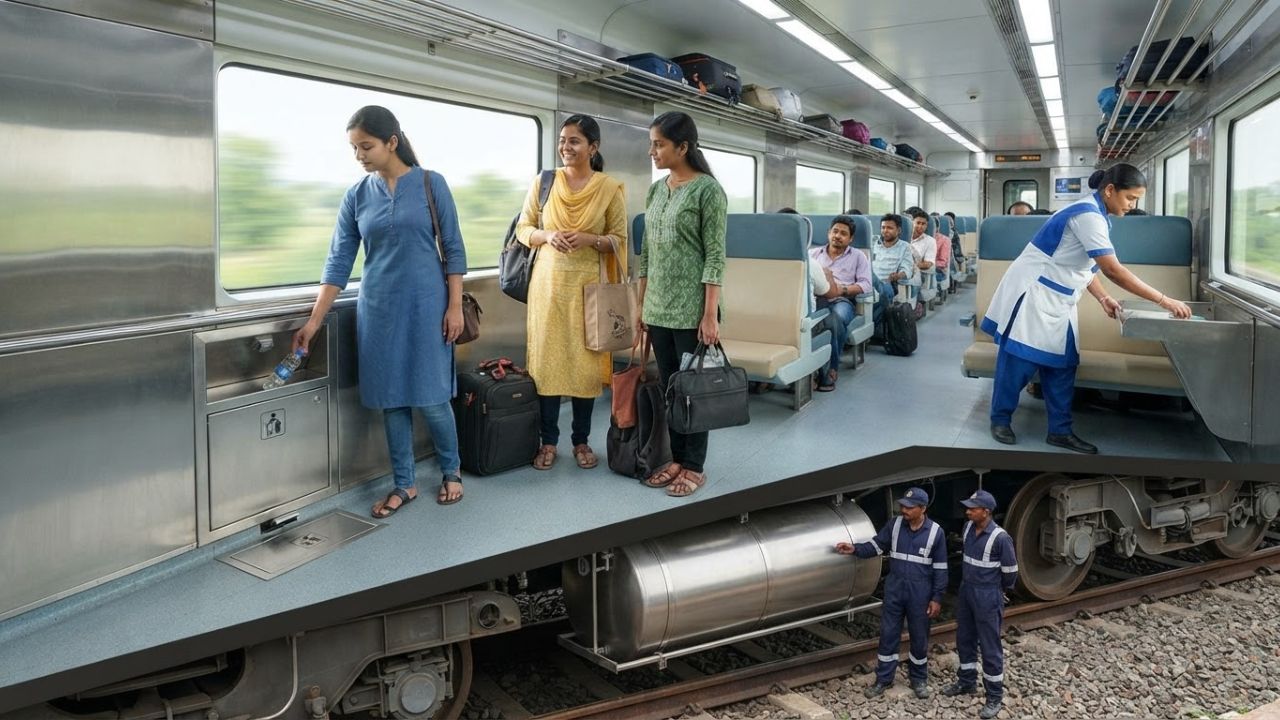
Image generated by AI
Indian Railways has introduced an innovative 367.4-litre gravity-fed undergear waste collection system designed by the Wagon Repair Workshop in Jhansi to resolve overflowing dustbin issues on long-distance passenger trains.
JHANSI, India — In a major engineering advancement aimed at elevating passenger comfort and environmental sanitation across long-distance rail routes, Indian Railways is rolling out a next-generation onboard waste management system. Developed by engineers at the Wagon Repair Workshop in Jhansi under the Ministry of Railways, the new gravity-assisted disposal mechanism replaces low-capacity cabin dustbins with a high-volume undergear collection unit mounted beneath the coach chassis.
The engineering redesign directly addresses long-standing cleanliness bottlenecks on Linke Hofmann Busch (LHB) coaches, where small internal bins routinely overflowed during multi-day journeys across India's rail network.
| Sanitation Innovation Overview | Legacy LHB Coach Bins | New Jhansi Workshop System |
|---|---|---|
| Waste Storage Volume | Two ~18 to 20-litre internal cabin bins | 367.4-litre undergear stainless steel collector |
| Disposal Mechanism | Manual deposit into small indoor bins | Gravity-fed floor drop box and drop chute |
| Emptying & Maintenance | Frequent manual clearing inside passenger cabins | External dual-side clearing during depot stops |
| Structural Design | Basic plastic/metal bins in vestibules | Corrosion-resistant stainless steel with 3:10 taper |
| Track & Environmental Impact | Overflow often spilled or was thrown on tracks | Prevents littering; secures refuse beneath chassis |
Gravity-Fed Engineering Resolves Internal Cabin Sanitation Bottlenecks
The traditional waste management layout on LHB long-distance trains relied on two standard dustbins of approximately 18 to 20 litres positioned near coach vestibules. On extended transcontinental routes spanning 24 to 48 hours, these small receptacles filled rapidly, causing unhygienic cabin conditions, foul odors, and litter accumulation in passenger aisles.
To eliminate these issues, Jhansi Wagon Repair Workshop designed a three-part gravity-fed system that routes waste entirely away from passenger living areas:
- Floor Drop Box: A flush-mounted stainless steel receptacle installed directly on the coach cabin floor, allowing travelers to deposit waste easily.
- Connecting Drop Chute: A vertical sealed chute that uses gravity to channel refuse downward automatically.
- Undergear Collector Tank: A heavy-duty 367.4-litre stainless steel collection chamber mounted securely beneath the vehicle chassis.
| System Component | Material & Fabrication | Functional Role |
|---|---|---|
| Floor Drop Box | High-grade stainless steel | Hygienic, flush-mounted passenger deposit point inside coach |
| Connecting Chute | Sealed corrosion-resistant channel | Direct gravity transfer of refuse from cabin to undergear tank |
| Undergear Collection Tank | Corrosion-resistant SS with 3:10 taper | High-capacity retention beneath chassis without structural interference |
| Dual-Side Access Ports | Heavy-duty latching side doors | Fast, independent emptying by maintenance crews at depots |
Tapered Undergear Design Ensures Rapid Servicing and Maintenance
A crucial engineering feature of the new 367.4-litre collector is its specialized 3:10 taper profile, developed in coordination with Research Designs and Standards Organisation (RDSO). The tapered geometry ensures that packed garbage slides out smoothly when servicing doors are opened, preventing clogging during high-speed depot clearance.
Furthermore, the undergear unit is engineered to fit within the strict physical clearance envelope beneath LHB coach frames. Maintenance personnel can unlock and discharge accumulated waste from either side of the train during scheduled technical stops, eliminating the need for sanitation staff to carry heavy trash bags through crowded passenger aisles.
| Engineering Specification | Design Detail | Operational Advantage |
|---|---|---|
| Total Collection Capacity | 367.4 Litres | Over 10x capacity expansion compared to legacy bins |
| Structural Geometry | 3:10 Taper Ratio | Frictionless gravity discharge during depot clearing |
| Material Construction | Stainless Steel (Anti-Corrosive) | Withstands liquid waste exposure and environmental wear |
| Servicing Accessibility | Dual-side external access | Enables simultaneous, two-sided servicing on pit lines |
Passenger Comfort and Track Conservation Environmental Benefits
By containing passenger refuse inside a sealed under-chassis tank, the new system offers substantial operational and environmental advantages:
- Enhanced Cabin Hygiene: Eliminates overflowing trash, lingering odors, and pest attraction in passenger bays.
- Trackside Pollution Prevention: Prevents refuse from being thrown onto railway tracks or embankments during transit.
- Streamlined Depot Servicing: Reduces turnaround time for cleaning crews at major railway junctions and terminal depots.
- Cost-Effective Scalability: Leverages existing workshop manufacturing capabilities without requiring expensive coach frame modifications.
| Environmental & Operational Area | Legacy System Challenge | Jhansi 367L Undergear System Impact |
|---|---|---|
| Onboard Hygiene | Frequent bin overflows and odor complaints | Complete elimination of indoor trash accumulation |
| Track Conservation | Refuse dropped onto railway tracks | 100% containment of passenger waste during transit |
| Depot Cleaning Speed | Labor-intensive bag collection in cabins | Rapid dual-side external dumping on maintenance pit lines |
| Durability | Plastic bins damaged by heavy usage | Heavy-duty stainless steel built for multi-year lifespans |
Frequently Asked Questions
What is the capacity of the new Indian Railways undergear waste collector?
The new undergear waste collection system designed by the Jhansi Wagon Repair Workshop features a 367.4-litre stainless steel tank—more than ten times the capacity of traditional LHB coach dustbins.
How does the new onboard waste disposal system work?
Passengers deposit waste into a flush-mounted drop box on the coach floor. Refuse travels down a vertical chute via gravity directly into a sealed 367.4-litre collection box beneath the coach chassis.
How is the undergear waste tank emptied at railway stations?
Maintenance crews can access and empty the stainless steel tank externally from either side of the coach frame during scheduled servicing halts, using its specialized 3:10 tapered design for quick unloading.
Why were traditional LHB coach dustbins inadequate?
Legacy LHB coaches used two 18-to-20-litre bins that filled up quickly on long journeys, leading to overflowing trash, foul odors, and litter spilling onto tracks or corridor aisles.
Related Travel Guides
Disclaimer
This article is for informational and educational purposes only. It does not constitute legal, financial, or professional advice. While we strive to provide accurate and up-to-date information, travel policies, regulations, and conditions change rapidly. Always verify information with official sources before making travel decisions. Nomad Lawyer makes no representations about the accuracy, reliability, completeness, or suitability of the information provided. Readers should consult qualified professionals for advice specific to their circumstances. The views expressed in this article are those of the author and do not necessarily reflect the views of Nomad Lawyer.
Kunal K Choudhary
Co-Founder & Contributor
A passionate traveller and tech enthusiast. Kunal contributes to the vision and growth of Nomad Lawyer, bringing fresh perspectives and driving the community forward.
Learn more about our team →