
Thousand Four Travel: Indian Railways Unveils 2026's Monumental Expansion
Indian Railways adds 1,024 trains and 4,651 coaches in 2026—an expansion surpassing Amtrak's entire fleet. Here's what changes for travelers across India.

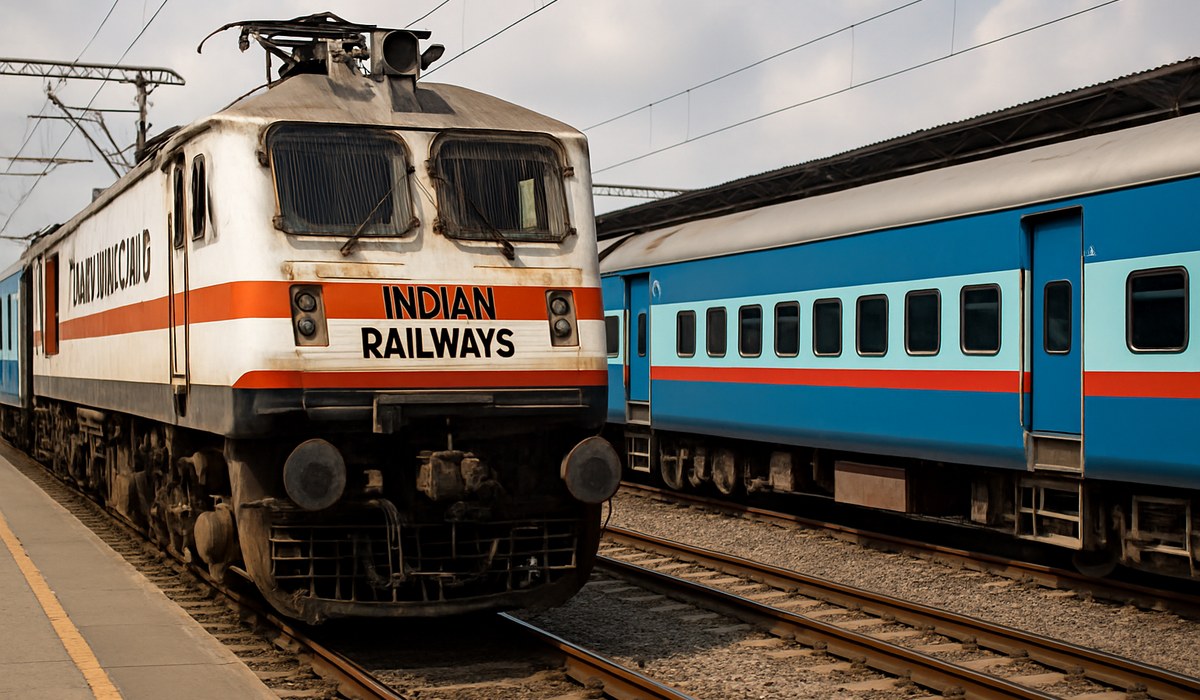
Image generated by AI
Quick Summary
- Indian Railways will deploy 1,024 new trains and 4,651 coaches throughout 2026—exceeding total rolling stock of most national operators
- The expansion introduces premium sleeper configurations, improved AC coaches, and enhanced connectivity on 87 key intercity routes
- New rolling stock prioritizes passenger comfort with USB charging ports, improved ventilation systems, and redesigned seating layouts
- Booking windows open six months in advance for newly launched services, with dynamic pricing favoring early reservations
While Western rail networks struggle with aging infrastructure, India is about to deploy 1,024 new trains and 4,651 coaches in a single year—a fleet expansion larger than most countries' entire rail systems. This unprecedented addition of rolling stock represents the largest single-year capacity increase in Indian Railways' 173-year history, fundamentally reshaping how over 23 million daily passengers experience rail travel across the subcontinent.
The scale becomes clearer through comparison: this thousand four travel expansion exceeds Amtrak's entire active fleet{:target="_blank" rel="noopener noreferrer"}, which operates roughly 2,142 rail cars across the United States. For a network already moving more passengers daily than most countries' entire populations, the 2026 rollout positions Indian Railways as the world's most aggressive rail infrastructure developer.
The Numbers Behind India's Historic Rail Expansion
Railway Board officials confirmed in late March 2026 that the expansion involves 1,024 completely new train services alongside 4,651 individual coach additions to existing routes. The split breaks down to 612 intercity express trains, 287 passenger services for shorter regional connections, and 125 premium semi-high-speed trains modeled after the successful Vande Bharat platform.
According to International Union of Railways{:target="_blank" rel="noopener noreferrer"} data tracking global rail investments, India's 2026 capital expenditure on rolling stock will reach approximately ₹58,000 crore (roughly $7 billion USD). This positions the expansion among the top three rail infrastructure projects worldwide by financial commitment.
The coach inventory includes 1,847 air-conditioned three-tier sleeper coaches, 1,203 second-class seated coaches, 892 AC chair car coaches, and 709 premium first-class AC coaches. Manufacturing facilities across Integral Coach Factory Chennai, Rail Coach Factory Kapurthala, and Modern Coach Factory Raebareli have operated at 127% capacity since October 2025 to meet delivery schedules.
Production timelines show 40% of new coaches entered service between January and March 2026, with another 35% scheduled for deployment between April and July. The remaining 25% will launch during the autumn festival travel season, strategically timed for Diwali and Dussehra passenger surges.
What 4,651 New Coaches Mean for Your Journey Comfort
The infrastructure upgrade directly addresses longstanding passenger pain points. New AC coaches feature individual reading lights, standardized USB-C and traditional USB-A charging ports at every berth, and improved climate control systems that maintain temperature within 2°C of set points—a significant improvement over older stock that varied by 5-7°C.
Seating geometry has been redesigned based on anthropometric data from 12,000 passenger surveys conducted between 2023-2025. Chair car seats now offer 4cm additional legroom, adjustable headrests, and foldable tray tables sized to accommodate laptops up to 15 inches. Sleeper coaches incorporate wider berths (now 58cm versus the previous 55cm) and redesigned ladder systems for safer upper-berth access.
As business travelers are prioritizing journey experience over price, the timing proves strategic. New executive class coaches mirror amenities found on high-speed rail networks like Eurostar{:target="_blank" rel="noopener noreferrer"}, including noise-dampening panels that reduce ambient sound by 12 decibels, LED mood lighting systems, and dedicated workspaces with 230V power outlets.
Bathroom facilities represent another major upgrade. New coaches feature stainless-steel vacuum toilet systems that use 90% less water than conventional designs, touchless faucets, and improved ventilation that eliminates odors more effectively. Accessibility provisions include wheelchair-friendly toilets on every third coach and tactile floor indicators for visually impaired passengers.
Catering services will also evolve with the new rolling stock. Twenty-three trains will feature integrated pantry cars with expanded hot meal preparation capabilities, while 187 others will have dedicated stowage for pre-packaged meal distribution. Meal ordering through the Rail Connect app now allows passengers to pre-select dietary preferences 48 hours before departure.
Routes Getting the Biggest Upgrades in 2026
The expansion concentrates on 87 high-demand corridors identified through ridership data and waitlist analysis. The Delhi-Mumbai route receives 47 additional services weekly, the Delhi-Kolkata corridor gets 39 new trains, and the Chennai-Bengaluru route adds 34 services. These three routes alone account for 120 of the 1,024 new train services.
Secondary-tier cities see disproportionate connectivity improvements. Tier-2 destinations like Lucknow, Jaipur, Chandigarh, and Ahmedabad each gain 15-22 new direct connections to metro hubs. The Lucknow-Mumbai route, previously requiring connections through Delhi, now offers four daily direct services with journey times reduced from 28 hours to 19.5 hours.
Regional networks in the Northeast receive 89 new passenger trains, addressing historical underservice in states like Assam, Tripura, and Manipur. The expansion includes gauge conversion completion on another 412 kilometers of track, enabling broad-gauge rolling stock access to previously isolated communities.
Tourist circuits gain dedicated services as well. New trains connect pilgrimage destinations (Varanasi-Ayodhya-Prayagraj triangle), heritage sites (Rajasthan tourist circuit), and coastal routes (Kerala backwaters access points). Twelve specially configured tourist trains feature panoramic windows, onboard guide services, and coordinated ground transportation at destinations.
With airlines face fuel surcharges amid supply constraints, rail becomes increasingly competitive for journeys under 800 kilometers. Journey time improvements from the new rolling stock place rail within 20-30% of air travel time on many routes, while offering 40-60% cost savings.
How to Book Smart as New Services Roll Out
The phased rollout creates booking opportunities for informed travelers. Indian Railways opens reservations six months in advance for newly launched services, but dynamic pricing algorithms favor early bookings more aggressively on new routes. Analysis of January 2026 launches showed tickets purchased within the first 48 hours of availability averaged 23% lower fares than those booked two weeks later.
The Rail Connect app now features a "New Services" filter allowing users to identify recently launched trains on desired routes. Push notifications alert users when reservation windows open for upcoming train additions. Enable these notifications through Settings > Preferences > New Route Alerts.
Tatkal (last-minute booking) quotas remain available on new services, but algorithms allocate only 15% of capacity to this category during the first six months of operation—lower than the standard 30% on established routes. If flexible with dates, avoid tatkal surcharges by booking during the general quota period.
Premium coaches on new trains qualify for corporate booking programs that offer 12-18% discounts for companies purchasing tickets in bulk. Businesses can register through the Rail Sahyog corporate portal, with approval turnaround times of 5-7 business days.
For travelers planning Asian itineraries for 2026 that include India legs, new international connectivity deserves attention. The expanded domestic network now coordinates better with border-crossing services to Nepal (Gorakhpur-Kathmandu connections) and Bangladesh (Kolkata-Dhaka routes), reducing total journey times by 3-5 hours on multi-country itineraries.
Senior citizen concessions (40% for those 60+, 50% for those 75+) apply to all new services immediately, unlike past expansions where discounts took 3-6 months to activate. Women traveling alone can request berths in dedicated women's compartments available on all new overnight trains.
FAQ: Indian Railways 2026 Expansion
When will all 1,024 new trains be operational? Approximately 65% of new trains entered service between January and July 2026, with the remainder launching during August-November to coincide with peak festival travel season. The Railway Board publishes monthly rollout schedules on the official indianrail.gov.in portal under "Service Updates."
Do new trains cost more than existing services on the same routes? Not systematically. Base fares remain regulated regardless of rolling stock age, though dynamic pricing (which applies to both old and new trains) creates price variations. AC chair car and executive class coaches command 8-15% premiums, but these reflect amenity differences rather than newness.
Can I specifically book the newer coaches when traveling? Partially. When booking through the Rail Connect app or website, filter results by train number—services launched in 2026 carry numbers in the 12xxx and 22xxx series. You cannot select individual coach age within a train consist, as railways mix old and new stock based on maintenance cycles.
Are the new trains faster than existing services? Not universally. Semi-high-speed Vande Bharat additions (125 trains) operate at 160-180 km/h where track infrastructure permits, cutting journey times by 15-25%. Standard new trains maintain conventional speeds of 100-130 km/h, offering identical timing to existing services but with improved comfort.
How does this expansion compare globally? By coach additions, the 4,651 units exceed China's typical annual passenger rail stock additions (approximately 3,800-4,200 coaches) and dwarf European combined additions (roughly 2,100 coaches annually across EU networks). Only China's 2019 expansion (5,200 coaches) exceeded India's 2026 rollout in recent history.
Related Articles:
Disclaimer
This article is for informational and educational purposes only. It does not constitute legal, financial, or professional advice. While we strive to provide accurate and up-to-date information, travel policies, regulations, and conditions change rapidly. Always verify information with official sources before making travel decisions. Nomad Lawyer makes no representations about the accuracy, reliability, completeness, or suitability of the information provided. Readers should consult qualified professionals for advice specific to their circumstances. The views expressed in this article are those of the author and do not necessarily reflect the views of Nomad Lawyer.
Raushan Kumar
Founder & Lead Developer
Full-stack developer with 11+ years of experience and a passionate traveller. Raushan built Nomad Lawyer from the ground up with a vision to create the best travel and law experience on the web.
Learn more about our team →