
Indian Railways Doubles Cleanliness Fine to Rs 1,000 Under New Gazette Rules
Indian Railways has officially doubled its maximum on-the-spot cleanliness fine to Rs 1,000 under new Gazette rules, enforcing strict penalties for littering and defacement.

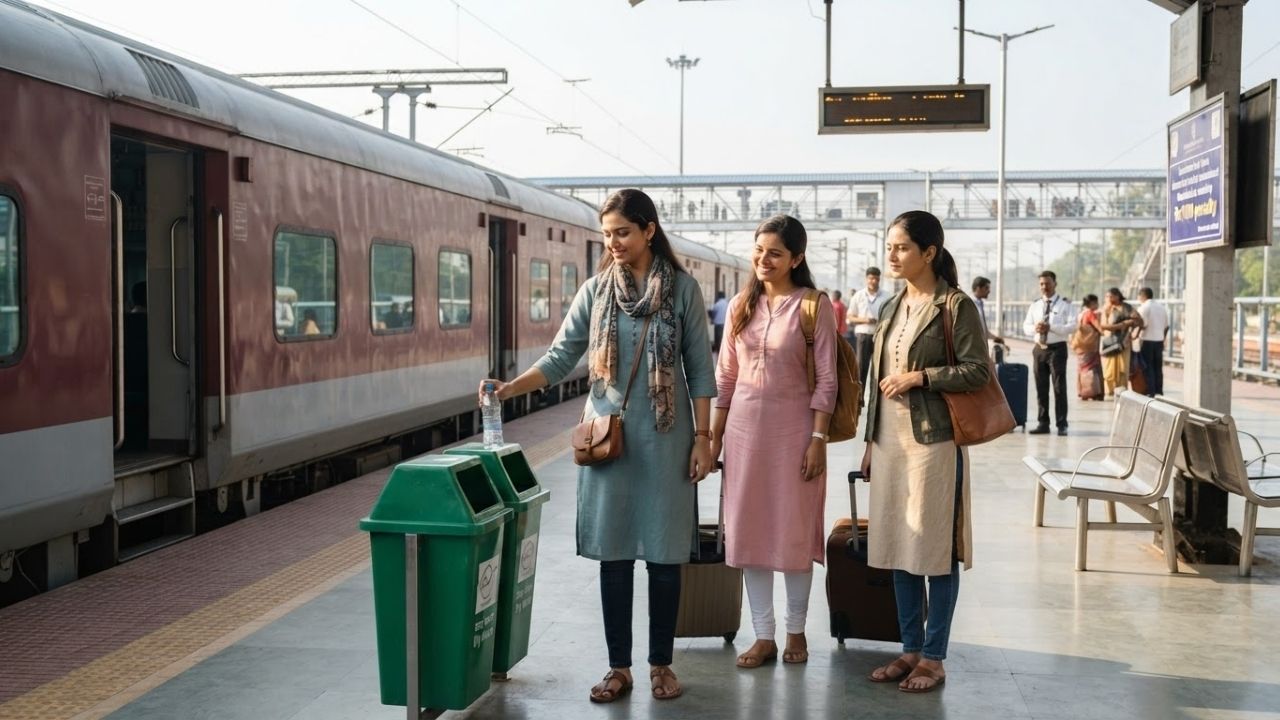
Image generated by AI
Indian Railways has officially doubled the maximum financial penalty for littering, spitting, and other sanitation violations across trains, station platforms, and railway premises. Under newly enacted Gazette rules, authorized station officers can now levy an immediate on-the-spot fine of Rs 1,000, with judicial courts empowered to double that amount to Rs 2,000 for non-payment.
Indian Railways Gazette Notification Elevates On-the-Spot Littering Fines
[NEW DELHI, India] — The Ministry of Railways has enacted a major policy reform targeting waste management and public hygiene across India's national rail network. Officially issued via a Ministry of Railways notification dated August 24, 2026, and published in the Gazette of India, the updated regulations are designated as the Indian Railways (Penalties for Activities Affecting Cleanliness at Railway Premises) Amendment Rules, 2026. The new legal framework amends previous sanitation guidelines established in 2012, introducing higher financial disincentives to curb persistent waste accumulation.
The updated rules apply across all passenger train coaches, railway stations, platform tracks, concourses, and surrounding rail property. Railway authorities have empowered front-line commercial and operating staff to enforce these regulations directly, ensuring that commuters who violate public health standards face immediate financial consequences.
By increasing monetary penalties and establishing judicial follow-up mechanisms, transportation authorities aim to modernize passenger station hygiene, streamline daily maintenance operations, and align India's passenger rail infrastructure with international sanitation standards.
Comparison: 2012 Cleanliness Code versus 2026 Amendment Rules
The 2026 Amendment Rules represent a major structural tightening of railway sanitation enforcement when compared to earlier administrative guidelines.
Under the previous legal framework—specifically Rule 4 of the Indian Railways (Penalties for Activities Affecting Cleanliness at Railway Premises) Rules, 2012—authorized personnel could impose a maximum fine of up to five hundred rupees (Rs 500) for cleanliness violations. The 2026 amendment doubles that statutory ceiling to a flat penalty of one thousand rupees (Rs 1,000).
Furthermore, the updated rules establish strict legal escalation procedures for non-compliance. If a violator refuses or fails to pay the prescribed Rs 1,000 fine on the spot, authorized railway officials hold the legal standing to produce the offender before a competent judicial magistrate. The court is authorized to levy an escalated judicial fine of up to two thousand rupees (Rs 2,000).
The table below compares key structural parameters between the 2012 rules and the newly enacted 2026 amendment:
| Policy Dimension | 2012 Cleanliness Framework | 2026 Gazette Amendment Rules | Escalation & Compliance Consequence |
|---|---|---|---|
| Governing Regulation | Rule 4, Cleanliness Rules, 2012 | Cleanliness Amendment Rules, 2026 | Enacted via Gazette Notification dated Aug 24, 2026 |
| Maximum On-the-Spot Fine | Up to Rs 500 | Rs 1,000 flat fine | Doubled to increase financial deterrence |
| Non-Payment Penalty | Basic administrative warning | Judicial court prosecution | Courts authorized to levy fines up to Rs 2,000 |
| Vendor Waste Mandate | Basic trash collection guidelines | Mandatory certified receptacles | Immediate fine for unauthorized waste disposal |
| Primary Enforcement Strategy | Variable localized warnings | Uniform national enforcement | Strict on-the-spot penalty collection |
Detailed Prohibited Activities and On-Site Enforcement Officers
The 2026 Amendment Rules define a comprehensive list of prohibited activities that directly compromise station hygiene, structural integrity, and public health. Passengers and visitors are strictly barred from discarding food wrappers, plastic bottles, or organic waste anywhere on railway property, except inside designated waste bins.
Prohibited actions carrying the Rs 1,000 fine include:
- Discarding garbage, organic waste, or plastic packaging outside designated receptacles
- Spitting, urinating, or defecating in non-designated station or track areas
- Cooking food, bathing, or washing utensils, clothing, or vehicles on station premises
- Unauthorized feeding of stray animals or birds near platforms and tracks
- Unauthorized storage of personal goods or commercial merchandise in public zones
- Pasting advertisements or defacing train coaches, walls, and station structures with writing or drawing
Authorized commercial vendors and hawkers operating on platforms must also maintain approved waste containers and ensure responsible disposal. Failure to comply results in immediate financial penalties.
To ensure uniform enforcement, the Ministry of Railways has designated specific operational personnel empowered to collect fines on the spot:
- Station Masters and Station Managers
- Ticket Collectors and Inspectors from the Commercial Department
- Equivalent authorized officials from the Operating Department
Operational Impact on Commuters and Passenger Responsibilities
For the millions of passengers utilizing Indian Railways daily, the heightened enforcement rules require greater personal accountability. Common habits—such as leaving plastic water bottles under coach seats, tossing food wrappers onto platform tracks, or spitting in stairwells—now trigger immediate financial penalties.
Maintenance teams report that individual acts of littering accumulate rapidly across high-traffic terminals like New Delhi, Mumbai Central, Howrah, and Chennai Central. By enforcing higher on-the-spot penalties, railway managers aim to foster a culture of civic responsibility, ensuring that public transit infrastructure remains clean for all travelers.
The increased monetary risk also encourages passengers to utilize waste disposal infrastructure provided inside modernized train coaches and across renovated platform concourses.
Modernizing National Transit Infrastructure to Match Global Sanitation Benchmarks
Transport analysts view the 2026 amendment rules as an essential component of India's broader railway modernization drive. Programs like the Amrit Bharat Station Scheme are upgrading hundreds of station buildings with modern amenities, requiring parallel enforcement policies to protect newly renovated infrastructure from defacement and waste accumulation.
Given the vast scale of the national rail network, routine cleanup operations consume substantial administrative resources and labor. Reducing waste accumulation at the source allows maintenance departments to redirect resources toward mechanized cleaning technology, sanitation upgrades, and deep-cleaning protocols for long-distance trains.
Coupling financial disincentives with judicial prosecution for non-payment establishes a clear legal standard, ensuring that public sanitation rules are respected across all railway zones.
Why This Matters for Passengers and Travellers
For domestic and international travelers using Indian Railways, the doubled cleanliness fine creates a cleaner, more pleasant journey while emphasizing strict personal responsibility. Travelers should ensure all personal waste, food wrappers, and plastic containers are deposited inside designated platform dustbins or coach trash Receptacles. Avoiding prohibited practices—such as spitting or leaving food remnants in seating areas—prevents unexpected Rs 1,000 on-the-spot fines from station inspectors. Understanding these updated rules helps travelers navigate station terminals smoothly while supporting national efforts to maintain high sanitation standards across India's passenger rail system.
Frequently Asked Questions
What is the new fine for littering or spitting on Indian Railways premises?
Under the Indian Railways (Penalties for Activities Affecting Cleanliness at Railway Premises) Amendment Rules, 2026, the maximum on-the-spot fine for littering, spitting, urinating, or defacing railway property has been doubled to Rs 1,000.
What happens if an offender refuses to pay the Rs 1,000 fine on the spot?
If an individual refuses or fails to pay the Rs 1,000 fine immediately, authorized officials can produce them before a competent judicial court. The court has the legal authority to impose an escalated fine of up to Rs 2,000.
Who is authorized to collect cleanliness fines at railway stations?
Authorized personnel empowered to collect penalties on the spot include Station Masters, Station Managers, Ticket Collectors from the Commercial Department, and equivalent authorized officials from the Operating Department.
Related Travel Guides
Amrit Bharat Express Expands Seven New Routes Across National Rail Network
Indian Railways Upgrades Special Passenger Trains Across Maharashtra and Karnataka
10 Essential Indian Railways Station Rules and Passenger Guidelines, According to Reddit
Disclaimer
This article is for informational and educational purposes only. It does not constitute legal, financial, or professional advice. While we strive to provide accurate and up-to-date information, travel policies, regulations, and conditions change rapidly. Always verify information with official sources before making travel decisions. Nomad Lawyer makes no representations about the accuracy, reliability, completeness, or suitability of the information provided. Readers should consult qualified professionals for advice specific to their circumstances. The views expressed in this article are those of the author and do not necessarily reflect the views of Nomad Lawyer.
Raushan Kumar
Founder & Lead Developer
Full-stack developer with 11+ years of experience and a passionate traveller. Raushan built Nomad Lawyer from the ground up with a vision to create the best travel and law experience on the web.
Learn more about our team →