
India Travel Upgrade as New Rail Projects Cut Delhi to Rishikesh and Karnaprayag Journey Times
India Travel Upgrade as New Rail Projects Cut Delhi to Rishikesh and Karnaprayag Journey Times

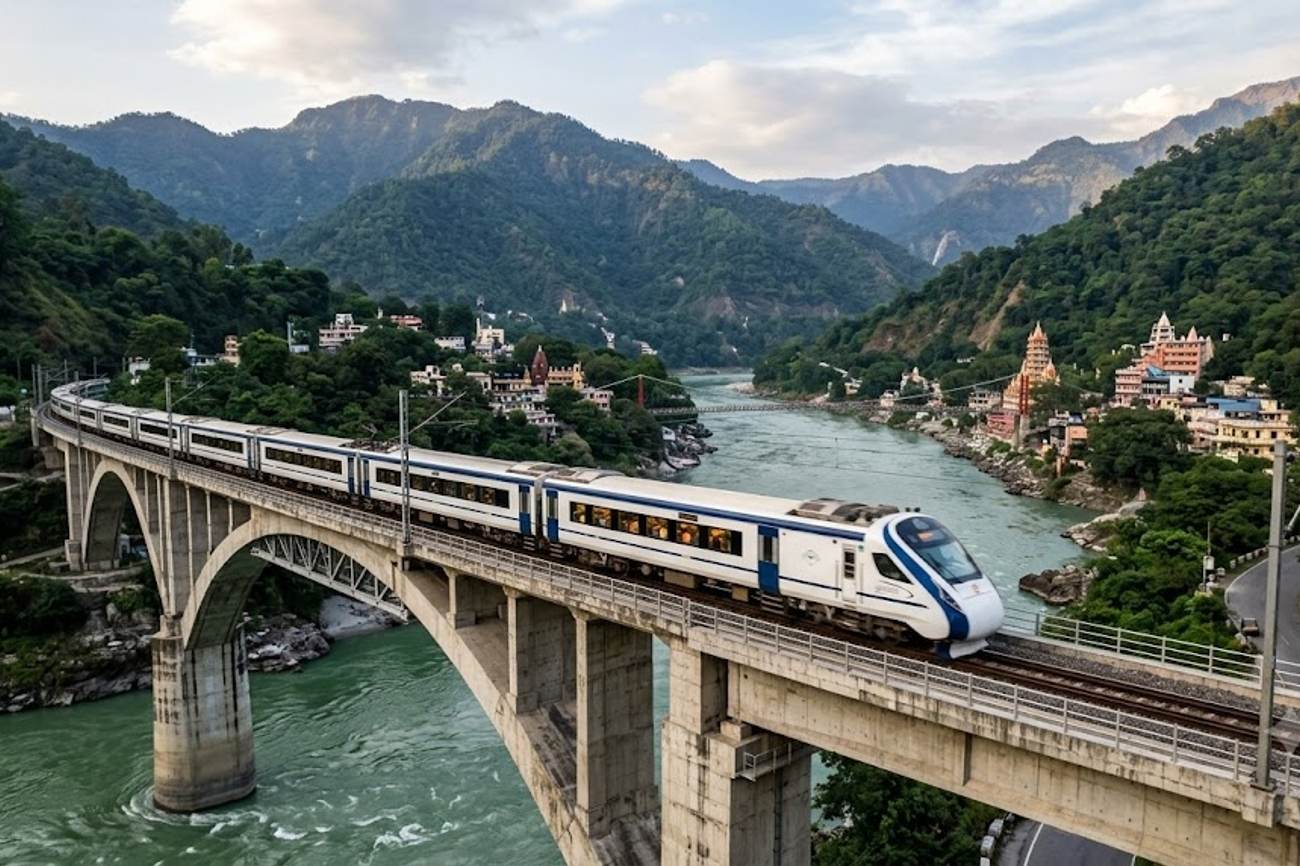
Image generated by AI
[New Delhi, October 2023] — The Indian government is executing a massive rail infrastructure overhaul that will slash travel time from Delhi to Karnaprayag by more than half, reducing a 13-hour road journey to approximately five to six hours.
This transformation centers on two primary developments: the proposed Namo Bharat regional rapid transit extension from Meerut to Rishikesh and the ongoing construction of the Rishikesh–Karnaprayag railway line. Together, these projects aim to bypass the chronic congestion and weather-related volatility of Himalayan road travel, providing a high-speed gateway for millions of pilgrims, international tourists, and local residents entering the Garhwal region of Uttarakhand.
The Engineering Push in the Garhwal Himalayas
The catalyst for this shift is a combination of high-speed regional transit and heavy-duty mountain engineering. The National Capital Region Transport Corporation (NCRTC), which manages the Namo Bharat system, is planning an extension from Meerut toward Haridwar and Rishikesh. This corridor is designed to compress the travel window between the capital and the gateway city of Rishikesh to just two to two-and-a-half hours.
Simultaneously, the Indian Railways is pushing through the Rishikesh–Karnaprayag line, a 127-kilometre project that is currently 75 per cent complete. Because of the extreme verticality and instability of the Himalayan terrain, the project relies on an unprecedented tunnel network. Roughly 105 kilometres—over 80 per cent of the entire route—will be subterranean.
A critical milestone was reached on September 11 with the successful breakthrough of Escape Tunnel-1, a 10-kilometre stretch that secures a vital safety and transit link within the mountain range. These tunnels are specifically designed to mitigate the risks of landslides and heavy monsoon rains that frequently paralyze the region's highway system.
Regional Connectivity and Route Impact
The new rail network will integrate several previously isolated districts and towns, creating a transit spine through Dehradun, Tehri Garhwal, Pauri Garhwal, Rudraprayag, and Chamoli.
The infrastructure includes 12 strategic stations. The full list of connected hubs includes:
- Rishikesh
- Muni Ki Reti
- Shivpuri
- Byasi
- Devprayag
- Maletha
- Srinagar Garhwal
- Tilani
- Gauchar
- Karnaprayag
While the Namo Bharat extension focuses on the rapid transit of passengers from the urban center of Delhi to the foothills, the Rishikesh–Karnaprayag line penetrates deep into the mountains. This dual-layered approach ensures that the "last mile" of the journey is significantly shortened, even though the trains will not reach the high-altitude temple sites directly.
What This Means for Travelers
For the average traveler, this is not just a change in transport mode, but a total restructuring of how the Garhwal Himalayas are accessed.
1. End of the "Road Fatigue" Era Currently, travelers heading to the Char Dham shrines must endure grueling 12-to-13-hour drives. The new system replaces a significant portion of this road time with rail. A traveler from Delhi can now envision a morning departure and an afternoon arrival in the upper highlands.
2. Strategic Pivot Points for Pilgrims The railway creates new "jump-off" points for the Char Dham circuit:
- Badrinath Bound: Travelers will use Karnaprayag as their primary rail terminus before switching to road transport via Joshimath.
- Kedarnath Bound: Stations at Tilani and Rudraprayag will serve as the closest rail access points for those heading toward Gaurikund to begin their trek.
3. Reliability Over Seasonality Road travel in Uttarakhand is notoriously unreliable during the monsoon season due to debris flows and road collapses. The 105-kilometre tunnel network provides a weather-shielded alternative, ensuring that tourism and essential supplies can move regardless of surface conditions.
4. Economic Shift for Local Hubs Towns like Srinagar Garhwal and Devprayag will evolve from mere transit stops into viable commercial hubs. Travelers are more likely to stop, stay, and spend in these towns if they are accessible via a reliable rail schedule rather than a precarious road trip.
Deployment Timeline and Future Milestones
The rollout of this network is staggered, with specific sections becoming available in phases to allow for rigorous safety testing in the mountain environment.
The first major milestone for the Rishikesh–Karnaprayag line is expected in 2028, with the section connecting Shivpuri and Byasi slated for opening. This will provide an early glimpse of the efficiency gains for travelers heading toward the interior.
The full 127-kilometre corridor is projected to be fully operational by 2029. Once completed, the synergy between the Namo Bharat extension and the mountain line will finalize the "Delhi-to-Himalayas" express corridor.
Beyond the 2029 horizon, the Uttarakhand Government expects this infrastructure to trigger a surge in wellness tourism and adventure sports, as the psychological barrier of the "long, dangerous drive" is removed for international and domestic visitors.
FAQ: Uttarakhand Rail Expansion 2029
Will the train go directly to the Char Dham temples? No. The trains will not reach the temples themselves due to extreme altitude and terrain. However, they will deliver passengers to key hubs like Karnaprayag and Rudraprayag, drastically shortening the remaining road distance to Badrinath and Kedarnath.
How much faster is the trip from Delhi to Karnaprayag? The journey is expected to drop from the current 12–13 hours by road to approximately five to six hours when combining the Namo Bharat extension and the new mountain railway.
When will the first sections of the new rail line open? While the full project is targeted for 2029, the section between Shivpuri and Byasi is expected to become operational earlier, in 2028.
Why are there so many tunnels on this route? Approximately 105 kilometres of the 127-kilometre line are tunneled to bypass steep peaks and protect trains from landslides and heavy rainfall, which frequently block mountain roads.
The Himalayas are becoming accessible, shifting the journey from a test of endurance to a streamlined transit.
#DelhiRishikeshRail #KarnaprayagRailway #UttarakhandTourism2029 #NamoBharatExtension #GarhwalConnectivity #IndianRailwaysInfrastructure
Related Travel Guides
Disclaimer
This article is for informational and educational purposes only. It does not constitute legal, financial, or professional advice. While we strive to provide accurate and up-to-date information, travel policies, regulations, and conditions change rapidly. Always verify information with official sources before making travel decisions. Nomad Lawyer makes no representations about the accuracy, reliability, completeness, or suitability of the information provided. Readers should consult qualified professionals for advice specific to their circumstances. The views expressed in this article are those of the author and do not necessarily reflect the views of Nomad Lawyer.
Naina Thakur
Contributor & Travel Specialist
Travel enthusiast and legal writer covering visa regulations, responsible tourism, and cultural journeys across global destinations.
Learn more about our team →