
Chennai Metro Hits Record 11.2 Crore Annual Ridership as India Travel Boom Accelerates in 2025
Chennai Metro has surpassed 10 million monthly passengers and reached a record 11.2 crore annual journeys in 2025, driven by a national surge in tourism and urban mobility.

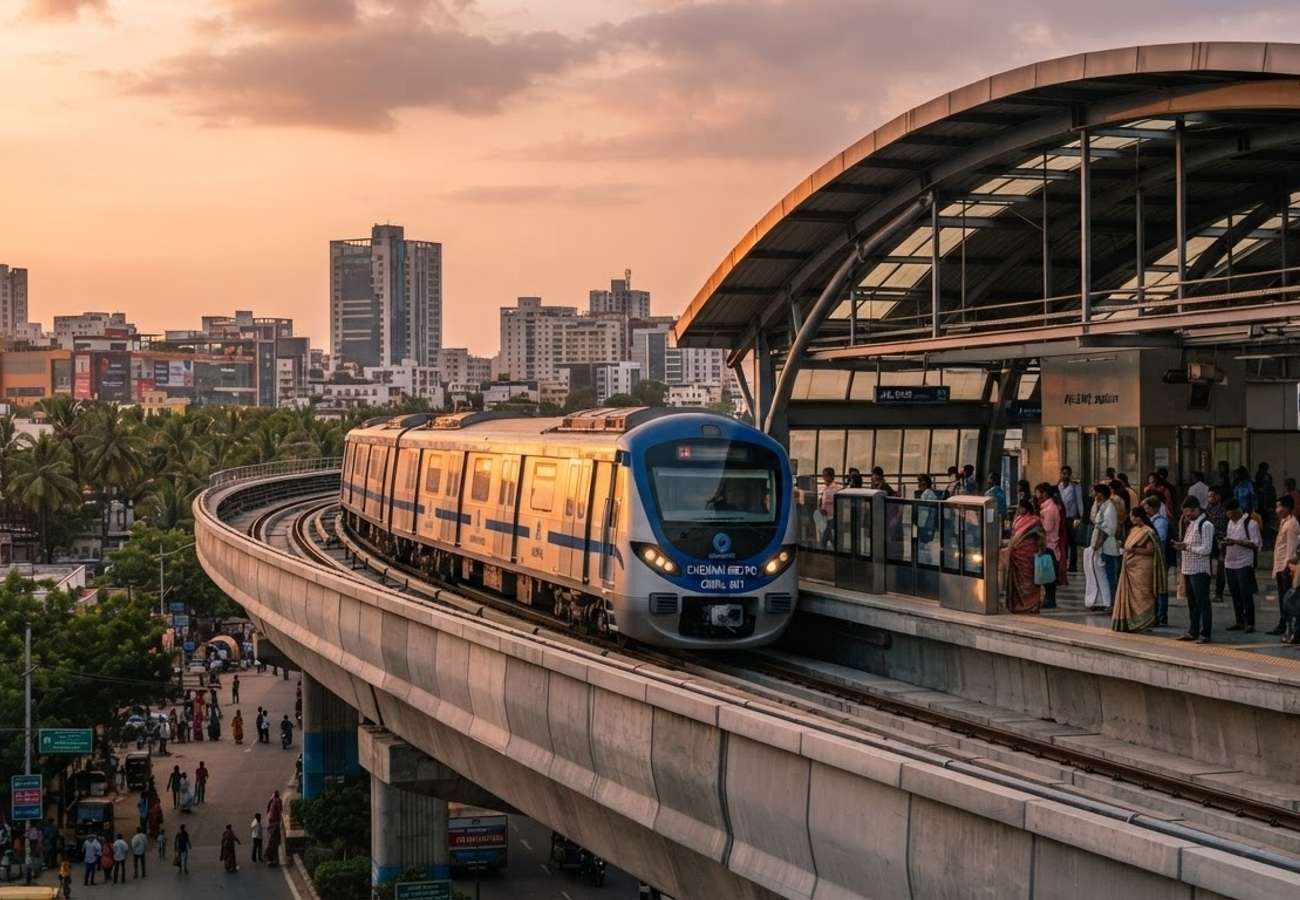
Image generated by AI
Chennai's rapid transit system has officially entered a high-growth era, consistently breaching the 10-million monthly passenger mark. This surge reflects a broader national trend where domestic tourism and economic recovery are reshaping urban mobility across India.
The Chennai Metro has transitioned from a pandemic-era recovery phase into a period of record-breaking patronage. Recent data confirms that the system is no longer just a commuter tool but a primary artery for a city experiencing rapid economic expansion and a surge in leisure travel.
Scaling New Heights in Passenger Volume
The trajectory of the Chennai Metro since 2022 reveals a steep upward curve in adoption. Annual passenger journeys have climbed steadily, reflecting a growing public preference for grade-separated mass transit over the city's increasingly congested arterial roads.
In 2025, the system carried approximately 11.2 crore passengers, the highest annual total since operations commenced in 2015. This brings the cumulative patronage of the network to over 46 crore journeys.
The most significant milestone of 2025 was the consistent breach of the "one-crore" (10 million) monthly threshold. Peak months, specifically July and September, saw passenger volumes exceed this mark, signaling a permanent shift in how residents and visitors navigate the city.
Daily usage has seen a similar lift. Weekday ridership has grown from roughly 2.5 lakh passengers per day a few years ago to more than 3 lakh currently. While still trailing the massive volumes of the Delhi Metro, Chennai has firmly established itself in India's second tier of high-volume transit networks.
The Catalyst: India's National Travel Resurgence
The ridership spike is not an isolated event but a byproduct of a wider Indian travel boom. As economic activity has rebounded, Chennai has emerged as a critical gateway hub for both domestic and international tourists.
The city serves as the primary entry point for travelers exploring Tamil Nadu’s east coast, including heritage sites like Mamallapuram and various temple and hill circuits. The integration of the metro with long-distance transport has removed traditional friction points for these visitors.
Urbanization trends also play a role. With a growing services economy and rising middle-class populations, the increase in private car ownership has led to severe road congestion, making the metro the most efficient option for both office commuters and students.
Strategic Integration of Aviation and Rail Hubs
A primary driver of the current growth is the metro's seamless connection to the city's most critical transport nodes. The Blue Line's direct service to Chennai International Airport has transformed the passenger experience.
To maximize this link, the airport has implemented:
- Dedicated metro counters and clear directional signage.
- Free shuttle routes linking terminals directly to the metro station.
- Integrated access that allows travelers to bypass surface traffic entirely.
Beyond the airport, the network was strategically designed to intersect with high-volume hubs. Key interchange points include Chennai Central and Egmore railway stations, as well as the Koyambedu bus terminus. This ensures that intercity rail passengers can transition to urban transit without leaving the rail ecosystem.
As Chennai prepares for future aviation upgrades and the development of a second greenfield airport at Parandur, the metro is expected to become even more central to the city's "long-haul to urban core" connectivity strategy.
Future Growth via Phase II Expansion
The current records are likely just a baseline, as Chennai Metro is currently undergoing one of the most ambitious expansions in the country. Phase II is set to significantly deepen the ridership base by extending the network into underserved suburbs and tech hubs.
Phase II Project Specifications
| Feature | Detail |
|---|---|
| Total New Corridors | ~118.9 km |
| Total New Stations | 128 |
| Primary Focus Areas | Suburbs and Technology Corridors |
| Key Infrastructure | Elevated sections along Old Mahabalipuram Road (OMR) IT corridor |
| Funding Partners | Multilateral lenders including the Asian Development Bank |
The expansion into the OMR IT corridor is particularly significant. Civil works, including piling and U-girder casting, have already hit major milestones. Once these sections open, the metro will capture a massive new demographic of office workers and university students who currently rely on private vehicles or shared autos.
Challenges in Reaching Full Potential
Despite the record-breaking numbers, the system still operates below its theoretical design capacity. To move from "high growth" to "full utilization," transport analysts suggest focusing on three critical areas:
- Last-Mile Connectivity: Improving the availability of feeder buses and pedestrian infrastructure.
- Fare Integration: Creating a more seamless payment ecosystem across different transport modes.
- Service Frequency: Increasing the number of trains during peak hours to accommodate the growing 3-lakh+ daily passenger base.
By addressing these bottlenecks, Chennai can ensure that its transit growth remains sustainable and that the 10-million monthly passenger mark becomes the new floor rather than the ceiling.
Chennai's transit evolution proves that strategic hub integration is the fastest way to scale urban ridership.
Key Takeaways
- Record Growth: 2025 annual ridership hit 11.2 crore, with monthly totals now regularly exceeding 10 million.
- Strategic Hubs: Direct links to Chennai International Airport and major rail stations (Central, Egmore) are primary growth drivers.
- Expansion: Phase II will add 118.9 km of track and 128 stations, targeting the OMR IT corridor.
- Economic Link: The surge is tied to a broader Indian domestic travel boom and increased urbanization.
FAQ
What was the total annual ridership for Chennai Metro in 2025? The system carried approximately 11.2 crore passengers in 2025, marking its highest annual total since 2015.
How does the metro connect to the airport? The Blue Line provides direct service to Chennai International Airport, supported by free airport shuttles and dedicated signage for travelers.
What is being added in Phase II of the Chennai Metro? Phase II involves the construction of 118.9 km of new corridors and 128 stations, extending the network into technology corridors and suburban areas.
Related Travel Guides
Disclaimer
This article is for informational and educational purposes only. It does not constitute legal, financial, or professional advice. While we strive to provide accurate and up-to-date information, travel policies, regulations, and conditions change rapidly. Always verify information with official sources before making travel decisions. Nomad Lawyer makes no representations about the accuracy, reliability, completeness, or suitability of the information provided. Readers should consult qualified professionals for advice specific to their circumstances. The views expressed in this article are those of the author and do not necessarily reflect the views of Nomad Lawyer.
Raushan Kumar
Founder & Lead Developer
Full-stack developer with 11+ years of experience and a passionate traveller. Raushan built Nomad Lawyer from the ground up with a vision to create the best travel and law experience on the web.
Learn more about our team →