
India Railways Suspends 20 Train Services In Bhopal Division During Major Bina And Agasod Infrastructure Upgrade
India Railways Suspends 20 Train Services In Bhopal Division During Major Bina And Agasod Infrastructure Upgrade

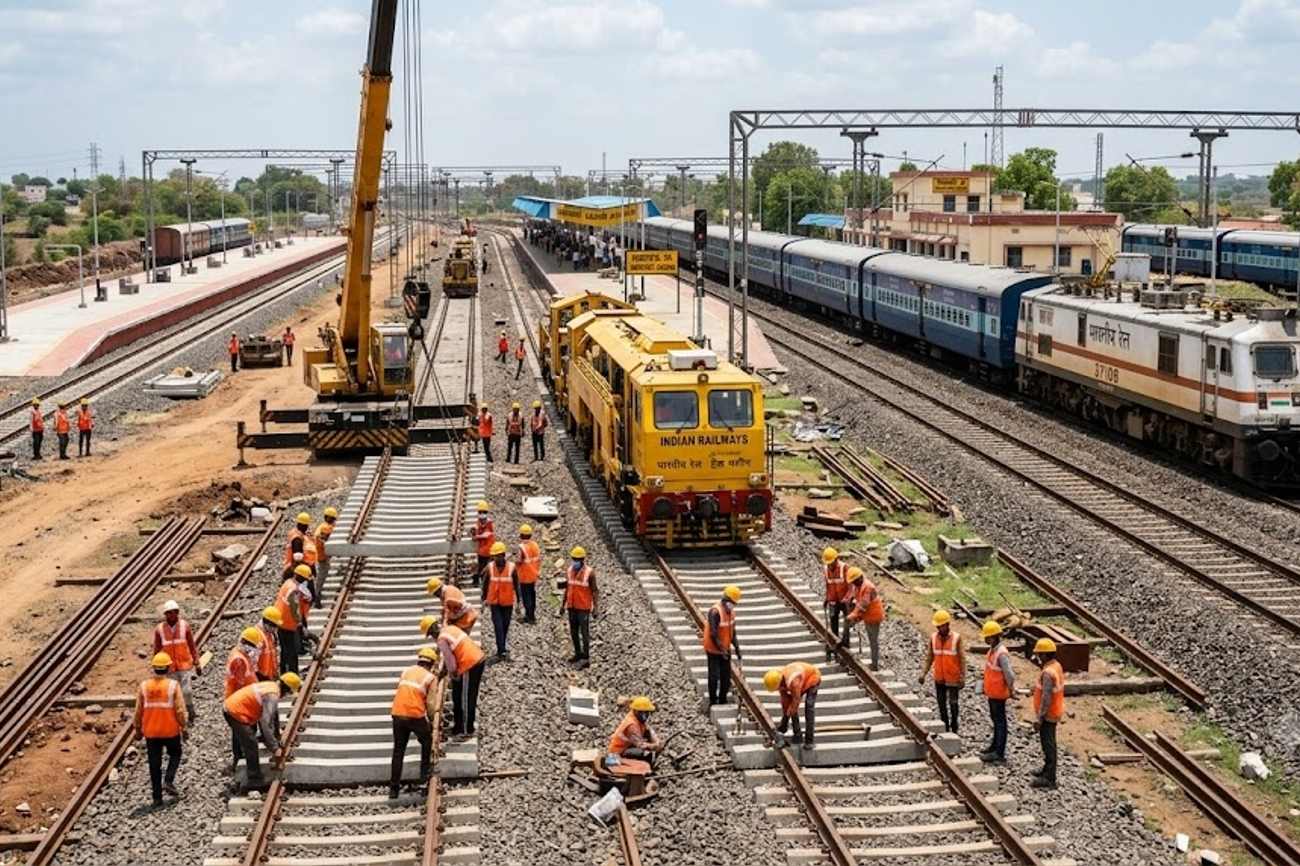
Image generated by AI
author: Travel Industry Trend Analyst category: Infrastructure Analysis tags: [Bhopal-Division-Capacity-2024, Bina-Agasod-Third-Line, Central-India-Rail-Modernization, Indian-Railways-Infrastructure-Shift]
While the Indian railway network has seen a steady increase in annual passenger kilometers over the last decade, the current capacity constraints in Central India have forced a strategic pivot toward aggressive yard remodelling. The cancellation of 20 train services between September 20 and October 16 serves as a microcosmic example of a broader national trend: the willingness to accept short-term operational paralysis to solve long-term throughput bottlenecks.
The Bina-Agasod Capacity Expansion in Numbers
The current operational disruption in the Bhopal Railway Division is not a random maintenance event but a targeted infrastructure upgrade focused on two critical nodes: Bina and Agasod stations. The primary objective is the integration of a third railway line, a move that signals a shift from basic connectivity to high-density capacity management.
The data reveals a focused window of disruption. Pre-non-interlocking and non-interlocking activities are scheduled in phases from September 1 to October 15. These technical modifications to signaling and track layouts are the prerequisite for the third line's activation. The scale of the disruption is evident in the specific service cuts:
- Total cancelled services: 20 trains.
- Primary disruption window: September 20 to October 16.
- Key affected routes: Lalitpur-Bina, Bina-Katni Mudwara, Jabalpur-Hazrat Nizamuddin, and Bhopal-Gwalior.
The removal of the Jabalpur-Hazrat Nizamuddin Shridham Express from September 26 to October 15 is particularly telling. By cancelling long-distance expresses alongside local MEMU services, the division is prioritizing a total "system reset" of the yard limits. This approach aligns with broader International Union of Railways (UIC) standards for modernization, where complete track isolation is preferred over piecemeal upgrades to ensure signaling integrity.
Central India Corridor: Comparative Context
The Bina-Agasod section acts as a vital artery for both freight and passenger movement in Central India. When comparing this project to historical railway expansions in the region, we see a transition from adding new routes to increasing the "density" of existing corridors. The move to a third line is a direct response to the saturation of double-track systems, which often lead to cascading delays when a single freight train is sidelined for a high-priority express.
The following table illustrates the shift in operational focus during this modernization window:
| Service Category | Pre-Upgrade Status | Upgrade Window Status (Sept 20 - Oct 16) | Post-Upgrade Expected Outcome |
|---|---|---|---|
| Local MEMU (Bina-Lalitpur) | Daily Operational | Suspended (Sept 20 - Oct 15) | Increased Frequency/Reduced Wait |
| Local MEMU (Bina-Katni) | Daily Operational | Cancelled (Sept 21; Sept 28 - Oct 15) | Enhanced Yard Flexibility |
| Intercity (Bhopal-Gwalior) | Daily Operational | Unavailable (Oct 1 - Oct 15) | Faster Transit Times |
| Long-Distance (Shridham Exp) | Scheduled Regular | Cancelled (Sept 26 - Oct 15) | Reduced Bottlenecking at Bina |
| High-Capacity (Humsafar/Mahamana) | Scheduled Regular | Selected Date Cancellations | Improved Throughput Capacity |
This pattern of "concentrated disruption" is becoming a hallmark of the Ministry of Railways strategy. Rather than extending maintenance over several months, they are utilizing "mega-blocks" to execute non-interlocking work. This reduces the total number of days the system is under construction, even if the daily impact is more severe.
What This Means for Travelers
For the individual traveler, the data indicates that the "standard" booking window for Central India is currently unreliable. The cancellation of 20 services across various tiers—from local MEMU to the Gwalior-SMVT Bengaluru Express—means that traditional scheduling logic is suspended.
If you are traveling through the Bhopal Division between September 20 and October 16, the following data-backed strategies are essential:
- Avoid the Bina-Agasod Pivot: Any itinerary relying on a transfer at Bina or Agasod should be rerouted. The "non-interlocking" phase means that track availability is unpredictable, and even trains not officially cancelled may face significant idling times.
- Shift to Alternative Transport for Regional Legs: With the Lalitpur-Bina and Bina-Ruthiyai MEMU services suspended, regional connectivity has dropped significantly. Travelers should anticipate a surge in demand for private bus services and ride-sharing platforms along these specific corridors during the October 1-16 window.
- Verify Long-Distance Status 48 Hours Prior: Because trains like the Rajya Rani and Mahamana Express face "selected date" cancellations rather than blanket suspensions, the risk of a last-minute cancellation is high. Use real-time tracking tools to confirm the "run status" of your specific train number.
- Anticipate Post-October 16 Congestion: Historically, when major lines reopen after a block, there is a "catch-up" period where backlog demand spikes. If you are booking for late October, expect higher-than-average occupancy rates as displaced passengers from the September/October window flood back into the system.
Projection: The High-Density Corridor Trajectory
The Bina-Agasod project is a leading indicator of the "High-Density Network" (HDN) strategy. By augmenting capacity with a third line, the Bhopal Division is preparing for a projected increase in freight tonnage and passenger volume that double-track systems can no longer sustain.
Based on current World Travel & Tourism Council (WTTC) growth projections for India, internal migration and domestic tourism are scaling at a rate that necessitates this shift. The transition to modernized railway yards—characterized by improved signaling and flexible track arrangements—will likely lead to a 15-20% reduction in average dwell times at stations like Bina.
We can expect this model of "short-term blackout for long-term capacity" to be replicated across other saturated corridors in Central and Northern India. The goal is a seamless transition to a system where freight and passenger trains no longer compete for the same track slots, effectively decoupling the two streams of traffic.
FAQ: Bhopal Division Rail Upgrades 2024
Will ticket prices increase after the third line is operational? There is no data suggesting a direct fare hike linked to this project. However, increased efficiency typically leads to higher load factors, which may reduce the availability of lower-cost "General" or "Sleeper" berths during peak periods.
Is it safe to book trains for late October? Yes. The upgrades are scheduled to conclude by October 16. Booking for the final week of October is advisable now, as the system will likely experience a surge in demand once the 20 cancelled services resume.
Which airlines or buses are the best alternatives for the Bhopal-Gwalior route? Since the Intercity services are unavailable from October 1-15, travelers should prioritize luxury bus operators or private charters. Given the distance, road travel is the most viable alternative to the cancelled rail services.
Why are so many different types of trains (MEMU and Express) cancelled? The "non-interlocking" work requires the physical disconnection of tracks and signals. Because the yard is the "brain" of the station, no train—regardless of its priority or type—can safely navigate the yard until the new signaling layout is verified.
The cost of progress is temporary stillness, but the data suggests the payoff will be a permanent increase in velocity.
Related Travel Guides
Disclaimer
This article is for informational and educational purposes only. It does not constitute legal, financial, or professional advice. While we strive to provide accurate and up-to-date information, travel policies, regulations, and conditions change rapidly. Always verify information with official sources before making travel decisions. Nomad Lawyer makes no representations about the accuracy, reliability, completeness, or suitability of the information provided. Readers should consult qualified professionals for advice specific to their circumstances. The views expressed in this article are those of the author and do not necessarily reflect the views of Nomad Lawyer.
Naina Thakur
Contributor & Travel Specialist
Travel enthusiast and legal writer covering visa regulations, responsible tourism, and cultural journeys across global destinations.
Learn more about our team →