
India Pushes High-Speed Rail Frontier With 350 Kmph Bullet Trains And Homegrown Technology
India Pushes High-Speed Rail Frontier With 350 Kmph Bullet Trains And Homegrown Technology

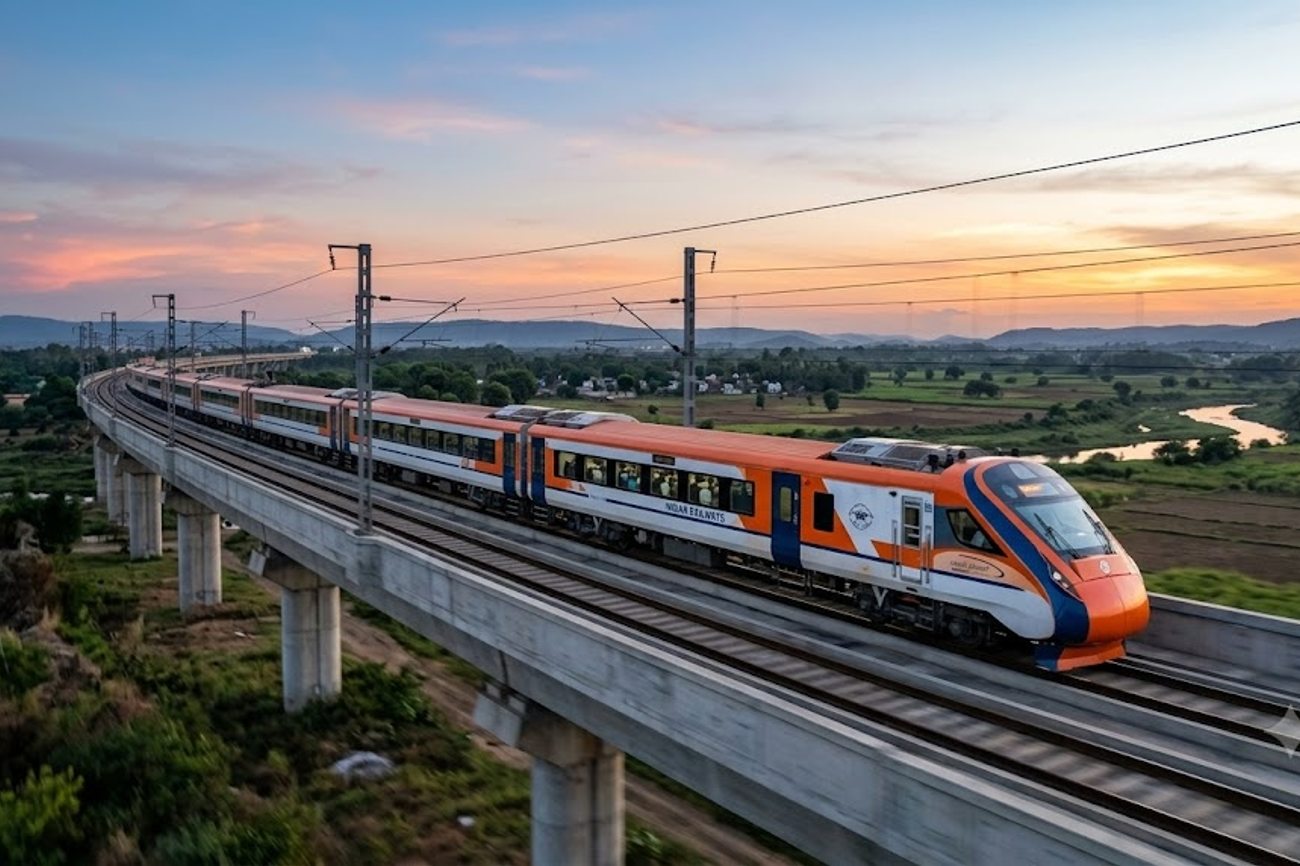
Image generated by AI
350 kmph is the design speed target for the B35, India’s first indigenously manufactured bullet train, signaling a pivot from technology imports to domestic aerospace-grade rail engineering. This shift marks a strategic departure for the Indian government, which is transitioning from the mere acquisition of foreign rolling stock to the creation of a sovereign high-speed rail ecosystem by 2030.
The Shift Toward Rail Sovereignty
For decades, high-speed rail (HSR) has been the exclusive domain of a few global powers, primarily Japan, China, and France. India's current trajectory, centered on the B35 platform, suggests a desire to break this oligopoly. The B35 is not merely a faster train; it is a platform designed to establish domestic expertise in high-speed aerodynamics, propulsion, and operational management.
This move coincides with a global arms race in rail technology. While India develops the B35, Japan is already engineering the next-generation E10 Shinkansen, slated for production around 2030. By pursuing a domestic alternative, India aims to avoid the "technology trap" where a nation remains permanently dependent on a foreign provider for proprietary parts, software updates, and specialized maintenance. This independence is further bolstered by the development of the Bharat Train Control System (BTCS), a homegrown signaling and safety architecture designed to replace foreign-owned systems and reduce long-term licensing costs.
The Financial Scale of the Mumbai-Ahmedabad Corridor
The primary laboratory for these advancements is the Mumbai-Ahmedabad High Speed Rail (MAHSR) project. However, the financial requirements for this corridor have surged, with the revised investment now exceeding Rs 2 lakh crore. This represents a massive escalation from the initial 2015 estimates, reflecting the sheer complexity of building HSR infrastructure from the ground up in densely populated regions.
The capital expenditure is distributed across several high-cost verticals, as detailed in the breakdown below:
| Expenditure Category | Estimated Cost/Detail |
|---|---|
| Total Project Investment | Exceeding Rs 2 lakh crore |
| Union Budget Contribution | Approximately Rs 1 lakh crore |
| Land Acquisition Costs | Approximately Rs 19,700 crore |
| Infrastructure Development | More than Rs 1 lakh crore |
| Cost per Kilometre | Approximately Rs 399 crore |
The surge in costs is attributed to the necessity of specialized infrastructure. High-speed rail cannot run on existing tracks; it requires dedicated corridors, advanced vibration-dampening ballast, and sophisticated signaling that can handle trains moving at nearly 250 kmph. The International Union of Railways (UIC) often notes that the highest costs in HSR projects typically stem from land acquisition and the civil engineering required to maintain the strict curvature radii necessary for high-speed stability.
Expert Analysis: The Logistics of the Two-Tier Rollout
The strategy India is employing is a "stepped implementation" model. Travelers will not jump immediately to 350 kmph. Instead, the Mumbai-Ahmedabad corridor will debut with the B28 trainsets. These units are designed for a maximum speed of 280 kmph, though their planned operational speed will be 249 kmph.
For travelers booking this route, the direct consequence is a phased increase in efficiency. The B28 serves as the "proof of concept" phase. Prototype units for the B28 are scheduled to enter testing by the first quarter of 2027. This allows the Ministry of Railways to stress-test the BTCS and the physical infrastructure before introducing the more demanding B35 models.
The pricing pressure created by a Rs 2 lakh crore investment is significant. When a project costs Rs 399 crore per kilometer, the operational costs are inherently high. To recoup this investment, the government will likely face a tension between keeping tickets affordable for the general public and pricing them at a premium to cover the massive capital outlay. If the B35 successfully reduces dependence on foreign imports, the long-term maintenance costs—which typically plague HSR projects—will drop, potentially stabilizing ticket prices over the next two decades.
Furthermore, the integration of the Bharat Train Control System (BTCS) is a critical safety play. By monitoring distances between trains and managing speeds autonomously, India is attempting to eliminate human error—the leading cause of rail accidents in the region. This system will not only serve the bullet trains but is intended to upgrade conventional railway networks, creating a unified safety layer across the entire national grid.
Key Takeaways
- Technological Leap: India is developing the B35 bullet train with a design speed of 350 kmph, aiming for full domestic production by 2030.
- Phased Launch: The Mumbai-Ahmedabad corridor will first utilize B28 trains (operational speed 249 kmph), with prototypes testing in Q1 2027.
- Fiscal Escalation: The MAHSR project cost has climbed to over Rs 2 lakh crore, with land acquisition alone costing Rs 19,700 crore.
- Sovereign Safety: The Bharat Train Control System (BTCS) is being built to remove reliance on foreign signaling and enhance safety across all rail tiers.
- Infrastructure Cost: The current estimated cost for the high-speed corridor stands at approximately Rs 399 crore per kilometer.
FAQ: India High-Speed Rail 2030
When will the first bullet trains start running in India? The Mumbai-Ahmedabad corridor will launch first using B28 trainsets. While a final passenger date is not fixed, prototype units are expected to begin testing in the first quarter of 2027.
What is the difference between the B28 and B35 trains? The B28 is the first-generation model with an operational speed of 249 kmph. The B35 is the next-generation, indigenously developed model designed to reach speeds of 350 kmph by 2030.
Why has the cost of the Mumbai-Ahmedabad project increased? Costs rose due to the complexity of specialized HSR infrastructure, increased land acquisition expenses (Rs 19,700 crore), and the need for advanced signaling and safety technology.
What is the Bharat Train Control System (BTCS)? BTCS is an indigenous signaling and management system designed to monitor train distances and speeds, reducing dependence on foreign technology and improving safety across both high-speed and conventional lines.
India is no longer content with buying the future of transport; it is now attempting to engineer it.
#B35-Bullet-Train #MAHSR-Corridor #Bharat-Train-Control-System #Indian-Railways-2030 #Mumbai-Ahmedabad-HSR
Related Travel Guides
Disclaimer
This article is for informational and educational purposes only. It does not constitute legal, financial, or professional advice. While we strive to provide accurate and up-to-date information, travel policies, regulations, and conditions change rapidly. Always verify information with official sources before making travel decisions. Nomad Lawyer makes no representations about the accuracy, reliability, completeness, or suitability of the information provided. Readers should consult qualified professionals for advice specific to their circumstances. The views expressed in this article are those of the author and do not necessarily reflect the views of Nomad Lawyer.
Raushan Kumar
Founder & Lead Developer
Full-stack developer with 11+ years of experience and a passionate traveller. Raushan built Nomad Lawyer from the ground up with a vision to create the best travel and law experience on the web.
Learn more about our team →