Chiltern Railways Begins New Public Era As London To Birmingham Services Expand With More Seats And Modern Trains

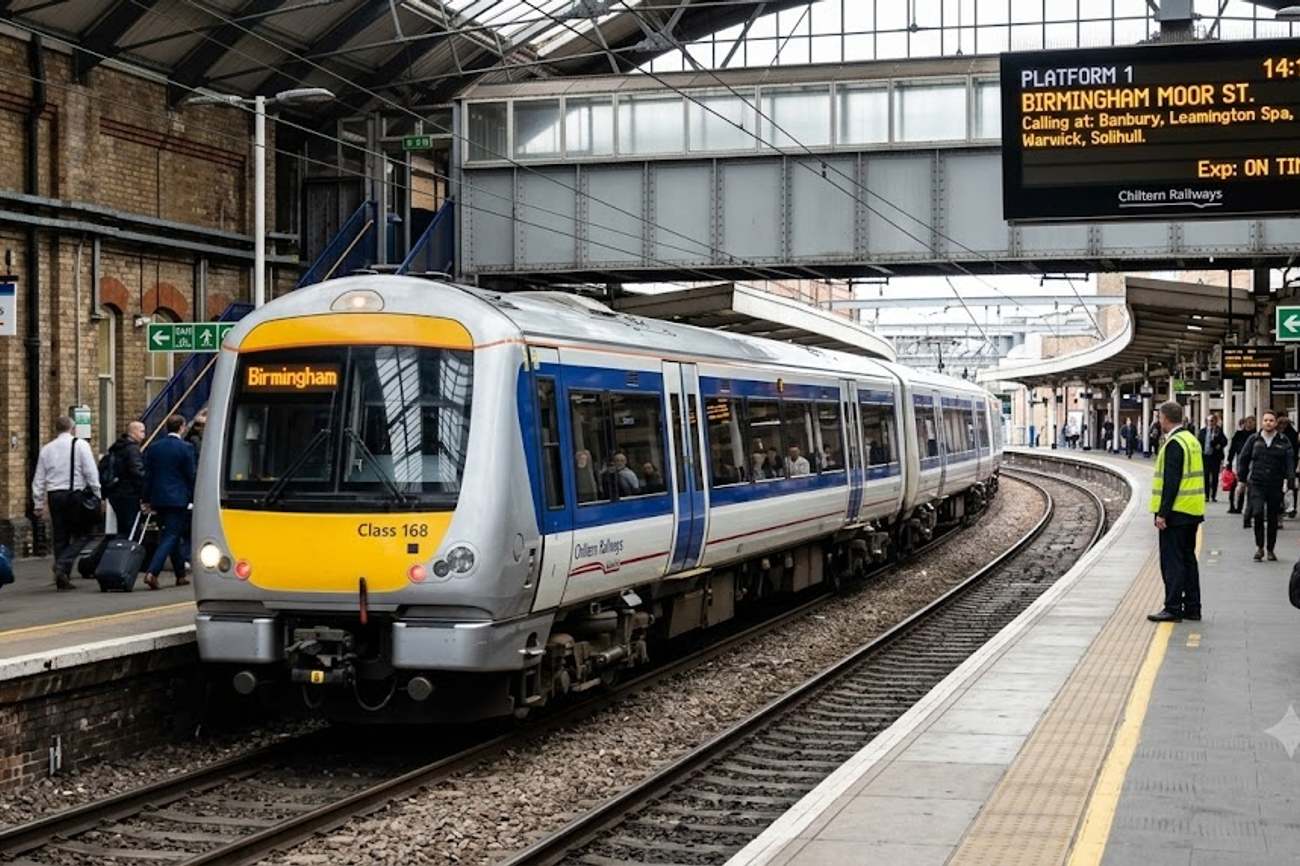
Image generated by AI
[London, October 2024] — Chiltern Railways has officially transitioned from private ownership to public sector operation, marking the end of nearly 30 years of private management. The rail operator, which connects London Marylebone to the West Midlands, now operates under a state-owned entity managed by DfT Operator Limited.
The shift is a direct result of the Passenger Railway Services (Public Ownership) Act 2024, a legislative framework allowing the UK government to bring rail contracts under state control as existing private agreements expire. Chiltern Railways is the sixth operator to move into the public sector, following the transitions of c2c, Greater Anglia, South Western Railway, Govia Thameslink Railway, and West Midlands Trains. This move is part of a broader strategy to consolidate the network under the future Great British Railways umbrella.
The Catalyst for State Control
The transition is triggered by a systemic overhaul of the British rail model. For nearly three decades, the network operated under a privatized structure established in the 1990s. The current government reform program seeks to eliminate the fragmented nature of private franchising in favor of a unified public management system.
Under the new structure, the Department for Transport (DfT) maintains oversight via DfT Operator Limited. This ensures that profits are reinvested into the infrastructure rather than distributed to private shareholders. The government intends for all passenger services under DfT contracts to be publicly owned by the end of 2027, with Great Western Railway slated for transfer on December 13.
Impacted Routes and Passenger Volume
The transition affects a network that serves approximately 20 million passengers every year. The primary corridor remains the link between London Marylebone and Birmingham Moor Street, though the impact extends across several English counties.
Key regions and hubs affected by the ownership change:
- London: Marylebone Station (Primary terminus).
- West Midlands: Birmingham Moor Street and surrounding regional hubs.
- Buckinghamshire: Local commuter services and regional stops.
- Oxfordshire: Key connections linking the university city to the capital.
- Warwickshire: Intercity and regional transit points.
While the ownership structure has changed, the existing routes and service frequencies remain intact for the immediate term. However, the state-led management is now tasked with improving reliability and accessibility across these specific corridors.
Practical Traveler Advisory and Strategic Insights
For the average passenger, the change in ownership is invisible on a daily basis, but it introduces immediate legal and operational protections.
Immediate Ticket Flexibility Passengers no longer face the rigid "operator-only" restrictions during service failures. If a Chiltern Railways service is cancelled, travelers can now use alternative direct or reasonable routes without additional costs, provided the alternative travel occurs within two hours of the original booking. This ticket acceptance currently extends to:
- Avanti West Coast
- CrossCountry
- Great Western Railway
- East Midlands Railway (expected to join the scheme shortly).
Capacity and Comfort Upgrades The move to public ownership coincides with a massive investment in rolling stock and scheduling. Starting in December 2026, the London-to-Birmingham corridor will see trains every 30 minutes throughout the day. This is supported by the addition of 25 weekday services, which will inject roughly 10,000 additional seats into the weekday schedule, 5,000 on Saturdays, and 3,000 on Sundays.
Hardware and Infrastructure Travelers will see a fleet modernization that includes six new "Chiltern Explorer" trains arriving in December 2026, bringing the total modern fleet to 13 units. These trains feature upgraded Wi-Fi, air conditioning, and enhanced accessibility. Simultaneously, a £12 million refurbishment of the Class 168 fleet is underway, ensuring every seat has power sockets and USB charging by 2028.
The 2026-2028 Modernization Timeline
The transition to public ownership is not merely administrative; it is the precursor to a physical overhaul of the network. The government has outlined a phased approach to infrastructure and service expansion.
December 2026 Milestones:
- Implementation of the new timetable with 25 additional weekday services.
- Introduction of the six additional Chiltern Explorer units.
- Activation of the 30-minute frequency between London and Birmingham.
Station Upgrades: Five of the network's highest-traffic stations will be upgraded to improve the passenger experience. These improvements include:
- Installation of new customer information screens and help points.
- Deployment of accessible ramps and modernized wayfinding systems.
- The reopening of approximately 200 parking spaces at Haddenham and Thame Parkway.
Long-term Goals (2027-2028): The final phase of the current refurbishment program will conclude in 2028, completing the interior refresh of the Class 168 fleet. This aligns with the broader goal of the UK government to have all DfT-contracted rail services in public hands by the end of 2027. Once the pending Railways Bill receives Royal Assent, the Great British Railways organization will become fully operational within 12 months to oversee the entire nationalized system.
FAQ: Chiltern Railways Public Ownership 2024
Do I need a new ticket because of the ownership change? No. All existing tickets, season passes, and bookings remain valid. The transition from private to public ownership does not change the validity of your fare or the routes you can travel.
What happens if my Chiltern train is cancelled? You can now use alternative routes via Avanti West Coast, CrossCountry, and Great Western Railway without paying extra, as long as the alternative journey is within two hours of your cancelled service.
When will the new trains and extra seats arrive? The major service boost, including 25 additional weekday services and six new Chiltern Explorer trains, is scheduled to launch in December 2026.
Will station facilities improve? Yes. Five major stations are receiving new information screens and ramps. Additionally, Haddenham and Thame Parkway will regain approximately 200 parking spaces.
State control takes the wheel as the West Midlands corridor prepares for a massive capacity surge.
Tags: Chiltern Railways, London Marylebone, Birmingham Moor Street, DfT Operator Limited, Great British Railways 2027, UK Rail Reform
Related Travel Guides
This article is for informational purposes. Flight routes, passenger regulations, visa rules, and transit advisories are subject to change by airlines and aviation authorities. Readers are advised to verify schedules and travel documentation with relevant carriers and border agencies before departure.
Related Stories
Amtrak Expands Loyalty Reach With Bilt Partnership Bringing Housing-Based Rewards to Rail Travellers
The World’s Most Beautiful Train Journeys Revealed: Australia’s Ghan Takes Top Spot in 2026 Index