
India Hospitality Sector Targets Vision 2047: HAI Conclave Outlines Growth for 225,000 Hotel Rooms
The Hotel Association of India (HAI) has unveiled a strategic roadmap to re-engineer the hospitality sector, leveraging 400 crore domestic visits to drive economic expansion by 2047.

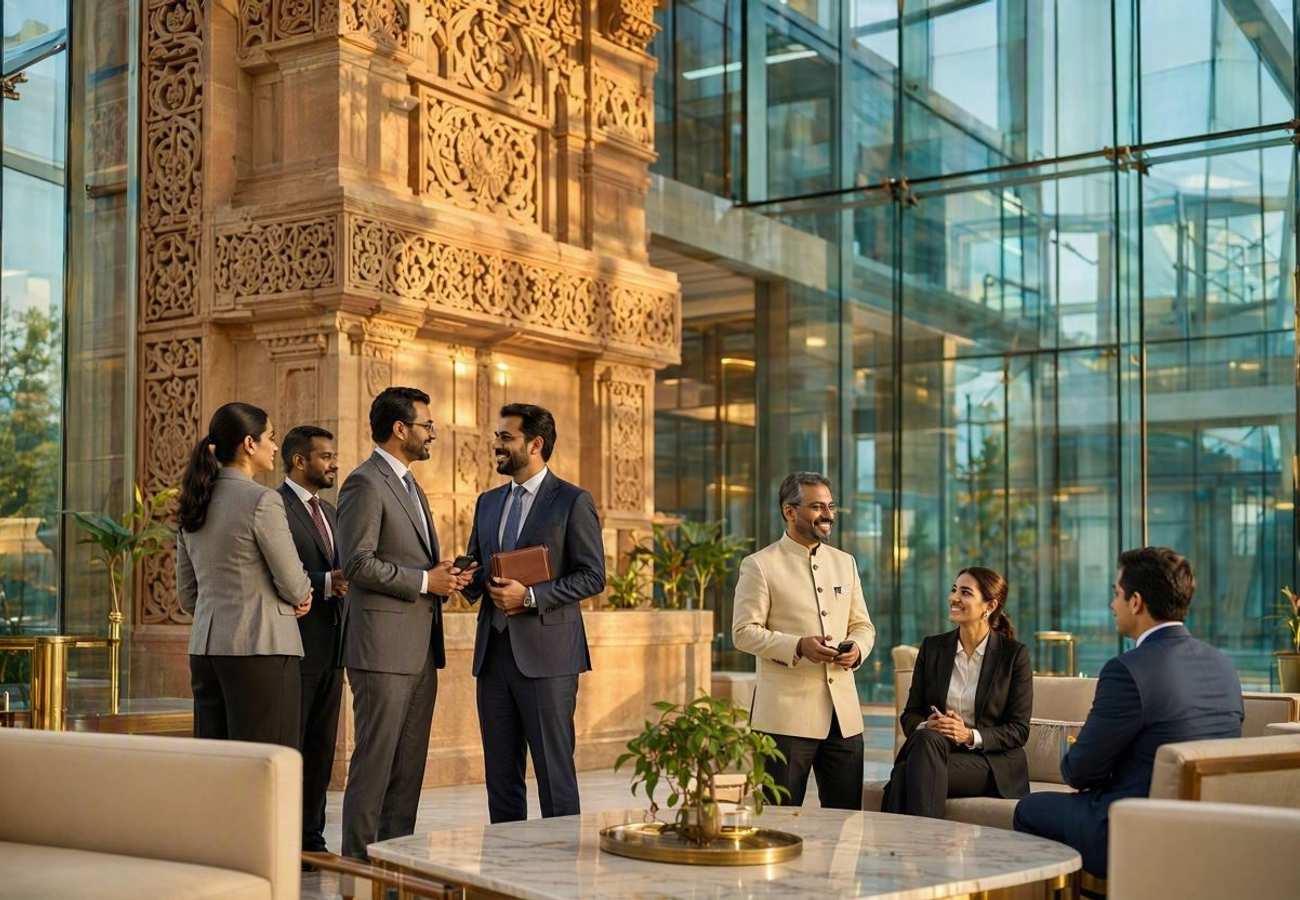
Image generated by AI
400 crore domestic tourist visits in 2024 serve as the baseline for a massive structural overhaul of the Indian hospitality sector. This staggering volume of internal movement is the primary catalyst behind the 7th HAI Hoteliers’ Conclave, held at the Taj Palace in New Delhi, where the Hotel Association of India (HAI) and government officials mapped out a trajectory toward "Vision 2047." The objective is no longer mere capacity expansion but a fundamental "re-engineering" of how the country manages the intersection of luxury accommodation, regional infrastructure, and global competitiveness.
The Strategic Pivot Toward Experience-Led Tourism
The transition currently underway in the Indian market is a shift from "beds to experiences." Union Minister for Tourism and Culture, Shri Gajendra Singh Shekhawat, indicated that the sector is moving beyond the basic provision of rooms toward an experience-led model. This shift is being fueled by a burgeoning middle class that prioritizes experiential travel over traditional sightseeing.
The government is identifying specific high-growth verticals to diversify the tourism portfolio. These include:
- Spiritual and Religious Travel: Leveraging India's deep cultural roots to attract high-volume domestic and international pilgrims.
- Wellness and Adventure: Tapping into the global trend of health-centric travel and outdoor exploration.
- Wedding Tourism: Positioning India as a premier global destination for luxury destination weddings.
- MICE (Meetings, Incentives, Conferences, and Exhibitions): Increasing the capacity for corporate events to attract foreign direct investment.
To support these goals, the Ministry of Tourism is coordinating with industry stakeholders to improve "last-mile" infrastructure. The consensus among policymakers is that while the "Atithi Devo Bhava" (Guest is God) philosophy provides a cultural advantage, it must be paired with professionalized services and modernized facilities to compete with other global hubs.
Infrastructure Gaps and Economic Benchmarks
Despite the high volume of domestic traffic, the physical capacity of the hospitality sector remains a bottleneck. KB Kachru, President of HAI and Chairman for South Asia at Radisson Hotel Group, highlighted a critical data point: India currently operates with approximately 225,000 hotel rooms. For a nation aspiring to be a global tourism superpower by 2047, this inventory is insufficient to meet projected demand.
The following table outlines the core areas of focus identified during the conclave to bridge the gap between current capacity and future goals:
| Focus Area | Current Challenge | Strategic Objective |
|---|---|---|
| Room Inventory | ~225,000 existing rooms | Rapid scale-up of accommodation to meet global demand |
| Connectivity | Last-mile infrastructure gaps | Improved road networks and efficient public services |
| Workforce | Skill gaps in young professionals | Large-scale vocational training and talent development |
| Branding | Fragmented international image | Unified global branding via the "Incredible India" campaign |
| Technology | Slow digital adoption | Integration of AI and digital transformation in guest services |
The economic reasoning provided by the former G20 Sherpa of India and former CEO of NITI Aayog suggests that tourism acts as a multiplier. Every single hotel room created does not just provide a bed; it generates a chain of employment in food and beverage, transport, and local artisanal crafts, creating a sustained economic dividend from India's demographic advantage.
Expert Analysis: The Execution Gap in Indian Hospitality
For the international investor or the frequent traveler, the direct consequence of the HAI Conclave is a signaled move toward aggressive deregulation and infrastructure spending. However, the real story lies in the phrase "move from policy intent to measurable execution."
For years, India has possessed the "intent" to be a top-ten global destination. The disconnect has always been the "last-mile" experience—the gap between a five-star hotel lobby and the poorly maintained road leading to a cultural monument. By explicitly mentioning "cleanliness" and "quality public services" as key areas for attention, the HAI is admitting that the luxury hotel sector cannot thrive in a vacuum.
The pricing pressure this creates is twofold. First, as the government pushes for "scale and speed," we will likely see a surge in mid-scale and upper-mid-scale hotel developments in Tier-2 and Tier-3 cities. Second, the push for MICE and wedding tourism will likely drive up premiums for luxury properties in primary hubs during peak seasons.
Furthermore, the integration of AI and digital transformation mentioned in the plenary sessions suggests a move toward "smart tourism." This means travelers can expect more seamless booking, personalized itineraries, and digitized government interfaces, reducing the friction that has historically deterred high-net-worth international travelers.
Key Takeaways
- Capacity Deficit: With only 225,000 rooms, India is aggressively seeking investment to expand its hospitality footprint to match its 2047 ambitions.
- Domestic Engine: The sector is leveraging a massive base of 400 crore domestic visits (2024) to fund and justify infrastructure growth.
- Diversification: Growth is shifting away from generic tourism toward specialized niches: Wellness, MICE, Wedding, and Spiritual travel.
- Infrastructure Priority: Success is now tied to "last-mile" delivery, focusing on cleanliness, road quality, and public service efficiency.
- Human Capital: A major push for youth skill development is underway to ensure the workforce can support professionalized, global-standard hospitality.
FAQ: India Hospitality Growth 2026
How will the "Vision 2047" plan affect hotel prices for travelers? In the short term, increased investment in luxury MICE and wedding tourism may raise prices in prime cities. However, the long-term goal of increasing the room inventory (beyond the current 225,000) should stabilize prices through increased supply.
What is the "Incredible India" campaign's new focus? The campaign is shifting from general promotion to a targeted strategy focusing on "invaluable economics," emphasizing high-value segments like wellness and adventure tourism to attract higher-spending international visitors.
Which regions in India are expected to see the most growth? While major hubs remain important, the focus is shifting toward regional tourism and "new destinations" to distribute the economic benefits of the 400 crore domestic visits across more states.
Is the Indian hospitality sector adopting AI? Yes. The HAI Conclave specifically identified artificial intelligence and digital transformation as essential drivers for the next stage of growth to improve operational efficiency and guest experiences.
The transition from a culture of hospitality to a global industry of scale is now a matter of execution, not ambition.
Related Travel Guides
Disclaimer
This article is for informational and educational purposes only. It does not constitute legal, financial, or professional advice. While we strive to provide accurate and up-to-date information, travel policies, regulations, and conditions change rapidly. Always verify information with official sources before making travel decisions. Nomad Lawyer makes no representations about the accuracy, reliability, completeness, or suitability of the information provided. Readers should consult qualified professionals for advice specific to their circumstances. The views expressed in this article are those of the author and do not necessarily reflect the views of Nomad Lawyer.
Naina Thakur
Contributor & Travel Specialist
Travel enthusiast and legal writer covering visa regulations, responsible tourism, and cultural journeys across global destinations.
Learn more about our team →