India Enters A New Travel Economy Phase As Foreign Exchange Outflow Rises With Growing Overseas Travel Demand

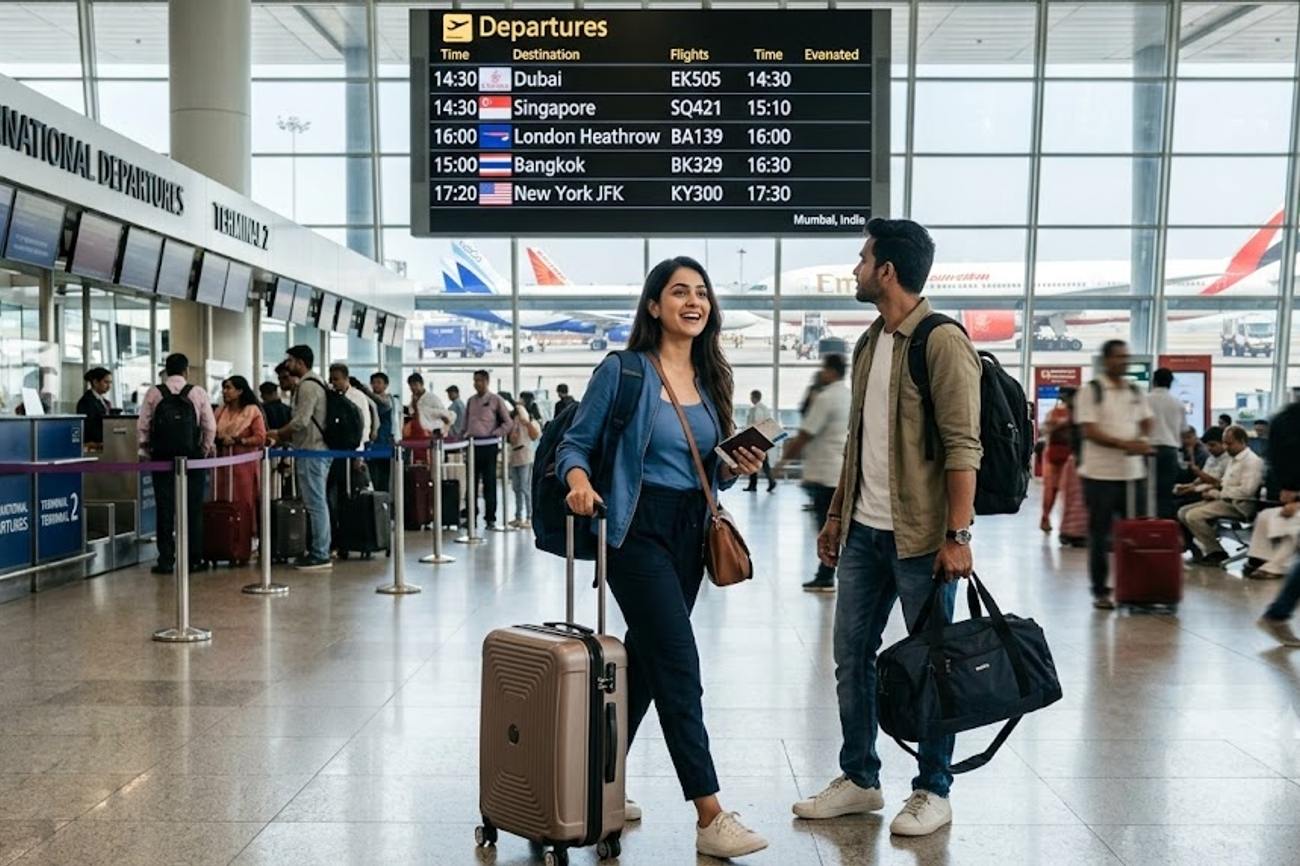
Image generated by AI
A net negative foreign exchange balance on travel marks a historic pivot for the Indian economy, as outbound spending by Indian citizens now outweighs the capital brought in by international visitors. This reversal, which occurred around 2021, signals a fundamental shift in the purchasing power and behavioral patterns of the Indian middle and upper classes, transforming the nation from a primary destination for foreign capital into a massive exporter of tourism spend.
The Outbound Exodus and the Forex Deficit
For decades, India operated as a net positive travel foreign exchange entity, meaning the revenue generated from global tourists visiting the subcontinent exceeded the amount Indians spent while vacationing abroad. However, as revealed by Shri Bhuvnesh Kumar, Secretary of the Ministry of Tourism, during the second ICC Global Business Summit 2026 at the Taj Palace in New Delhi, this dynamic has flipped.
The current deficit is not a result of declining interest in India, but rather an explosion in the appetite for global exploration among Indian nationals. This trend is exemplified by the surging interest in Mediterranean destinations. Data provided by the Indian Ministry of Tourism shows that Indian arrivals in Greece climbed from 21,630 in 2022 to 29,523 in 2023, reaching 37,150 by 2024. This represents a growth rate of nearly 72 per cent over a mere 24-month window.
While domestic travel remains a powerhouse—recording 429 crore trips in the previous year—the macroeconomic reality is that the "leakage" of currency to foreign markets is now a primary concern for policymakers. To counteract this, the government is attempting to pivot the domestic industry toward "world-class" experiences that can compete with the luxury and efficiency of overseas destinations.
Infrastructure Expansion and the Tier 2 Pivot
The surge in domestic volume is triggering a massive capital injection into the hospitality sector. One major hospitality group, currently managing 365 properties, has committed to adding approximately 300 new hotels within the next three years.
Significantly, this investment is no longer confined to the traditional "Golden Triangle" of Delhi, Agra, and Jaipur. Capital is flowing into Tier 2 and Tier 3 cities, as the consistent demand from domestic travelers has mitigated the financial risks previously associated with building premium hotels outside of major metropolitan hubs.
| Metric | Data Point |
|---|---|
| Domestic Trips (Previous Year) | 429 Crore |
| Greek Arrivals from India (2022) | 21,630 |
| Greek Arrivals from India (2023) | 29,523 |
| Greek Arrivals from India (2024) | 37,150 |
| Indian Visa Categories (Old $\rightarrow$ New) | 22 $\rightarrow$ 9 |
| Medical Value Visa Extension | 60 Days $\rightarrow$ 1 Year |
| E-visa Accessibility | 171 Countries |
| ONDC Pilot (Varanasi) | 180 Products |
| Total ONDC Tourism Products | 23,000 |
Expert Analysis: The "Experience Economy" vs. Volume Growth
The current strategy of the Indian Ministry of Tourism suggests a sophisticated understanding of the "Experience Economy." Secretary Kumar's warning against "chasing volume" is a critical distinction. In aviation and tourism, volume without distribution leads to overtourism, infrastructure collapse, and a degradation of the visitor experience.
India's growing overseas travel demand has led to a significant increase in foreign exchange outflow, with the country's residents spending more on international travel than ever before. According to the Reserve Bank of India, the outflow of foreign exchange for travel has risen substantially, indicating a shift in the country's travel economy. This trend is expected to continue, driven by the increasing disposable income of Indian citizens and their desire to explore international destinations.
For the traveler, the direct consequence of the "Dekho Apna Desh 2.0" initiative is a government-led push toward "distributed demand." By steering traffic away from saturated hubs and toward locations like Turtuk in Ladakh, Gurez and Doodhpatri in Jammu and Kashmir, and Varkala in Kerala, the state is attempting to create new luxury and adventure niches.
However, the bottleneck is no longer just physical infrastructure, but digital visibility. As Shri Harvinder Singh of United Airlines noted, the modern traveler plans around an "end-to-end experience" rather than a geographic coordinate. If a destination like Varkala is not seamlessly bookable and visible on global digital platforms, it remains invisible regardless of its physical beauty.
The pricing pressure this creates is significant. To stop the foreign exchange bleed, India must transition from "budget-friendly" to "value-premium." If the domestic offering remains stagnant while Indian travelers' expectations rise due to their international journeys, the net negative forex position will only widen. The integration of the Open Network for Digital Commerce (ONDC) with 23,000 identified products is a direct attempt to solve this "discoverability" problem.
Key Takeaways
- Forex Reversal: India has shifted from a net positive to a net negative travel foreign exchange balance since 2021, as outbound spending now exceeds inbound revenue.
- Visa Liberalization: To attract higher-spending international visitors, India has slashed visa categories from 22 to 9 and extended medical visas to one year.
- Strategic Diversification: The "Dekho Apna Desh 2.0" program aims to redirect domestic traffic from overcrowded hubs to emerging sites in Ladakh, Kerala, and Jammu and Kashmir.
- Hospitality Boom: A massive expansion is underway in Tier 2 and Tier 3 cities, with one major group alone adding 300 hotels over three years.
- Connectivity Catalyst: The launch of direct flights between India and Greece in January 2026 serves as a blueprint for how connectivity unlocks existing, latent demand.
FAQ: India Tourism 2026
Why is India's travel foreign exchange now negative? It is negative because Indian citizens are spending more money on international travel and services abroad than foreign tourists are spending while visiting India. This reflects the rising wealth and global mobility of the Indian population.
What is the "Dekho Apna Desh 2.0" initiative? It is a government strategy to promote "distributed demand," encouraging travelers to visit lesser-known destinations like Turtuk and Varkala instead of only visiting traditional hotspots like the Taj Mahal.
How has the Indian visa process changed for international visitors? The government has streamlined the process by reducing the number of visa categories from 22 to 9 and expanding e-visa access to 171 countries to make entry more efficient.
What role does ONDC play in Indian tourism? The Open Network for Digital Commerce (ONDC) is being used to digitize tourism products. Starting with a pilot in Varanasi, it has expanded to include 23,000 bookable experiences across the country.
The battle for the Indian traveler's wallet is no longer fought on the ground, but in the digital interface and the quality of the curated experience.
Tags: Ministry of Tourism India, ONDC Tourism, India-Greece Aviation, Dekho Apna Desh 2.0, Indian Travel Forex 2026
Related Travel Guides
- Seychelles and More Countries Ignite a Powerful Global Responsible Tourism Push for Lasting Peace
- Thailand and Malaysia Keep Pace With Leading Asian Destinations As New Data Reveals The True First Asian Holiday Cost
- Florida Creates A Powerful Underwater Paradise In Destin-Fort Walton Beach As Millions Of Pounds Of Concrete Transform U.S. Gulf Tourism
This article is for informational purposes. Flight routes, passenger regulations, visa rules, and transit advisories are subject to change by airlines and aviation authorities. Readers are advised to verify schedules and travel documentation with relevant carriers and border agencies before departure.
Related Stories

Canada Inbound Travel from India Falls 7.8% in 2026: Gateway Analysis for Toronto, Vancouver, and Montréal

Thailand Tourism Slowdown Tests Small Businesses as Kingdom Pivots to High-Yield Travel and Secondary Provinces