
Idaho Kokanee Salmon Run 2026: Prime Autumn Viewing Creeks, Trophy Fish, and Eagle Spectacles
Every autumn, Idaho's landlocked kokanee salmon transform into crimson spawners across Trestle Creek, Boise mountain tributaries, McCall, and Lake Coeur d'Alene.

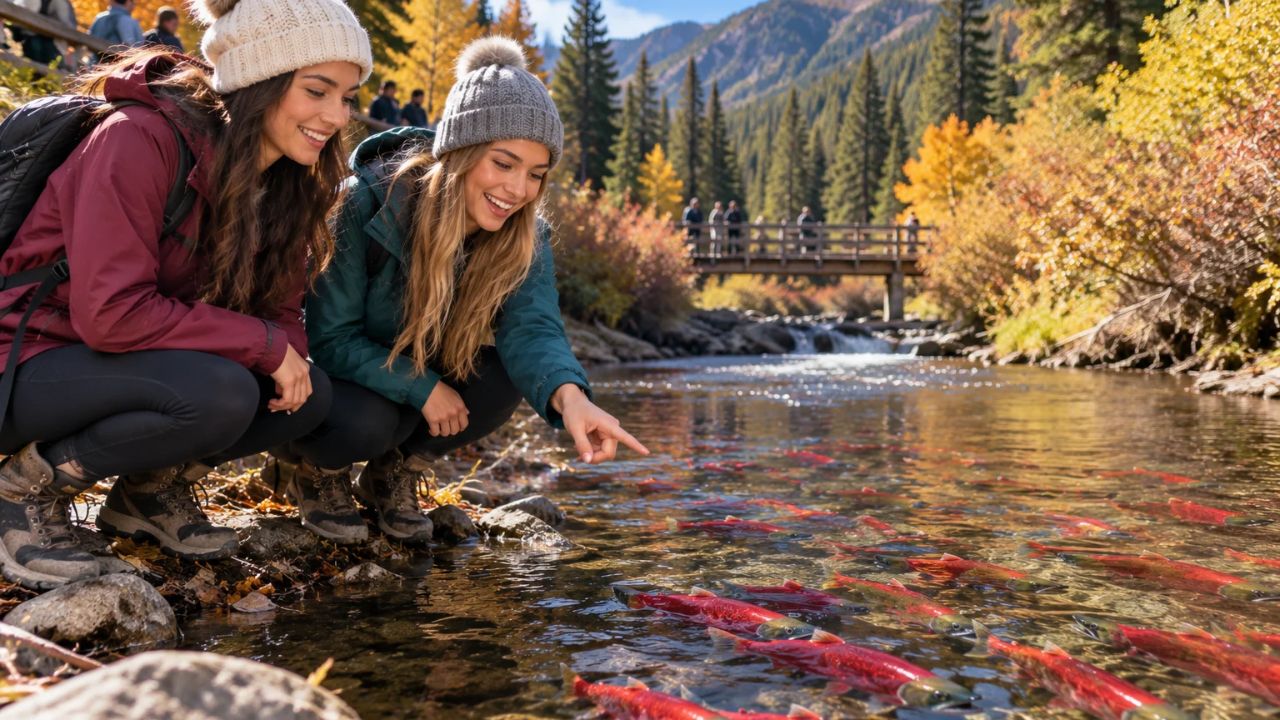
Image generated by AI
Unlike ocean-migrating salmon that travel thousands of river miles to reach the Pacific, Idaho's kokanee spend their entire two to four-year life cycle trapped in freshwater reservoirs before turning brilliant crimson with dark olive heads for their final autumn journey. As these landlocked sockeye fight their way into shallow tributary gravel to deposit eggs in excavated nests called redds, mountain rivers across the state suddenly illuminate in vivid red bands before the fish complete their life cycle and nourish surrounding forests.
The Seasonal Surge Across Idaho's Northern and Central Waterways
The annual kokanee migration is not a single uniform event, but a staggered natural phenomenon that unfolds across distinct regional river systems between late August and early October. While southern tributaries surrounding Boise activate first, northern glacially carved lakes like Pend Oreille and Coeur d'Alene hit peak viewing density just as autumn mountain foliage reaches its golden maximum.
State wildlife managers at the Idaho Department of Fish and Game actively support these runs to sustain multi-species river ecosystems. Decomposing post-spawn salmon deliver essential marine-grade phosphorus and nitrogen into sterile mountain streams, stimulating algae and aquatic insect blooms that feed native cutthroat, rainbow, and predatory bull trout. In 2026, conservation teams reached a major milestone by releasing approximately one million juvenile kokanee produced through the state's first captive broodstock facility to maintain population stability during natural cycle dips.
What Makes Regional Spawning Corridors Unique
Each watershed presents a completely different viewing environment depending on water depth, predator activity, and local fishery management.
In northern Idaho, Trestle Creek flows into Lake Pend Oreille just a quarter-mile off Highway 200. This protected channel offers crystal-clear gravel shallows where visitors can stand along the stream bank and watch dense schools of scarlet salmon hold against the current. Millions of hatched fry are later stocked into Granite Creek, replenishing the deep lake's food web.
In central Idaho's high-elevation resort valley of McCall, Payette Lake showcases a remarkable ecological balance. While aggressive lake trout predation previously suppressed numbers, targeted suppression programs and regulated hatchery splits on the North Fork Payette River have allowed returning kokanee to grow to record dimensions. In 2026, despite lower overall counts, returning spawners are measuring over 20 inches in length. At the river weir, biologists direct 50 percent of returning adults upstream for wild spawning while harvesting the remaining half for hatchery rearing.
Near Boise, early-run kokanee fill high-desert mountain channels including Mores Creek, Grimes Creek, Deadwood River, and both the Middle and South Forks of the Boise River. Feeding into Lucky Peak, Arrowrock, and Anderson Ranch reservoirs, these waterways offer easily accessible bankside vantage points for travelers based in the state capital.
Further north at Lake Coeur d'Alene's Wolf Lodge Bay, the kokanee run sets the stage for a world-class winter wildlife gathering. From November through February, hundreds of migrating bald eagles congregate around Higgins Point, Mineral Ridge Boat Ramp, and the Mineral Ridge Trailhead to feed on spent salmon carcasses.
Visitor Insider Tips
- Trestle Creek Etiquette: Trestle Creek is strictly closed to all fishing. Never wade into the water or let dogs splash through the stream bed. Stepping directly onto gravel bars crushes delicate egg nests buried mere inches beneath the surface.
- Optimal Observation Hours: Arrive at viewing creeks between 9:00 AM and 1:00 PM on sunny days. Polarized sunglasses cut through surface river glare, revealing vivid fish movements that remain invisible to the naked eye.
- Boise Basin Transit: When exploring Mores Creek or Grimes Creek, take Highway 21 north from Boise past Lucky Peak Reservoir. Pull completely into designated gravel turnouts rather than stopping on blind mountain curves.
- Eagle Viewing Protocols: At Lake Coeur d'Alene, view eagles through high-power spotting scopes or 10x binoculars from established perimeter lookouts. Approaching shorelines on foot flushes resting raptors and disrupts feeding patterns.
Cultural and Environmental Context
Kokanee viewing anchors sustainable eco-tourism across rural Idaho towns, bringing travelers to family-owned lodges, outfitters, and local cafes in McCall, Sandpoint, and Coeur d'Alene during the shoulder season between summer boating and winter ski operations.
State and federal conservation bodies work closely with regional communities to safeguard cold-water corridors. Through trail networks maintained across public lands by the US Forest Service, visitors gain direct access to sensitive river habitats while interpretive signage teaches watershed protection and catch-and-release ethics outlined by Visit Idaho.
FAQ: Visiting Idaho for the Kokanee Salmon Run 2026
When is the absolute peak time to see red kokanee in Idaho?
Boise area streams peak between late August and mid-September, while northern locations like Trestle Creek and Payette Lake hit peak red coloration from late September through early October.
Are visitors allowed to catch spawning kokanee?
Spawning viewing creeks like Trestle Creek are strictly closed to fishing. In open reservoirs like Anderson Ranch, anglers can harvest kokanee according to seasonal bag limits set by state wildlife authorities.
Where can families watch kokanee salmon with small children?
The interpretive site at Trestle Creek near Hope, Idaho, and the paved greenbelt paths around Boise river access points offer flat, safe, and easily accessible bankside viewing.
What causes kokanee salmon to change color from silver to red?
During their transition from deep open waters to shallow breeding streams, kokanee absorb carotenoid pigments from the plankton they consumed, turning their skin deep scarlet while developing hooked jaws and green heads.
Watching thousands of brilliant red kokanee navigate cold mountain currents captures the resilient, untamed wilderness spirit of Idaho's autumn waterways.
Disclaimer
This article is for informational and educational purposes only. It does not constitute legal, financial, or professional advice. While we strive to provide accurate and up-to-date information, travel policies, regulations, and conditions change rapidly. Always verify information with official sources before making travel decisions. Nomad Lawyer makes no representations about the accuracy, reliability, completeness, or suitability of the information provided. Readers should consult qualified professionals for advice specific to their circumstances. The views expressed in this article are those of the author and do not necessarily reflect the views of Nomad Lawyer.
Naina Thakur
Contributor & Travel Specialist
Travel enthusiast and legal writer covering visa regulations, responsible tourism, and cultural journeys across global destinations.
Learn more about our team →