
Huntington Beach and Florida Coastlines Advance Sensory-Inclusive Travel With KultureCity

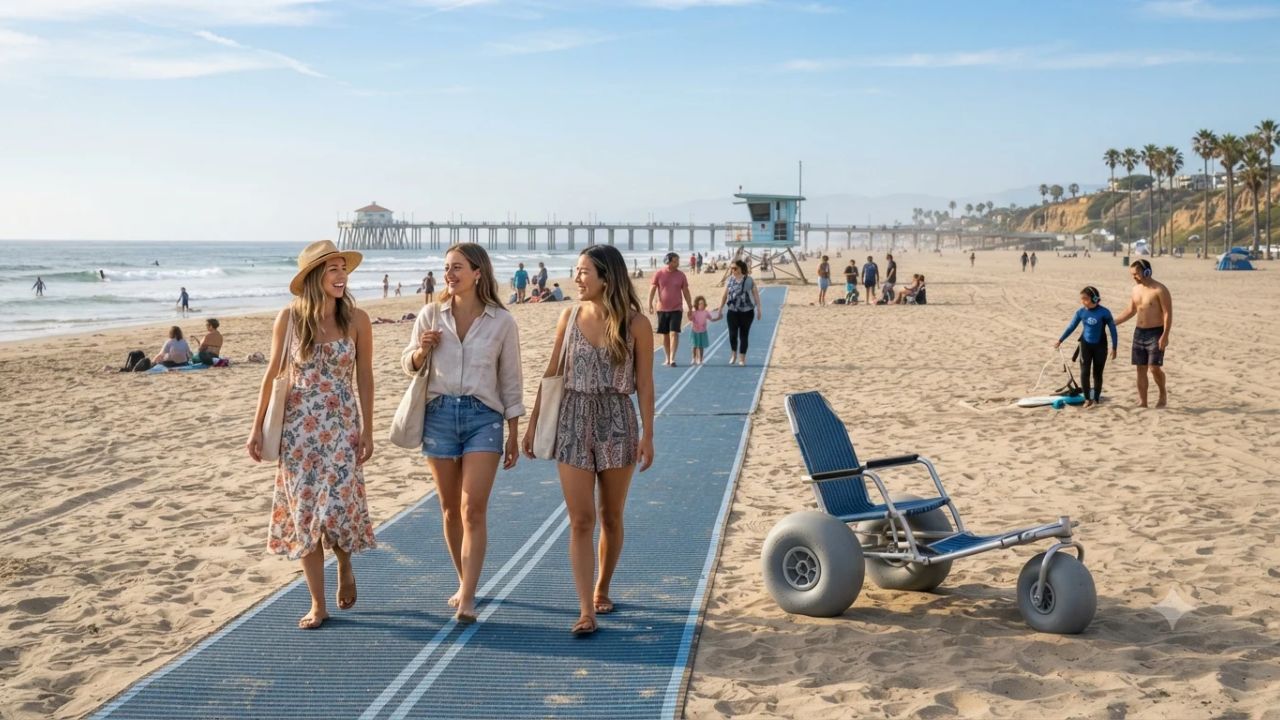
Image generated by AI
With more than 1,538 frontline hospitality workers and municipal emergency personnel certified across California's Surf City alongside 170 trained ocean lifeguards in South Florida, American coastal destinations are executing a profound shift from purely physical ADA compliance to comprehensive sensory inclusion. Led by non-profit organization KultureCity and verified through 1,141 granular accessibility metrics from Wheel the World, Huntington Beach and six Broward County communities are fundamentally rewriting the operational playbook for millions of neurodivergent travelers and families navigating invisible disabilities.
Beyond Physical Ramps: Deconstructing the Invisible Disability Deficit
For over three decades following the passage of the Americans with Disabilities Act (ADA) in 1990, public beach accessibility was defined almost exclusively through physical architecture. Municipalities focused their capital investments on poured-concrete ramps, blue polyurethane Mobi-mats, and balloon-tired beach wheelchairs. While these physical interventions remain vital for wheelchair users, they left millions of travelers with non-apparent disabilities entirely unassisted.
Coastal environments present an intense, volatile sensory reality. The roar of crashing surf, reflective glare across open sand, sudden thermal shifts, crowded boardwalks, and blaring public safety sirens can trigger debilitating sensory overload for individuals with autism, post-traumatic stress disorder (PTSD), traumatic brain injuries, and sensory processing differences. For families traveling with neurodivergent individuals, the unpredictability of a public beach frequently resulted in premature departures or total avoidance of coastal vacations.
Recognizing this market failure, destination marketing organizations are abandoning piecemeal accommodations in favor of destination-wide systemic preparation. Under the leadership of Visit Huntington Beach and the City of Huntington Beach, California achieved its first destination-wide Sensory Inclusive® Certification. Simultaneously, Visit Lauderdale expanded its "Beaches for All" initiative across six distinct coastal municipalities, creating continuous corridors of trained personnel and dedicated calming infrastructure from Pompano Beach down to Hallandale Beach.
Bicoastal Implementation Matrix: California Surf City vs. Broward County Beaches
The operational rollouts across the Pacific and Atlantic coastlines highlight two complementary models of municipal inclusion. In Huntington Beach, the strategy is defined by multi-sector civic integration, training not only ocean lifeguards but also city police officers, firefighters, hotel concierges, and retail employees.
In Broward County, Florida, the framework leverages regional inter-municipal coordination, ensuring that visitors moving across municipal boundaries encounter uniform sensory toolkits and trained beach patrol teams.
| Beach Destination & Region | Sovereign State | KultureCity Certification Scope | Specialized Hardware & Spaces | Verified Frontline Human Capital |
|---|---|---|---|---|
| Huntington Beach | California | First Destination-Wide City Certification | Mobi-mats, beach wheelchairs, adaptive surf, fire pits | 1,538+ municipal & hospitality personnel |
| Fort Lauderdale Beach | Florida | Certified Broward County Beach Hub | Sensory bags, calm zones, weighted lap pads | Certified beach patrol & ocean rescue |
| Pompano Beach | Florida | Integrated Coastal Community Partner | Sensory signage, sensory bags, floating chairs | Cross-trained regional ocean lifeguards |
| Hollywood Beach | Florida | Broadwalk & Shoreline Certified Sector | KultureCity Social Stories, sensory bags | Trained municipal public safety ambassadors |
| Lauderdale-by-the-Sea | Florida | Village Coastal District Partner | Quiet spaces, visual cue cards, sunglasses | Certified village ocean rescue staff |
| Dania Beach | Florida | Coastal Gateway & Pier District | Sensory-friendly signage, designated decompression | Trained first responders & lifeguards |
| Hallandale Beach | Florida | South County Shoreline & Aquatic Hub | Sensory beach kits, sensory-friendly public pools | Lifeguards & community aquatic staff |
Across all six participating Florida beaches, frontline lifeguard towers maintain specialized KultureCity sensory kits. These resources contain certified noise-canceling headphones, fidget tools, non-verbal communication cue cards, and strobe-reduction sunglasses. In addition, designated calm spaces allow individuals experiencing sensory dysregulation to rest, decompress, and reset without leaving the beach environment.
Verifiable Data vs. Broad Generalities: The Wheel the World Integration
A persistent hurdle facing disabled and neurodivergent travelers is the prevalence of vague, unverified marketing language. Hotel websites routinely describe properties as "fully accessible" without providing specific measurements or operational nuances, resulting in painful surprises upon check-in.
To eliminate this uncertainty, Huntington Beach integrated its KultureCity certification with an extensive multi-year technical audit conducted by Wheel the World. Over a three-year evaluation cycle, specialized accessibility auditors surveyed nearly 30 hotels, major cultural venues, and outdoor recreation operators across the city.
This systematic ground assessment produced 1,141 verified accessibility data points. Travelers can access verified measurements detailing bed heights, roll-in shower configurations, grab-bar alignments, ramp incline percentages, and ambient decibel levels across public spaces. By pairing sensory awareness training with audited physical dimensions, destinations provide neurodivergent travelers and wheelchair users with total predictability before confirming non-refundable flights and lodging reservations.
Expert Analysis: The $58 Billion Accessible Market, Frontline De-Escalation, and Brand Resilience
For hotel operators, regional airlines, and municipal tourism boards, the direct consequence of embracing sensory inclusion is direct access to an extraordinarily loyal, high-spending, and historically underserved market segment. Industry economic studies estimate that accessible domestic travel accounts for over $58 billion in direct annual expenditures across the United States. Neurodivergent families travel in multi-generational parties, stay longer to avoid frequent relocation stress, and demonstrate exceptional repeat visitation rates when they find a destination that reliably accommodates their needs.
The pricing pressure this creates means that certified hotels and oceanfront resorts in Huntington Beach and Fort Lauderdale can command sustainable average daily room rates while maintaining elevated off-peak occupancy. When parents know that hotel front-desk staff recognize non-verbal communication and restaurant waitstaff understand sensory food aversions, they are far more willing to commit travel budgets to those verified properties rather than gambling on uncertified competitors.
From a municipal safety and liability standpoint, training over 1,538 city employees and 170 lifeguards delivers profound public safety benefits. In crowded summer beach environments, behavioral manifestations of sensory overload—such as sudden running, vocal distress, or withdrawal—can easily be misidentified by untrained security personnel as disruptive behavior or medical intoxication.
Trained first responders who understand sensory processing can immediately de-escalate volatile situations, provide weighted lap pads or noise-reducing headphones, and guide distressed individuals to quiet decompression zones. By transforming frontline public servants into compassionate accessibility stewards, these forward-thinking coastal communities prove that genuine hospitality is measured by how safely and comfortably every member of the public can experience the shore.
Key Takeaways
- First in California: Huntington Beach became California's first destination to earn destination-wide KultureCity Sensory Inclusive® Certification, training more than 1,538 city personnel and hospitality staff.
- Six-Beach Florida Network: Greater Fort Lauderdale integrated sensory inclusion across six Broward County shorelines—Fort Lauderdale, Pompano, Hollywood, Lauderdale-by-the-Sea, Dania, and Hallandale.
- Specialized Sensory Hardware: Participating lifeguard stations provide free sensory kits featuring noise-canceling headphones, fidget tools, strobe-reduction sunglasses, and verbal cue cards.
- Data-Backed Verification: Huntington Beach’s three-year partnership with Wheel the World generated 1,141 verified accessibility metrics across nearly 30 local hotels, venues, and attractions.
- Frontline Safety Integration: Training emergency responders, police officers, and lifeguards ensures that sensory overload is met with informed de-escalation rather than punitive enforcement.
FAQ: Sensory-Inclusive Beach Travel 2026
What is a KultureCity Sensory Inclusive beach certification?
It is a formal accreditation indicating that lifeguards, hospitality staff, and public safety personnel have completed specialized training to assist individuals with sensory sensitivities, autism, PTSD, and invisible disabilities, supported by dedicated calming sensory equipment.
What items are inside a KultureCity sensory bag at the beach?
Sensory bags contain certified noise-canceling headphones, tactile fidget tools, visual cue cards for non-verbal communication, and strobe-reduction sunglasses designed to mitigate sensory overload from ocean glare and crowds.
Which Florida beaches provide sensory-inclusive resources?
Six Broward County communities provide sensory resources: Fort Lauderdale Beach, Pompano Beach, Hollywood Beach, Lauderdale-by-the-Sea, Dania Beach, and Hallandale Beach, with trained lifeguards stationed along the coast.
How does Wheel the World assist travelers visiting Huntington Beach?
Wheel the World provides travelers with 1,141 verified accessibility data points across nearly 30 Huntington Beach hotels and attractions, detailing exact bed heights, step-free pathways, and roll-in showers before booking.
Where the ocean tide meets the open sand, American beaches are demonstrating that the highest form of coastal luxury is an environment where every mind and body feels entirely at home.
Related Travel Guides
Morristown Festival on the Green & Historic Downtown Guide
Alexandria and US Destinations Reach Billion-Dollar Tourism Milestones
10-best-accessible-beaches-and-coastal-resorts-usa-reddit-2026
Disclaimer
This article is for informational and educational purposes only. It does not constitute legal, financial, or professional advice. While we strive to provide accurate and up-to-date information, travel policies, regulations, and conditions change rapidly. Always verify information with official sources before making travel decisions. Nomad Lawyer makes no representations about the accuracy, reliability, completeness, or suitability of the information provided. Readers should consult qualified professionals for advice specific to their circumstances. The views expressed in this article are those of the author and do not necessarily reflect the views of Nomad Lawyer.
Preeti Gunjan
Contributor & Community Manager
A passionate traveller and community builder. Preeti helps grow the Nomad Lawyer community, fostering engagement and bringing the reader experience to life.
Learn more about our team →