
Why Flying Emirates’ Airbus A380 Still Delivers the Smoothest Long-Haul Experience in Modern Aviation
As the global aviation industry phases out the superjumbo, Emirates continues to leverage the Airbus A380’s unique archi

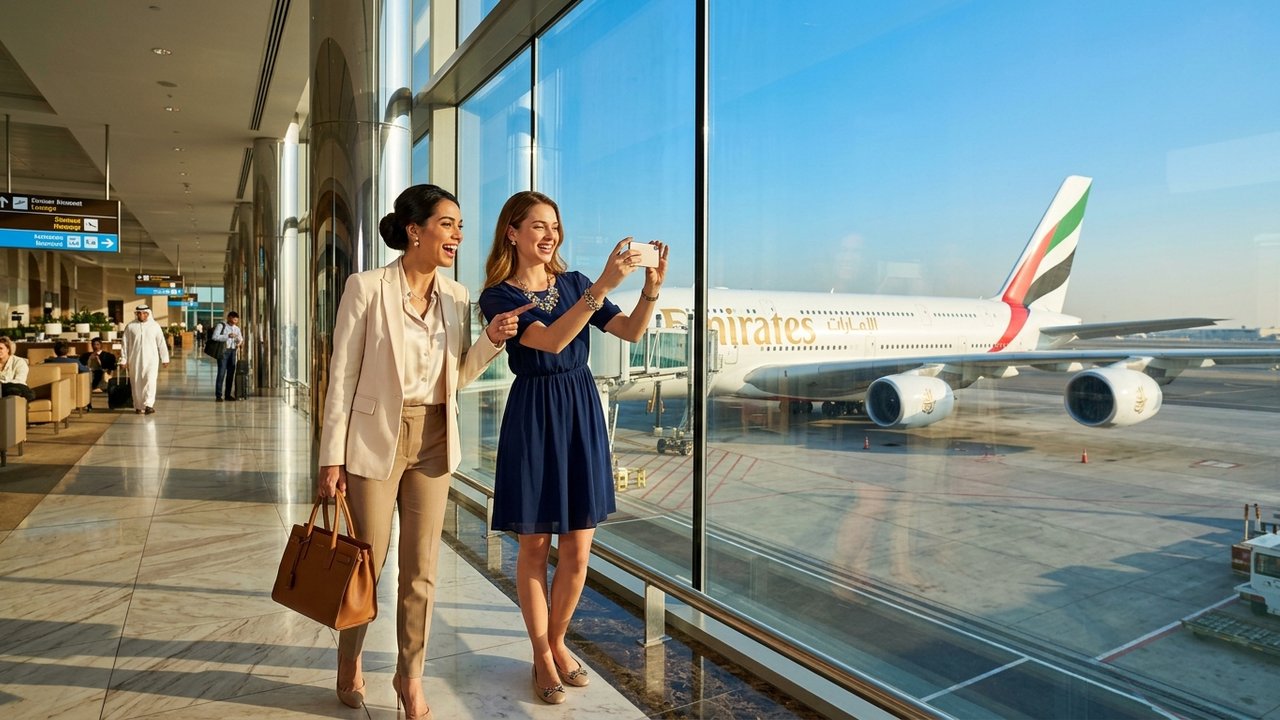
Image generated by AI
Travelers booking long-haul flights with Emirates consistently rank the Airbus A380 as a superior choice for comfort, stability, and cabin atmosphere. While most carriers have retired the double-decker superjumbo, Emirates maintains the world’s largest fleet and deliberately positions the aircraft as the cornerstone of its premium long-haul product. The advantage does not stem from a single luxury feature, but from a combination of fuselage geometry, acoustic engineering, and cabin zoning that materially reduces passenger fatigue on extended sectors.
How the Double-Deck Layout Reduces Cabin Congestion
The A380’s wide-body fuselage and full-length double-deck configuration create significantly more usable cabin volume per passenger than single-deck widebodies. Emirates capitalizes on this spatial advantage by designing broader aisles, larger service galleys, and more open seating zones. The result is a noticeable reduction in bottlenecks during boarding, meal service, and peak lavatory usage.
Vertical cabin separation is equally critical. Emirates deliberately zones the upper deck to isolate premium cabins from main-deck economy traffic. This architectural choice minimizes cross-cabin foot movement, allowing business and first-class passengers to access amenities without navigating through high-density economy corridors. The layout transforms what is typically a congested boarding process into a more distributed, orderly flow, particularly on ultra-long-haul sectors where passenger density peaks.
Acoustic Dampening and Ride Stability at Cruise Altitude
Aircraft size and propulsion directly influence in-cabin comfort. The A380’s four-engine configuration and massive airframe naturally dampen engine noise and absorb turbulent air better than smaller twin-engine widebodies. Passengers frequently report a noticeably quieter cabin environment, even when seated near the wings during takeoff and climb. The reduced vibration and acoustic footprint compound over time, making the aircraft feel less fatiguing on flights exceeding six hours.
Ride stability follows the same principle. The superjumbo’s mass and wing design smooth out atmospheric disturbances, leading to a calmer cruise experience. While modern flight computers and fly-by-wire systems on newer aircraft mitigate harsh turbulence, the physical inertia of the A380 still provides a perceptibly more settled ride, a factor that premium travelers and frequent flyers actively consider when selecting flights.
Premium Zoning and Exclusive Onboard Amenities
Emirates treats the A380 as a flagship platform, investing in cabin features that single-deck aircraft physically cannot accommodate. The airline’s configuration includes dedicated upper-deck lounges for business and first-class passengers, creating a social environment typically reserved for boutique hotels or private terminals. First-class suites also feature onboard shower spas, a amenity unavailable on any other commercial widebody aircraft.
These features are not merely marketing differentiators; they reflect a deliberate strategy to prioritize passenger flow and spatial comfort over maximum seat density. Travel reviews and aviation forums consistently highlight the upper deck’s tranquil atmosphere, noting that the combination of reduced traffic, quieter acoustics, and exclusive lounging areas creates a cabin environment that feels fundamentally separate from the main deck.
Operational Constraints and When the Superjumbo Makes the Most Sense
The A380’s advantages are highly situational. Emirates concentrates these aircraft on its highest-yield, highest-demand routes, typically deploying one A380 frequency per day on major long-haul corridors while filling remaining slots with Boeing 777-300ERs. This scheduling reality means the superjumbo experience is not guaranteed, and seat selection must account for aircraft substitution.
Operational constraints also limit the A380’s flexibility. The aircraft requires specially reinforced gates, wider taxiways, and compatible terminal infrastructure, which can extend turnaround times at congested hubs. Additionally, the comfort benefits scale with flight duration. On medium-haul or shorter long-haul routes, the advantages of cabin volume and ride stability become less pronounced, and modern twin-engine widebodies often deliver a comparable product. For passengers seeking the full A380 experience, booking extended sectors in premium cabins on confirmed A380 routes yields the highest return.
A380 vs. Boeing 777-300ER: Comfort Versus Efficiency
The Boeing 777-300ER remains Emirates’ core long-haul workhorse, prized for its fuel efficiency, range, and economic flexibility. However, the 777’s single-deck design and tighter fuselage diameter impose physical limits on cabin volume and passenger flow. While Emirates equips its 777s with modern seating and up-to-date entertainment systems, the aircraft cannot replicate the spatial distribution, acoustic calm, or exclusive zoning of the A380.
The table below outlines how the two aircraft compare across key passenger experience metrics.
| Feature | Emirates Airbus A380 | Emirates Boeing 777-300ER |
|---|---|---|
| Aircraft layout | Full-length double deck | Single deck |
| Typical Emirates role | Flagship long-haul & high-demand routes | Core long-haul workhorse |
| Cabin volume per passenger | Very high | Moderate |
| Boarding experience | Faster, more distributed across decks | Busier, single-aisle bottlenecks |
| Cabin noise level | Noticeably quieter in cruise | Louder, especially near engines |
| Turbulence perception | Lower, more stable ride | More noticeable on rough sectors |
| Upper-deck experience | Dedicated premium-only zone | Not applicable |
| Cross-cabin foot traffic | Minimal in premium cabins | Higher, especially during service |
| Social spaces | Onboard lounge (Business & First) | None |
| Shower facilities | Available in First Class | Not available |
| Overall atmosphere | Calm, spacious, relaxed | Efficient but busier |
The comparison clarifies why frequent travelers actively request the A380 when booking. The 777 excels in operational economics and network reach, but the superjumbo delivers a distinctly different passenger environment. When seat configuration and service standards are comparable, the A380’s architectural advantages often tip the decision toward long-haul comfort.
Key Takeaways
- Emirates operates the world’s largest A380 fleet, using the aircraft as a flagship for long-haul comfort rather than pure capacity.
- The double-deck layout, wider fuselage, and vertical cabin zoning significantly reduce congestion, boarding bottlenecks, and cross-cabin foot traffic.
- Four-engine propulsion and larger airframe mass dampen noise and turbulence, delivering a quieter and more stable cruise experience.
- Exclusive amenities like the upper-deck business lounge and first-class shower spas are only possible on the A380’s unique architecture.
- A380 deployments concentrate on high-demand routes, often operating once daily, with Boeing 777-300ERs covering remaining frequencies.
- The comfort advantages scale with flight duration; shorter sectors and economy class on medium-haul routes see diminished benefits.
- While the 777-300ER offers superior fuel efficiency and route flexibility, the A380 remains unmatched for cabin volume, acoustic calm, and premium zoning.
FAQ
Can an Emirates A380 be substituted with another aircraft after booking? Yes. Emirates occasionally swaps A380s for Boeing 777-300ERs or other widebodies due to maintenance, scheduling, or demand adjustments. Passengers booking specifically for the superjumbo should monitor their flight status and consider purchasing flexible fares if the A380 experience is essential.
Which cabin class benefits most from the A380’s design? Premium cabins, particularly business and first class, gain the most from the upper-deck separation, lounge access, and reduced economy foot traffic. Economy passengers also benefit from wider aisles, larger galleys, and a calmer cabin environment, though the spatial advantages are most pronounced on sectors exceeding six hours.
Why haven’t other airlines successfully operated the A380 alongside the 777? The superjumbo requires high passenger density to justify its operational costs, complex gate infrastructure, and higher fuel burn compared to twin-engine widebodies. Emirates aligned its network, hub strategy, and premium product directly around the A380’s strengths, whereas other carriers lacked the route concentration or cabin differentiation needed to sustain the aircraft profitably.
Is the A380 still a viable choice for business travelers on tight schedules? Business travelers prioritizing productivity and rest often prefer the A380 for its quieter cabin, stable ride, and dedicated upper-deck work or lounge spaces. However, those requiring maximum schedule flexibility or direct point-to-point routing may find the 777-300ER’s operational efficiency and broader network coverage more practical.
Related Travel Guides
Disclaimer
This article is for informational and educational purposes only. It does not constitute legal, financial, or professional advice. While we strive to provide accurate and up-to-date information, travel policies, regulations, and conditions change rapidly. Always verify information with official sources before making travel decisions. Nomad Lawyer makes no representations about the accuracy, reliability, completeness, or suitability of the information provided. Readers should consult qualified professionals for advice specific to their circumstances. The views expressed in this article are those of the author and do not necessarily reflect the views of Nomad Lawyer.
Preeti Gunjan
Contributor & Community Manager
A passionate traveller and community builder. Preeti helps grow the Nomad Lawyer community, fostering engagement and bringing the reader experience to life.
Learn more about our team →