
Hungary Opens Autumn Rail Route Through The Puszta
Hungary Opens Autumn Rail Route Through The Puszta

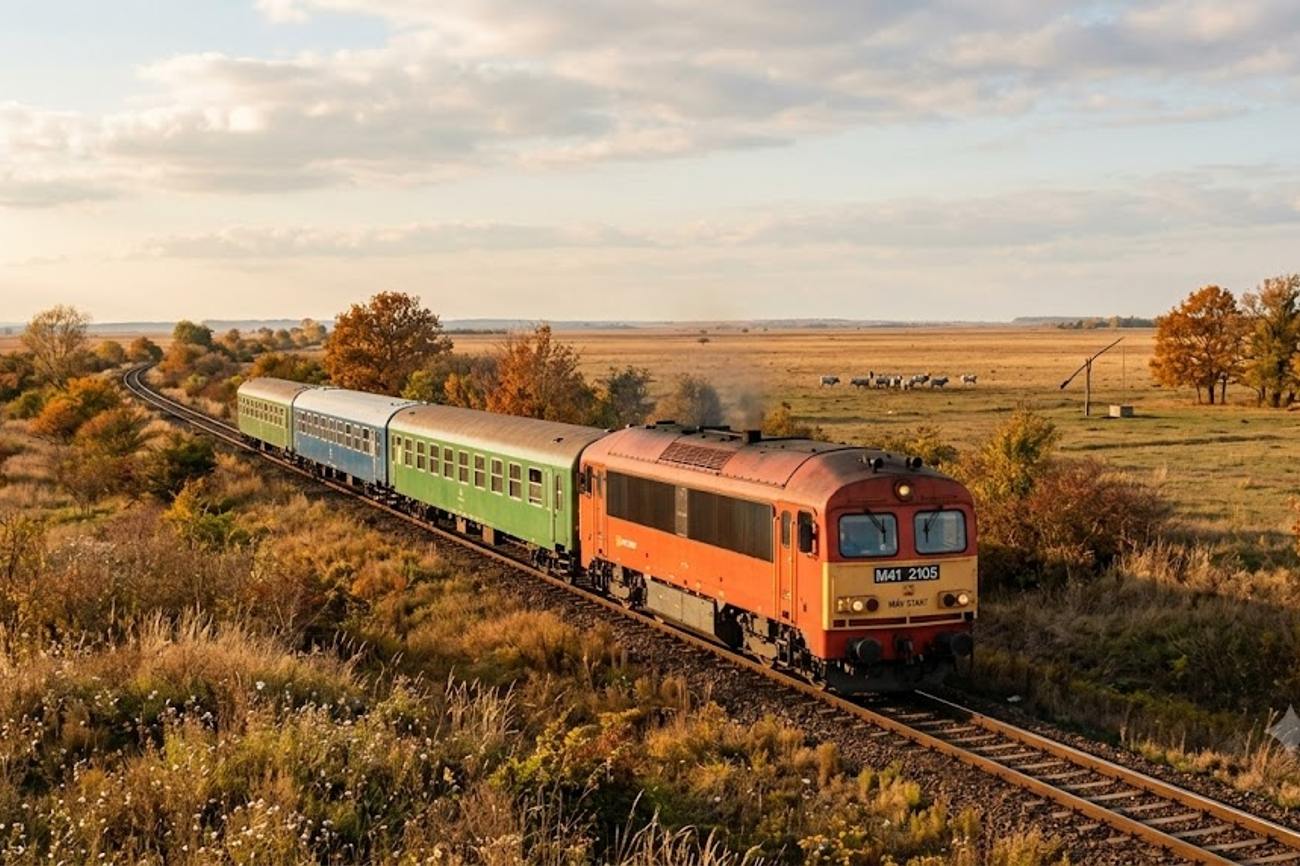
Image generated by AI
The shift toward "slow travel" in Central Europe is manifesting in tangible infrastructure; while urban tourism in Hungary remains centered on Budapest, the introduction of specialized heritage rail links in September 2026 signals a strategic pivot toward rural diversification. This move mirrors a broader regional trend where secondary destinations are seeing increased investment to alleviate overtourism in capital cities. By connecting the Lake Neusiedl and Fertő-Hanság region of Austria and Hungary directly to the Hortobágy National Park, operators are leveraging the growing demand for nature-based, low-carbon transit.
The Rural Rail Pivot in Numbers
The launch of the autumn rail service in September 2026 is not merely a seasonal offering but a calculated entry into the "heritage tourism" market. The route focuses on two primary ecological and cultural anchors: the Lake Neusiedl/Fertő-Hanság area and the Hortobágy National Park. The latter stands as Hungary’s largest protected area and a UNESCO-recognized cultural landscape.
From a data perspective, this initiative targets a specific window of high-value biological activity. Autumn is the peak period for migratory bird patterns in the Puszta, specifically the arrival of cranes, geese, and raptors. By scheduling these weekend tours specifically for the autumn season, the service aligns its capacity with the highest possible demand for wildlife observation.
The operational model relies on vintage rolling stock, which transforms the transit phase from a utility into a product. This aligns with current World Tourism Organization (UNWTO) data suggesting that travelers are increasingly valuing the "journey as the destination." The integration of equestrian culture—specifically the csikós horse-herding traditions—and regional paprika-based gastronomy ensures that the rail line serves as a conduit for a multi-sensory cultural product rather than a simple transport link.
Comparative Context: Urban vs. Rural Distribution
Historically, Hungary's tourism data has been heavily skewed toward Budapest. The capital's thermal baths and Danube architecture create a high concentration of visitors in a small geographic area. The September 2026 rail initiative is a direct attempt to redistribute this passenger load toward the eastern plains.
When comparing the Lake Neusiedl region to the Hortobágy Puszta, we see a transition from "wetland and vineyard tourism" to "grassland and pastoral tourism." This creates a diversified itinerary that appeals to two different high-spend demographics: the oenophile (wine lover) and the ornithologist (bird watcher).
The following table illustrates the shift in tourism focus provided by this new connectivity:
| Metric | Traditional Budapest-Centric Model | New Rural Heritage Rail Model (Sept 2026) |
|---|---|---|
| Primary Driver | Architecture & Urban Culture | Wildlife & Pastoral Traditions |
| Transit Mode | High-speed rail / Ride-share | Vintage Heritage Rolling Stock |
| Key Geographic Anchor | Danube River Basin | Hortobágy National Park / Lake Neusiedl |
| Seasonal Peak | Year-round / Summer | Autumn (Migratory Bird Window) |
| Activity Profile | Sightseeing & Museums | Birdwatching, Equestrianism, Gastronomy |
| Travel Pace | Point-to-Point Efficiency | "Slow Travel" / Experience-Based |
This shift is consistent with IATA and rail industry observations regarding the "de-centering" of European tourism, where travelers are seeking "hidden gems" to avoid the crowds of primary hubs.
Practical Traveler Advisory and Strategic Insights
For the individual traveler, the September 2026 launch changes the logistical calculus of visiting eastern Hungary. Previously, reaching the Hortobágy National Park from Austria required significant road travel or complex transfers. The introduction of a dedicated weekend rail service removes this friction.
Actionable Booking Advice: If you are planning a Central European itinerary for Q3 or Q4 of 2026, you should now budget for a "split-stay" model. Instead of spending five days in Budapest, allocate three days to the capital and a full weekend for the Puszta rail circuit. Because this service utilizes vintage rolling stock—which typically has lower capacity than modern trains—tickets for the autumn birdwatching window are expected to sell out rapidly. I recommend monitoring booking windows 4-6 months in advance.
Furthermore, travelers should synchronize their visits with the migratory patterns of cranes. To maximize the value of the trip, combine the rail journey with a stay in the Lake Neusiedl region to experience the contrast between the Austrian vineyards and the Hungarian grasslands.
The seasonal rail route offers travelers an immersive journey through the Great Hungarian Plain, highlighting the region's unique biodiversity and rural heritage. Visitors can coordinate their itineraries and explore regional attractions through the [Visit Hungary](https://www.visit magyarul.hu) official tourism portal.
Projections for Central European Connectivity
The trajectory of this project suggests a blueprint for further "niche rail" developments across the Austro-Hungarian border. By proving the viability of a heritage-based, seasonal route, operators are likely to explore similar links between other under-utilized rural zones.
We can expect a rise in "themed" transit. Just as this route leverages birdwatching and equestrianism, future routes may focus on specific agricultural harvests or regional festivals. This movement toward specialized, low-frequency, high-experience rail travel is a direct response to the saturation of the mass-market tourism industry.
The long-term data trend indicates that the "experience economy" is moving away from the "what" (the destination) and toward the "how" (the mode of travel). The September 2026 service is a primary example of this evolution, turning a geographic gap into a marketable asset. As more travelers seek to reduce their carbon footprint while maintaining a luxury or heritage experience, these vintage rail links will likely see a year-over-year increase in occupancy rates, potentially leading to an expansion of the service into the spring migration season.
FAQ: Puszta Heritage Rail 2026
Will ticket prices for the vintage train be higher than standard rail? Yes. Heritage rail services typically command a premium over standard transit because they are marketed as "experiences" rather than mere transportation. Expect pricing to reflect a tour package rather than a commuter fare.
Is this the best way to reach Hortobágy National Park? For those valuing the experience and sustainability, yes. While driving is faster, the rail link provides a curated transition from the Lake Neusiedl region to the Puszta, eliminating the stress of cross-border driving.
Which airlines provide the best access for this route? Travelers should fly into Vienna International Airport (VIE) or Budapest Ferenc Liszt International Airport (BUD). Vienna provides the most direct access to the starting point of the Lake Neusiedl segment.
When is the absolute best time to book for birdwatching? The peak migration occurs in autumn. To ensure a seat on the September 2026 departures, travelers should aim to book their rail slots as soon as the window opens, likely in early 2026.
The transition from the vineyard-lined shores of Lake Neusiedl to the endless horizons of the Puszta represents the new frontier of European luxury: the luxury of slowing down.
Related Travel Guides
Disclaimer
This article is for informational and educational purposes only. It does not constitute legal, financial, or professional advice. While we strive to provide accurate and up-to-date information, travel policies, regulations, and conditions change rapidly. Always verify information with official sources before making travel decisions. Nomad Lawyer makes no representations about the accuracy, reliability, completeness, or suitability of the information provided. Readers should consult qualified professionals for advice specific to their circumstances. The views expressed in this article are those of the author and do not necessarily reflect the views of Nomad Lawyer.
Raushan Kumar
Founder & Lead Developer
Full-stack developer with 11+ years of experience and a passionate traveller. Raushan built Nomad Lawyer from the ground up with a vision to create the best travel and law experience on the web.
Learn more about our team →