Surviving a Long Layover at New York JFK Airport: Local Guide to Lounges, TWA Hotel, and City Escapes 2026

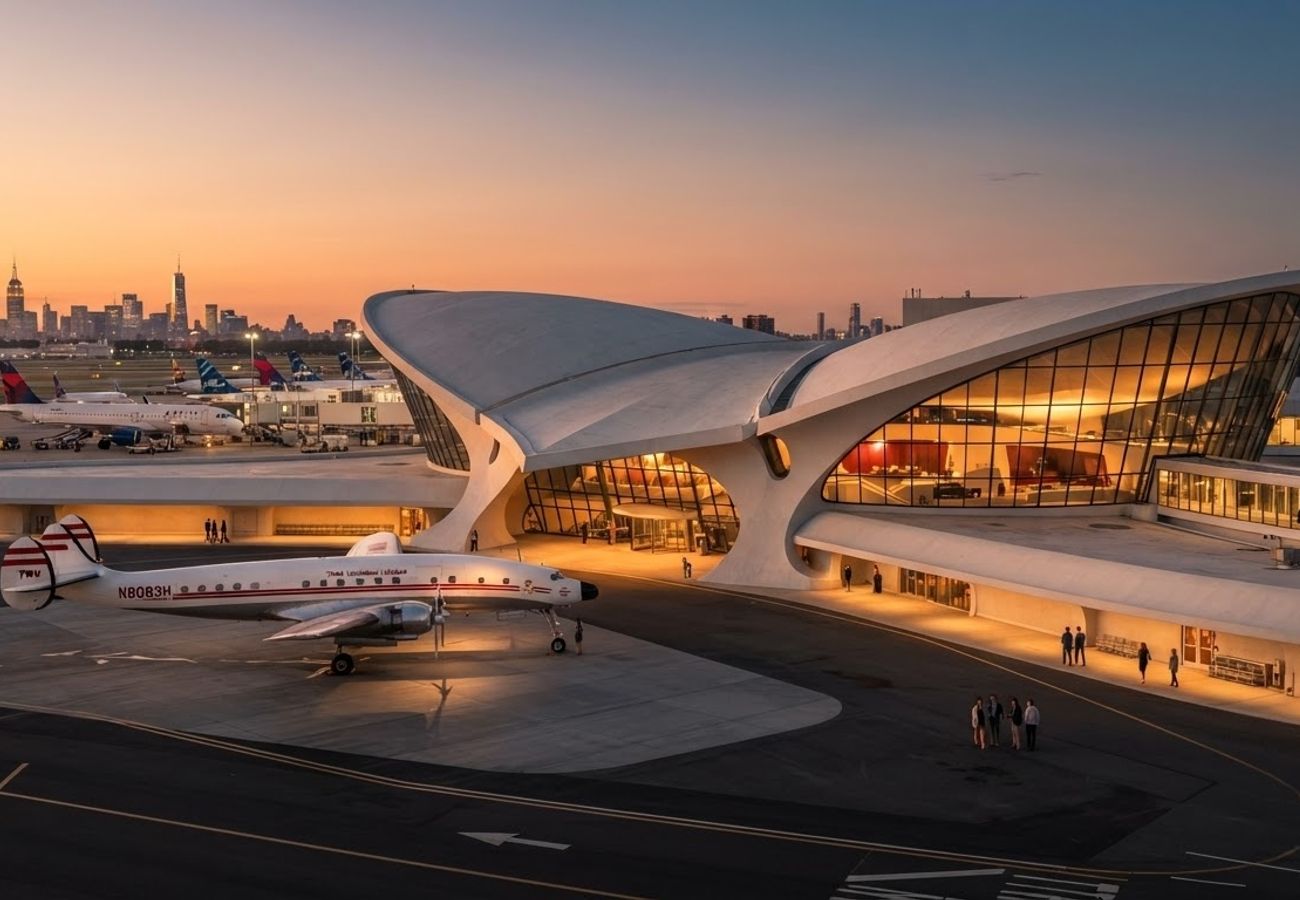
Image generated by AI
A 7-hour layover at JFK is often a mathematical illusion; after immigration, security, and transit, your actual "free" time is frequently closer to 4 hours. Understanding the rigid geography of New York's primary gateway is the difference between a stressful wait and a productive break.
The Reality of the JFK Time Budget
For the seasoned traveler, the primary challenge at John F. Kennedy International Airport is not the wait itself, but the "invisible" time loss. An 8-hour window on a ticket does not equate to 8 hours of leisure. Between deplaning, navigating immigration (for international arrivals), and the mandatory 2-hour pre-flight security buffer, a significant portion of the clock vanishes.
Local experience suggests a strict hierarchy for layover planning:
- Under 6 Hours: Stay airside. The risk of traffic or security delays makes leaving the airport a gamble.
- 7 Hours: The "borderline" zone. Only venture out if you have a specific, nearby destination and minimal luggage.
- 8 to 10 Hours: The realistic window for a curated visit to Manhattan or Queens, provided flights are on schedule.
Timing also dictates strategy. A daylight layover offers full access to city infrastructure and airport retail, while overnight stretches shift the priority from sightseeing to biological necessities: sleep, hygiene, and silence.
Navigating the Terminal Maze
JFK operates as a series of disconnected hubs (Terminals 1, 4, 5, 7, and 8). Because terminals are not connected behind security, moving between them requires the AirTrain—a driverless system that serves as the airport's circulatory system.
The AirTrain operates on two distinct logic paths:
- The Inner Loop: Free of charge and running 24 hours a day, this connects the terminals. A full loop typically takes under 20 minutes, with specific terminal transfers taking 5 to 10 minutes.
- The Outer Legs: Paid transit to Jamaica and Howard Beach stations. This is the gateway to the Long Island Rail Road (LIRR) and the NYC Subway, utilizing OMNY contactless payment.
For those transferring airlines—such as arriving at Terminal 1 and departing from Terminal 8—expect a landside transfer. This process, involving immigration and re-clearing security, typically consumes 60 to 90 minutes, though construction can extend this window.
Premium Recovery: Lounges and Private Suites
To avoid the chaos of public gate areas, investing in "quiet zones" is the most effective strategy for mental recovery. As of 2026, JFK hosts over two dozen lounge options.
Terminal 4 is the current epicenter for premium services, featuring the Delta Sky Club and the American Express Centurion Lounge, the latter of which provides essential shower suites and chef-curated menus. For those without high-tier credit cards, mid-range lounges like the Admirals Club in Terminal 8 offer day passes typically ranging from 50 to 80 dollars.
For passengers requiring absolute privacy for work or sleep, Minute Suites (Terminal 4, near Gate B39) provides enclosed spaces with daybeds and desks. Pricing generally starts around 55 to 60 dollars for the first hour, offering a sanctuary from the ambient noise of the terminal.
The TWA Hotel: A Mid-Century Sanctuary
For those who find lounge seating insufficient, the TWA Hotel at Terminal 5 serves as both a luxury retreat and a cultural landmark. Occupying the restored 1960s TWA Flight Center, the hotel is accessible via a short walkway from Terminal 5 or the AirTrain.
The hotel's "day stay" model is specifically designed for layovers, allowing passengers to book rooms in blocks of several hours. This is often more cost-effective than multiple lounge passes for families or couples. Beyond the rooms, the hotel offers a rooftop pool overlooking the runways and a lobby filled with vintage aviation memorabilia, turning a transit wait into a destination experience.
Visitor Insider Tips
- The "Quiet Gate" Hunt: If you are roughing it overnight, head to Terminal 5 or Terminal 4. Look for carpeted corners and rows of seats without armrests. Pack a lightweight layer; JFK's air conditioning is notoriously aggressive during the night.
- The OMNY Shortcut: Do not waste time at MetroCard kiosks. Use OMNY (contactless payment via phone or credit card) at the AirTrain fare gates for the fastest exit toward the city.
- The Wellness Reset: Use XpresSpa in Terminal 4 for a 20-minute neck and shoulder massage. It is a high-cost but high-reward way to break the physical tension of a long-haul flight.
- Immigration Buffer: If arriving from overseas during afternoon or evening peaks, add an extra hour to your transit calculations. Customs queues can be unpredictable.
Tourism Outlook
JFK is currently undergoing significant redevelopment to streamline the passenger experience. The shift toward integrated wellness (spas and private suites) and the success of the TWA Hotel indicate a trend where the airport is no longer just a transit point, but a hospitality destination. As the infrastructure evolves, the "layover" is being rebranded as a "short-stay experience," encouraging travelers to spend more time and capital within the airport ecosystem.
Turn your transit time into a tactical advantage.
Related Travel Guides
This article is for informational purposes. Flight routes, passenger regulations, visa rules, and transit advisories are subject to change by airlines and aviation authorities. Readers are advised to verify schedules and travel documentation with relevant carriers and border agencies before departure.
Related Stories
Dubai Airports and Emirates Sync Infrastructure for Winter Surge with 260M Passenger Capacity Goal

Bolivia Emerges as Top Corporate Incentive Destination for High-Impact Executive Retreats in 2026