
Legend of Speed: The F-4 Phantom II Remains One of Aviation's Most Formidable Achievements
Breaking airline news and aviation industry updates for 2026.

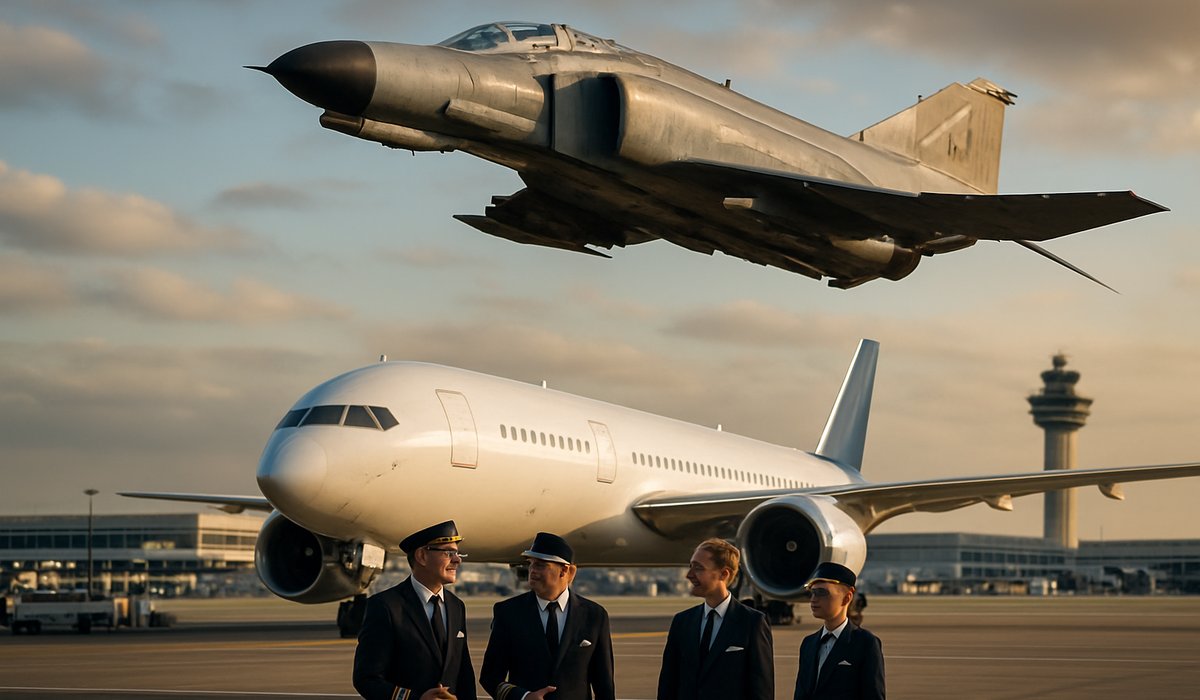
Image generated by AI
Legend of Speed: The F-4 Phantom II Remains One of Aviation's Most Formidable Achievements
The Cold War-era fighter jet that redefined aerial combat capabilities and dominated skies for decades
A Revolutionary Leap in Military Aviation
The McDonnell Douglas F-4 Phantom II stands as one of the most consequential military aircraft ever developed, fundamentally reshaping expectations for fighter jet performance in the post-1945 era. Engineered with speed as its primary design objective, the Phantom II emerged as the world's fastest operational fighter aircraft during its era, embodying a radical departure from previous combat aviation philosophy.
Developed during an era of rapidly evolving Cold War tensions, the aircraft represented designers' bold conviction that the future of aerial warfare would pivot toward extended-range engagements conducted at high altitudes. This strategic vision prioritized advanced radar systems and sophisticated missile technology over traditional dogfighting capabilities—a revolutionary concept that influenced fighter jet development for generations to come.
Performance That Defined an Era
The Phantom II's exceptional velocity capabilities set it apart from contemporary military aircraft. Its twin turbofan engines generated tremendous thrust, propelling the jet to unprecedented speeds that made it the fastest combat aircraft available when operational squadrons began deployment. This performance advantage translated directly into tactical superiority, allowing pilots to intercept adversaries, execute rapid maneuvers, and escape threatened engagement zones with unmatched swiftness.
The aircraft's design philosophy emphasized altitude performance alongside speed, enabling operations in the rarified upper atmosphere where earlier jets struggled. This combination of velocity and ceiling altitude created a multi-dimensional advantage that military strategists across NATO and allied nations recognized immediately.
Enduring Legacy in Aviation History
Beyond raw speed metrics, the F-4 Phantom II secured its place in aviation lore through operational versatility. The aircraft served across multiple roles—air superiority, ground attack, and reconnaissance—demonstrating that advanced performance characteristics could accommodate diverse mission requirements without compromising core capabilities.
The jet's influence extended globally, with numerous air forces adopting the platform and numerous variants emerging to meet specific operational demands. Its longevity in active service across multiple decades underscored the fundamental soundness of its engineering and design principles.
The Phantom II remains a testament to 1950s aviation innovation, representing a pivotal moment when military aircraft design transformed from incremental advancement into revolutionary reimagining of aerial combat potential.
FAQ: Understanding the F-4 Phantom II
What was the maximum speed of the F-4 Phantom II? The aircraft achieved supersonic velocities exceeding Mach 2, making it the fastest fighter jet of its generation and establishing speed records that influenced fighter development worldwide.
Why was the F-4 Phantom II considered revolutionary? Its design prioritized long-range missile engagements and high-altitude operations over traditional close-range dogfighting, representing a fundamental shift in military aviation philosophy during the Cold War.
Which countries operated the F-4 Phantom II? Multiple NATO nations and allied air forces deployed the aircraft, with various international variants customized for specific operational requirements and strategic objectives.
How long did the F-4 Phantom II remain in active service? The platform demonstrated exceptional longevity, serving operational squadrons across multiple decades and remaining relevant despite significant technological advances in aviation.
What made the Phantom II superior to competing fighter jets? Its combination of exceptional speed, high-altitude performance, advanced radar systems, and missile technology created a comprehensive tactical advantage unavailable in contemporary aircraft.
Related Travel Guides
External Resources
Disclaimer
This article is for informational and educational purposes only. It does not constitute legal, financial, or professional advice. While we strive to provide accurate and up-to-date information, travel policies, regulations, and conditions change rapidly. Always verify information with official sources before making travel decisions. Nomad Lawyer makes no representations about the accuracy, reliability, completeness, or suitability of the information provided. Readers should consult qualified professionals for advice specific to their circumstances. The views expressed in this article are those of the author and do not necessarily reflect the views of Nomad Lawyer.
Preeti Gunjan
Contributor & Community Manager
A passionate traveller and community builder. Preeti helps grow the Nomad Lawyer community, fostering engagement and bringing the reader experience to life.
Learn more about our team →