
Boeing's Modified Dreamlifter: The Workhorse Behind Global Aircraft Manufacturing Reaches 4,600 Miles on Single Tank
Breaking airline news and aviation industry updates for 2026.

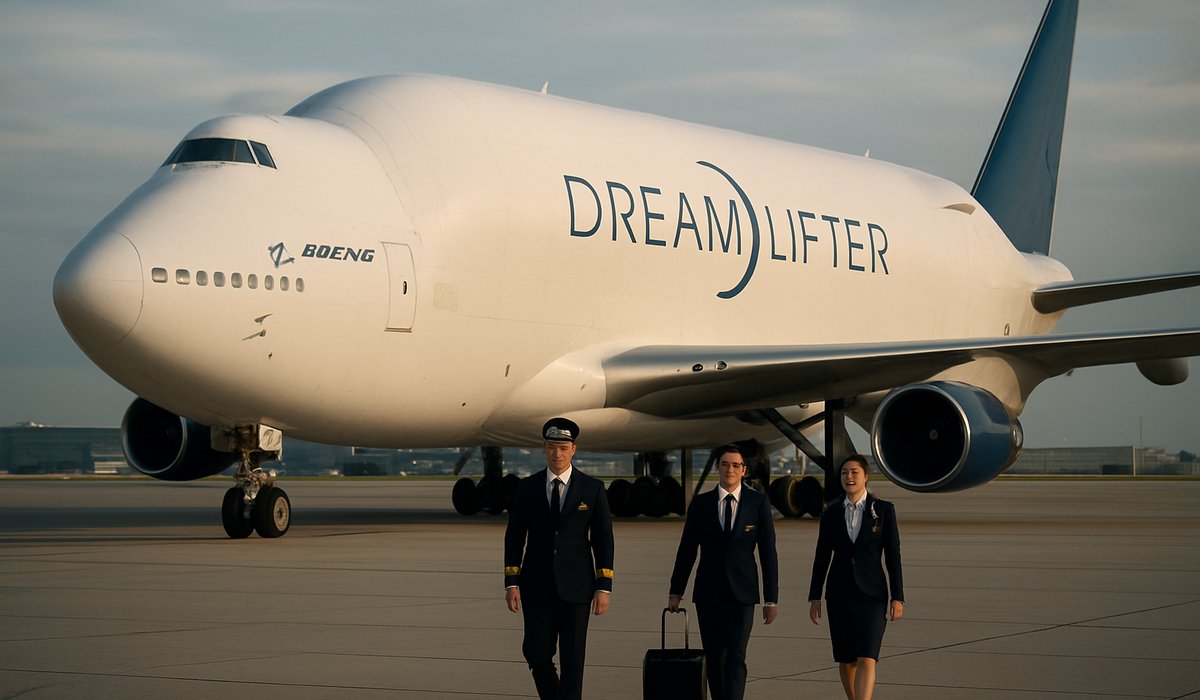
Image generated by AI
Boeing's Modified Dreamlifter: The Workhorse Behind Global Aircraft Manufacturing Reaches 4,600 Miles on Single Tank
How aviation's most ambitious supply chain logistics depend on a heavily modified cargo aircraft designed to transport massive 787 components worldwide
Revolutionary Supply Chain Demands a Revolutionary Aircraft
Boeing's decision to fundamentally reimagine how the 787 Dreamliner would be manufactured—distributing component production across a global network of suppliers rather than concentrating production in a single facility—created an unprecedented logistical challenge. To solve this problem, the aerospace manufacturer developed the Dreamlifter, a heavily modified cargo aircraft purpose-built to transport oversized fuselage sections, wings, and other critical components from manufacturing partners around the world to final assembly lines in North Charleston, South Carolina and Everett, Washington.
The specialized freighter represents one of aviation's most dramatic engineering adaptations, fundamentally transformed from its commercial roots to accommodate the enormous dimensional requirements of 787 subassemblies.
Impressive Range Capabilities Enable Global Manufacturing Network
The Dreamlifter can travel approximately 4,600 miles without refueling—a range that strategically enables Boeing to maintain supply chain efficiency across continents. This extended operational radius proves critical for connecting geographically dispersed manufacturing facilities to assembly operations, allowing Boeing to consolidate component shipments and optimize logistics costs despite volatile jet fuel prices that have pressured aviation industry economics in recent years.
The aircraft's capability to traverse intercontinental distances on a single fuel load represents a significant competitive advantage in managing the complex choreography required to keep assembly lines productive.
Engineering Marvel Meets Manufacturing Necessity
Built on the foundation of the 747-400 freighter, the Dreamlifter underwent extraordinary modifications to its fuselage, creating a cargo hold of unprecedented proportions. The reimagined aircraft can accommodate wing sections, fuselage barrels, and other large-scale components that would be impossible to transport via conventional cargo aircraft, effectively serving as the physical backbone supporting Boeing's distributed manufacturing strategy.
This innovative approach to aircraft production—while reducing unit manufacturing costs through competitive supplier networks—depends entirely on the Dreamlifter's ability to efficiently move materials across global supply chains.
Broader Implications for Aviation Industry
Boeing's solution demonstrates how modern aircraft manufacturing must evolve beyond traditional vertical integration. As airlines continue facing baggage fee pressures and operational cost management amid fluctuating jet fuel prices, manufacturers like Boeing recognize that supply chain optimization directly impacts final production costs and, ultimately, aircraft affordability in a competitive market.
The Dreamlifter's 4,600-mile range exemplifies how specialized aviation assets enable the increasingly complex global manufacturing networks that define 21st-century aerospace production.
FAQ: Boeing Dreamlifter Range and Aviation Manufacturing
How far can the Boeing Dreamlifter fly without refueling? The Dreamlifter can travel approximately 4,600 miles on a single fuel load, enabling efficient long-distance transport of 787 components across global manufacturing networks.
Why did Boeing create the Dreamlifter aircraft? Boeing needed a specialized cargo solution to transport oversized fuselage sections and components from distributed suppliers worldwide to final assembly facilities in the United States.
How does jet fuel cost impact aircraft manufacturing logistics? Rising jet fuel prices directly increase operational costs for transport aircraft like the Dreamlifter, affecting overall supply chain economics and potentially influencing aircraft pricing for airlines.
Which Boeing facilities receive Dreamlifter components? Primary assembly locations include North Charleston, South Carolina and the Everett, Washington facility (now closed for 787 production).
How many Dreamlifters does Boeing operate? Boeing operates multiple modified 747-400 freighters configured as Dreamlifters to maintain consistent component delivery schedules across its global manufacturing network.
Related Travel Guides
External Resources
Disclaimer
This article is for informational and educational purposes only. It does not constitute legal, financial, or professional advice. While we strive to provide accurate and up-to-date information, travel policies, regulations, and conditions change rapidly. Always verify information with official sources before making travel decisions. Nomad Lawyer makes no representations about the accuracy, reliability, completeness, or suitability of the information provided. Readers should consult qualified professionals for advice specific to their circumstances. The views expressed in this article are those of the author and do not necessarily reflect the views of Nomad Lawyer.
Raushan Kumar
Founder & Lead Developer
Full-stack developer with 11+ years of experience and a passionate traveller. Raushan built Nomad Lawyer from the ground up with a vision to create the best travel and law experience on the web.
Learn more about our team →