
The F-4 Phantom: The Forgotten Architect of Modern Naval Aviation That Paved the Way for Iconic Fighters
Breaking airline news and aviation industry updates for 2026.

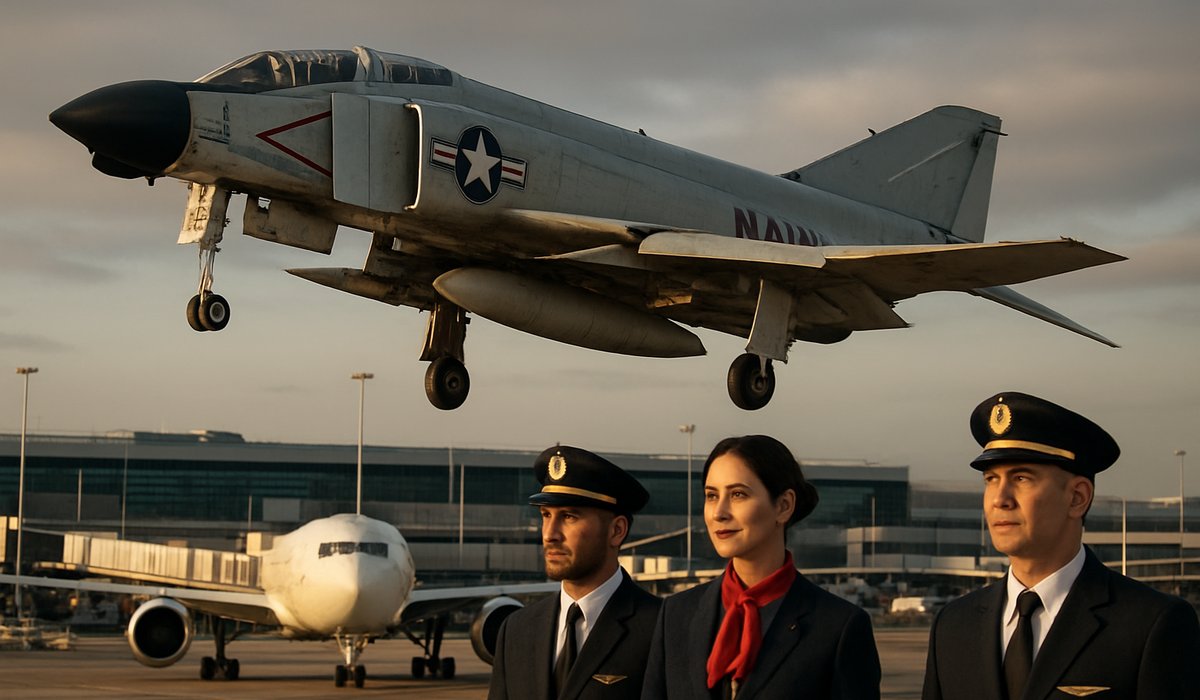
Image generated by AI
The F-4 Phantom: The Forgotten Architect of Modern Naval Aviation That Paved the Way for Iconic Fighters
How McDonnell Douglas's legendary jet revolutionized carrier operations before the F-14 Tomcat and F/A-18 Super Hornet took center stage
A Legacy Eclipsed by Hollywood
The McDonnell Douglas F-4 Phantom II remains one of the most prolific military aircraft ever manufactured, yet its transformative impact on naval aviation has been largely overshadowed by the glamorized F-14 Tomcat—a fighter that owes far more to the Phantom's pioneering work than popular culture acknowledges. While aviation enthusiasts and casual observers associate the F-14 with Top Gun mythology, the reality is far more nuanced: the Phantom laid the foundational blueprint for everything that followed in carrier-based fighter development.
Dominance Through Innovation
Produced in staggering numbers across multiple decades, the F-4 fundamentally reshaped how the US Navy projected power at sea. The aircraft's introduction marked a watershed moment in maritime air combat, establishing operational concepts and technological standards that would define naval fighter operations for generations. Its versatility—capable of executing air-to-air combat, strike missions, and reconnaissance—made it indispensable across the fleet.
The Wild Weasel Pioneer
While the aircraft gained prominence in US Air Force operations, particularly through its revolutionary "Wild Weasel" role—wherein specially equipped variants hunted and neutralized enemy air defense systems—its naval contributions proved equally consequential. The Phantom's development of advanced avionics, missile integration systems, and multi-role capability architecture became the template upon which subsequent generations of naval fighters were designed.
The Unacknowledged Foundation
The F-14 Tomcat, which eventually succeeded the Phantom as the Navy's premier carrier fighter, incorporated technological and tactical lessons learned directly from Phantom operations. Similarly, the modern F/A-18 Super Hornet—today's backbone of carrier air wings—carries forward innovations that originated with the F-4's design philosophy and operational methodology.
The Phantom's influence extends beyond mere technical specifications; it fundamentally altered how naval aviation conceptualized fighter employment, weapons integration, and carrier operations themselves. Yet popular culture and historical narratives have allowed subsequent platforms to claim the spotlight while the true innovator recedes into relative obscurity.
FAQs
When did the F-4 Phantom enter US Navy service? The F-4 was introduced to the US Navy in 1961, becoming the primary carrier-based fighter throughout the 1960s and 1970s.
How many F-4 Phantoms were produced in total? Approximately 5,195 F-4 Phantoms were manufactured, making it one of the most mass-produced fighter jets in aviation history.
What made the F-4 superior to earlier naval fighters? The F-4 introduced advanced radar systems, supersonic capabilities, and multi-role functionality that vastly exceeded previous carrier aircraft like the F-8 Crusader.
Which countries operated the F-4 Phantom? The F-4 was exported to over 11 nations, including the United Kingdom, Germany, Japan, South Korea, and Australia, extending its operational influence globally.
How did the F-4's design influence the F-14 Tomcat? The F-14's avionics architecture, weapon systems integration, and multi-role operational concepts were directly derived from lessons learned through extensive F-4 deployment experience.
Related Travel Guides
External Resources
Disclaimer
This article is for informational and educational purposes only. It does not constitute legal, financial, or professional advice. While we strive to provide accurate and up-to-date information, travel policies, regulations, and conditions change rapidly. Always verify information with official sources before making travel decisions. Nomad Lawyer makes no representations about the accuracy, reliability, completeness, or suitability of the information provided. Readers should consult qualified professionals for advice specific to their circumstances. The views expressed in this article are those of the author and do not necessarily reflect the views of Nomad Lawyer.
Raushan Kumar
Founder & Lead Developer
Full-stack developer with 11+ years of experience and a passionate traveller. Raushan built Nomad Lawyer from the ground up with a vision to create the best travel and law experience on the web.
Learn more about our team →