
Boeing C-17 Globemaster's Unique Flap System Creates Unprecedented Noise Challenge for Military Aviation
Breaking airline news and aviation industry updates for 2026.

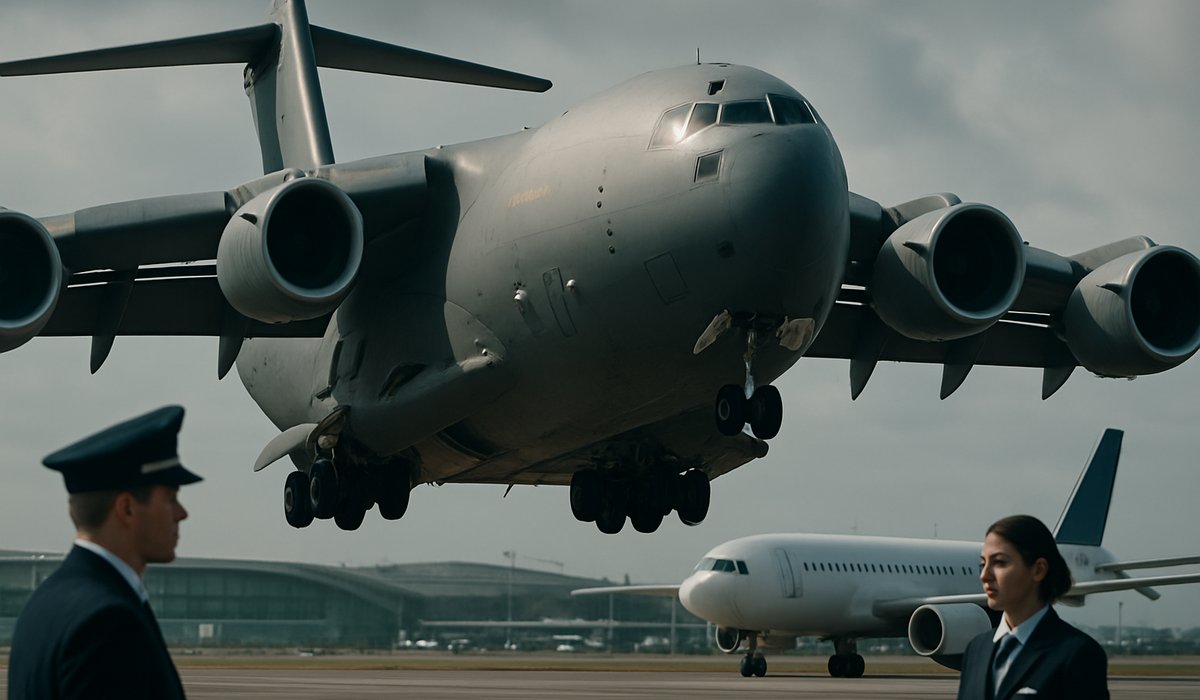
Image generated by AI
Boeing C-17 Globemaster's Unique Flap System Creates Unprecedented Noise Challenge for Military Aviation
The strategic airlifter's propulsive lift technology delivers unmatched cargo capacity but generates acoustic problems no rival transport aircraft faces
Revolutionary Landing Technology With an Acoustic Cost
The Boeing C-17 Globemaster stands alone among the world's military transport fleet, operating a propulsive lift system that fundamentally reshapes how heavy-payload aircraft approach landing. This externally blown flap configuration—which directs engine exhaust directly onto deployed wing flaps to produce additional lift during low-speed operations—enables the aircraft to accomplish what competitors simply cannot: delivering payloads exceeding 160,000 pounds onto runways shorter than 3,000 feet.
Yet this technological superiority comes with a significant operational drawback. The system generates noise levels that no other strategic airlifter in current service produces, creating distinctive acoustic signatures during approach and landing phases that have become a persistent challenge for military installations worldwide.
Unmatched Operational Capability
The C-17's propulsive lift advantage translates directly into military flexibility. By vectoring engine thrust onto its extended flaps, the aircraft achieves short-field performance that expands operational options dramatically. Forward operating bases, damaged airfields, and austere landing zones become viable logistics hubs—capabilities critical for global military operations, humanitarian missions, and disaster relief efforts.
No competing heavy-lift transport aircraft—whether the Airbus A400M, Lockheed Martin C-130 Hercules, or Russian Il-76—can match this combination of payload capacity and runway flexibility. This operational monopoly has made the C-17 indispensable to U.S. and allied air forces across multiple continents.
The Noise Problem No Solution Has Solved
The externally blown flap system's acoustic signature presents communities near military airbases with persistent challenges. The engine exhaust deflection creates distinctive, high-intensity noise during landing sequences that differs markedly from conventional turbofan aircraft. The phenomenon has prompted noise mitigation studies, operational restrictions at certain bases, and ongoing discussions within the defense and environmental sectors.
Military aviation planners face an inherent trade-off: leverage the C-17's unparalleled short-field capability or minimize community noise exposure. Current solutions remain limited to operational scheduling adjustments and flight path modifications—temporary measures rather than systemic fixes.
Strategic Implications for Global Airlift Operations
The C-17's technological singularity underscores broader trends in military aviation. As geopolitical tensions increase demand for rapid global response capabilities, the aircraft's short-field performance becomes strategically more valuable, even as acoustic concerns intensify at home bases and allied facilities.
Future military transport development will likely address this acoustic-capability equation, but for the foreseeable future, the C-17 remains the sole operator of this propulsive lift technology—a distinction that brings both unparalleled operational advantages and unique environmental challenges.
FAQ: C-17 Globemaster Noise and Military Aviation
What makes the C-17 Globemaster's landing system different from other military transport aircraft? The C-17 uniquely employs an externally blown flap system that redirects engine exhaust onto wing flaps, creating additional lift during low-speed operations. No other strategic airlifter uses this propulsive lift technology.
How short can the C-17 actually land? The aircraft can land payloads exceeding 160,000 pounds on runways as short as 3,000 feet—a capability no competing transport aircraft can replicate.
Why does the C-17's landing system create noise problems? The externally blown flap configuration generates distinctive high-intensity acoustic signatures as engine exhaust is deflected during approach and landing, producing noise levels incomparable to conventional military transport aircraft.
Which other military transport aircraft compete with the C-17? The Airbus A400M, Lockheed Martin C-130 Hercules, and Russian Il-76 are primary competitors, though none matches the C-17's payload-to-runway-length performance ratio.
What solutions exist for the C-17's noise challenges? Current mitigation strategies include operational scheduling modifications and adjusted flight path routing, though no permanent technological solution has been implemented to eliminate the acoustic signature of the propulsive lift system.
Related Travel Guides
External Resources
Disclaimer
This article is for informational and educational purposes only. It does not constitute legal, financial, or professional advice. While we strive to provide accurate and up-to-date information, travel policies, regulations, and conditions change rapidly. Always verify information with official sources before making travel decisions. Nomad Lawyer makes no representations about the accuracy, reliability, completeness, or suitability of the information provided. Readers should consult qualified professionals for advice specific to their circumstances. The views expressed in this article are those of the author and do not necessarily reflect the views of Nomad Lawyer.
Raushan Kumar
Founder & Lead Developer
Full-stack developer with 11+ years of experience and a passionate traveller. Raushan built Nomad Lawyer from the ground up with a vision to create the best travel and law experience on the web.
Learn more about our team →