
Severe Travel Chaos Erupts Over Massive 26% Aviation Fuel Spike as Extreme Ticket Inflation Threatens Boston to London Routes: Latest Airline News
A catastrophic surge in global aviation fuel costs is triggering widespread financial travel chaos, with 70% of passengers aggressively battling extreme ticket inflation across major transatlantic corridors.

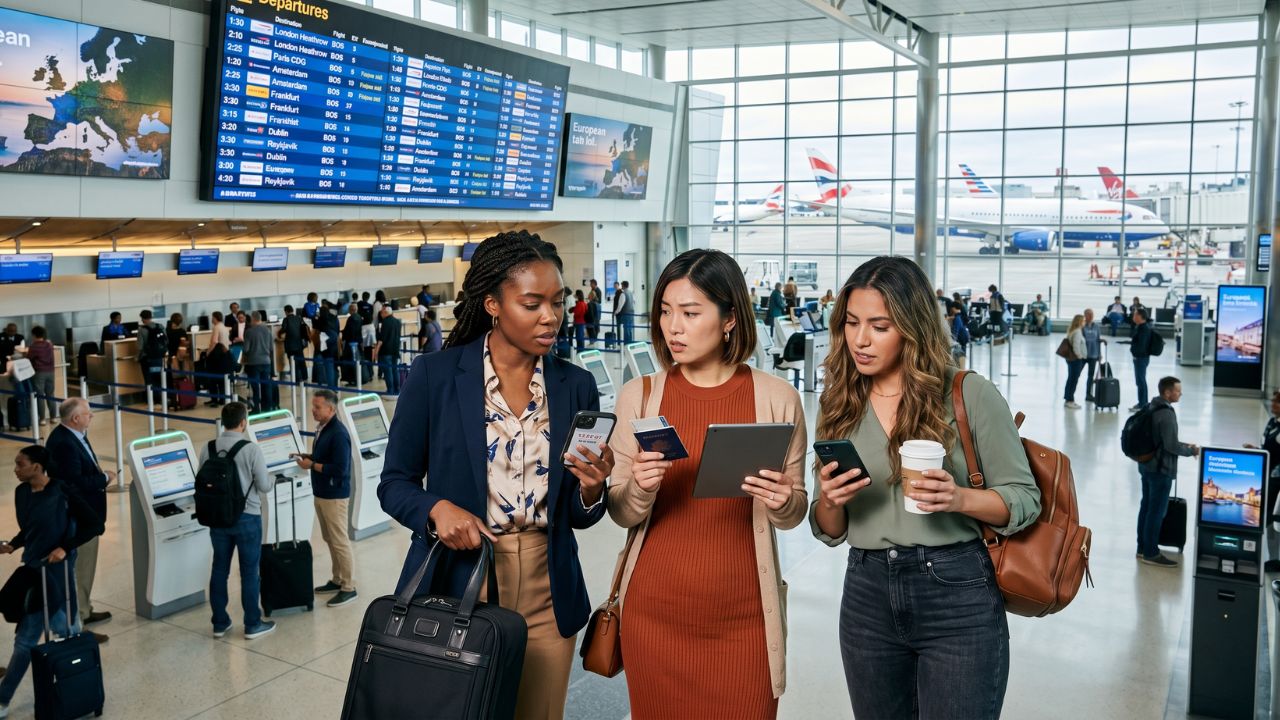
Image generated by AI
In a massive, highly destructive economic breakdown that is currently fracturing the global leisure market, thousands of international passengers are battling a severe wave of financial travel chaos directly triggered by unprecedented flight cancellations and exorbitant ticket inflation. According to the striking new Spring 2026 Global Rescue Traveler Sentiment and Safety Survey, the commercial aviation sector is buckling under extreme pricing pressure, with a staggering 70% of modern travelers expressing profound alarm over sky-high ticket costs and declining operational reliability. As airlines desperately attempt to offset a catastrophic 26.2% monthly spike in aviation fuel costs, radical new electronic surcharges are ravaging consumer budgets across critical transatlantic corridors, specifically targeting high-demand routes connecting Boston, New York, Chicago, and London. This systemic pricing failure represents the premier headline in today's breaking airline news and essential global aviation updates.
By introducing direct passenger coordination and dynamic scheduling backups, the regional aviation hubs target growing passenger demand across vital commerce sectors. The choice to coordinate flight departures in phases helps to manage gate capacity, supporting the country's broader regional transportation network.
Context: The Collapse of Affordable Leisure Transit
The global aviation network operates on highly sensitive macroeconomic margins. Because fuel consumption traditionally accounts for a massive 30% of an airline’s baseline operating ledger, any supply shock immediately dictates the cost of a passenger ticket.
When the Bureau of Transportation Statistics confirmed a staggering 26.2% monthly explosion in jet fuel costs in early 2026, the resulting financial contagion instantly infected the consumer travel pipeline. Instead of absorbing these massive corporate losses, legacy carriers immediately passed the raw material spikes straight down to the consumer via aggressive, unavoidable fuel surcharges. For the thousands of independent vacationers attempting to secure summer bookings, this translates directly into blown budgets, ruined European vacations, and massive financial losses for families relying on affordable transatlantic connectivity between hubs like Boston and London.
To view live pricing schedules, specific fee waivers, or regional delay protocols at primary American gateways, travelers must consult official airline directories. For direct booking access, specific baggage rules, and fuel surcharge explanations, passengers should check the official Bureau of Transportation Statistics or their respective operating carrier. To explore live flight tracking and monitor the exact severity of operational airspace congestion, passengers can consult the official FlightAware tracking service.
Section-Wise Breakdown of the Global Pricing Meltdown
The Geographic Divide: Transatlantic Surcharges
The survey data highlights a brutal geographic divide across the Atlantic corridor. Because international carriers operate significantly longer routes requiring massive fuel loads, they have systematically added heavier surcharges to long-haul tickets. Consequently, the financial friction index has climbed to an exceptional 61% among non-US residents attempting to fly abroad, compared to 52% for domestic American travelers. Fliers originating in London are facing significantly higher out-of-pocket penalties than those executing domestic loops out of Chicago or New York.
The Advisor Rebound: Combating the Surcharge
Rather than accepting outright trip cancellations, savvy consumers are actively fighting back against legacy airline monopolies. Industry tracking directories confirm that elite travel planners in cities like Boston and Chicago are seeing a massive surge in demand for specialized, off-peak routing formulas. Confused consumers are rapidly abandoning automated third-party booking websites—which often hide massive baggage fee adjustments and fuel penalties—and returning to independent travel advisors who possess the technical capability to bypass forced corporate surcharges via secondary airport gateways.
Accommodation Shift: Defeating the Budget Deficit
To fully comprehend how independent vacationers are continuing to fly despite these historic financial hurdles, property management files reveal a massive shift in on-the-ground spending behavior. Because the actual flight now consumes a drastically larger portion of the total vacation fund, smart families are aggressively cutting back on luxury amenities. Accommodations featuring private kitchenettes have experienced a massive 20% spike in reservations, proving that travelers are opting to cook independent meals rather than spending heavily at metropolitan bistros to subsidize their expensive airline tickets.
Technical Roster: The 2026 Airfare Inflation Matrix
To ensure absolute factual accuracy regarding the specific economic pressures currently paralyzing the global leisure market, the following table details the exact statistical metrics and consumer reactions defining the current travel crisis:
| Global Rescue Survey Metric | Specific Statistical Data Point | Aviation Market Impact |
|---|---|---|
| Aviation Fuel Cost Surge | 26.2% Monthly Spike | Triggers massive, automated fuel surcharges on passenger tickets |
| Overall Traveler Alarm | 70% Express Profound Concern | Dominant operational hurdle threatening the international leisure market |
| Itinerary Disruption Factor | 57% View Airfare as Highly Important | Forces mass alterations to planned summer vacation durations |
| Non-US Resident Friction | 61% Pricing Sensitivity | International consumers heavily targeted by long-haul carrier fees |
| Accommodation Pivot | 20% Spike in Kitchenette Rentals | Passengers drastically cut food budgets to afford exorbitant flights |
Passenger Impact: The Financial Squeeze
For the everyday family attempting to secure a transatlantic flight from Boston to London in 2026, the financial reality is incredibly grim.
Because legacy carriers command unprecedented pricing power on high-demand routes, a basic economy passenger without elite status is trapped. They are hit with exorbitant base fares, immediately followed by "carrier-imposed" fuel surcharges, and finally punished with inflated checked baggage fees. This extreme financial friction does not just cause stress; it explicitly causes hidden airport disruptions. Families are actively shortening their trips to cover the flight bill, or entirely abandoning the transatlantic corridor to execute localized domestic road-trip loops. The Chief Executive Officer of the Global Rescue Companies explicitly warned that international travelers are now facing a highly toxic convergence of challenges, constantly balancing extreme unaffordability against declining airline reliability and widespread operational disruptions.
Industry Analysis: The Breaking Point of Commercial Pricing
Aviation industry macroeconomic analysts view this massive surge in ticket inflation as a terrifying symptom of systemic market fragility and unresolved regional energy conflicts.
Because global crude prices remain at highly inflated levels due to persistent geopolitical friction, airlines cannot hedge their fuel costs effectively. The International Air Transport Association (IATA) warns that these sharp increases in oil prices are heavily reducing household purchasing power worldwide. If these underlying international energy conflicts remain unresolved, the persistent financial pressure will inevitably trigger massive corporate consolidation. Smaller, low-cost regional carriers will simply go bankrupt unable to afford the jet fuel, effectively handing the remaining legacy airlines an absolute monopoly. This shrinking competition guarantees that airlines will retain the power to charge extreme premiums on vital routes forever.
Actionable Advice for Surviving the Fare Crisis
If you are a traveler attempting to secure an active itinerary amidst this massive ticket inflation wave, execute this extreme financial survival checklist immediately:
- Deploy Aggressive Date Flexibility: Never book a transatlantic flight departing on a Friday or Saturday. Industry data demands that value-conscious passengers must explicitly target mid-week departures, specifically on Tuesdays or Wednesdays, to avoid extreme weekend demand premiums.
- Leverage Professional Travel Advisors: Do not rely exclusively on automated booking algorithms. Contact an independent, elite travel planner who has the specialized software access required to hunt for secondary airport gateways, hidden routing bargains, and complex fuel penalty waivers that standard consumer websites block.
- Audit Your On-the-Ground Budget: If the flight from New York to London completely consumes your travel fund, immediately pivot your accommodation strategy. Book properties with private kitchenettes to execute massive savings on daily dining costs, allowing you to absorb the airline's fuel surcharge without canceling the trip.
- Monitor the Route Network: Remain highly vigilant. If a low-cost carrier goes bankrupt due to high fuel costs, the remaining legacy carrier on that specific route will instantly double its prices. Book your flights the moment you secure your itinerary.
FAQ: 2026 Global Airfare Inflation Crisis
What are the primary findings of the 2026 Global Rescue Traveler Sentiment Survey?
The official tracking logs confirm a massive crisis: exactly 70% of experienced travelers are deeply concerned about sky-high ticket inflation and declining reliability, with 57% categorizing it as a critical factor in their planning.
Why are international airlines aggressively raising ticket prices right now?
The price hikes are a direct response to a staggering 26.2% monthly spike in aviation fuel costs, forcing legacy carriers to immediately deploy heavy, automated passenger surcharges across long-haul routes.
How are families adapting to these extreme airline costs without canceling their vacations?
Savvy consumers are combating the fare crisis by rapidly shifting their spending behavior, specifically generating a 20% spike in reservations for accommodations featuring kitchenettes to heavily cut daily food expenses.
A Fragile Network on the Brink of Unaffordability
The catastrophic wave of massive ticket inflation currently ravaging the Boston, New York, Chicago, and London transit corridors proves definitively that the global aviation system is operating at the absolute edge of consumer affordability. By forcing legacy carriers into massive fuel cost deficits, this macroeconomic breakdown has shattered the concept of cheap global connectivity and exposed the deep financial fragility of the leisure travel sector. As families desperately attempt to balance extreme out-of-pocket holiday expenses and travel advisors fight for alternative routing, global travelers must brace for a brutal reality: navigating major international gateways in 2026 requires aggressive budget auditing, relentless vigilance, and the absolute expectation of financial travel chaos.
Key Takeaways
- Massive Traveler Alarm: The Global Rescue survey officially verifies that 70% of travelers are aggressively battling extreme anxiety over rising airfare and declining airline reliability.
- 26.2% Aviation Fuel Spike: Skyrocketing raw material costs have forced international airlines to deploy devastating electronic fuel surcharges directly onto consumer tickets.
- International Pricing Friction: Non-U.S. residents are facing significantly higher pricing sensitivity (61%) due to the massive fuel loads required for long-haul transatlantic operations.
- Consumer Spending Pivot: Travelers are actively bypassing the financial strain by driving a massive 20% spike in kitchenette accommodations, refusing to cancel their holidays.
- The Return of the Travel Advisor: Confused consumers are abandoning automated booking sites, heavily relying on elite professional planners to bypass complex carrier surcharges and secure secondary airport routings.
Related Travel Guides
Severe Travel Chaos Engulfs Lisbon Across Major Airports
Severe Travel Chaos Paralyzes San Diego Across Major Airlines
Global Airfare Inflation and Budget Strategies Discussion on Reddit
Disclaimer
This article is for informational and educational purposes only. It does not constitute legal, financial, or professional advice. While we strive to provide accurate and up-to-date information, travel policies, regulations, and conditions change rapidly. Always verify information with official sources before making travel decisions. Nomad Lawyer makes no representations about the accuracy, reliability, completeness, or suitability of the information provided. Readers should consult qualified professionals for advice specific to their circumstances. The views expressed in this article are those of the author and do not necessarily reflect the views of Nomad Lawyer.
Kunal K Choudhary
Co-Founder & Contributor
A passionate traveller and tech enthusiast. Kunal contributes to the vision and growth of Nomad Lawyer, bringing fresh perspectives and driving the community forward.
Learn more about our team →