
Heathrow Airport Deploys Digital Navigation Strategy to Combat Terminal Complexity in 2026
Heathrow Airport is leveraging a smart app ecosystem to reduce passenger friction and optimize terminal flow through digital mapping and integrated service discovery.

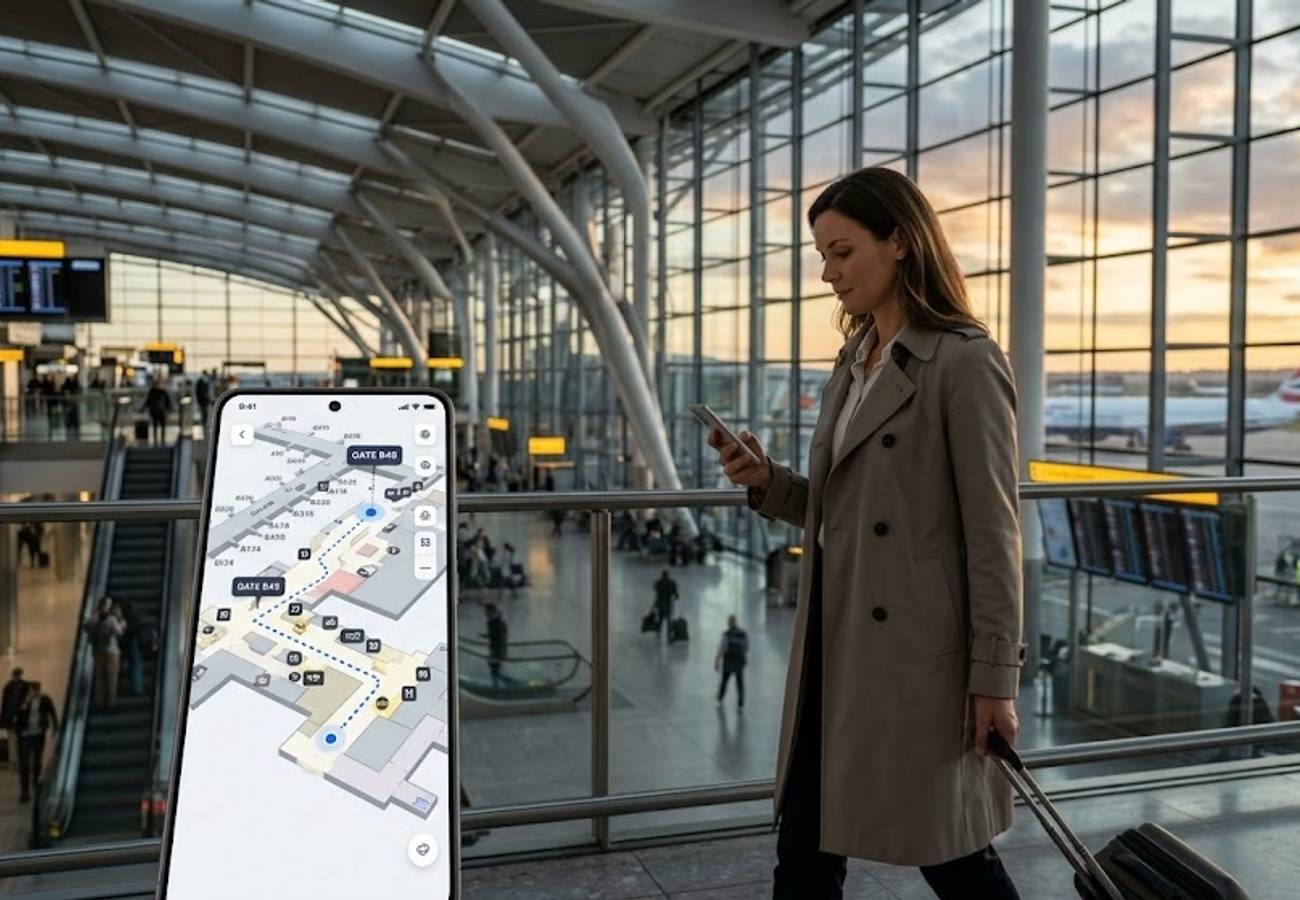
Image generated by AI
Millions of annual passengers are now the target of a strategic digital push by Heathrow Airport, which is deploying an intelligent application ecosystem to mitigate the inherent logistical friction of one of the world's most complex aviation hubs. By shifting the passenger's primary point of information from physical signage and staffed desks to a personalized mobile interface, the airport is attempting to decentralize its information flow and reduce congestion at critical terminal touchpoints.
The Logistics of Terminal Friction
Modern international hubs have evolved into "aerotropolises"—massive urban environments that often overwhelm the average traveler. For a hub like London Heathrow, the challenge is not merely the volume of passengers but the cognitive load required to navigate multiple terminals, connecting flights, and a sprawling array of commercial services. The airport's current strategy focuses on eliminating "arrival anxiety" by moving the discovery phase of the journey from the terminal floor to the pre-departure phase.
By urging travelers to integrate the app into their planning process before they even leave for the airport, Heathrow is attempting to create a "digital twin" of the passenger's journey. This approach allows travelers to visualize their route, locate specific amenities, and understand terminal layouts in a controlled environment, thereby reducing the erratic movement and hesitation that often lead to bottlenecks in high-traffic corridors.
Digital Integration and Service Mapping
The core of this initiative is a comprehensive digital guide that consolidates fragmented airport services into a single access point. This is not merely a directory but a navigational tool designed to support specific high-stress traveler profiles.
| Passenger Segment | Primary Pain Point | App-Based Solution |
|---|---|---|
| International Arrivals | Terminal unfamiliarity | Interactive digital mapping |
| Connecting Passengers | Inter-terminal transit | Route optimization and timing |
| Families with Children | Logistics management | Facility location (nurseries, restrooms) |
| Business Travelers | Time scarcity | Rapid access to essential services |
The deployment of this technology aligns with broader standards set by the International Air Transport Association (IATA), which advocates for the seamless movement of passengers through the use of standardized digital identities and information systems. By digitizing the map and service directory, Heathrow reduces the reliance on static infrastructure, allowing the airport to update service locations or terminal flows in real-time without the need for costly physical signage changes.
Expert Analysis: The Business of Passenger Flow
From an operational perspective, this digital push is less about "convenience" and more about "throughput." In aviation logistics, any second a passenger spends standing still while looking at a map is a second they are not moving toward a gate or spending money in a retail outlet.
For travelers booking flights through London, the direct consequence of this shift is a transition toward self-service autonomy. The airport is effectively offloading the role of the "information agent" to the passenger's own device. While this increases efficiency for the tech-savvy, it creates a dependency on mobile hardware and connectivity.
The pricing pressure this creates is indirect but significant. As airports like Heathrow optimize flow via apps, they can increase the density of their commercial offerings. By guiding passengers through specific "digital paths," airports can theoretically steer foot traffic toward underutilized retail zones or high-margin services, turning a navigation tool into a revenue driver. This is a global trend seen across major hubs managed by entities like Airports Council International (ACI), where the goal is to maximize the "non-aeronautical revenue" per passenger.
Key Takeaways
- Pre-Arrival Planning: The app is designed to be used before reaching the terminal to reduce uncertainty and mental load upon arrival.
- Targeted Navigation: Specific features are optimized for connecting passengers and families to reduce transit friction between terminals.
- Infrastructure Shift: Heathrow is moving away from a reliance on physical information desks toward a decentralized, mobile-first information model.
- Operational Goal: The primary objective is to increase passenger confidence and independence, which in turn improves overall terminal throughput.
FAQ: Heathrow Navigation 2026
Do I need the Heathrow app to navigate the airport? No, physical signage and information desks remain available. However, the app provides real-time digital maps and service locations that are not available on static signs, making the journey significantly faster for first-time visitors.
Can the app help with connecting flights between terminals? Yes. The app is specifically designed to help passengers identify the fastest routes between different terminals and locate the necessary transit services to ensure they reach their connecting gate on time.
Is the app available for all terminals at Heathrow? Yes, the digital guide covers the entirety of the airport's terminal services, providing a unified map and service directory regardless of which terminal you are departing from or arriving at.
Does the app provide real-time updates on airport services? Yes, by using a digital platform, Heathrow can update the availability and location of services more rapidly than physical signage allows, ensuring passengers have the most current information.
The transition from physical signage to digital intuition marks the end of the airport as a place of discovery and the beginning of the airport as a programmed experience.
Related Travel Guides
Disclaimer
This article is for informational and educational purposes only. It does not constitute legal, financial, or professional advice. While we strive to provide accurate and up-to-date information, travel policies, regulations, and conditions change rapidly. Always verify information with official sources before making travel decisions. Nomad Lawyer makes no representations about the accuracy, reliability, completeness, or suitability of the information provided. Readers should consult qualified professionals for advice specific to their circumstances. The views expressed in this article are those of the author and do not necessarily reflect the views of Nomad Lawyer.
Kunal K Choudhary
Co-Founder & Contributor
A passionate traveller and tech enthusiast. Kunal contributes to the vision and growth of Nomad Lawyer, bringing fresh perspectives and driving the community forward.
Learn more about our team →