Haukland Beach Teams Up With Kvalvika and More as Underrated Beaches of Europe Take Centre Stage

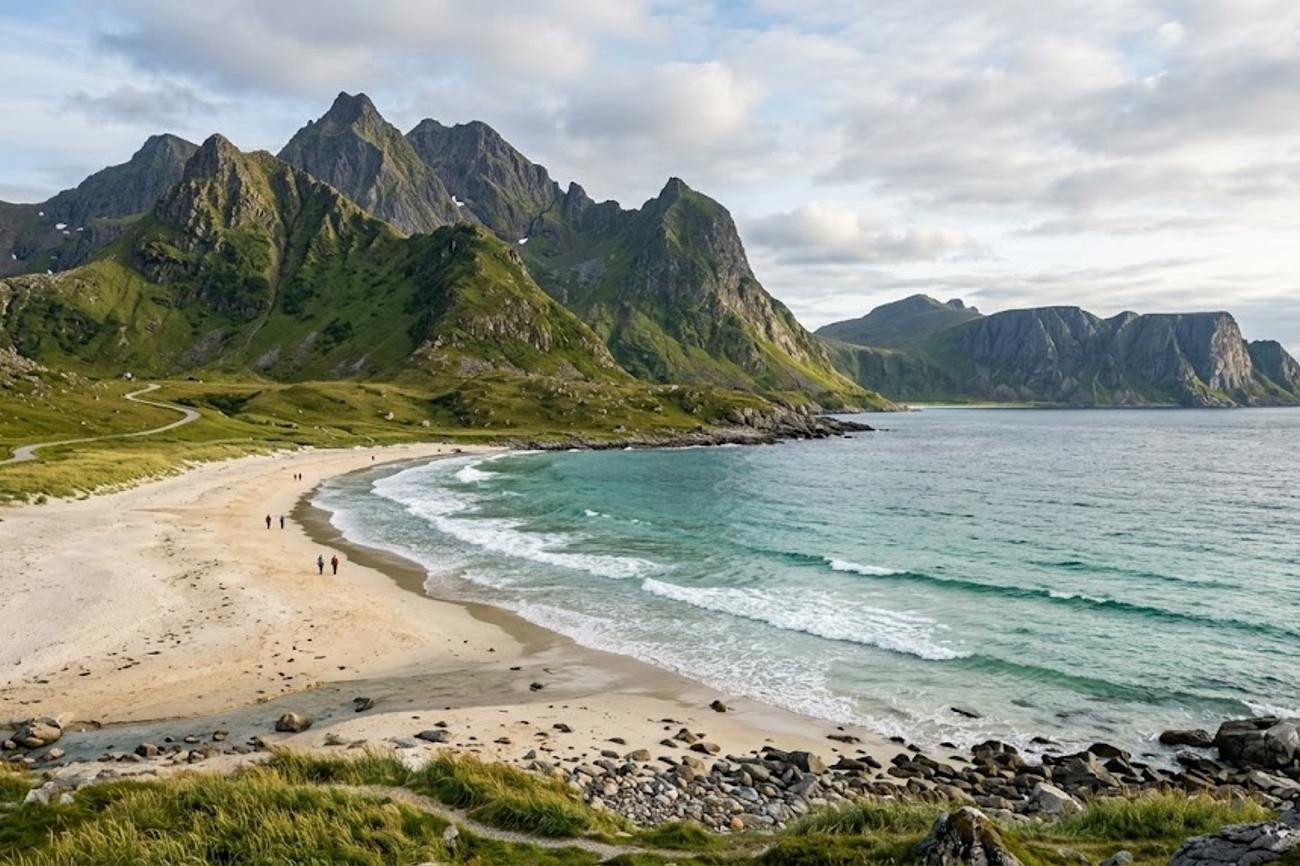
Image generated by AI
Haukland Beach and Kvalvika are putting Europe’s underrated beaches in the spotlight, as remarkable coastal escapes take centre stage. Haukland Beach, known for its Arctic scenery, is joining Kvalvika and more underrated beaches across Europe in attracting adventurous travellers. Meanwhile, these beaches offer far more than beautiful shores. They combine dramatic mountains, turquoise waters, secluded landscapes and memorable outdoor experiences. As Europe’s underrated beaches take centre stage, global travellers are discovering alternatives to crowded coastal resorts. Travel And Tour World explores Haukland Beach, Kvalvika and more, revealing what makes these underrated beaches worth adding to a European journey. Read the entire story for essential travel inspiration.
Europe’s Lesser-Known Beach Escapes: Six Underrated Coastal Gems Beyond Haukland Beach Norway
Haukland Beach has placed Norway’s dramatic Arctic coastline firmly on the international beach-travel map.
Yet Europe has many other coastal destinations where travellers can escape the most heavily visited resort areas.
These beaches range from Arctic sands and mountain-backed coves to Atlantic dunes and isolated Adriatic bays.
They also offer very different experiences.
Some are reached by hiking trails, while others require a short drive or boat journey.
For travellers looking for quieter landscapes, these destinations provide alternatives to Europe’s most famous beach resorts.
Six underrated European beaches travellers should consider Beach Country Main setting Key attraction Access Best travel style Kvalvika Beach Norway Lofoten Golden sand, mountains, hiking Hike or boat Adventure Uttakleiv Beach Norway Vestvågøy, Lofoten Arctic coast and mountains Road/coastal walk Scenic escape Praia da Amoreira Portugal Aljezur, Algarve River mouth, dunes and ocean Road Families, surfers Los Genoveses Spain Cabo de Gata, Almería 1.18-km golden beach Walk/car Nature Hladna Uvala Montenegro Bar–Ulcinj coast Quiet rocky bay Road Couples Crystal Beach Montenegro Stari Ulcinj Secluded Adriatic cove Forest path/kayak Adventure
The official tourism authorities describe these beaches in notably different ways, but a common feature is their connection with natural landscapes rather than large-scale resort development.
- Kvalvika Beach, Norway
Kvalvika Beach is one of the most dramatic alternatives for travellers already visiting Lofoten.
Haukland Beach, located in the Lofoten Islands of Norway, is gaining popularity as a hidden gem among European beaches. According to the Norwegian Tourism Board, the beach offers a unique combination of white sand, crystal-clear waters, and picturesque mountain scenery. Visitors can enjoy a range of outdoor activities, including hiking, kayaking, and fishing, making it an ideal destination for nature lovers.
The beach sits within Lofotodden National Park and is surrounded by steep mountains and open sea.
Unlike Haukland, it is not a simple roadside beach.
Visitors generally reach it by walking from the Fredvang or Innersand area.
Official Visit Lofoten information gives the direct distance to the beach as approximately three kilometres.
The one-way walk takes around 1.5 hours.
Travellers continuing to Ryten can extend the adventure considerably.
Ryten reaches 543 metres above sea level and provides a high viewpoint over the golden beach.
The complete Kvalvika-Ryten excursion takes around three to five hours, depending on the route and pace.
The area is particularly attractive to photographers because the landscape changes rapidly with weather and light.
Travellers should not expect warm Mediterranean-style swimming conditions.
Instead, Kvalvika is better understood as a hiking destination with a spectacular beach at its centre.
For food, Ramberg is the practical base.
The official tourism authority identifies Ramberg as the nearest shopping centre, around seven kilometres from the trail area.
It has shops, cafés, restaurants, tourist information and accommodation.
That makes it sensible to buy lunch before starting the hike.
For accommodation, travellers can stay around Ramberg or other nearby Lofoten communities.
The local tourism authority also recommends several neighbouring beaches, including Yttersand, Ramberg and Skagsanden.
Kvalvika is therefore better experienced as part of a multi-stop Lofoten itinerary rather than as a standalone beach day.
A major conservation project is also underway in 2026.
From 22 June to 30 September, trail improvements are being carried out around Kvalvika and Ryten.
As Haukland Beach teams up with other underrated beaches like Kvalvika, passenger logistics are becoming increasingly important to ensure a smooth travel experience. The Aviation Authority of Norway provides information on flight schedules, airport facilities, and travel tips for passengers traveling to and from Norway. By planning ahead and checking with the aviation authority, travelers can make the most of their trip to these stunning beaches.
The work responds to heavy visitor pressure and visible wear on vegetation and terrain.
Visit Lofoten states that close to 90,000 people make the journey each year.
The project also aims to protect nesting areas and concentrate foot traffic onto stronger paths.
What to do: Hike Kvalvika, climb Ryten, photograph the coastline, explore nearby beaches.
What to eat: Pack a picnic for the trail and eat seafood, Arctic cod and local bakery products in Ramberg.
Where to stay: Ramberg, Fredvang or nearby Lofoten fishing villages.
Where to eat: Ramberg has restaurants and cafés, while nearby fishing communities offer traditional seafood options.
- Uttakleiv Beach, Norway
Uttakleiv is another remarkable Arctic beach on Vestvågøy.
It is particularly useful for travellers visiting Haukland because the two beaches can be incorporated into the same itinerary.
Visit Lofoten identifies Uttakleiv as a small community with only 22 permanent residents.
That figure demonstrates the intimate scale of the settlement surrounding the beach.
The destination has nevertheless attracted substantial visitor interest.
The community has invested in parking, toilets, waste facilities and visitor management.
A designated camping area accommodates tents and motorhomes.
Other areas have restrictions, so visitors should follow local instructions rather than choosing an overnight location independently.
Parking is currently managed through automatic number-plate recognition.
For vehicles up to 3.5 tonnes, the listed charge is NOK 60 for each started three-hour period.
The rise of underrated beaches like Haukland and Kvalvika is expected to boost local tourism, with the European Travel Commission predicting a significant increase in visitor numbers in the coming years. To cater to the growing demand, local authorities are investing in infrastructure development, including new hotels, restaurants, and recreational facilities. Travelers can visit the European Travel Commission website for more information on travel trends, destination guides, and planning tips.
The maximum listed price is NOK 300 per 24 hours.
Motorhomes are charged NOK 100 per started three hours, with a NOK 300 daily maximum.
Larger vehicles have different charges.
The beach works particularly well for travellers who want scenery without committing to a major mountain expedition.
One of the most attractive options is the coastal route connecting Haukland and Uttakleiv.
Official tourism information describes a route of roughly four to five kilometres depending on the specific route used.
Travellers can therefore begin at Haukland and finish at Uttakleiv.
This creates a much more immersive experience than simply driving between the two locations.
Food options directly at Uttakleiv are limited compared with larger Norwegian settlements.
Visitors should therefore carry water and snacks.
For a full meal, travellers can base themselves in nearby Leknes or other Lofoten communities.
The wider Lofoten region is particularly known for seafood and stockfish.
Official Visit Norway information highlights skrei, Arctic cod and dried cod as important regional foods.
What to do: Coastal walking, photography, camping where permitted and northern-lights viewing in the appropriate season.
What to eat: Stockfish, skrei, seafood and Norwegian bakery products.
Where to stay: Leknes, nearby fishing villages or permitted camping areas.
Where to eat: Use cafés and restaurants around Leknes for a wider choice.
- Praia da Amoreira, Portugal
Praia da Amoreira offers a completely different interpretation of an underrated European beach.
Located near Aljezur, the beach combines Atlantic coastline, extensive sand and a river mouth.
This creates an unusual choice for travellers.
FAQ: Haukland Beach Teams Up With Kvalvika an 2026
What is Haukland Beach known for? Answer 1: Pristine white sand and turquoise waters.
How do I get to Kvalvika Beach? Answer 2: Hike from Reine or take a boat tour.
Are these beaches suitable for families? Answer 3: Yes, they offer calm and safe environments.
What is the best time to visit? Answer 4: Summer for warmest weather and longest days.
Related Travel Guides
This article is for informational purposes. Flight routes, passenger regulations, visa rules, and transit advisories are subject to change by airlines and aviation authorities. Readers are advised to verify schedules and travel documentation with relevant carriers and border agencies before departure.
Related Stories
The Best Things to Do in Vero Beach with Family: A Local Parent & Traveler's Guide

European Mass Protests Disrupt Travel Across France, Italy, Belgium, and Turkey in 2026