
Halton Visitor Economy Reaches £225 Million in 2025 as Heritage and Waterways Draw Millions to Northern England
Halton's visitor economy surged to £225.04 million in 2025 with 3.08 million visitors exploring Norton Priory, Spike Island, Daresbury, and historic Mersey waterways.

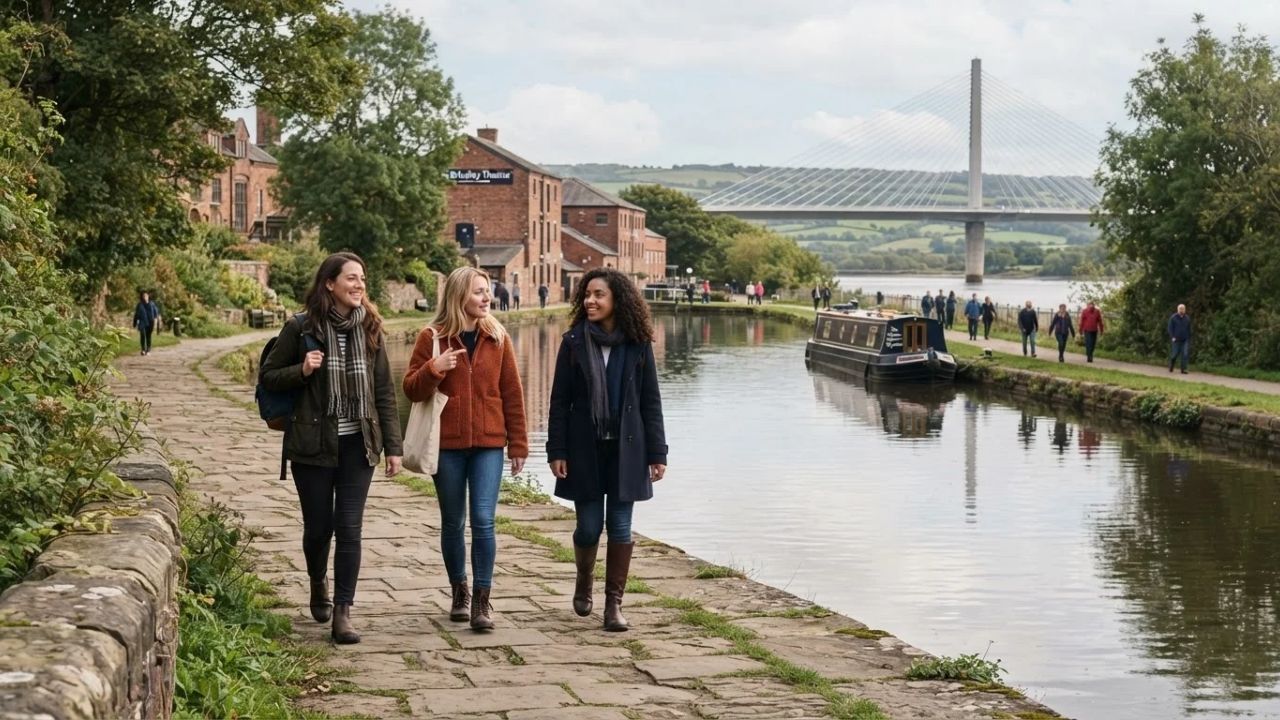
Image generated by AI
Tucked between the maritime energy of Liverpool and the industrial pulse of Manchester, the northern borough of Halton generated £225.04 million in visitor revenue during 2025, drawing 3.08 million travelers to its medieval ruins and historic canals. Long regarded primarily as a transit corridor over the River Mersey, this compact district of Runcorn and Widnes proved that rich heritage and rewilded green corridors can outpace conventional tourism hotspots, recording a 2.4 per cent rise in annual arrivals over 2024. According to independent findings from the Scarborough Tourism Economic Activity Monitor (STEAM), the borough's overall visitor economy value jumped by 4.9 per cent, while tourism-supported employment expanded by 4.7 per cent to sustain 2,165 local jobs. For independent travelers seeking authentic English stories away from manicured tourist circuits, Halton represents one of the most rewarding cultural surprises in the North West.
The Mersey Crossing Shift: Beyond Day-Trips to Immersive Stays
Halton's tourism resurgence is anchored in a meaningful transition toward slower, deeper exploration. While regional day-trippers accounted for 2.74 million visits during 2025, the most significant trend was the return of the overnight traveler. Halton recorded 340,000 overnight guests during the year, representing a 2 per cent increase over the previous twelve months and reversing a slight decline seen in earlier cycles. Travelers who once sped across the River Mersey without stopping are now checking into village inns, cycling along historic towpaths, and spending entire weekends examining early industrial architecture.
This local expansion forms part of a wider travel wave across the surrounding Liverpool City Region, whose visitor economy reached a record £6.834 billion in 2025. Across the greater regional network, visitor volume increased by 7.8 per cent to exceed 61.5 million travelers, with visitor spending climbing by 9.3 per cent and sustaining 57,591 regional jobs. Rather than confining themselves to standard downtown attractions, travelers are exploring the satellite towns and waterways that give the North West its distinctive character. Halton acts as an accessible gateway where pastoral Cheshire countryside meets dramatic tidal rivers and historic canals.
What Makes Halton Different: Medieval Priories, Literary Roots, and Chemical Lore
What separates Halton from typical rural getaways is its layered identity, where medieval monasticism, Victorian engineering, and world-changing literature sit within minutes of one another.
At Norton Priory Museum & Gardens, visitors encounter over 900 years of monastic history set across a secluded woodland estate. Excavated as one of the most thoroughly investigated monastic sites in Europe, Norton Priory preserves twelfth-century vaulted undercrofts and a rare, colossal 3.5-metre carved sandstone statue of St. Christopher dating back to 1390. Surrounding the medieval stone remains is a restored Georgian walled garden that houses the National Collection of Tree Quinces, historic orchards, and an 18th-century pineapple pit, recognized nationally by Historic England for its architectural and horticultural significance.
Just south of Runcorn lies Daresbury, a peaceful village of sandstone cottages that gave the world Charles Lutwidge Dodgson, better known as Lewis Carroll. Born at the local parsonage in 1832, Carroll drew inspiration for Alice's Adventures in Wonderland from the characters and wildlife of this quiet parish. At All Saints' Church, stained-glass memorial windows pay homage to the author, depicting the Mad Hatter, the White Rabbit, and the Cheshire Cat beneath traditional devotional scenes. Walking through the village feels like entering an open-air archive of English literary heritage.
Across the Mersey in Widnes, industrial history takes center stage at Spike Island and the Catalyst Science Discovery Centre. Perched at the confluence of the River Mersey and the historic Sankey Canal, Spike Island was once the beating heart of the nineteenth-century British alkali industry, where salt from Cheshire and coal from Lancashire met to power the Industrial Revolution. Today, chemical works have been replaced by a peaceful public park of tidal marshes, walking trails, and sailing marinas. The adjacent Catalyst centre, housed in a former Victorian chemical administration building, features a rooftop glass observatory delivering panoramic views across the river basin and the cable-stayed Mersey Gateway Bridge.
Along the southern bank in Runcorn, the ruins of Halton Castle command the high ground of Halton Hill. Built by the Barons of Halton shortly after the Norman Conquest in 1071, this sandstone fortress withstood multiple sieges during the English Civil War. From its crumbling curtain walls, travelers can gaze across the Cheshire Plain toward the Pennines. Nearby in Hale village, local lore honors John Middleton, the legendary "Childe of Hale" born in 1578, whose nine-foot-three-inch stature earned him a place in King James I's court and whose historic cottage remains a stop for curious wanderers. Along the Canal & River Trust network, the historic Bridgewater Canal offers flat walking and cycling routes that trace the Duke of Bridgewater's historic coal-transport route from the 1760s.
Visitor Insider Tips: Navigating Runcorn, Widnes, and the Canals
Planning a visit to Halton requires stepping off the beaten path and embracing the rhythms of the estuary:
- Optimal Timing and Crowd Windows: Visit Norton Priory on weekday mornings between 10:00 and 12:30, when school excursions have cleared and you can wander the vaulted undercrofts in peaceful solitude. For Spike Island, check local tide charts; arriving two hours before high tide brings flocks of oystercatchers, curlews, and lapwings onto the mudflats.
- Local Etiquette and Conservation: When walking along the Bridgewater Canal and Sankey Canal towpaths, pedestrians maintain right of way over cyclists. Ring your bell early if riding, and keep dogs leashed around nesting swans and wildfowl. In Daresbury's All Saints' Church, maintain quiet respect during parish service times on Sunday mornings.
- Regional Specialties to Taste: Sample crumbly Cheshire cheese from local farm shops, paired with real ales at centuries-old pubs like the Ring O' Bells in Daresbury or the Castle Hotel near Halton Castle. Look for traditional bowls of Scouse, the regional beef and root vegetable stew beloved across the Mersey basin, alongside warm toasted Eccles cakes served with afternoon tea.
- Where to Base Yourself: For rural character, book a historic bed and breakfast in Daresbury village or near Hale, where thatched cottages and country lanes predominate. If you plan to travel by train, base yourself near Runcorn's Old Town, giving you immediate access to the canal basin and the main rail line.
- Transport Hacks: Runcorn Railway Station sits on the West Coast Main Line, offering direct 20-minute connections from Liverpool Lime Street and direct trains to London Euston in under two hours. If driving across the Mersey Gateway Bridge, note that it uses an open-road tolling system with automatic license plate cameras; remember to pay the toll online via Merseyflow by midnight the following day to avoid penalty charges.
Cultural and Environmental Context: Industrial Reclamation and Estuary Ecology
The revival of Halton is fundamentally an environmental success story. During the late nineteenth century, the heavy alkali and chemical works lining the banks of Widnes produced toxic fumes and waste heaps that left the soil barren. Local communities faced harsh working conditions and severe industrial pollution that choked the waterways.
Over the past four decades, sustained regeneration efforts by civic groups and conservation trusts have transformed these abandoned industrial sites into ecological sanctuaries. Spike Island stands as the foremost example of reclamation, having been cleared of chemical waste in the 1970s and reseeded with native grasses, birch copses, and wildflower meadows. The return of migratory birds, otters, and salmon to the upper Mersey estuary highlights the resilience of northern waterways when given proper stewardship.
This balance between history and green recovery underpins the borough's cultural appeal. By safeguarding monuments like Norton Priory and preserving walking routes along the Bridgewater Canal, Halton provides local residents with meaningful employment while inviting travelers to witness how post-industrial towns can reinvent their heritage for the modern era.
FAQ: Visiting Halton and the Mersey Valley 2026
What is the best time of year to visit Halton?
Late spring from May through June and early autumn in September offer the best weather for exploring Norton Priory's gardens, walking canal towpaths, and birdwatching along the Mersey estuary with mild temperatures and blooming flora.
How do I travel to Halton from Liverpool or Manchester?
Regular Northern Rail and Merseyrail trains connect Liverpool Lime Street to Runcorn in 20 minutes. From Manchester Piccadilly, hourly direct services reach Runcorn in approximately 35 minutes, making Halton easily accessible for day trips or weekend breaks.
What are the top attractions to prioritize on a short visit?
Prioritize Norton Priory Museum & Gardens for its medieval ruins, Spike Island and the Catalyst Science Discovery Centre for waterfront views and industrial heritage, and the historic village of Daresbury to see the Lewis Carroll birthplace trail.
Do I have to pay a toll to cross the Mersey Gateway Bridge?
Yes. The Mersey Gateway Bridge uses an automated camera toll system without physical booths. Drivers must pay the crossing fee online through the official Merseyflow website before midnight the day after crossing.
Where quiet canal waters meet nine centuries of northern resilience, Halton proves that Britain's most authentic stories thrive just beyond the bright lights of the capital.
Related Travel Guides
Disclaimer
This article is for informational and educational purposes only. It does not constitute legal, financial, or professional advice. While we strive to provide accurate and up-to-date information, travel policies, regulations, and conditions change rapidly. Always verify information with official sources before making travel decisions. Nomad Lawyer makes no representations about the accuracy, reliability, completeness, or suitability of the information provided. Readers should consult qualified professionals for advice specific to their circumstances. The views expressed in this article are those of the author and do not necessarily reflect the views of Nomad Lawyer.
Raushan Kumar
Founder & Lead Developer
Full-stack developer with 11+ years of experience and a passionate traveller. Raushan built Nomad Lawyer from the ground up with a vision to create the best travel and law experience on the web.
Learn more about our team →