
Unlocking South America's Last Frontier: How the Guyana-Panama Aviation Deal Opens Kaieteur Falls and the Amazonian Interior
The newly signed Guyana-Panama Air Services Agreement establishes sixth-freedom transit rights, creating seamless flight connections from North America to Guyana's rainforests.

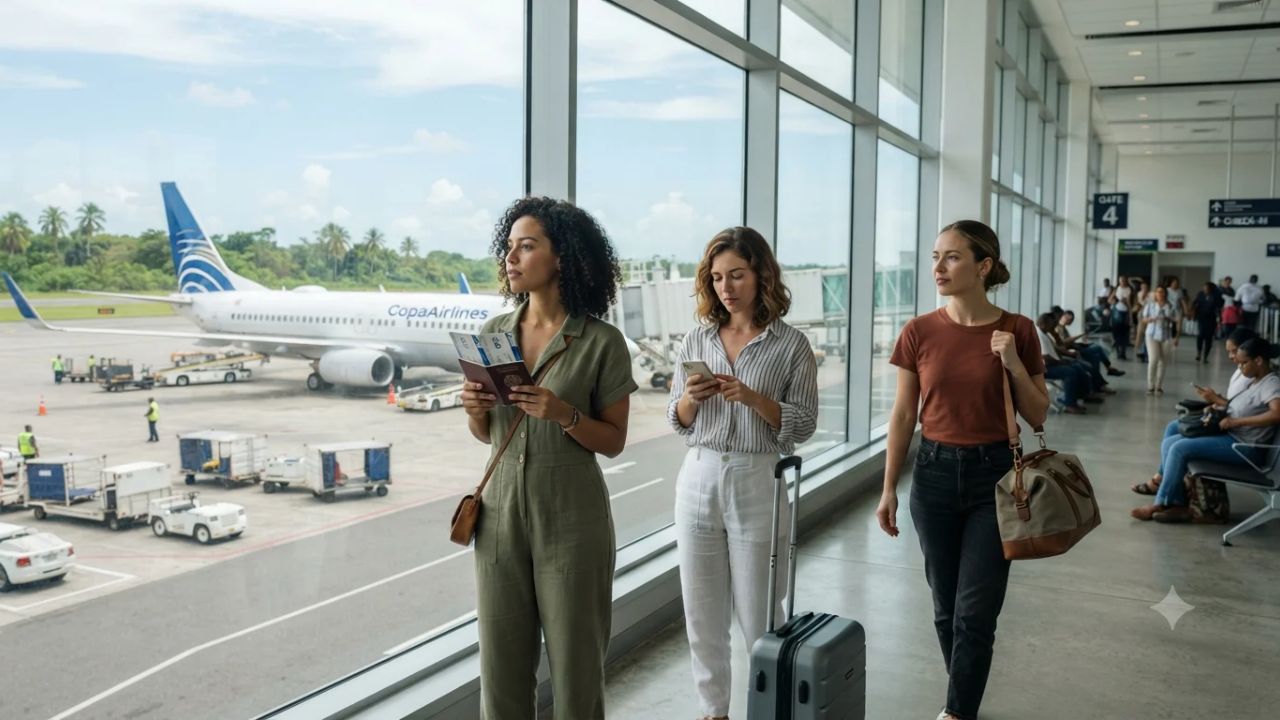
While more than eighty percent of Guyana remains blanketed in pristine, primary Amazonian rainforest, international travelers historically navigated fragmented flight routes to access its interior—a bottleneck permanently eased on September 30, 2026, with the formal signing of the Guyana-Panama Air Services Agreement. Executed at the Arthur Chung Conference Centre in Georgetown, the landmark pact replaces a decade-old reciprocity framework established when Copa Airlines launched daily flights in 2014, upgrading bilateral aviation ties to include sixth-freedom passenger rights and seventh-freedom cargo freedoms.
By utilizing Panama City’s Tocumen International Airport as a central hemispheric transit bridge, the treaty provides North American and European travelers with streamlined, single-transfer itineraries into Cheddi Jagan International Airport (GEO). This enhanced connectivity unlocks South America’s premier untouched wilderness, connecting global eco-travelers directly to the thundering 226-meter single drop of Kaieteur Falls and the community-managed wildlife reserves of the Rupununi.
Regional Flight Corridors & Interior Expedition Gateways
| Route / Expedition Hub | Connection Mechanism & Aircraft | Travel Window / Flight Time | Destination Experience |
|---|---|---|---|
| Panama City (PTY) to Georgetown (GEO) | Daily Copa Airlines Boeing 737 service | 3 hours 45 minutes direct | Main international gateway into coastal Guyana |
| Georgetown (OGL) to Kaieteur Falls | Trans Guyana Airways / Air Services Cessna Caravans | 55-minute chartered bush flight | 226-meter single-drop waterfall in Kaieteur National Park |
| Georgetown to Lethem (LTM) | Scheduled domestic flights via Eugene F. Correia Airport | 75 minutes direct | Gateway to the vast grasslands and ranches of the Rupununi |
| Fair View Airstrip / Iwokrama | Light aircraft charter or 6-hour overland 4x4 trail | Year-round access (dry season optimal) | Canopy walkway, river boat safaris, and jaguar tracking |
| Essequibo River Estuary | Overland transfer to Parika followed by speed boat | 90 minutes from Georgetown | Secluded eco-lodges, historic Dutch forts, and river bathing |
How Sixth-Freedom Aviation Rights Transform Eco-Travel
The introduction of sixth-freedom passenger traffic rights represents a structural breakthrough for regional tourism across the Americas. Under this framework, international airlines operating through Panama can ticket passengers from major metropolitan hubs—including New York, Miami, Toronto, Houston, Bogotá, and San José—directly to Georgetown on a single unified booking without separate baggage re-check protocols.
For travelers, this eliminates complex multi-carrier arrangements that previously characterized trips to the Guiana Shield. Promoted by the Guyana Tourism Authority and the Panama Tourism Authority, the agreement positions Guyana as an accessible extension for travelers combining Central American cultural itineraries with South American wildlife expeditions.
Simultaneously, the granting of seventh-freedom cargo rights allows air freight operators to move specialized expedition equipment, scientific research tools, and high-value regional goods between markets, strengthening the logistics infrastructure that supports remote eco-lodges across the interior.
What Makes Guyana's Ecological Frontier Unique
Unlike mass-market resort destinations, Guyana’s tourism model is built entirely around low-impact conservation and community-led immersion. Located in northeastern South America, the country encompasses four distinct natural ecosystems: coastal plains, white-sand interior forests, dense rainforest canopies, and the sprawling savannahs of the Rupununi.
Key highlights for adventurous travelers include:
- Kaieteur National Park: Housing the world's widest single-drop waterfall, where the Potaro River plunges 226 meters (741 feet) over a sandstone plateau—roughly five times the height of Niagara Falls—surrounded by primary cloud forest that shelters the rare golden rocket frog.
- Iwokrama Forest Reserve: Managed by the Iwokrama International Centre, this one-million-acre living laboratory features a 154-meter suspension canopy walkway positioned 30 meters above the jungle floor, offering sightings of green aracari, red howler monkeys, and the elusive Guianan cock-of-the-rock.
- North Rupununi Wetlands: An expansive savannah ecosystem home to the world's largest freshwater fish (the Arapaima gigas), giant river otters, black caiman exceeding four meters in length, and giant anteaters foraging across open termite mounds.
- Indigenous Amerindian Community Tourism: Pioneer eco-lodges in villages like Surama and Rewa are wholly owned and staffed by Makushi and Wapishana residents, offering guided river tracking, nocturnal caiman tagging, and ancestral ethnobotanical walks.
Visitor Insider Tips for Exploring Guyana
Navigating Guyana’s interior requires meticulous preparation and local knowledge:
- Airport Logistics Split: International flights arrive at Cheddi Jagan International Airport (GEO) in Timehri, located 41 kilometers (60 minutes) south of Georgetown. However, internal charter flights to Kaieteur Falls and wildlife lodges depart from Eugene F. Correia International Airport (OGL) in Ogle, located right inside the eastern city limits. Allow at least two hours for transfers between the two airfields.
- Seasonal Timing Windows: The optimal dry seasons for interior travel occur from September through November and February through April. During these periods, forest trails remain dry and dirt roads through the Rupununi are easily navigable by four-wheel-drive vehicles.
- Mandatory Health Requirements: Yellow fever vaccination is mandatory for entry into Guyana, and international travelers must present an official International Certificate of Vaccination (yellow card) upon arrival. Pack prescription malaria prophylaxis when traveling into interior rainforest zones.
- Currency and Remote Payments: Outside of international hotels in Georgetown, credit cards are rarely accepted in the interior. Carry sufficient Guyana Dollars (GYD) or crisp US Dollars in cash for tipping indigenous guides, local community crafts, and village landing fees.
- Kaieteur Flight Scheduling: Book day-trip charters to Kaieteur Falls on morning departures (typically departing Ogle around 08:30). Cloud cover and thermal turbulence build over the Potaro plateau by mid-afternoon, making morning aerial photography significantly clearer.
Cultural and Environmental Context
Guyana’s approach to ecotourism serves as a global benchmark for sustainable development. The country’s Low Carbon Development Strategy (LCDS) generates international carbon credits by preserving standing forest ecosystems, directly funding educational infrastructure and solar power grids in Amerindian villages.
Indigenous community-owned lodges prove that conservation and economic independence can coexist. In villages like Rewa, local communities halted commercial hunting of endangered arapaima to build a world-renowned catch-and-release fly-fishing economy. Travelers staying in these community lodges directly finance village health posts, protect nesting harpy eagle habitats, and ensure that indigenous youth retain ancestral tracking and language skills.
FAQ: Visiting Guyana and Transiting via Panama in 2026
What is the primary benefit of the Guyana-Panama Air Services Agreement?
The agreement grants sixth-freedom passenger rights, enabling travelers from North America and across the Americas to connect seamlessly through Panama City directly to Georgetown on single-ticket itineraries.
Do I need a visa to enter Guyana?
Citizens of the United States, Canada, the United Kingdom, European Union nations, and CARICOM countries do not require a tourist visa for stays up to 90 days.
How do I reach Kaieteur Falls from Georgetown?
Kaieteur Falls is inaccessible by road; visitors must take a 55-minute scheduled flight or chartered light aircraft from Eugene F. Correia Airport (OGL) in Ogle.
Is Guyana safe for solo and adventure travelers?
Yes. When traveling with registered local tour operators in the interior, eco-lodges and indigenous communities provide exceptionally safe, welcoming, and expert-guided environments.
Across the thundering precipice of Kaieteur and the untamed rivers of the interior, Guyana reminds travelers that the world's greatest wonders remain those untouched by time and crowds.
Related Travel Guides
Disclaimer
This article is for informational and educational purposes only. It does not constitute legal, financial, or professional advice. While we strive to provide accurate and up-to-date information, travel policies, regulations, and conditions change rapidly. Always verify information with official sources before making travel decisions. Nomad Lawyer makes no representations about the accuracy, reliability, completeness, or suitability of the information provided. Readers should consult qualified professionals for advice specific to their circumstances. The views expressed in this article are those of the author and do not necessarily reflect the views of Nomad Lawyer.
Preeti Gunjan
Contributor & Community Manager
A passionate traveller and community builder. Preeti helps grow the Nomad Lawyer community, fostering engagement and bringing the reader experience to life.
Learn more about our team →