
Inside Delta's Secret Flying Clubhouse: The Custom Airbus A321neo Built for 7-Foot NBA Giants
Delta Air Lines introduces a custom 90-seat Airbus A321neo equipped with lie-flat beds, strategy tables, and removed overhead lockers tailored for grueling NBA team travel.

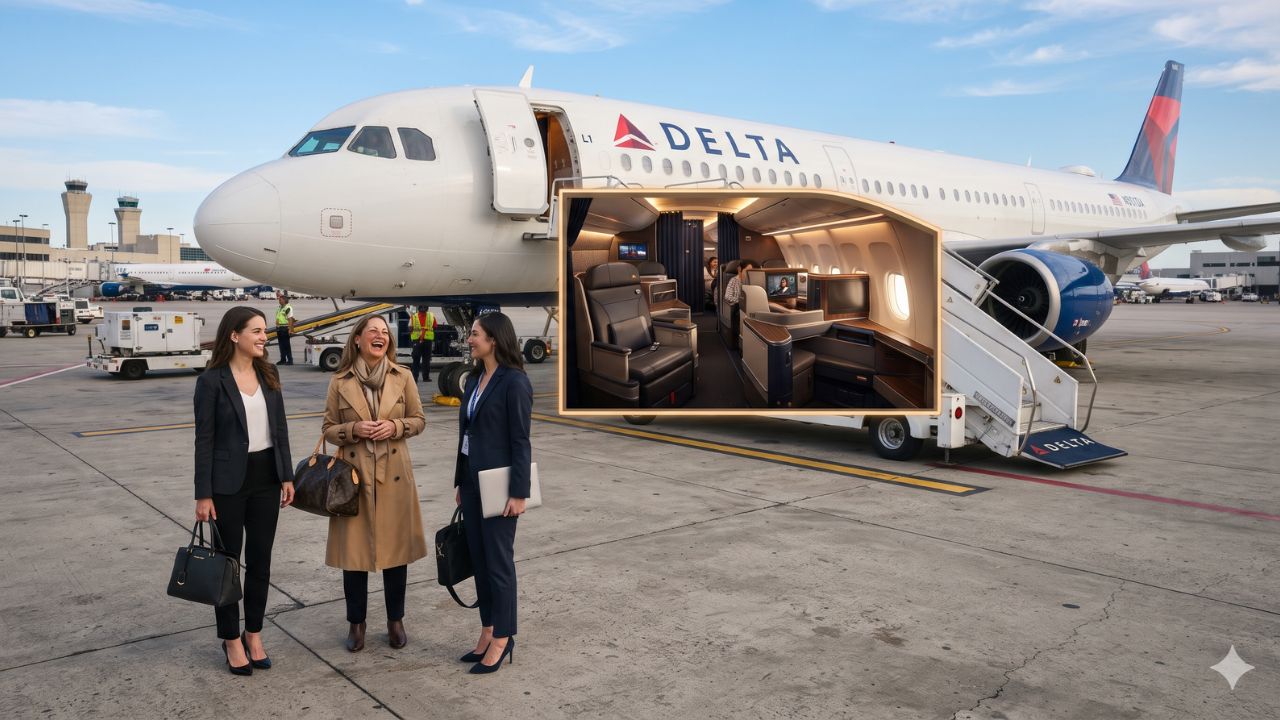
To ferry seven-foot-tall professional basketball players across a brutal 82-game calendar, Delta Air Lines did something almost unheard of in modern commercial aviation: it dismantled the forward overhead luggage bins of a factory-fresh narrowbody airliner to give towering athletes standing headroom, replaced dense rows of coach seating with fully flat sleeping suites, and slashed passenger capacity from 194 down to roughly 90 seats. Operating far beyond public ticketing channels, this dedicated charter aircraft represents the cutting edge of specialized sports logistics. The transition officially took flight on 13 September 2026, when aviation fleet tracking recorded the first purpose-built Airbus A321neo, registration tail number N701DH, entering charter service for the National Basketball Association (NBA) ahead of the 2026–27 season.
Replacing an aging fleet of Boeing 757-200 charter workhorses that spent decades flying professional teams between back-to-back night games, Delta’s new A321neo program demonstrates how state-of-the-art narrowbody aircraft can be radically reconfigured into private athletic sanctuaries in the sky.
The Flying Sanctuary: Dissecting Delta's Custom NBA Charter Interior
A standard commercial airliner is engineered around revenue passenger density, balancing narrow aisles, overhead storage compartments, and maximum seating capacity. Delta’s basketball charter completely reverses that logic, prioritizing ergonomic comfort, rapid recovery, and strategic workspace for a traveling delegation of fewer than one hundred people.
A typical NBA traveling party consists of 15 to 18 active players, a head coach, assistant coaching staff, athletic trainers, physical therapists, physicians, equipment managers, media personnel, and front-office executives. To accommodate these competing needs simultaneously, Delta and cabin designers segmented the A321neo into distinct functional zones:
Forward Strategy and Executive Salons
At the front of the aircraft, the cabin features a spacious executive lavatory, heavy gear stowage compartments, and an intimate lounge area equipped with full-sized conference tables. Rather than perching laptops on flimsy seatback trays, head coaches and advance scouts can gather around shared tables to dissect video scouting footage, review defensive analytics, or share post-game meals without disturbing resting players.
The most noticeable structural modification in this forward section is the complete removal of overhead baggage lockers. Eliminating the upper stowage bins creates soaring ceiling clearance, allowing athletes standing well over six-and-a-half feet tall to walk upright through the cabin without hunching or ducking.
Dedicated Lie-Flat Suites for Athletic Recovery
Behind the forward strategy tables lie the aircraft's premier rest sections. Aviation cabin descriptions circulated in October 2026 reveal two dedicated lie-flat zones configured in a spacious 2-2 seating layout—reported as 16 flat-bed suites in one section and 12 in another.
Unlike standard domestic first-class recliners that tilt backward only a few inches, these specialized seats extend into horizontal beds. For an elite athlete recovering from 36 minutes of physical basketball before playing again in a different time zone 24 hours later, horizontal rest during a three-hour transcontinental flight provides meaningful physiological relief, helping reduce spinal compression and muscle stiffness.
Premium Recliners and Support Staff Sections
To bridge the gap between flat-bed sleeping accommodations and the reported 90-seat total capacity, the aircraft features wider premium reclining chairs followed by a rear cabin of conventional-style airline seating. This flexible layout accommodates team personnel who do not require flat beds—such as social media managers, security staff, and equipment personnel—while allowing coaches and players to work or converse without occupying designated quiet sleeping berths.
Technical Comparison: Delta's VIP NBA Charter A321neo vs Standard Commercial Configuration
The following data table illustrates how Delta's NBA charter aircraft differs from standard commercial Airbus A321neo airliners:
| Aircraft Feature / Specification | VIP NBA Charter Airbus A321neo | Standard Commercial Delta A321neo | Operational Trade-Off & Context |
|---|---|---|---|
| Primary Operational Role | Dedicated NBA team charter transport | Scheduled domestic & international passenger flights | Private charter vs public commercial operations |
| Maximum Passenger Capacity | Reported ~90 seats (exact breakdown unverified) | Standard 194 seats (interim 164-seat layout) | Over 50% reduction in passenger density |
| Sleeping Accommodations | Dual dedicated lie-flat seating sections (2-2 layout) | Standard upright seats (Delta First recliners only) | Horizontal sleeping beds installed on a narrowbody jet |
| Overhead Bin Structure | Forward lockers removed for vertical head clearance | Full-length commercial overhead luggage bins | Tailored for athletes exceeding 6 ft 8 in tall |
| Forward Cabin Layout | Conference tables, strategy space, expanded lavatory | Standard galley, lavatories, and forward seating | Mobile locker room and coaches' scouting center |
| Aircraft Tail Registration | First aircraft identified as N701DH | Commercial fleet series | Delivered and active as of September 2026 |
| First Recorded Charter Flight | 13 September 2026 | Scheduled commercial service | Tracked via FlightAware aviation logs |
| Fleet Size & Acquisition | 13 aircraft via SMBC Aviation Capital lease (14 reported) | Direct airline fleet order | Contracted dedicated charter fleet |
| Aircraft Dimensions | Length: 146 ft (44.5 m); Wingspan: 117 ft 5 in (35.8 m) | Identical airframe dimensions | Cruising speed: approx 525 mph (845 km/h) |
| Public Ticket Availability | Strictly non-public charter operations | Bookable via Delta Air Lines channels | Not open to general ticket-holding passengers |
The Fleet Transition: Retiring the Iconic Boeing 757
For more than two decades, the Boeing 757-200 served as the gold standard of professional sports transportation. Revered by pilots for its overpowered Rolls-Royce or Pratt & Whitney engines, the 757 could lift heavy sports payloads off short runways and climb directly to high cruising altitudes above turbulent weather.
However, as Boeing 757 airframes aged past their second and third decades of service, commercial airlines faced mounting maintenance costs, declining spare-parts availability, and aging cabin climate systems. The transition to the Airbus A321neo modernizes Delta’s sports operation with advanced fly-by-wire cockpit avionics, quieter Pratt & Whitney Geared Turbofan engines, and improved cabin air filtration.
The transaction is structured through an aircraft leasing arrangement with SMBC Aviation Capital, which supplied 13 aircraft under a 2024 agreement (with broader program reports citing up to 14 aircraft). This structure allows the NBA and Delta to maintain a dedicated fleet without taking full residual asset risk on airframes that cannot easily be swapped back into standard passenger rotation.
Visitor Insider Tips
While ordinary travelers cannot purchase a ticket on Delta’s NBA charter aircraft, aviation enthusiasts and sports travelers can deploy savvy local strategies to witness these unique aircraft in action:
- Track Fixed-Base Operators (FBOs) Rather Than Commercial Terminals: NBA charter flights do not park at standard passenger gates or use commercial TSA checkpoints. Instead, aircraft like N701DH operate from private aviation FBO ramps—such as Signature Aviation or Atlantic Aviation—at major metropolitan airports. If traveling through cities like Dallas Love Field, Chicago Midway, or Westchester County Airport near New York City, look toward private general aviation aprons to spot the unmarked or subtle Delta charter aircraft parked near team buses.
- Align Spotting Around the 2026–27 NBA Calendar: The official NBA season began on 20 October 2026 and concludes on 11 April 2027, followed by the playoffs. Key dates generate predictable aircraft movements: the Emirates NBA Cup group stage commences on 30 October 2026, while international neutral-site showcases—such as the 7 November 2026 regular-season clash between Denver and Indiana in Mexico City—trigger long-haul charter flights.
- Do Not Confuse Charter A321neos with Commercial Delta First: If booking commercial travel on Delta's scheduled A321neos, note that the airline announced in February 2026 that seven commercial A321neos would temporarily operate with 44 Delta First recliners while awaiting flat-bed retrofits. Always verify your specific seat map during booking; commercial domestic A321neos feature standard Delta First and Delta Comfort seating, not the 90-seat charter layout.
- Observe NBA Road City Routines: Professional teams typically land in away cities between 01:00 and 03:00 following evening games. If staying at luxury team hotels in downtown hubs like Toronto, Boston, or San Francisco, expect quiet motorcade arrivals in the early morning hours, as teams prioritize immediate hotel sleep before morning shootarounds.
Cultural and Environmental Context
Professional basketball in North America represents a grueling test of athletic endurance. Over a five-and-a-half-month regular season, each of the league’s 30 franchises plays 82 regular-season games, traveling an estimated 40,000 to 50,000 air miles per team. Back-to-back games in different cities—often separated by less than 22 hours between final buzzer and next tip-off—place immense strain on athletes. By eliminating commercial terminal crowds and providing horizontal sleeping berths, specialized aviation has evolved into an essential component of professional sports science and injury prevention.
Yet the environmental reality of private sports aviation presents a nuanced balance. Airbus states that the commercial A321neo platform achieves approximately 20% lower fuel burn and carbon dioxide emissions per seat compared to previous-generation airliners like the Boeing 757. However, that manufacturer metric assumes a dense commercial layout of 180 to 220 passengers. On a VIP charter carrying only 90 passengers, the per-capita emissions footprint rises significantly.
As leagues explore corporate sustainability goals, transitioning from aging, fuel-thirsty 757s to modern A321neos represents a meaningful step toward reducing total trip emissions, demonstrating how professional athletics and modern aviation engineering intersect above the clouds.
FAQ: Delta VIP NBA Charter Airbus A321neo 2026–2027
How many passengers does Delta's NBA Airbus A321neo seat?
The aircraft is configured with approximately 90 seats, including lie-flat sleeping suites, strategy tables, premium recliners, and a rear support staff section.
Can commercial passengers buy tickets on Delta's NBA charter aircraft?
No. The aircraft is dedicated entirely to professional sports charter contracts and does not operate on Delta's public passenger schedule.
When did Delta's first NBA charter A321neo enter service?
Aviation tracking records confirm that the first specially configured aircraft, registered N701DH, commenced official charter flight operations on 13 September 2026.
Does Delta operate charter flights for the WNBA as well?
Yes. Delta established a multi-year partnership in August 2024 as the official airline of the WNBA, providing dedicated charter travel for all 13 teams across the expanded league.
High above the hardwood, modern flight transforms into a moving sanctuary, proving that the toughest games are won long before the players ever touch the court.
Related Travel Guides
- Beyond the Tarmac: How Houston Is Turning Millions of Connecting Air Travelers into City-Break Explorers
- The Anatomy of a 2,000-Flight Ground Stall: How Tech Outages and Rolling Delays Snarled American and Southwest
- The Golden Age of Airport Hospitality: United's Record 54,000-Square-Foot Houston Club Anchors a Global Lounge Boom
- Bypassing the Mega-Hubs: How Seven New Asian Air Corridors Are Reshaping 2027 Regional Travel
Disclaimer
This article is for informational and educational purposes only. It does not constitute legal, financial, or professional advice. While we strive to provide accurate and up-to-date information, travel policies, regulations, and conditions change rapidly. Always verify information with official sources before making travel decisions. Nomad Lawyer makes no representations about the accuracy, reliability, completeness, or suitability of the information provided. Readers should consult qualified professionals for advice specific to their circumstances. The views expressed in this article are those of the author and do not necessarily reflect the views of Nomad Lawyer.
Preeti Gunjan
Contributor & Community Manager
A passionate traveller and community builder. Preeti helps grow the Nomad Lawyer community, fostering engagement and bringing the reader experience to life.
Learn more about our team →