
Cascading Airspace Delays Grip US Hubs: Chicago, Austin, and San Francisco Hit by 3,287 Flight Disruptions
A combination of Pacific low cloud ceilings, midwestern volume crunches, and ground delay advisories triggered 3,287 flight delays and 121 cancellations across major US airports on 23 October 2026.

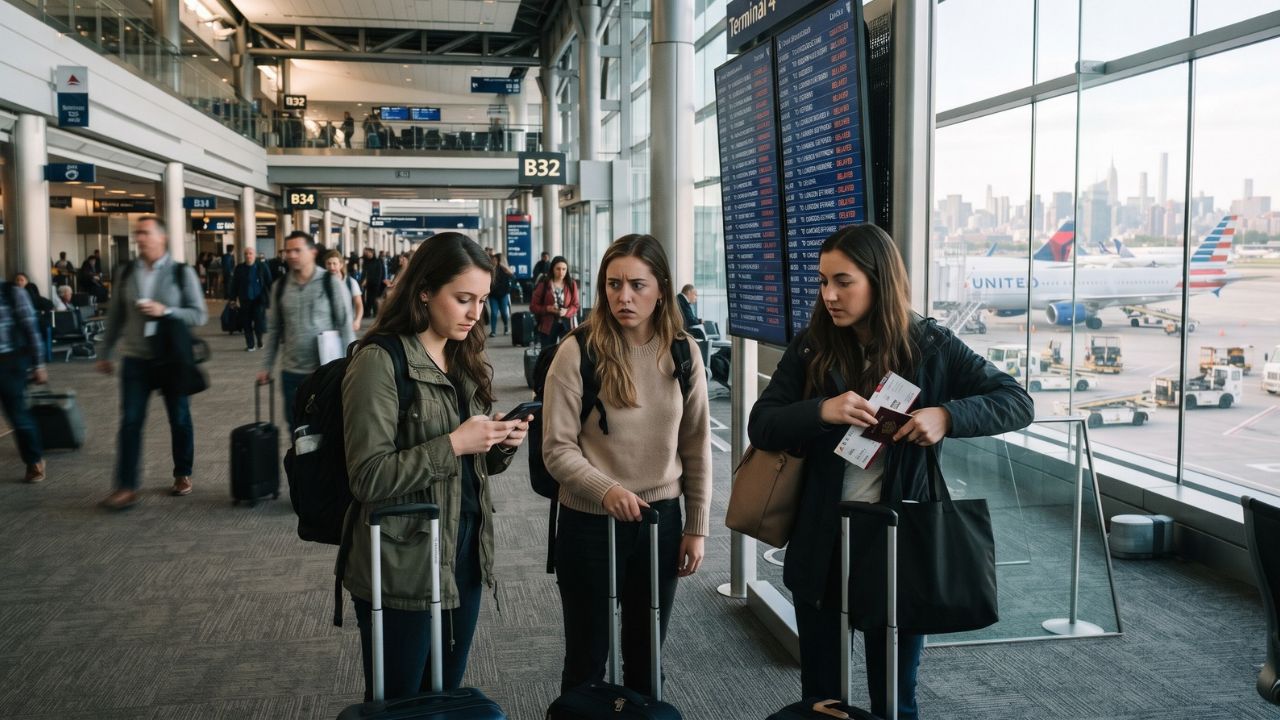
While nationwide cancellations remained contained at 121 flights on 23 October 2026, air travelers across the United States suffered a staggering 3,287 flight delays, with Southwest Airlines absorbing 877 delayed departures alone—more than American Airlines and United Airlines combined. Flight operations tracked at 2:51 pm ET by live monitoring systems revealed that the disruption was not caused by a single catastrophic storm system, but by an acute convergence of local meteorological obstacles and air traffic volume bottlenecks. Across the country, the Federal Aviation Administration imposed aggressive flow-control programs, hitting Austin-Bergstrom International Airport with a punishing 75-minute average ground delay advisory, while San Francisco International Airport battled marine layer cloud ceilings that stretched arrival delays to 57 minutes.
From the midwestern hub of Chicago O'Hare International Airport to the Caribbean gateway of Luis Muñoz Marín in San Juan, travelers encountered mounting rolling delays that shattered tight connection windows. What began as morning airspace congestion escalated into an afternoon chain reaction, highlighting the razor-thin margins of America's commercial aviation network during peak autumn travel periods.
Anatomy of the 23 October Airspace Disruption
The operational stress was concentrated across several key geographical transit hubs. Chicago O'Hare logged 292 delays and 10 cancellations, experiencing a 10% departure delay rate alongside a 9% arrival delay rate as air traffic control managed high arrival streams. Further south in Texas, Austin-Bergstrom recorded 243 delays with zero cancellations, proving that an absence of canceled flights does not spare passengers from agonizing tarmac waits when ground delay advisories halt inbound departures from feeder cities.
On the West Coast, San Francisco International Airport contended with persistent low cloud ceilings that forced controllers to reduce runway acceptance rates, generating 208 delays and eight cancellations. SFO suffered an 11% departure delay rate and a severe 19% arrival delay rate. Nearby in Southern California, San Diego recorded 174 delays and seven cancellations, where the FAA cited swelling airport traffic volume for departure delays averaging 15 minutes and climbing. Los Angeles International Airport recorded 167 delays and 12 cancellations, posting a 9% departure delay rate and a 10% arrival delay rate.
On the East Coast, Newark Liberty logged 66 delays and 10 cancellations, while Puerto Rico's primary gateway, Luis Muñoz Marín International Airport in San Juan, registered 33 total delays (including 20 flights operating within, into, or out of the United States) and 14 cancellations. The Caribbean disruptions also took a heavy toll on regional luxury carrier Tradewind Aviation, which grounded 17 flights with zero recorded delays, demonstrating how regional feeder networks often cancel rotations outright rather than absorb cascading schedule slippage.
Operational Benchmarks: Airports and Airlines Hit Hardest
Evaluating the distribution of schedule disruptions across carriers and regional hubs illustrates the operational pressure points across the national airspace system.
| Aviation Entity / Airport Hub | Recorded Flight Delays | Recorded Cancellations | Performance Metrics & Primary Disruption Drivers |
|---|---|---|---|
| Nationwide Total (All US Operations) | 3,287 delays | 121 cancellations | Monitored live at 2:51 pm ET on 23 October 2026 |
| Southwest Airlines | 877 delays | 13 cancellations | Carrier absorbed 26.7% of all nationwide delays |
| American Airlines | 535 delays | 7 cancellations | High-density hub turnarounds impacted in Texas and Midwest |
| SkyWest Airlines | 313 delays | 8 cancellations | Regional partner flights hit by hub ground delays |
| United Airlines | 256 delays | 20 cancellations | Carrier recorded the highest total cancellations among majors |
| Alaska Airlines | 115 delays | 9 cancellations | Pacific corridor schedule friction |
| Frontier Airlines | 88 delays | 7 cancellations | Point-to-point network rotations strained |
| Tradewind Aviation | 0 delays | 17 cancellations | Island feeder flights canceled due to regional operating limits |
| Chicago O'Hare (ORD) | 292 delays | 10 cancellations | 10% departure delay rate; 9% arrival delay rate |
| Austin-Bergstrom (AUS) | 243 delays | 0 cancellations | FAA ground delay advisory averaging 75 minutes |
| San Francisco (SFO) | 208 delays | 8 cancellations | FAA ground delay averaging 57 minutes due to low ceilings |
| San Diego (SAN) | 174 delays | 7 cancellations | FAA departure delay averaging 15 minutes due to volume |
| Los Angeles (LAX) | 167 delays | 12 cancellations | 9% departure delay rate; 10% arrival delay rate |
| Newark Liberty (EWR) | 66 delays | 10 cancellations | Congested Northeast corridor arrival constraints |
| Luis Muñoz Marín (SJU) | 33 delays (20 US) | 14 cancellations | Caribbean transit bottleneck impacting regional connections |
The comparative data reveals a clear operational reality: while United Airlines absorbed the highest individual cancellation tally at 20 flights, Southwest Airlines endured the most severe schedule degradation with 877 delayed departures, reflecting how point-to-point routing structures can propagate aircraft rotation delays across dozens of consecutive cities.
What Makes These Aviation Corridors Vulnerable
Understanding the root causes of nationwide flight disruptions requires examining the unique geographic and operational challenges of each gateway.
The Fog and Runway Constraints of San Francisco
San Francisco International Airport is historically susceptible to coastal stratus clouds. SFO's closely spaced parallel runways require clear visual conditions for simultaneous instrument approaches. When low ceilings roll in from the Pacific, controllers must implement single-runway arrival procedures, instantly slashing arrival capacity by nearly 50% and triggering ground delay programs that hold aircraft at their departure gates across the continent.
Texas Airspace and High-Growth Pressures in Austin
Austin-Bergstrom has experienced rapid passenger growth over the past decade, transforming from a regional airfield into a major business and cultural transit hub. However, its airspace intersects with military training corridors and the heavy departure streams of Dallas/Fort Worth and Houston. When regional weather or flow management constraints hit central Texas, Austin lacks the redundant runway capacity of mega-hubs, resulting in prolonged ground delays like the 75-minute pauses experienced today.
The Midwestern Vortex of Chicago O'Hare
As one of the continent's busiest aviation crossroads, Chicago O'Hare operates on exacting schedules where aircraft turnarounds occur in 45 to 60 minutes. When volume restrictions slow operations by even 10%, gates quickly become occupied by held departures, leaving incoming arrivals stranded on taxiways and causing crew members to time out of their federally mandated flight duty periods.
Visitor Insider Tips
When airspace ground delays threaten your travel plans, employing seasoned transit strategies can mean the difference between sleeping in an airport terminal and reaching your destination on time:
- Bypass Airport Phone Queues via Global Support Desks: When a domestic flight is delayed or canceled, the airline's standard domestic phone lines often face wait times exceeding an hour. Switch your calling app to contact the airline's overseas English-speaking customer support lines in Australia, the United Kingdom, or Singapore. These agents share the identical global reservation database and usually answer within two minutes without queues.
- Leverage Rail Transit Alternatives During Severe Ground Stops: If you are grounded at Chicago O'Hare and your regional connecting flight to Milwaukee, Indianapolis, or Detroit is scrubbed, do not wait for the next morning's flight. Take the CTA Blue Line directly into downtown Chicago to catch an Amtrak train from Union Station. Similarly, in the Northeast, Amtrak's Northeast Corridor from Newark or Philadelphia provides faster, weather-immune transit when EWR or JFK ground stops hit.
- Capitalize on U.S. DOT Automatic Refund Mandates: Under updated federal rules enforced by the U.S. Department of Transportation, passengers whose domestic flights are delayed by more than three hours—or whose flights are canceled outright—are legally entitled to an immediate cash or credit card refund if they choose not to travel. Airlines cannot force you to accept travel vouchers.
- Track Inbound Aircraft Hardware Rather than Scheduled Gates: Never rely solely on airport departure monitors, which frequently show 'On Time' until 20 minutes before departure. Use dedicated flight tracking tools to trace the physical inbound aircraft (Where is my plane coming from?). If your inbound aircraft is held under an FAA ground stop two states away, immediately seek alternative routings before the rest of your flight rushes the customer service desk.
- Select Morning Flights to Avoid Cumulative Rotational Lag: Aviation data consistently demonstrates that flights departing before 08:30 experience fewer delays. As aircraft rotate through five to seven legs across a day, morning delays in San Francisco or Austin compound into late-afternoon gridlock for travelers flying Southwest or SkyWest.
Cultural and Environmental Context
Modern commercial aviation operates within an intricate balance between environmental reality and human mobility. Airports like SFO, situated along delicate coastal wetlands, face strict noise and environmental limits that restrict runway expansions into the bay, necessitating sophisticated flow-management algorithms instead of concrete expansions.
Simultaneously, the sheer volume of cultural tourism—from live music festivals and technology summits in Austin to autumnal foliage pilgrimages across New England—pushes national airspace to maximum capacity. When airlines run at 90% load factors, there is virtually zero slack to absorb stranded passengers. By adopting realistic travel buffers and understanding that aviation delays are often safety protocols designed to keep congested skies secure, travelers can approach seasonal flight disruptions with resilience and cultural awareness.
FAQ: US Flight Delays and Passenger Rights October 2026
What caused the widespread US flight delays on 23 October 2026?
Disruptions stemmed from a combination of FAA ground delay advisories, low cloud ceilings in San Francisco, high air traffic volume in San Diego, and operational ground stops in Austin.
Am I entitled to hotel accommodation if my flight is delayed?
Major US airlines have committed to providing meal vouchers and hotel accommodations for delays or cancellations within their control, though weather-related air traffic delays are typically exempt from mandatory overnight hotel coverage.
Which airline recorded the highest delays during the 23 October disruption?
Southwest Airlines suffered the highest delay total, logging 877 delays, followed by American Airlines with 535 delays and SkyWest Airlines with 313 delays.
What should I do if my flight at Austin-Bergstrom is placed on a ground delay?
Remain at your departure gate and monitor inbound aircraft status. Because Austin ground delays averaged 75 minutes without cancellations, flights generally depart once clearance slots open.
In the high-speed choreography of American aviation, patience is not merely a virtue—it is the seasoned traveler's most dependable compass.
Related Travel Guides
- New US Air Travel Mandate Enforces 21-Day Health Declaration for All Inbound Flights Starting November 3
- Beyond the Departure Desk: How Travelers Can Safely Experience China Under the 2026 US Advisory
- The Rose-Red Kingdom Rebounds: How Jordan Is Courting American Travelers Amid Petra's Tourism Recalibration
- Middle East Aviation Under Pressure: 109 Flight Cancellations and 1,224 Delays Ripple Across Riyadh, Dubai, and Istanbul
Disclaimer
This article is for informational and educational purposes only. It does not constitute legal, financial, or professional advice. While we strive to provide accurate and up-to-date information, travel policies, regulations, and conditions change rapidly. Always verify information with official sources before making travel decisions. Nomad Lawyer makes no representations about the accuracy, reliability, completeness, or suitability of the information provided. Readers should consult qualified professionals for advice specific to their circumstances. The views expressed in this article are those of the author and do not necessarily reflect the views of Nomad Lawyer.
Kunal K Choudhary
Co-Founder & Contributor
A passionate traveller and tech enthusiast. Kunal contributes to the vision and growth of Nomad Lawyer, bringing fresh perspectives and driving the community forward.
Learn more about our team →