
Gulf Airports Disrupted as Riyadh and Dubai Record 1315 Delays
Aviation networks in the Gulf experience 1,315 delays and 36 cancellations, affecting passenger connections in Dubai, Riyadh, Jeddah, and Cairo.

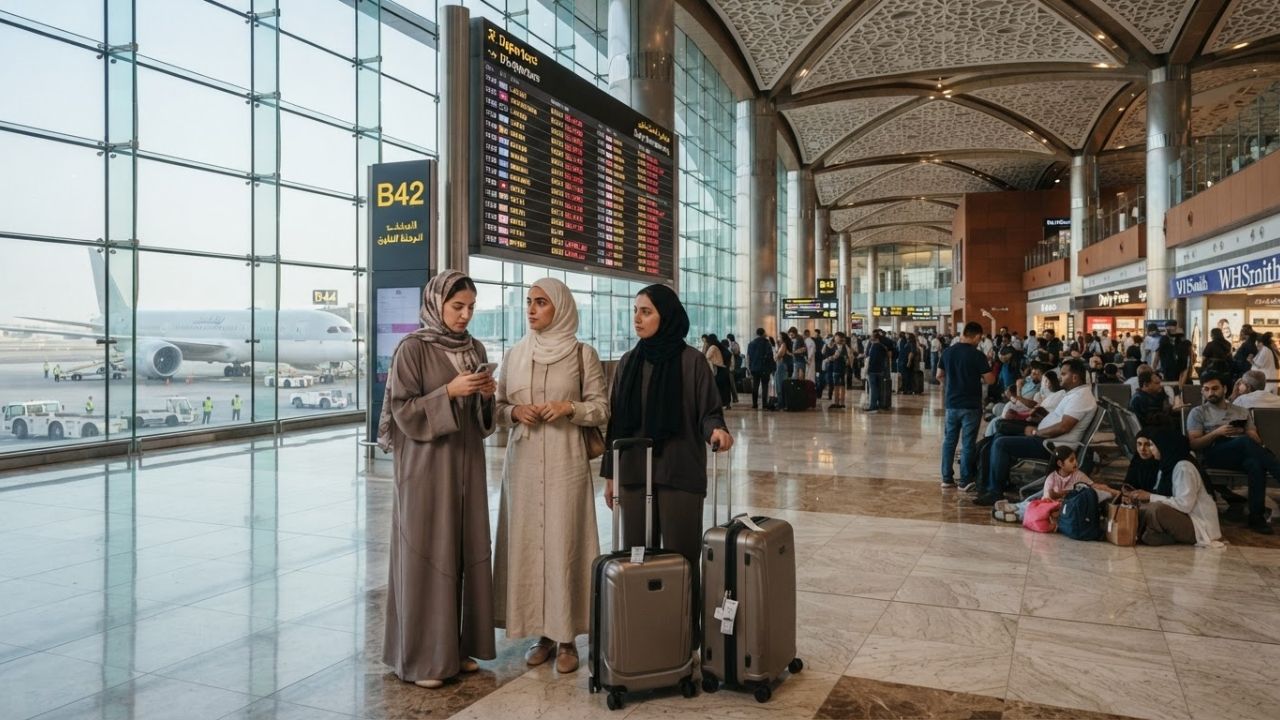
Image generated by AI
Middle Eastern aviation hubs are facing widespread operational delays, with 1,315 delays and 36 cancellations impacting passengers at Gulf airports like Riyadh, Jeddah, and Dubai. High traffic volumes and cascading network issues have disrupted schedules across regional carriers, forcing travelers to adjust transit times.
The Local Trend Revealed
Aviation networks in the Gulf are under significant capacity pressure as international flight connections surge. Verified figures from FlightAware recorded on August 27, 2026, at 6:13 PM ET (August 28, 2026, at 2:13 AM GST) outline the localized impacts:
- Dubai International Airport Delays: The UAE hub reported 523 delays and 5 cancellations, reflecting heavy transit pressure on connecting routes.
- Sharjah International Airport Disruption: The low-cost hub recorded 128 delays and 3 cancellations, affecting budget connections across the emirate.
- Saudi Arabia Hub Performance: King Khalid International Airport in Riyadh reported 156 delays and 9 cancellations, while King Abdulaziz International Airport in Jeddah recorded 133 delays and 5 cancellations.
- Saudi Regional Closures: Abha Regional Airport reported 15 delays and 3 cancellations, Gizan Regional Airport reported 5 cancellations, and Najran Domestic Airport reported 4 cancellations (both Gizan and Najran recorded 0 delays).
- Other Major Transit Gateways: Egypt’s Cairo International Airport reported 214 delays and 1 cancellation, while Qatar’s Hamad International Airport in Doha recorded 146 delays and 1 cancellation.
Affected Regional Airlines
The operational delays have directly impacted the schedule reliability of several Middle Eastern and regional carriers:
- FlyDubai (UAE): 207 delays (60 percent delay rate) and 3 cancellations (0 percent cancellation rate).
- Air Arabia (UAE): 112 delays (42 percent delay rate) and 3 cancellations (1 percent cancellation rate).
- Saudia (Saudi Arabia): 77 delays (13 percent delay rate) and 14 cancellations (2 percent cancellation rate).
- Turkish Airlines (Turkey): 407 delays (23 percent delay rate) and 1 cancellation (0 percent cancellation rate).
Local Community & Environmental Value
For the visitor, the real impact of flight delays is the opportunity to support local communities during long layovers. Choosing to stay in independent hotels in Sharjah, buying traditional crafts from merchants in Cairo, or dining at family-run street kitchens near transit zones ensures that travel spending stays within regional hands during travel crises.
Environmental preservation is supported by using low-emission alternatives during delays. When short-haul regional flights are canceled, opting for high-speed rail networks—such as the Haramain High-Speed Railway connecting Jeddah, Mecca, and Medina—reduces passenger emissions. These green choices align with regulations monitored by the General Authority of Civil Aviation of Saudi Arabia (GACA), the General Civil Aviation Authority of the UAE (GCAA), the Egypt Civil Aviation Authority, and the International Air Transport Association (IATA).
Visitor Insider Tips for Gulf Airport Transit
Travel specialists recommend the following practices during Middle East disruptions:
- Utilize Mobile Rebooking Options: Skip the long customer service lines at Dubai International (DXB). Log onto the airport's high-speed DXB Free Wi-Fi and use your airline's mobile app to queue virtually or secure alternative flights.
- Access Rest Zones in Doha: If delayed at Hamad International (DOH), access the Vitality Wellbeing & Fitness Centre inside the passenger terminal to use the indoor swimming pool and showers during long layovers.
- Explore Jeddah via High-Speed Rail: If your flight out of King Abdulaziz Airport (JED) is delayed for several hours, take the Haramain high-speed train directly from the airport terminal to the historic Al-Balad district (old Jeddah) to explore coral-stone houses instead of waiting at the gate.
- Observe the Off-Peak Window: High summer temperatures (June to August) often lead to flight delays due to weather disruptions. Travel during the cooler shoulder months of November to February. Temperatures average 20°C to 25°C, passenger flows are steadier, and flights run on time.
- Sample Regional Culinary Specialties:
- In Riyadh: Try traditional Kabsa (spiced rice with slow-cooked chicken or lamb) with Arabic coffee (Gahwa).
- In Dubai: Try Machboos (spiced rice with meat or fish) or Luqaimat sweet fried dough balls.
- In Doha: Sample Harees (slow-cooked wheat and meat).
- Observe Religious and Airport Etiquette: Jeddah is the primary entry point for pilgrims. Dress modestly (shoulders and knees covered) and do not photograph pilgrims in Ihram attire. Shops and cafes inside Saudi airports may close briefly during daily prayer times. Tipping is not mandatory at Gulf airports, but rounding up taxi fares is appreciated.
Tourism Outlook
The long-term impact of regional delays will drive investment in airport expansion and train integrations. By coordinating flight schedules with high-speed rail networks, Middle Eastern transport authorities aim to protect passenger mobility, ensuring that business and religious tourism flows continue to expand.
FAQ: Gulf Airport Flight Disruptions
How many delays and cancellations were recorded across the Gulf region? Middle Eastern aviation networks recorded a total of 1,315 delays and 36 cancellations on August 27, 2026.
Which airport experienced the highest number of delays? Dubai International Airport (DXB) recorded the highest number of delays in the region, with 523 delays and 5 cancellations.
Which airline reported the highest number of flight cancellations? Saudia reported the highest number of cancellations, with 14 cancellations and 77 delays.
How can passengers travel sustainably between Jeddah and Medina during disruptions? Passengers can ride the Haramain High-Speed Railway directly from Jeddah Airport, which is a low-emission alternative to regional flights.
Related Travel Guides
Disclaimer
This article is for informational and educational purposes only. It does not constitute legal, financial, or professional advice. While we strive to provide accurate and up-to-date information, travel policies, regulations, and conditions change rapidly. Always verify information with official sources before making travel decisions. Nomad Lawyer makes no representations about the accuracy, reliability, completeness, or suitability of the information provided. Readers should consult qualified professionals for advice specific to their circumstances. The views expressed in this article are those of the author and do not necessarily reflect the views of Nomad Lawyer.
Raushan Kumar
Founder & Lead Developer
Full-stack developer with 11+ years of experience and a passionate traveller. Raushan built Nomad Lawyer from the ground up with a vision to create the best travel and law experience on the web.
Learn more about our team →