
Typhoon Dolphin Triggers Massive Flight Delays and Cancellations Across Asia
Typhoon Dolphin disrupts Asian aviation hubs, causing 8,207 delays and 761 cancellations across Shanghai, Beijing, Tokyo, and Incheon airports.

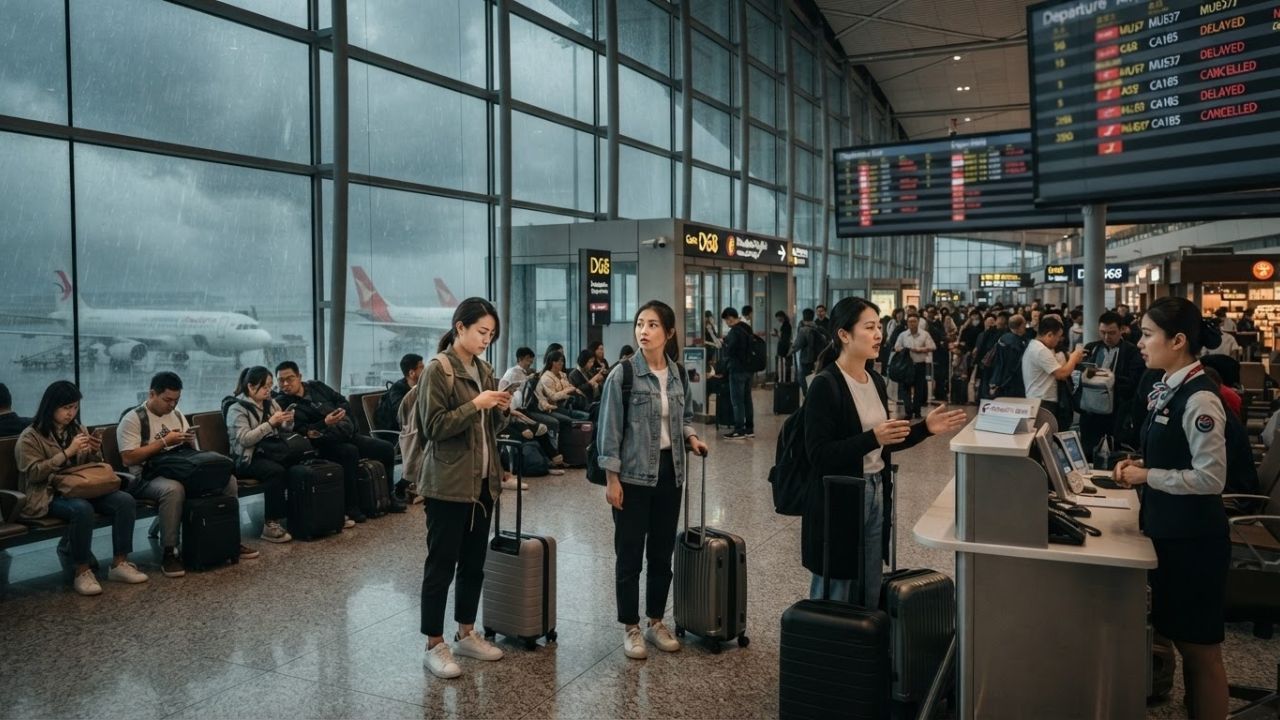
Image generated by AI
Typhoon Dolphin has triggered a massive operational disruption across East Asia's aviation network, resulting in 8,207 delays and 761 cancellations at major hubs on August 11, 2026.
Typhoon Dolphin Slashes Capacity Across Major Asian Corridors
Asia’s highly interconnected aviation network is facing widespread disruptions as extreme weather conditions, led by Typhoon Dolphin, impact major gateways in China, Japan, South Korea, India, and Indonesia. FlightAware data compiled on August 11, 2026, at 3:43 PM ET (August 12, 2026, at 3:44 AM China Standard Time) recorded a combined 8,207 delays and 761 cancellations across the region.
Typhoon Dolphin brought heavy rainfall, severe flooding risks, and reduced airport capacity to eastern China before moving inland. In Beijing, authorities prepared for extreme rainfall, forecasting more than 150mm of rain in 24 hours and activating emergency flood responses in several districts. The severe weather has created a massive backlog of delayed aircraft, impacting domestic passengers and travelers connecting to international routes, a situation that mirrors similar weather-induced travel delays.
Gateway Breakdown: Busiest Hubs Facing Major Disruption
Chinese airports are at the center of the current disruption, managing significant backlog due to weather-related runway restrictions and passenger congestion:
- Shanghai Pudong International Airport (PVG): Recorded the highest delay count in the region, with 664 delays and 20 cancellations.
- Beijing Capital International Airport (PEK): Reported 645 delays and 85 cancellations, creating potential knock-on effects for international routes.
- Beijing Daxing International Airport (PKX): Faced severe pressure with 524 delays and 71 cancellations.
- Shanghai Hongqiao International Airport (SHA): Registered 381 delays and 27 cancellations.
- Guangzhou Baiyun International Airport (CAN): Recorded 450 delays and 25 cancellations.
- Shenzhen Bao’an International Airport (SZX): Reported 406 delays and 16 cancellations.
- Chengdu Tianfu International Airport (TFU): Registered 355 delays and 21 cancellations.
- Chongqing Jiangbei International Airport (CKG): Recorded 291 delays and 9 cancellations.
- Nanjing Lukou International Airport (NKG): Reported 297 delays and 4 cancellations.
- Hangzhou Xiaoshan International Airport (HGH): Registered 268 delays and 12 cancellations.
- Xiamen Gaoqi International Airport (XMN): Recorded 259 delays and 6 cancellations.
- Chengdu Shuangliu International Airport (CTU): Reported 258 delays and 15 cancellations.
Regional Spillover: Japan, South Korea, India, and Indonesia
The storm's impact has extended beyond mainland China, disrupting flight schedules across neighboring countries:
Japan
Japanese airports reported substantial delays as weather agencies warned of flooding, landslides, and high winds:
- Tokyo Haneda International Airport (HND): Reported 405 delays and 50 cancellations, representing the hardest-hit hub outside of China.
- Tokyo Narita International Airport (NRT): Recorded 156 delays and 14 cancellations.
- Osaka Itami Airport (ITM): Registered 113 delays and 8 cancellations.
- Fukuoka Airport (FUK): Reported 155 delays and 4 cancellations.
South Korea, India, and Indonesia
- Incheon International Airport (ICN): Recorded 193 delays and 6 cancellations, disrupting transit traffic.
- Indira Gandhi International Airport (DEL) in Delhi: Registered 208 delays and 15 cancellations.
- Chhatrapati Shivaji Maharaj International Airport (BOM) in Mumbai: Reported 145 delays and 9 cancellations.
- Soekarno-Hatta International Airport (CGK) in Jakarta: Recorded 239 delays and 14 cancellations.
Airline Operations and Flight Cancellation Rates
The disruption has heavily impacted regional carrier schedules, particularly for Chinese airlines managing major flight backlogs:
- China Eastern Airlines: Reported the highest delay volume with 877 delays and 84 cancellations.
- Air China: Registered 666 delays and 93 cancellations, representing the highest cancellation total.
- China Southern Airlines: Recorded 622 delays and 76 cancellations.
- Shenzhen Airlines: Reported 319 delays and 4 cancellations.
- Sichuan Airlines: Registered 302 delays and 2 cancellations.
- XiamenAir: Recorded 271 delays and 4 cancellations.
- IndiGo (India): Reported 268 delays and 2 cancellations.
- Japan Airlines: Registered 246 delays and 9 cancellations.
- Hainan Airlines: Recorded 250 delays and 9 cancellations.
- Spring Airlines: Reported 211 delays and 8 cancellations.
- All Nippon Airways (ANA): Registered 151 delays and 31 cancellations.
- Batik Air (Indonesia): Recorded 106 delays and 17 cancellations.
- ANA Wings (Japan): Reported 102 delays and 10 cancellations.
- SpiceJet (India): Registered 37 delays and 16 cancellations.
- Air India: Recorded 84 delays and 3 cancellations.
Environmental Layovers and Traveler Wellness
Flight disruptions inevitably increase the environmental footprint of travel due to idling aircraft and higher volumes of airport waste. Stranded passengers can practice sustainable travel by using digital boarding passes, avoiding single-use plastic water bottles, and choosing local airport dining options that source regional ingredients.
Additionally, managing personal well-being is vital during long transit delays. Keep prescription medications, device chargers, and travel documents in your hand luggage. Staying hydrated and utilizing designated quiet zones can help manage the stress of missed connections, a standard strategy during other transport disruptions, such as the EMR rail suspensions alert.
Visitor Insider Tips: Managing Flight Disruptions in Asia
- Confirm Status Early: Monitor flight status through your airline’s mobile application before leaving for the terminal. Weather-related updates can change schedules rapidly during typhoon conditions.
- Utilize High-Speed Rail: In China, if your flight between Shanghai and Beijing is cancelled, check for tickets on the Beijing-Shanghai High-Speed Railway. It runs at up to 350 km/h, takes about 4.5 hours, has a lower carbon footprint, and is generally unaffected by typhoon-related flight ground stops.
- Water Refill Stations: Major Chinese hubs like PVG and PEK provide free hot and cold purified water dispensers near terminal restrooms. Bring a reusable insulated bottle to make tea and stay hydrated, avoiding single-use plastic bottles.
- Lounge Access strategy: Check your credit card benefits for airport lounge access. Having a quiet space with power outlets, showers, and refreshments is highly valuable during multi-hour departures, especially at high-density hubs like HND, PEK, and PVG.
- Download Airline Apps: Major Chinese carriers often process rebookings via WeChat mini-programs or mobile applications faster than their customer service lines at the airport terminal. Download the app before your trip.
Long-Term Outlook for Aviation Infrastructure
The widespread delays highlight the vulnerability of the East Asian aviation network to summer typhoon systems. As extreme weather events become more frequent, the need for next-generation air traffic control technology and modernized routing procedures is increasingly important.
By investing in real-time weather tracking and flexible flight-routing systems, civil aviation authorities aim to minimize the scope of ground stops and ground-delay programs. Until these upgrades are fully implemented, passengers must remain prepared to monitor schedules closely and utilize alternative transit options when storms disrupt key corridors, a challenge also discussed in our guide on Middle East flight cancellations.
FAQ: Asia Flight Cancellations and Delays
What caused the massive flight disruptions across Asia?
Typhoon Dolphin brought heavy rainfall, flooding risks, and reduced airport capacity to East Asia, resulting in 8,207 delays and 761 cancellations on August 11, 2026.
Which airport was the hardest hit by flight delays?
Shanghai Pudong International Airport (PVG) recorded the highest delays with 664 flights affected, followed by Beijing Capital International Airport (PEK) with 645 delays.
What should I do if my flight is cancelled due to a typhoon?
Contact your airline directly through their mobile application or customer service desk to request rebooking on the next available flight. If you are in China, WeChat mini-programs often process rebookings faster.
Related Travel Guides
US Flight Delays and Cancellations: Storms and Ground Stops
UK Railway Suspensions and Commuter Disruption Amidst Extreme Heatwave
Middle East Flight Cancellations and Delays Amidst Regional Instability
Disclaimer
This article is for informational and educational purposes only. It does not constitute legal, financial, or professional advice. While we strive to provide accurate and up-to-date information, travel policies, regulations, and conditions change rapidly. Always verify information with official sources before making travel decisions. Nomad Lawyer makes no representations about the accuracy, reliability, completeness, or suitability of the information provided. Readers should consult qualified professionals for advice specific to their circumstances. The views expressed in this article are those of the author and do not necessarily reflect the views of Nomad Lawyer.
Raushan Kumar
Founder & Lead Developer
Full-stack developer with 11+ years of experience and a passionate traveller. Raushan built Nomad Lawyer from the ground up with a vision to create the best travel and law experience on the web.
Learn more about our team →