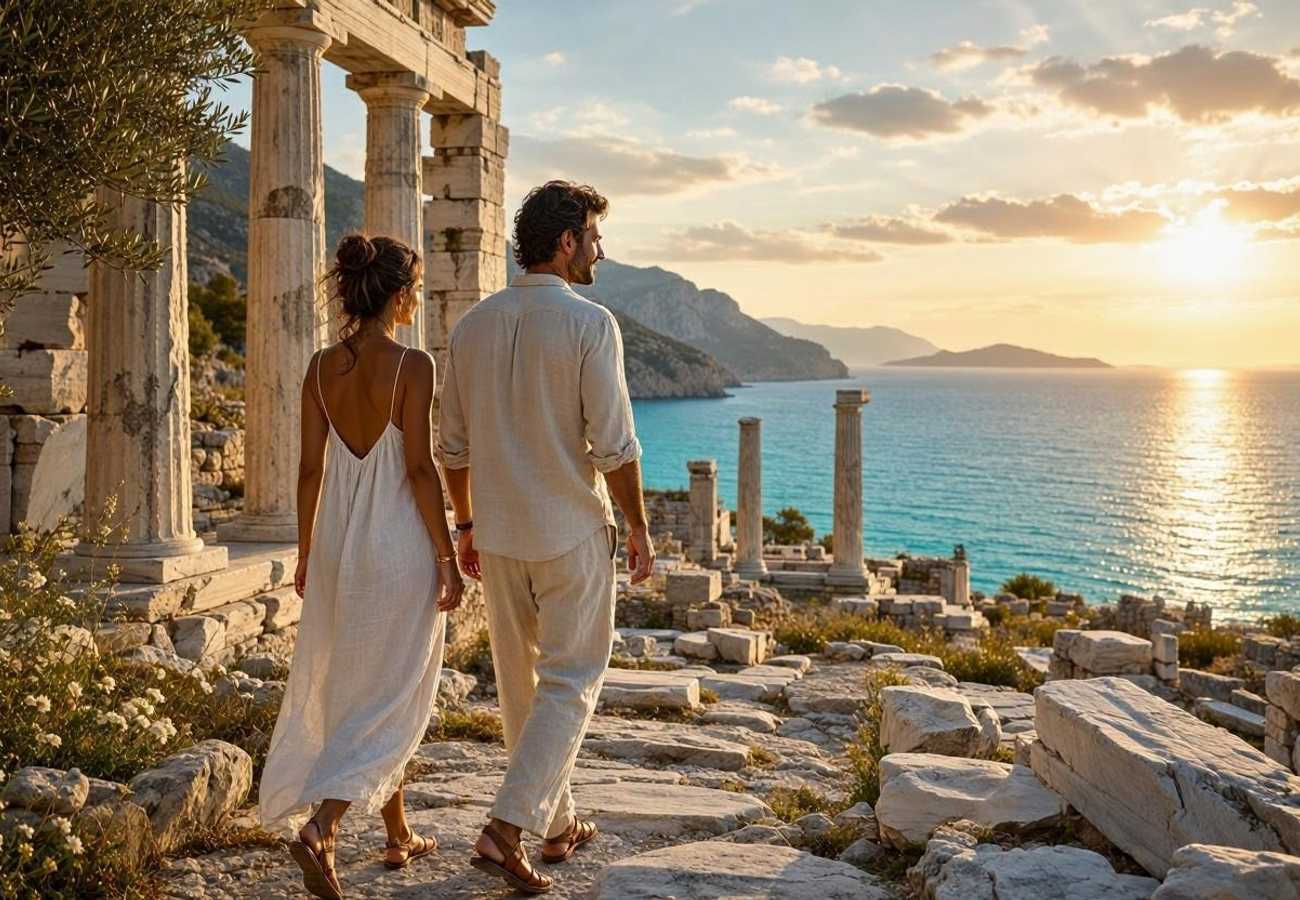
Greece Joins Spain,Italy and Others as Mediterranean Travel Enters Powerful New High Spending Tourism Era in 2026

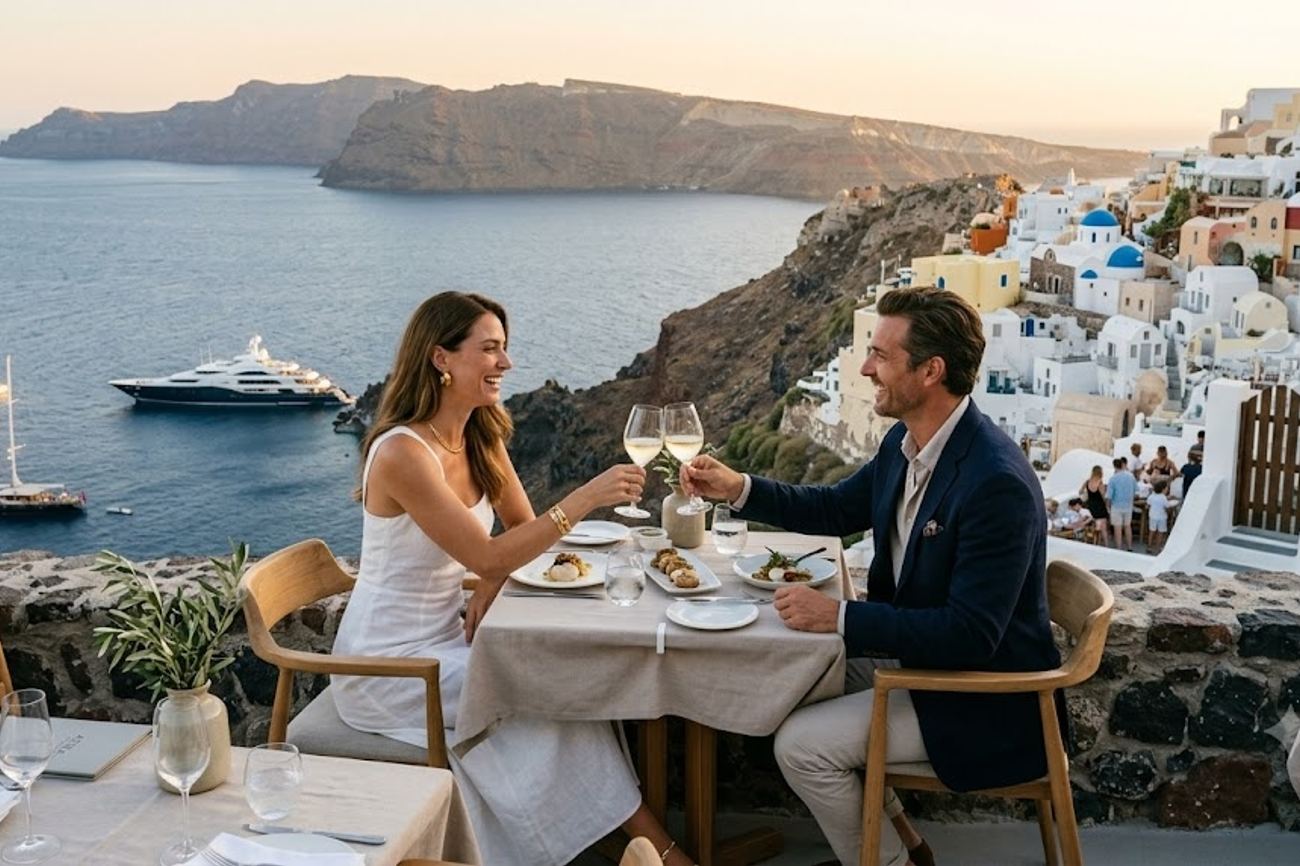
Image generated by AI
[Athens, August 2026] — Mediterranean nations are aggressively pivoting away from mass tourism volume in favor of high-yield visitor spending and extended stay durations. This strategic shift is most evident in Greece, where July 2026 data reveals a paradoxical trend: a decrease in total visitor arrivals coupled with a significant surge in total tourism revenue.
The transition marks a departure from the "numbers game" that has historically defined Southern European tourism. According to recent figures from the Bank of Greece, non-resident traveler arrivals in July 2026 dropped by 3.1 percent compared to the previous year. Despite this dip in foot traffic, travel receipts climbed 7.2 percent, totaling €4.72 billion for the month. This indicates that while fewer people are visiting, those who do are spending more per capita on premium services and luxury accommodations.
The Economic Pivot in Greece
The broader data for the first seven months of 2026 suggests a robust overall recovery, though the July figures signal a change in the nature of that growth. From January to July 2026, Greece saw an 8.6 percent increase in non-resident arrivals. More importantly, tourism receipts for this period jumped 12 percent, reaching €13.52 billion, up from €12.07 billion during the same window in 2025.
This divergence between arrival numbers and revenue proves that spending power is the new benchmark for success. Greek authorities are no longer prioritizing the sheer quantity of tourists, but are instead targeting "high-value" travelers. This includes those booking luxury villas, engaging in high-end culinary tours, and utilizing private sailing charters.
To sustain this, Greece is diversifying its offerings to move beyond the saturated markets of the Cyclades and other famous islands. The government is now promoting Athens as a hub for heritage tourism, expanding mainland destination marketing, and investing in wellness retreats to attract a demographic that prioritizes quality over cost.
Regional Shifts Across the Mediterranean
Greece is not acting in isolation. A coordinated movement across the Mediterranean is seeing several countries implement similar "value-over-volume" frameworks to combat overtourism and environmental degradation.
- Spain: The Spanish government is actively diversifying its portfolio to move beyond the "sun and beach" stereotype. By promoting wine regions, nature tourism, and heritage cities in Andalucía and Catalonia, Spain is attempting to spread visitor density across a wider seasonal calendar.
- Italy: Italy is leaning into "slow travel." While Rome, Venice, and Florence remain anchors, there is a concerted push toward regional Italy—specifically Puglia, Sicily, and Tuscany—where visitors are encouraged to stay longer in historic villages and engage with local traditions.
- Portugal: Portugal is leveraging the rise of the remote workforce. By catering to digital nomads and wellness seekers in the Azores, Madeira, and the Algarve, the country is successfully extending the tourism season beyond the traditional summer peak.
- Croatia: Facing extreme pressure in hubs like Dubrovnik and Split, Croatia is shifting focus toward sustainable coastal management and promoting its inland national parks to reduce the burden on its Adriatic coastline.
- Türkiye: Türkiye continues to manage high-volume traffic in Istanbul and Antalya but is rapidly expanding its luxury and medical tourism sectors to increase the average spend per visitor.
Practical Traveler Advisory and Strategic Insights
For the average tourist, this systemic shift in Mediterranean policy will manifest in several practical ways. The era of the "budget mass-market" summer holiday is being intentionally phased out in favor of curated, higher-cost experiences.
Greece is poised to capitalize on the growing demand for Mediterranean travel, with the country's tourism industry expected to experience significant growth in 2026. According to official forecasts, Greece is likely to attract a record number of visitors, with many travelers opting to fly into Athens International Airport , the country's primary gateway. The airport has undergone significant upgrades in recent years, including the expansion of its passenger terminal and the addition of new flight routes.
1. Pricing and Availability Travelers should expect a rise in the cost of "premium" experiences. As destinations prioritize high-spending visitors, luxury hotel rates and high-end tour packages will likely increase. However, this strategy is designed to reduce the "crowd factor," potentially leading to a more breathable experience at major landmarks.
2. The Rise of the "Off-Peak" Incentive To reduce dependence on July and August, countries are creating incentives for shoulder-season travel. Travelers visiting in October or March may find more authentic local experiences and better availability in rural regions that were previously ignored during the summer rush.
3. Diversification of Destinations The push toward "regional" tourism means better infrastructure is being developed in non-traditional hotspots. Travelers will find more high-quality accommodation and guided services in the Greek mainland, the Spanish interior, and the Italian countryside than in previous years.
4. Sustainability Requirements Particularly in Croatia and Italy, travelers may encounter more stringent regulations regarding visitor numbers at sensitive sites. This could include mandatory booking systems for certain landmarks or limits on the number of cruise ship passengers allowed in port.
The Future of Mediterranean Tourism
The long-term goal for these nations is the total decoupling of economic growth from visitor volume. By focusing on "value," these countries hope to increase their GDP from tourism while simultaneously reducing the wear and tear on their natural landscapes and urban infrastructure.
As Mediterranean travel enters a new era of high spending tourism, countries such as Spain and Italy are also expected to benefit from the surge in demand. The Italian National Tourism Board has launched a series of initiatives aimed at promoting the country's rich cultural heritage and natural beauty, including targeted marketing campaigns and investments in tourism infrastructure. With its unique blend of history, art, and cuisine, Italy is well-placed to attract high-end tourists, who are expected to drive growth in the region's tourism industry in 2026.
The next phase of this evolution involves deeper integration of technology to manage tourist flows in real-time. By using data to steer visitors away from overcrowded centers toward underutilized regions, the Mediterranean bloc aims to create a sustainable ecosystem that benefits local communities rather than just large-scale hotel chains.
As these strategies mature, the definition of a "successful" tourism season will no longer be a record-breaking number of arrivals, but rather a record-breaking average spend per guest and a balanced distribution of visitors across the calendar year.
FAQ: Mediterranean Travel 2026
Is it more expensive to visit Greece or Spain in 2026? While basic costs remain competitive, there is a marked increase in the price of "premium" and "luxury" experiences. However, traveling during the shoulder seasons (spring and autumn) remains a cost-effective way to visit these regions.
How do I find "off-the-beaten-path" destinations in Italy? Focus on regional hubs like Puglia or Sicily rather than the "Big Three" (Rome, Florence, Venice). Look for "Agriturismo" stays and slow-travel itineraries that emphasize rural villages and local gastronomy.
What is "slow travel" and why is it being promoted? Slow travel encourages visitors to stay in one location for a longer period to deeply engage with the local culture. It is promoted to reduce the environmental impact of rapid transit and distribute wealth to smaller communities.
Are there restrictions on visiting popular sites like Dubrovnik? Yes, many Mediterranean hubs are implementing sustainable management plans. This may include capped visitor numbers or required pre-bookings to prevent overcrowding and protect historic architecture.
The Mediterranean is no longer selling a destination; it is selling an investment in quality.
Related Travel Guides
This article is for informational purposes. Flight routes, passenger regulations, visa rules, and transit advisories are subject to change by airlines and aviation authorities. Readers are advised to verify schedules and travel documentation with relevant carriers and border agencies before departure.
Related Stories
Greece Holiday Rental Registrations Drop 2.1% as Athens and Thessaloniki Impose Restrictions Through 2027
Germany and Key European Markets Propel Greek Tourism to €18.2B as Mykonos and Cyclades Face Infrastructure Reckoning