Greece Holiday Rental Registrations Drop 2.1% as Athens and Thessaloniki Impose Restrictions Through 2027

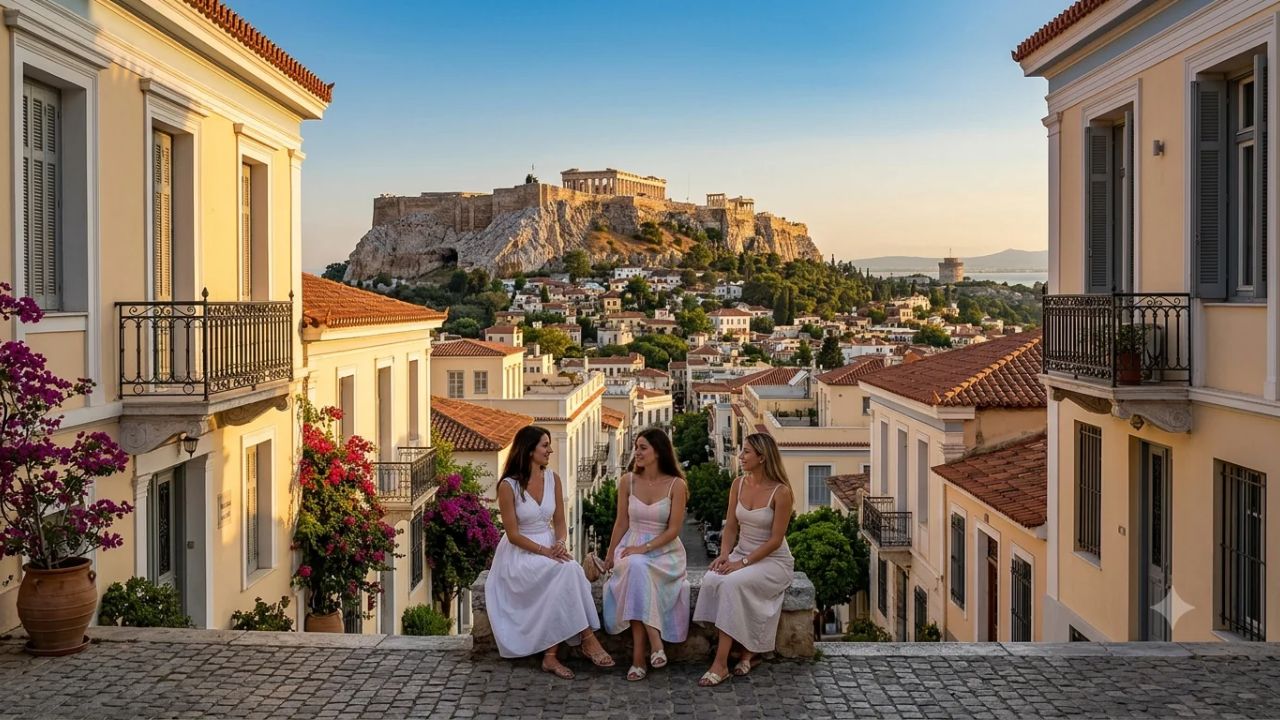
Greece's national holiday rental registry recorded a 2.1% decline in 2026 as strict registration limits in Athens and Thessaloniki curb short-term tourism accommodations.
ATHENS, November 3, 2026 — Greece's short-term tourism accommodation market has reached a historical inflection point, with official central bank data documenting a 2.1 percent nationwide contraction in registered holiday rentals as aggressive municipal registration freezes take hold across central Athens and Thessaloniki through 2027. The contraction marks the first sustained reversal in Greece's holiday rental sector following more than a decade of unchecked growth, reflecting a determined government push to reconcile soaring international tourism volumes with acute residential housing shortages, surging urban rental costs, and local neighborhood carrying-capacity pressures.
[!NOTE] According to the Bank of Greece's October 2026 Financial Stability Report, total properties listed in the national Short-Term Rental Property Registry declined to 203,122 in March 2026, down from 207,572 in 2024. The net loss of 4,450 registered units coincides with targeted registration freezes across the first, second, and third municipal districts of Athens and the historic first community of Thessaloniki.
GREECE SHORT-TERM RENTAL REGISTRY & REGULATORY STATUS (2026 - 2027)
| Metric / Jurisdiction Benchmark (2024) Recorded (2026) Variance |
|---|
| National Registry Units 207,572 203,122 -2.1% (-4,450) |
| Central Athens Active Units ~16,775 15,920 -5.1% (-855) |
| Athens 1st, 2nd, 3rd Dist. Active Growth Full Freeze Frozen to 2027 |
| Thessaloniki 1st Community Active Growth Full Freeze Frozen to 2027 |
| Operational Penalties: Minimum €20,000 Fine for Operating Unregistered Units |
| Tax Reclassification: Owners with 3+ Units Subject to Commercial VAT & Business Tax |
The Turning Tide: Bank of Greece Confirms 2.1% National Registry Contraction
For more than a decade, the exponential rise of peer-to-peer accommodation platforms reshaped the architectural, economic, and social fabric of Greek cities. Following the sovereign debt crisis of the 2010s, short-term rentals served as a lifeline for property owners, enabling families to monetize vacant apartments, generate foreign currency receipts, and revive urban neighborhoods. However, as international arrivals to Greece climbed toward 36 million annually, the unchecked conversion of residential apartments into commercial tourist suites began displacing long-term tenants, inflating residential rents, and straining municipal waste and water infrastructure.
The publication of the Bank of Greece's Financial Stability Report in late October 2026 provides empirical proof that statutory government interventions have reversed this multi-year trend. Certified figures from the Independent Authority for Public Revenue (AADE), which manages the national Short-Term Rental Property Registry, indicate that active registered properties declined from 207,572 in 2024 to 203,122 in March 2026. This absolute drop of 4,450 units demonstrates that the combination of municipal freezes, tighter technical inspections, and tax reclassifications has successfully curtailed speculative short-term conversions.
Economic analysts note that while a 2.1 percent net contraction appears modest in absolute terms, its significance lies in the underlying structural shift. In earlier operating cycles, national listings expanded at annual rates exceeding 15 to 20 percent. Halting that momentum and producing a net shrinkage confirms that property owners are actively reassessing the commercial viability of short-term rentals against tightening compliance costs and potential legal liabilities.
Urban Core Restrictions: The Athens and Thessaloniki Registration Freeze Through 2027
The core pillar of Greece's legislative intervention is a targeted geographical moratorium on new short-term rental property registrations. Rather than enacting a blunt, nationwide ban that would penalize rural or under-visited island communities, the Ministry of National Economy and Finance established strict geographical perimeters encompassing the country's most tourism-dense urban centers.
In the Greek capital, the moratorium covers the first, second, and third municipal districts of the Municipality of Athens. Implemented initially in January 2025, the registration freeze has been formally extended through December 31, 2027. This geographical zone encompasses the primary cultural and tourism core of Athens, including renowned neighborhoods such as:
- Plaka: The historic labyrinthine quarter nestled beneath the Acropolis.
- Koukaki: The former residential enclave that evolved into Europe's fifth most densely saturated short-term rental district.
- Monastiraki and Thissio: Historic trading and dining corridors directly facing the ancient Agora.
- Syntagma and Kolonaki: The political and upscale commercial center of the capital.
- Exarchia and Pagkrati: Dynamic student and artistic quarters that experienced rapid gentrification and residential displacement.
In northern Greece, the commercial metropolis of Thessaloniki introduced parallel restrictions across its premier central zone in July 2026, likewise scheduled to operate through 2027. The restriction targets the First Municipal Community of Thessaloniki, which encompasses the historic downtown core, the waterfront promenade along Leoforos Nikis, the vibrant commercial avenues of Tsimiski and Egnatia, and the historic entertainment district of Ladadika.
| Municipality | Designated Restricted Zone | Freeze Inception Date | Statutory Duration | Primary Impacted Neighborhoods |
|---|---|---|---|---|
| Athens | 1st, 2nd, and 3rd Municipal Districts | January 1, 2025 | Extended through Dec 31, 2027 | Plaka, Koukaki, Kolonaki, Syntagma, Monastiraki, Exarchia, Pagkrati |
| Thessaloniki | 1st Municipal Community | July 1, 2026 | Extended through Dec 31, 2027 | Historic Center, Waterfront Promenade, Ladadika, Tsimiski Corridor |
Central Athens Market Telemetry: Carrying-Capacity Realities and the Coastal Spillover
The tangible effects of these statutory constraints are visibly altering the operational landscape of central Athens. Comprehensive carrying-capacity evaluations conducted by urban planning institutes revealed that the annual expansion rate of short-term rental listings across the capital's central districts decelerated dramatically—from 18 to 20 percent annual gains during the 2023–2024 period down to between 1.7 and 5.4 percent in 2024–2025.
By late summer 2026, independent commercial monitoring telemetry verified that active short-term rental listings across central Athens had contracted to approximately 15,920 units in August 2026, marking an outright 5.1 percent year-on-year reduction. The disappearance of more than 850 active listings from central Athens demonstrates the direct enforcement power of the AADE registry freeze, as decommissioned or non-compliant properties could no longer be replaced by new market entrants.
However, housing economists identify an emerging spatial displacement effect—often described by urban planners as the "balloon effect." While listings in central Athens declined, short-term rental capacity expanded measurably across southern and coastal suburban municipalities along the Athens Riviera. Suburbs such as Glyfada, Voula, Alimos, and Paleo Faliro recorded double-digit listing increases as property developers and foreign real estate investors redirected capital toward coastal zones located outside the municipal boundaries of the city center freeze. This displacement highlights the persistent challenge of managing tourism carrying capacities across integrated metropolitan areas.
The neighborhood of Koukaki serves as the most prominent symbol of this carrying-capacity transformation. Positioned directly beneath the Acropolis Museum and the pedestrianized walkways of Dionysiou Areopagitou, Koukaki experienced one of Europe's most dramatic commercial conversions. Within a six-year window, hundreds of multi-generational residential apartment buildings were converted into turnkey tourist rentals, replacing traditional neighborhood greengrocers, neighborhood bakeries, and pharmacies with automated luggage storage lockers, boutique espresso bars, and tourist souvenir outlets. In municipal school districts across central Athens, elementary school enrollments experienced steady declines as families with young children were priced out of the city center by soaring private residential rents.
Compounding this urban dynamic was the historical influx of foreign capital channeled through the Greek Golden Visa residence-by-investment program. Seeking permanent European residency, international investors poured billions of euros into acquiring residential real estate in central Athens, often purchasing multiple distressed apartments to convert into short-term rental portfolios. In response, the Hellenic government implemented sweeping reforms in September 2024, raising the minimum Golden Visa investment threshold to €800,000 across Athens, Thessaloniki, and popular Aegean islands, while strictly prohibiting Golden Visa properties from operating in the short-term rental market. This dual legislative clampdown has effectively curtailed speculative foreign acquisitions across the capital's historic core.
CENTRAL ATHENS SHORT-TERM RENTAL DYNAMICS (2023 - 2026)
| Column 1 |
|---|
| Timeframe Listing Growth Trajectory Regulatory Environment |
| 2023 - 2024 Period +18.0% to +20.0% YoY Expansion Unrestricted Registrations |
| 2024 - 2025 Period +1.7% to +5.4% Deceleration Initial Freeze Imposed |
| August 2026 Level 15,920 Active Units (-5.1% YoY) Full Enforced Moratorium |
| Geographic Displacement: Capital Central Freeze --> Growth along Athens Riviera |
Thessaloniki's First Community: Protecting the Historic Core and Ladadika
In Thessaloniki, Greece's second-largest urban center, the imposition of the July 2026 freeze answered years of escalating protests from local university student coalitions, healthcare unions, and civic preservation groups. As the educational and artistic heart of northern Greece, Thessaloniki hosts over 100,000 university students enrolled across Aristotle University of Thessaloniki and the University of Macedonia.
In recent years, the rapid conversion of historic studio apartments and multi-room residential flats across the city center into tourist Airbnbs created a severe housing affordability crisis for students and young professionals. Neighborhoods such as Ladadika—famed for its preserved Ottoman-era brick warehouses, traditional ouzeries, and live rebetiko music taverns—saw significant residential displacement as entire heritage buildings were converted into multi-unit short-term vacation complexes.
By restricting new property registrations across the First Municipal Community through 2027, municipal and federal authorities have created a vital administrative barrier against further gentrification. The freeze ensures that the limited existing residential housing stock within walking distance of the central university campus remains sheltered from commercial tourism speculation, preserving the social diversity and living character of the northern metropolis.
The urgency of preserving residential stability in Thessaloniki has been accentuated by major urban infrastructure modernizations, headlined by the commercial commissioning of the Thessaloniki Metro. The driverless underground transit system—featuring architectural display stations showcasing archaeological treasures unearthed during tunneling along the ancient Roman Via Egnatia—has dramatically enhanced urban connectivity between the central railway terminus, the university campus, and eastern residential suburbs. However, this transit accessibility triggered immediate speculative interest among property investors seeking to acquire residential buildings along primary metro stations for conversion into short-term holiday suites.
By enforcing the registration moratorium across the First Municipal Community, authorities have insulated the historic urban fabric from runaway commercialization. Neighborhoods spanning from the historic waterfront at the White Tower up to the Byzantine ramparts of Ano Poli (Upper Town) retain essential housing stock for university professors, healthcare personnel, and local families. This regulatory shield ensures that Thessaloniki's celebrated cultural identity—defined by its intellectual cafe culture, active artisan bakeries, and lively youth-driven arts scene—endures alongside its expanding international tourism appeal.
Rigorous Operational Mandates: Safety Standards, VAT Thresholds, and Climate Levies
Parallel to geographical freezes, the Greek government has implemented strict technical, fiscal, and operational standards that fundamentally raise the barrier to entry for holiday rental operators. Effective since October 2025, all active properties listed in the national registry must satisfy mandatory physical and legal criteria:
- Physical Habitability Standards: Every registered unit must possess certified residential suitability, verified natural day-lighting, functional ventilation systems, and installed climate control equipment (air conditioning units capable of both cooling and heating).
- Mandatory Safety Infrastructure: Properties must be equipped with certified electrical safety documentation, operational smoke detectors, fire extinguishers, and comprehensive third-party civil liability insurance covering guest injury or property damage.
- Fiscal Reclassification and VAT Liability: In an effort to curb commercial corporations operating dozens of units disguised as private homeowners, legislation mandates that any individual or corporate entity operating three or more short-term rental properties is classified as a commercial enterprise. Such operators must register as a formal business, maintain commercial accounting books, and charge standard 24 percent Value Added Tax (VAT) on lodging transactions.
- Climate Resilience Levy (Telos Anthektikotitas stin Klimatiki Krisi): Replaced the traditional stayover tax, imposing daily per-room levies on short-term rentals that fluctuate seasonally between €1.50 during low-season winter months and up to €10.00 per night during the summer high season. The collected funds are channeled directly into a dedicated state fund supporting national disaster recovery and civil protection infrastructure following severe Mediterranean climate events.
| Regulatory Requirement | Operational Parameter | Legal / Fiscal Consequence | Compliance Authority |
|---|---|---|---|
| Physical Suitability | Natural lighting, ventilation, installed AC | Non-compliant units face registry deregistration | Ministry of Tourism / AADE |
| Safety Certification | Smoke alarms, fire extinguishers, liability cover | Mandatory documentation upload to AADE portal | Fire Service / Hellenic Police |
| Commercial Reclassification | Ownership of 3 or more short-term properties | Compulsory VAT registration (24%) & commercial tax | Independent Authority (AADE) |
| Climate Resilience Levy | €1.50 (winter) to €10.00 (summer) per night | Mandatory collection and monthly tax remittance | Ministry of National Economy |
The Real Estate Transfer Hazard: Deregistration Pitfalls and the €20,000 Initial Fine
One of the most consequential yet widely misunderstood provisions of the new legal framework relates to real estate transactions within designated restricted zones. Many domestic and foreign property investors operate under the mistaken assumption that a short-term rental registration functions as a perpetual property right that automatically transfers to a new owner upon sale.
Under statutory Greek property regulations, a short-term rental registration number (AMA - Arithmos Mitroou Akinitou) is legally tied to the specific tax identification number (AFM) of the property operator, not to the physical real estate deed. Consequently, when an apartment in Plaka, Koukaki, or central Thessaloniki is sold, gifted, or transferred through inheritance, the existing AMA registration is automatically revoked upon completion of the property conveyance.
Because the geographical freeze remains active through 2027, the purchasing party is legally prohibited from generating a new AMA registration number for the acquired property. Real estate attorneys and financial advisors in Athens have issued urgent warnings to foreign golden visa investors and commercial buyers: purchasing an apartment marketed as a "high-performing Airbnb" in central Athens will result in an immediate inability to operate legally as a short-term rental once the title deeds are registered.
In addition, the statutory penalties for attempting to circumvent these geographical restrictions are exceptionally severe. Operating an unregistered holiday rental in a restricted district carries a mandatory minimum administrative fine of €20,000 for an initial violation. For repeat violations within a one-year window, fines double to €40,000, accompanied by potential legal sanctions against the property owner and immediate platform blacklisting enforced through automated data sharing between AADE, Airbnb, Booking.com, and Vrbo.
INVESTOR HAZARD: PROPERTY TRANSFER IN RESTRICTED ZONES
| Category / Entity | Details / Impact |
|---|---|
| Step 1: Property Acquisition | Buyer purchases active short-term rental in Plaka |
| Step 2: Title Registration | Ownership deed changes hands; old AMA revoked by AADE |
| Step 3: Registration Attempt | New owner attempts to register property on AADE |
| Step 4: Statutory Rejection | System blocks registration due to 2025-2027 Freeze |
| Step 5: Operational Risk | Operating illegally triggers immediate €20,000 fine |
Greece's Underlying Housing Emergency: NPL Bottlenecks and Q2 2026 Price Inflation
While the decline in registered holiday rentals marks a regulatory victory for the government, housing economists caution that the removal of 4,450 short-term properties has not instantly resolved Greece's profound residential affordability crisis.
Official real estate indices published by the Bank of Greece indicate that residential apartment prices continued their upward march throughout 2026, rising by 5.5 percent year-on-year across the nation in the second quarter of 2026. Price acceleration remained particularly intense in metropolitan urban centers, with Athens recording residential price gains of 5.0 percent and Thessaloniki posting increases of 4.7 percent. Concurrently, residential rental rates across central Athens remain at near-record highs, consuming between 40 and 45 percent of an average Greek worker's disposable household income.
The reason deregistered holiday rentals fail to instantly flood the long-term rental market lies in entrenched structural bottlenecks within the Greek property sector:
- Non-Performing Loan (NPL) Collateral: Tens of thousands of residential properties remain tied up in servicing portfolios held by international credit-servicing firms (servicers), trapped in protracted legal foreclosure processes that keep homes sealed off from the market.
- Complex Fractional Ownership: Byzantine Greek inheritance laws often leave individual residential flats divided among numerous fractional heirs who cannot agree on long-term leasing or renovation investments.
- Renovation Capital Deficits: Transforming an apartment that operated for years as an intensive tourist rental into a compliant, long-term residential home often requires substantial capital expenditures for kitchen renovations, plumbing updates, and energy efficiency upgrades that private owners cannot immediately finance.
A critical macroeconomic obstacle perpetuating Greece's housing shortage involves the colossal inventory of residential real estate trapped inside distressed debt portfolios. Following the protracted Greek financial crisis, domestic systemic banks transferred tens of billions of euros in non-performing loans (NPLs) to specialized loan servicing firms (such as doValue, Cepal, and Intrum) under the state-sponsored "Hercules" Asset Protection Scheme. An estimated 60,000 to 80,000 residential apartments in the greater Athens and Thessaloniki metropolitan regions remain caught in protracted legal foreclosures, contested auction schedules, or bureaucratic title reconciliations.
Because these institutional portfolios move through legal liquidation at a deliberate, complex pace, tens of thousands of structurally sound residential units remain shuttered behind locked metal shutters, unavailable to either international tourists or local Greek tenants. Commercial real estate federations emphasize that resolving this institutional bottleneck through streamlined electronic auctions and private renovation capital partnerships will be far more consequential for long-term housing affordability than municipal rental restrictions alone.
Government Counter-Measures: The 36-Month Tax Exemption for Long-Term Conversions
Recognizing that punitive restrictions alone cannot generate adequate housing supply, the Greek government has paired its registration freeze with aggressive financial incentives designed to coax property owners back into the long-term residential leasing market.
The flagship incentive program offers eligible property owners a complete 36-month personal income tax exemption on rental revenues when qualifying properties are transitioned into primary long-term residential leases. Under standard Greek tax schedules, rental income is taxed at progressive rates ranging from 15 percent up to 45 percent. An exemption spanning three consecutive tax years provides massive financial relief, often saving a landlord between €3,000 and €9,000 in annual tax liabilities.
To qualify for the 36-month tax holiday, properties must satisfy specific statutory criteria:
- Size Limitation: The residence must measure up to 120 square meters of primary living space.
- Historical Use Verification: The property must have been officially registered as a short-term rental on the AADE registry or documented as completely vacant for at least three consecutive years prior to the transition.
- Lease Duration: The property must be leased as a primary residence under a legally binding residential lease contract of at least three years' duration.
In late October 2026, the government proposed extending the application deadline for this incentive program through December 2027, awaiting formal parliamentary ratification. When combined with state-backed renovation grants—such as the "Renovate-Rent" (Anakainizo-Noikiazw) program, which provides up to 50 percent non-repayable subsidies for home modernizations—the initiative seeks to systematically convert thousands of idle urban units into stable, long-term family homes.
| Policy Instrument | Mechanism Type | Core Economic Incentive | Primary Policy Target |
|---|---|---|---|
| Geographic Freeze | Regulatory Moratorium | Complete ban on new short-term registrations | Halts tourist saturation in Athens 1st-3rd dist & Thessaloniki |
| 36-Month Tax Holiday | Fiscal Incentive | 100% income tax exemption on residential rent | Converts short-term and vacant units into 3-year leases |
| Renovate-Rent Grants | Direct Capital Subsidy | Up to 50% state co-financing for renovations | Revitalizes aged, unrenovated urban residential stock |
| €20,000 Penalty | Administrative Enforcement | Severe financial fines and platform blacklisting | Eliminates illicit, black-market short-term operations |
What the Shift Means for International Travelers: Verifying AMA Compliance and Hotel Shifts
For the millions of international tourists visiting Greece each year, the evolving regulatory environment introduces significant practical considerations that impact vacation planning, accommodation selection, and booking security.
First and foremost, travelers should understand that the ongoing restrictions do not constitute a blanket ban on vacation rentals. Tens of thousands of legally registered, fully compliant short-term apartments continue to operate normally throughout central Athens, Thessaloniki, and the Greek islands. Visitors can freely book apartments, provided they adhere to basic verification steps. When booking via digital platforms, travelers should ensure that the property listing clearly displays an official, certified AMA registration number (e.g., AMA 00000123456). Booking unlisted or informal properties arranged through unverified social media channels exposes travelers to the immediate risk of reservation cancellation or property closure during municipal safety and tax sweeps. In addition, major digital booking platforms—including Airbnb, Booking.com, and Vrbo—maintain automated API data-sharing agreements directly with the Greek Independent Authority for Public Revenue (AADE). Under these compliance protocols, any property listing published without a verified, government-issued AMA registry code faces automated algorithmic deactivation and immediate platform removal, protecting international vacationers from unregistered, non-compliant operators.
Second, the constriction of central supply is reshaping accommodation pricing and geographic distribution. With new registrations frozen in Plaka and Koukaki, average daily room rates for prime central apartments are expected to firm up during peak holiday seasons. In response, budget-conscious travelers are increasingly choosing modern boutique hotels or exploring accommodation in up-and-coming peripheral neighborhoods located along the Athens Metro network—such as Ampelokipi, Kypseli, and Neos Kosmos—which offer vibrant local dining and lower nightly tariffs while remaining within 15 minutes of the Acropolis.
Concurrently, Greece's traditional hospitality sector is experiencing a renaissance. Licensed hotels and boutique luxury guesthouses—which have long advocated for a level playing field regarding safety, employment standards, and taxation—are capturing an expanding share of international leisure bookings. By investing heavily in rooftop plunge pools, curated cultural concierge services, and authentic Greek gastronomy, certified hoteliers are offering high-value alternatives that insulate travelers from the shifting regulatory complexities of the private rental market.
Long-Term Outlook: Balancing Heritage Tourism Vitality with Urban Resident Viability
The transformation underway across Greece's short-term rental sector reflects a broader global awakening regarding the limits of unconstrained urban tourism. Across European cultural capitals—from Barcelona's ban on short-term rentals by 2028 to strict limits in Florence, Amsterdam, and Venice—municipal governments are concluding that sustainable tourism cannot thrive at the expense of permanent community life.
Greece's balanced strategy—combining strict, neighborhood-specific registration moratoria through 2027 with generous tax exemptions for long-term landlords and heavy penalties for illicit operators—represents a sophisticated model in destination management. By containing tourism saturation within historic urban cores while encouraging geographic dispersion along the Athens Riviera and regional provincial capitals, the Hellenic Republic is working to safeguard both its world-class visitor economy and the enduring social vibrancy of its historic cities.
As the 2027 regulatory milestones approach, the trajectory of Greece's holiday rental market will serve as an authoritative benchmark for international tourism planners worldwide, proving that with decisive governance, legal transparency, and proactive incentives, a nation can protect the homes of its residents while remaining one of the most welcoming, inspiring travel destinations on earth.
Related Travel Guides
This article is for informational purposes. Flight routes, passenger regulations, visa rules, and transit advisories are subject to change by airlines and aviation authorities. Readers are advised to verify schedules and travel documentation with relevant carriers and border agencies before departure.
Related Stories

Cambodia Tourism Shock: Angkor Archaeological Park Foreign Arrivals Drop 26% Amid Sharp Asian Slump

Global Tourism Taxes Reshape 2027 Holiday Budgets Across Thailand, Japan, Wales, Norway, and Spain