
National Park Service Warns of Federal Penalties After Tourist Climbs Historic Mormon Row Structures in Grand Teton 2026
The National Park Service is reinforcing federal resource protection rules following a viral incident where a visitor climbed a historic building at Mormon Row in Grand Teton National Park.

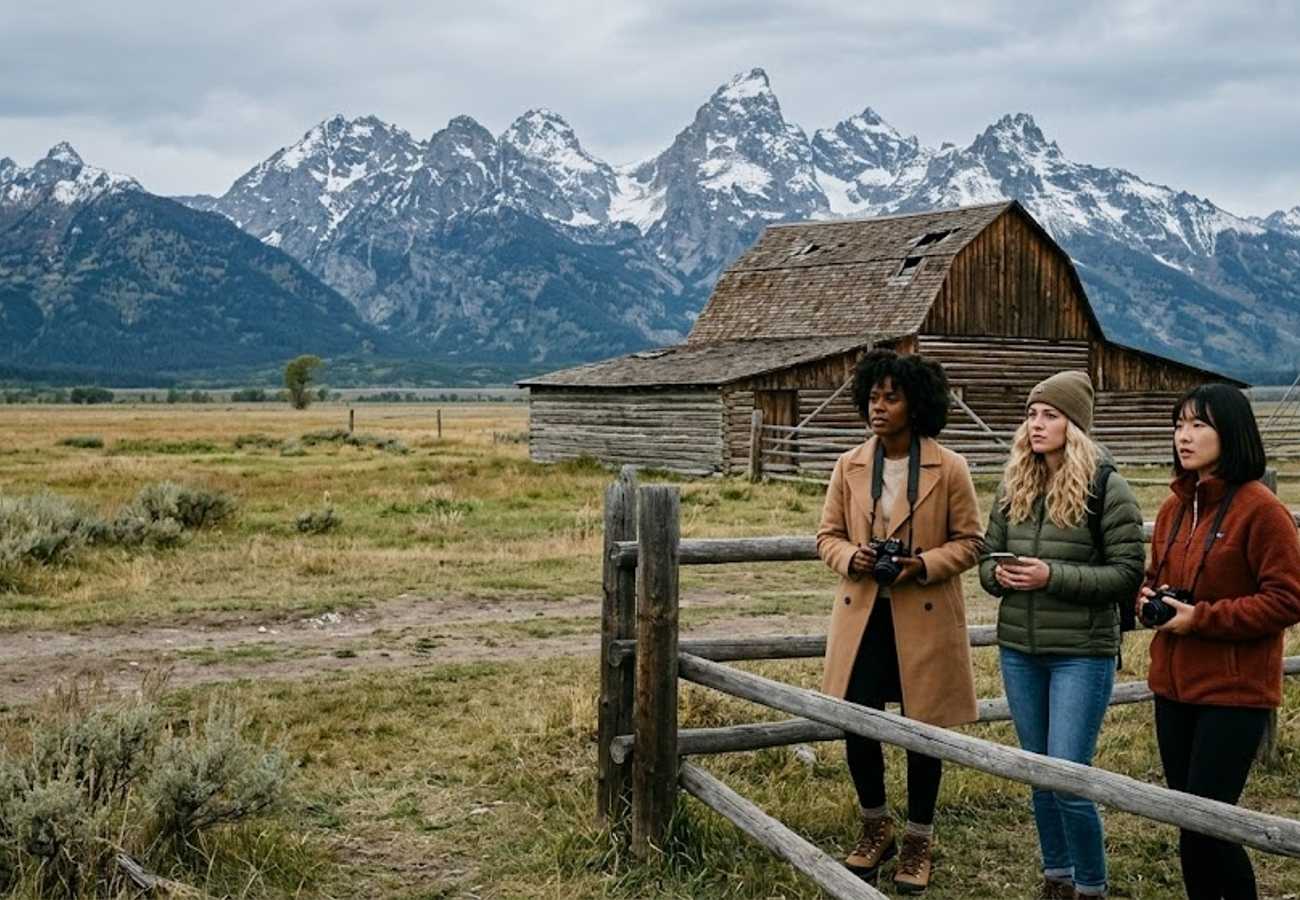
Image generated by AI
The National Park Service (NPS) is intensifying enforcement of cultural resource protections following a viral social media incident at the Mormon Row Historic District in Grand Teton National Park.
A video circulating on Instagram shows a tourist climbing onto the roof of a historic structure at Mormon Row to take photographs. The act has triggered widespread criticism and prompted a reminder from federal authorities regarding the legal consequences of damaging or disturbing protected historical landmarks.
Mormon Row serves as a critical historical record of the early settlers who established homesteads in Wyoming’s Jackson Hole Valley between the late 19th and early 20th centuries. The T.A. Moulton Barn, one of the most photographed sites in the American West, is a primary example of the pioneer resilience the NPS seeks to preserve. Because these structures are aging and fragile, climbing on them poses a direct threat to the physical integrity of the buildings and the safety of the visitors.
Federal Regulations and Penalties for Resource Violations
The National Park Service enforces strict federal regulations to ensure that cultural and historical resources are not defaced or destroyed. Under 36 CFR §2.1, the act of climbing on or disturbing a protected structure is a punishable offense.
The following table outlines the potential legal and financial repercussions for visitors who violate these protections:
| Violation / Situation | Possible Consequences | Legal Basis / Authority |
|---|---|---|
| Climbing or standing on protected historic structures | Citation and fines | 36 CFR §2.1 (Resource Protection) |
| Damaging historic buildings or cultural resources | Restitution for repair costs, fines, and criminal penalties | Federal restoration and repair cost mandates |
| General violation of NPS regulations | Fines, imprisonment up to six months, or both | Federal Law |
| Ignoring closures, barriers, or restricted areas | Citations based on Superintendent’s Compendium | Federal Regulations |
| Creating safety hazards while climbing | Immediate removal from area and citations | Grand Teton Park Regulations |
Traveler Logistics Guide: Visiting Grand Teton’s Historic Sites
Navigating the high-traffic areas of Grand Teton National Park requires adherence to specific transit and behavioral protocols to avoid citations and ensure site preservation.
Accessing Mormon Row Mormon Row is best accessed via the Antelope flats road. Travelers should be aware that parking is limited and strictly regulated. To avoid traffic congestion, visit during the early morning hours, which also provides the optimal lighting for photography of the T.A. Moulton Barn.
Photography and Connectivity While the area is a hub for social media content, the NPS mandates that all photography be conducted from the ground. Do not cross fences, enter restricted barn interiors, or climb any part of the structures. Digital transit policies in the park vary; while some areas have cellular reception, offline maps are recommended for the Jackson Hole Valley.
Optimal Layover and Timing If visiting as part of a larger Wyoming circuit (including Yellowstone), allocate at least 3 to 4 hours for Grand Teton's historic districts. This allows for walking tours and compliant photography without the need to rush, reducing the likelihood of impulsive rule-breaking.
Infrastructure Impact and Regional Connectivity
This incident highlights a growing conflict between "content tourism" and the preservation of historical infrastructure. As Grand Teton National Park continues to attract millions of visitors, the strain on fragile 19th-century architecture increases.
The pattern of disregard for barriers is not isolated to Wyoming. Similar issues have been documented at Hawaiʻi Volcanoes National Park, where visitors ignore volcanic instability warnings, and Yellowstone National Park, where geothermal features are frequently encroached upon.
Within Grand Teton, this is a recurring challenge. In 2014, the historic Luther Taylor Cabin was vandalized with spray paint, requiring a complex and costly restoration process. The continued trend of visitors treating protected landmarks as personal backdrops threatens the long-term viability of these sites and may lead the NPS to implement stricter access controls, such as timed entry or gated barriers, which could impact regional tourism flow.
Preservation of the American West depends on the discipline of those who visit it.
Related Travel Guides
Disclaimer
This article is for informational and educational purposes only. It does not constitute legal, financial, or professional advice. While we strive to provide accurate and up-to-date information, travel policies, regulations, and conditions change rapidly. Always verify information with official sources before making travel decisions. Nomad Lawyer makes no representations about the accuracy, reliability, completeness, or suitability of the information provided. Readers should consult qualified professionals for advice specific to their circumstances. The views expressed in this article are those of the author and do not necessarily reflect the views of Nomad Lawyer.
Preeti Gunjan
Contributor & Community Manager
A passionate traveller and community builder. Preeti helps grow the Nomad Lawyer community, fostering engagement and bringing the reader experience to life.
Learn more about our team →